The German regional elections held on Sunday, September 20, 2026, have triggered a profound political crisis for Chancellor Friedrich Merz, as exit polls reveal the Christian Democratic Union (CDU) has suffered its worst electoral performance since World War II.
Key Takeaways
- Historic CDU Losses: The conservative CDU failed to clear the parliamentary threshold in Mecklenburg-Western Pomerania, receiving just 4.9% of the vote.
- Far-Right Momentum: The Alternative for Germany (AfD) secured a dominant 38.2% in Mecklenburg-Western Pomerania and 16.3% in berlin.
- Far-Left Surge in Berlin: Die Linke achieved its best-ever result in the capital, capturing 25.7% of the vote.
- Merz Defiance: Despite calls for resignation, Chancellor Merz has vowed to maintain his federal agenda of tax and welfare reforms.
- Governance Challenges: The rise of radical parties on both ends of the spectrum is hollowing out the political center and complicating coalition building.
- The Incumbent (Merz/CDU): Taking a defensive and defiant stance. The strategy is to leverage the high legal and political bar required to oust a sitting Chancellor to maintain stability and continuity.
- The Far-Right (AfD): Taking an opportunistic stance. Leaders like Weidel view the CDU’s decline as an opening to move from the fringes into the mainstream of German governance.
- The Far-Left (Die Linke): Taking a triumphant stance. Eralp is positioning her party as a bulwark against the AfD while focusing on the immediate material needs of urban residents.
- Political Analysts: Experts like Sudha David-Wilp of the German Marshall Fund suggest that while Merz may resist calls to resign, his ability to govern effectively is being severely undermined by the lack of political momentum.
- Can the SPD maintain control? In Mecklenburg-Western Pomerania, Manuela Schwesig is expected to find allies to remain in office, but the AfD’s strength makes any coalition fragile.
- Will the CDU survive the next federal election? The current losses are a warning sign, but the scale of the recovery required is unprecedented.
- How will Berlin’s coalition look? The necessity for Die Linke to find two partners could lead to a highly unconventional or unstable local government.
- Coalition Negotiations in Berlin: Watch for which parties Elif Eralp approaches to form a majority. The inclusion or exclusion of centrist parties will signal the city’s ideological direction.
- Federal Legislative Push: Monitor whether Merz can successfully advance even minor components of his tax and welfare reform agenda in the coming months.
- AfD’s Strategic Moves: Observe how the AfD utilizes its gains to challenge the legitimacy of mainstream institutions in the lead-up to the next federal election.
- www.npr.org
- www.npr.org
What Happened: A Weekend of Political Upheaval
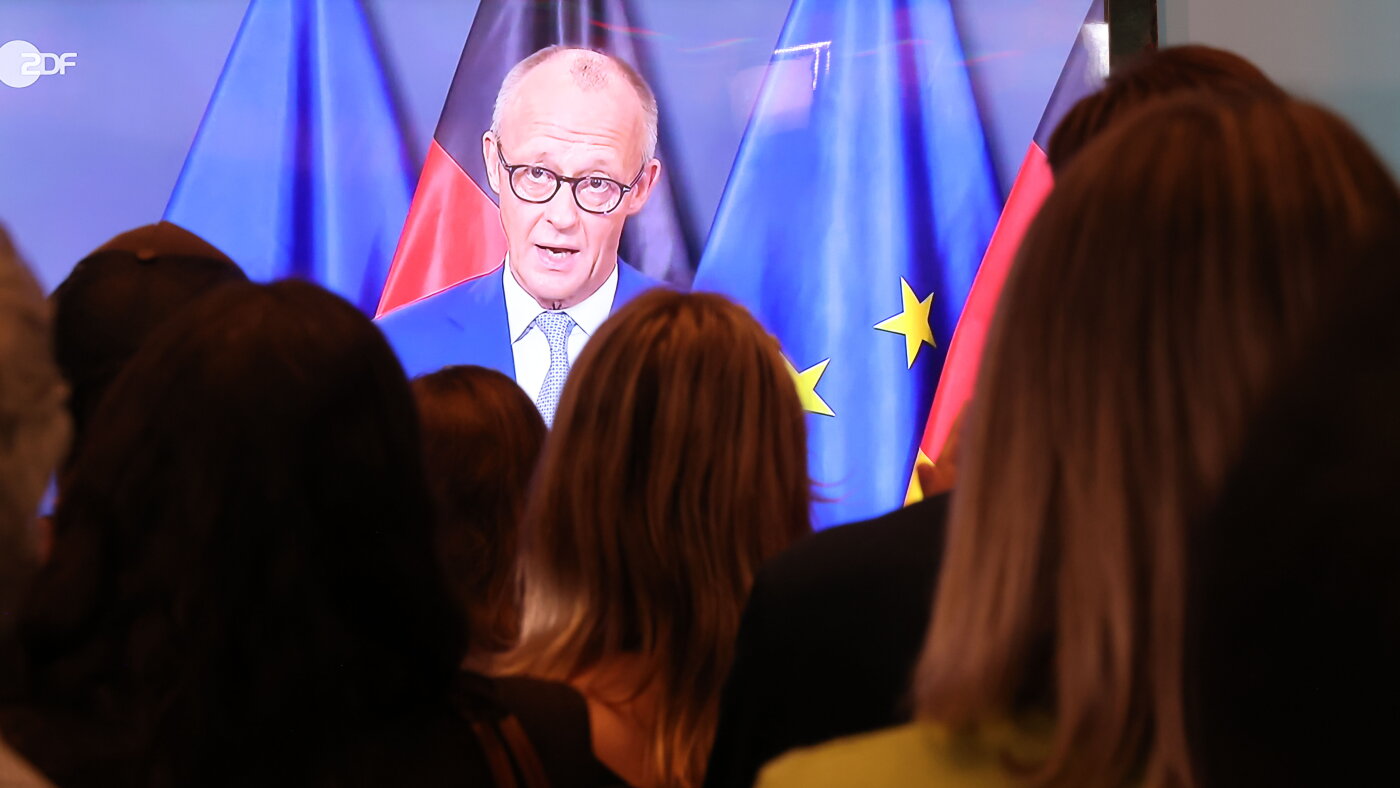
On the night of September 20, 2026, the political landscape of Germany shifted dramatically. While Chancellor Friedrich Merz was scheduled to travel to New York for the United Nations General Assembly, he instead remained at the CDU headquarters in Berlin to face the fallout of two critical state elections. The results from Mecklenburg-Western Pomerania and the city-state of Berlin have sent shockwaves through the German political establishment.
In the northeastern state of Mecklenburg-Western Pomerania, the far-right Alternative for Germany (AfD) emerged as the clear victor, capturing 38.2% of the vote. The incumbent Social Democrats (SPD), led by state governor Manuela Schwesig, came in second with 35%. The CDU’s performance was catastrophic; with only 4.9% of the vote, the party failed to meet the minimum threshold required to maintain representation in the state parliament.
In Berlin, the results presented a different but equally disruptive picture. The far-left Die Linke secured a historic 25.7% of the vote, placing them seven percentage points ahead of the CDU. The AfD also maintained a significant presence in the capital, securing 16.3% of the electorate’s support.

Why It Matters: The Erosion of the Political Center
These election results are more than just local shifts; they represent a systemic challenge to the stability of the German federal government. For decades, the political center—represented by parties like the CDU and SPD—has provided the bedrock of German governance. The simultaneous rise of the AfD in the northeast and Die Linke in the urban center of Berlin suggests a “hollowing out” of this middle ground.
Chancellor Merz himself acknowledged the severity of the situation, describing the night as a “disaster” for the political center. The data suggests that voters are increasingly gravitating toward the ideological extremes, driven by a declining trust in state institutions. This polarization makes the traditional German model of consensus-based governance increasingly difficult to maintain.
Comparative Election Results by State
| Party | Mecklenburg-Western Pomerania | Berlin |
|---|---|---|
| AfD | 38.2% | 16.3% |
| Die Linke | Not specified | 25.7% |
| SPD | 35.0% | Not specified |
| CDU | 4.9% | Not specified |
Note: Data based on exit polls reported on September 21, 2026.
Deep-Dive: The Collapse and Defiance of the CDU
The Merz Leadership Crisis
For Friedrich Merz, the weekend was a crushing blow. This defeat follows closely on the heels of a significant loss in the state of Saxony-Anhalt just two weeks prior. The 4.9% result in Mecklenburg-Western Pomerania is particularly damaging, as it effectively removes the CDU from the state’s legislative process.
Despite the mounting pressure, Merz has refused to step down. Rather than conceding to calls for a leadership reckoning, he has doubled down on his federal platform. He characterized his proposed tax and welfare reforms as “the antidote to the poison of authoritarianism,” asserting that implementing these changes requires “backbone, steadfastness and patience.”
However, opposition leaders are not buying the Chancellor’s resolve. Alice Weidel, the federal leader of the AfD, spoke to public broadcaster ARD, suggesting that Merz’s refusal to pivot is actively harming his party. “Friedrich Merz is the wrong chancellor for the CDU,” Weidel stated, “and he is dragging the party down with him.”
The Rise of the Radical Left in Berlin
In Berlin, the narrative is driven by Elif Eralp, the leader of Die Linke. Her party’s 25.7% share is its best result to date, positioning her as a major power player in the city’s upcoming coalition negotiations. Eralp, whose political identity is shaped by her family’s history of fleeing Turkey after the 1980 coup, has framed her campaign around urban affordability and social justice.
Eralp has pledged to introduce a rent cap and has even proposed the seizure of apartments owned by large corporate real estate developers. While these policies have resonated with Berliners, they are expected to be highly contentious during negotiations with potential coalition partners. To take office as mayor, Eralp must secure support from at least two other parties, a task that will test the limits of Berlin’s fragmented political landscape.
Stakeholders and Reactions
The political fallout has created distinct camps of reaction across the German spectrum:
What It Means for You
The shifting political tides in Germany have practical implications for various groups:
For Voters and Residents
If you reside in Berlin, expect intense debates regarding housing policy and rent controls. The influence of Die Linke suggests that urban affordability will be at the forefront of local legislation. For voters in the northeast, the dominance of the AfD may lead to a different style of regional governance, though coalition hurdles remain.
For Investors and Businesses
The instability of the political center creates uncertainty regarding federal fiscal policy. Merz’s push for tax and welfare reforms is a key variable; if he cannot find consensus, the legislative gridlock could stall significant economic shifts. The rise of parties advocating for the seizure of corporate assets in Berlin also introduces a layer of regulatory risk for real estate developers.
For Federal Policy-Makers
The fragmentation of the electorate means that the “middle ground” is shrinking. This makes passing any major legislation—especially the controversial tax reforms Merz is championing—increasingly difficult, as even one coalition partner can block progress.
Counterpoints and Open Questions
While Merz argues that his reforms are the only way to combat authoritarianism, critics argue that his refusal to acknowledge the depth of the CDU’s failure is exactly what is fueling the rise of radical parties. There is a significant risk that by “digging in his heels,” Merz may inadvertently accelerate the migration of moderate voters toward more extreme alternatives.
Several questions remain unanswered:
What Happens Next
As the dust settles on the election night, several key developments will serve as indicators of Germany’s political direction:
Frequently Asked Questions
Why did the CDU perform so poorly in these elections?
The CDU’s poor performance, particularly the 4.9% result in Mecklenburg-Western Pomerania, is attributed to a loss of support among traditional voters and a growing dissatisfaction with the political center. This follows a previous defeat in Saxony-Anhalt, suggesting a broader trend of voters moving toward the AfD or Die Linke.
What is the AfD’s current position in Germany?
The Alternative for Germany (AfD) is a far-right party that has seen significant gains in recent years. In the September 2026 elections, they became the largest party in Mecklenburg-Western Pomerania with 38.2% of the vote, signaling their growing influence in both rural and urban areas.
How does the German electoral system work?
Germany uses a combination of winner-take-all and proportional representation. This means that while certain candidates may win specific seats, parties generally need to meet a certain percentage threshold to enter parliament. Furthermore, because no single party often holds an absolute majority, parties must form coalitions with other parties to govern.
What are Die Linke’s main policy goals?
In Berlin, Die Linke, led by Elif Eralp, is focusing heavily on social and economic issues. Their primary pledges include implementing rent caps and seizing apartments from large corporate real estate developers to make the city more affordable for residents.
Closing
The German regional elections of September 2026 mark a turning point in the nation’s political history. With the CDU facing an existential crisis and radical parties gaining significant ground, the stability of Germany’s political center is more precarious than it has been in decades. Whether Chancellor Merz can maintain his agenda or if the fragmentation of the electorate leads to prolonged legislative gridlock remains the defining question for the country’s future.
References
Featured image: Photo by Werner Pfennig on Pexels