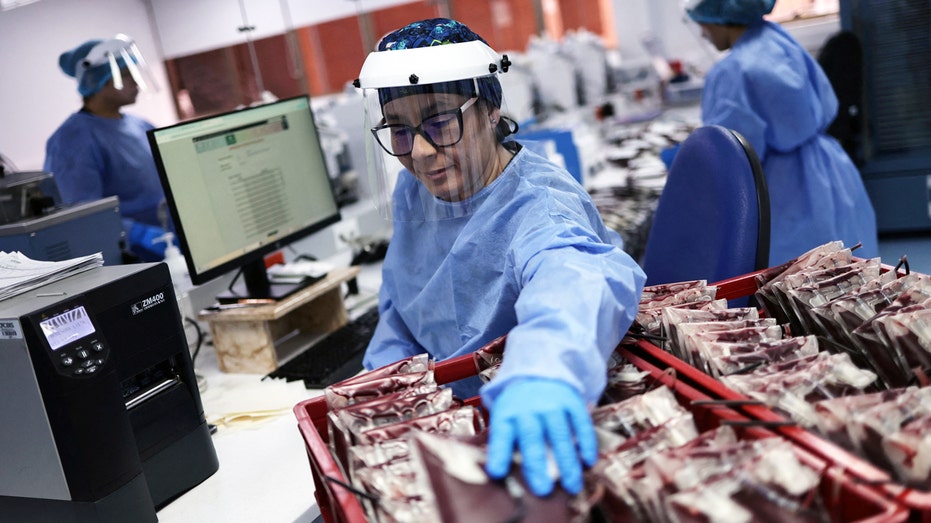
The french blood bank cyberattack targeted critical refrigeration systems at three regional facilities, attempting to compromise life-saving medical supplies by manipulating temperature controls to extreme levels. This incident, which occurred between Sunday and Monday of this week, marks a significant escalation in cyber-physical threats aimed at essential infrastructure. While the French Blood Establishment (EFS) successfully prevented the loss of blood products through rapid manual intervention, the breach has exposed deep vulnerabilities in the interconnected systems used to monitor and maintain temperature-sensitive medical and food supplies.
Key Takeaways
- Critical Threat Mitigated: Hackers attempted to raise temperatures in French blood bank refrigerators to 110°C (230°F), but staff moved supplies before damage occurred.
- Wider European Pattern: The attack coincides with a wave of refrigeration-related cyberattacks across eight European countries, heavily impacting supermarkets.
- Massive Economic Impact: The Dutch supermarket chain Ahold Delhaize expects the recent wave of attacks to reduce quarterly sales by as much as €250 million ($281 million).
- Technical Vulnerability: The refrigeration provider Coolworld identified a vulnerability linked to a third-party component, highlighting the risks of complex supply chains.
- Global Context: Similar refrigeration failures were reported at at least six U.S. military commissaries in August, prompting federal investigations.
- The French Investigation Results: The findings from the French Health Ministry and the cybersecurity agency will be crucial in determining whether the EFS breach was a result of a specific software flaw or a broader systemic failure in how third-party components are vetted.
- U.S. Military Findings: The conclusion of the investigation into the August commissary failures will provide a clearer picture of whether the United States is facing the same pattern of cyber-physical targeting as Europe.
- New Security Standards for IoT: Expect increased pressure on companies like Coolworld and other industrial IoT manufacturers to provide more transparent security documentation and to undergo more rigorous third-party auditing.
- Legislative Action: Governments may move to mandate stricter cybersecurity protocols for any company managing critical supply chains, including food and medical resources.
- www.foxbusiness.com
- www.dw.com
What Happened: The Attack on the EFS
On Wednesday, French authorities confirmed that the French Blood Establishment (EFS) was the victim of a “cybersecurity incident” that specifically targeted the monitoring and control systems of cold storage units. The attack was aimed at three regional facilities responsible for the storage of plasma and blood samples.
According to reports from the French weekly newspaper Le Canard Enchaine, the attackers did not merely attempt to turn the cooling systems off. Instead, they attempted to program the temperature controls to reach a boiling 110°C (230°F). This is a staggering departure from the required storage temperature of -30°C (-22°F). If the attackers had succeeded in maintaining these temperatures, the entire stock of plasma and blood samples at those sites would have been rendered useless, potentially creating a localized medical crisis.
Charley Dubois, a spokesperson for the EFS, told Reuters that the organization’s 24-hour rotation of staff was instrumental in preventing a catastrophe. “We have staff round the clock since blood can be needed at any time. They were warned about the problems by alerts and moved the blood to other refrigerators that were not connected,” Dubois stated. The EFS confirmed that no health consequences have been identified and no blood products were lost during the incident.
In response to the breach, the French Health Ministry disabled all remote access to the affected refrigeration systems. While an investigation by the French cybersecurity agency is currently underway, officials have not yet identified the specific group or individual responsible for the intrusion.
A Pattern of European Disruption
The attack on the EFS does not appear to be an isolated event. It is part of a coordinated or at least highly similar pattern of cyberattacks targeting refrigeration and cold-storage systems across the European continent.
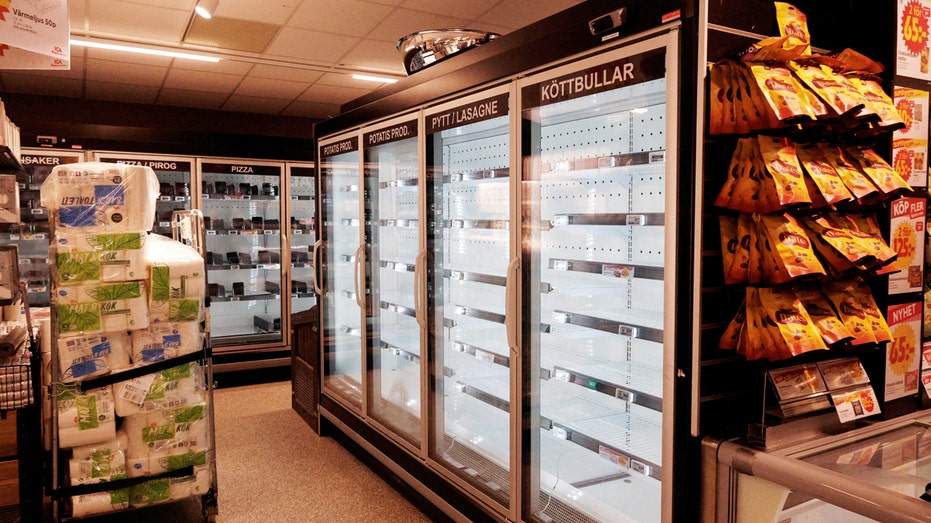
On Sunday and Monday, a series of attacks hit the refrigeration systems of supermarkets in several countries, including France and Germany. These attacks reportedly caused systems to enter a “defrost mode,” a setting intended for maintenance that raises internal temperatures and leads to the rapid spoilage of perishable goods. This method of attack is particularly insidious because it uses the system’s own legitimate functions to cause physical damage.
Regional Impact Summary
| Region / Sector | Specific Impact | Reported Damage or Loss |
|---|---|---|
| French Blood Banks (EFS) | 3 regional facilities targeted | No blood products lost; operations continued |
| Belgian & Luxembourg Retail | ~40 Delhaize supermarkets affected | Significant food waste and spoilage |
| European Supermarkets | 8 countries affected (incl. Sweden, Ireland, Netherlands, Estonia, Finland) | Millions of euros in wasted food |
| French Supermarkets | Major chains (Carrefour, Monoprix, etc.) hit last month | Temperatures reached 122°F in some instances |
| Ahold Delhaize | Quarterly sales disruption | Estimated €250 million ($281 million) loss |
| U.S. Military Commissaries | 6 locations experienced failures in August | Currently under federal investigation |
In Belgium and Luxembourg, approximately 40 Delhaize supermarkets were impacted by the recent wave of attacks. The economic fallout for the retail sector has been profound. The Dutch supermarket giant Ahold Delhaize reported on Wednesday that the disruptions, which began in October, are expected to impact their quarterly sales by as much as €250 million. Franz Muller, the CEO of Ahold Delhaize, noted that while most of the disruption was contained within two weeks, the company is still working to fully restore normal operations.
The Technical Root: Third-Party Vulnerabilities
The EFS incident has placed intense scrutiny on the hardware and software used to manage industrial cooling. Coolworld, the company that supplies the refrigeration equipment used by the affected facilities, addressed the breach directly. The company stated that the vulnerability was not within its own direct software but was related to a component provided by a “third-party supplier.”
This highlights a critical weakness in modern industrial infrastructure: the complexity of the supply chain. Even if a primary vendor like Coolworld maintains high security standards, a single insecure component from a secondary or tertiary vendor can provide an entry point for hackers. In the context of the Internet of Things (IoT), where temperature sensors, controllers, and remote monitoring tools are increasingly connected to the internet for convenience and efficiency, the “attack surface” for hackers has expanded exponentially.
The Shift to Cyber-Physical Warfare
Security experts are increasingly concerned that these incidents signal a shift in the motivations and methods of cybercriminals and state-sponsored actors. Traditionally, cyberattacks focused on data theft—stealing credit card numbers, intellectual property, or personal identities. However, the attacks on European supermarkets and French blood banks represent a move toward “cyber-physical” attacks.
In a cyber-physical attack, the goal is to use digital means to cause tangible, physical damage or disruption in the real world. By targeting the temperature of a refrigerator, an attacker can destroy food, ruin medicine, or even damage industrial machinery, all without ever needing to access a single database of sensitive information. The impact is immediate, highly visible, and can cause significant economic and social instability.
Nicole Parker, a former FBI special agent, emphasized the gravity of this trend during an interview with Fox News Digital, stating, “What we’re seeing right now is in Europe and other places, but it can very well happen on our soil.”
This sentiment is echoed by the ongoing investigations in the United States. The U.S. Army Criminal Investigation Division’s Cyber Field Office, working alongside the Defense Commissary Agency and the Defense Criminal Investigative Service, is currently investigating refrigeration failures that occurred at a minimum of six military commissaries in August. While the cause of those failures has not been officially linked to a cyberattack, the timing and similarity to the European incidents have heightened concerns among U.S. defense and security officials.
What It Means for You
Depending on your role in society, these developments carry different implications:
For Healthcare Providers and Patients
If you work in a medical facility, the reliability of cold-chain logistics is paramount. The EFS incident demonstrates that while automated systems are efficient, they are not infallible. The ability of staff to recognize anomalies and perform manual overrides is currently the most effective defense against such attacks. For patients, this underscores the need for hospitals to maintain rigorous contingency plans for the storage of temperature-sensitive medications and blood products.
For Retailers and Food Suppliers
For those in the grocery and food distribution industries, the financial risks are no longer just about data breaches. A single successful attack on refrigeration can lead to millions of euros in lost inventory. Companies must evaluate not only their own network security but also the security protocols of their hardware vendors and third-party component suppliers. Implementing “air-gapping”—physically isolating critical control systems from the public internet—may become a necessary, albeit more expensive, standard for high-stakes refrigeration.
For Investors and Consumers
Investors should be aware that the “cyber risk” profile for retail and healthcare companies has changed. Physical operational disruptions can now be triggered remotely, leading to sudden and significant quarterly losses, as seen with Ahold Delhaize. For consumers, these attacks may lead to increased prices for perishable goods as companies pass on the costs of wasted inventory and enhanced security measures.

Counterpoints and Open Questions
While the evidence points toward a coordinated pattern of attacks, several questions remain unanswered. First and foremost is the question of attribution. While the FBI has recently linked a massive $6.3 billion cryptocurrency heist at Binance to a North Korean network, no such definitive link has been made regarding the refrigeration attacks. It remains unclear whether these are the work of organized criminal syndicates looking for ransom, or state-sponsored actors conducting “stress tests” on Western critical infrastructure.
Furthermore, there is a debate regarding the best way to secure these systems. Some experts argue for increased connectivity and advanced AI-driven monitoring to detect anomalies faster. Others argue that the only way to truly secure critical infrastructure is to move away from remote access entirely, returning to more manual, isolated systems that are inherently immune to remote hacking. The tension between operational efficiency and absolute security remains a central challenge for the industry.
What Happens Next
Several key developments will determine how the world responds to this new threat:
Frequently Asked Questions
How did the French blood bank prevent the loss of blood products?
The French Blood Establishment (EFS) relied on its 24-hour monitoring and alarm systems to detect the temperature anomalies. When the systems signaled that temperatures were rising toward the programmed 110°C, staff were able to respond immediately by manually moving the blood and plasma samples into alternative, non-connected refrigeration units. This rapid human intervention was the primary reason no medical supplies were lost.
What is the difference between a standard cyberattack and a cyber-physical attack?
nA standard cyberattack typically targets digital assets, such as stealing passwords, encrypting files for ransom, or accessing private data. A cyber-physical attack uses digital access to manipulate physical hardware or systems. In this case, the attackers used digital access to change the physical temperature of refrigerators, intending to cause physical spoilage of food and medical supplies.
Why are supermarkets such frequent targets for these attacks?
Supermarkets represent a massive, decentralized network of connected devices (IoT) that are essential to the daily functioning of society. Because they rely heavily on automated, remote-monitored refrigeration to manage vast amounts of perishable inventory, they offer a high-impact target for attackers. Disrupting these systems can cause immediate, widespread economic damage and food shortages, making them attractive targets for both criminals and state actors.
Is my food or medical supply at risk from these attacks?
While these specific attacks targeted certain regions in Europe and specific sites in the U.S., the vulnerability is a global one. As more critical infrastructure becomes connected to the internet for efficiency, the risk of similar attacks increases. However, the successful mitigation of the EFS attack shows that robust monitoring and rapid response protocols can effectively protect the supply chain from these types of threats.
As the investigation into the French blood bank cyberattack continues, it serves as a stark reminder that the boundary between the digital and physical worlds is increasingly porous
References
Featured image: Image via Fox Business