The German regional elections held on September 20, 2026, have triggered a significant political crisis for Chancellor Friedrich Merz and his conservative Christian Democratic Union (CDU), following historic losses in two key states.
Key Takeaways
- Historic CDU Defeat: The CDU suffered its worst electoral performance in Mecklenburg-Western Pomerania since World War II, failing to meet the threshold required for parliamentary representation.
- Far-Right Surge: The Alternative for Germany (AfD) secured a dominant 38.2% of the vote in the northeastern state of Mecklenburg-Western Pomerania and 16.3% in Berlin.
- Far-Left Victory in Berlin: Die Linke achieved its best-ever result in the capital, winning 25.7% of the vote and positioning itself as a major power in coalition talks.
- Chancellor’s Defiance: Despite the losses and calls for resignation, Friedrich Merz has vowed to maintain his federal agenda of tax and welfare reforms.
- Political Fragmentation: The rise of radical parties on both the left and right is complicating the ability of mainstream parties to form stable governing coalitions.
- Voters in Berlin: Expect intense negotiations over housing policy. If Die Linke successfully enters a coalition, residents may see more aggressive interventions in the real estate market, including potential rent controls and changes to corporate property ownership.
- Investors and Businesses: The volatility in the CDU and the rise of radical parties may lead to uncertainty regarding long-term fiscal policy. While Merz intends to push through tax reforms, the difficulty of forming stable coalitions could delay or dilute these legislative efforts.
- Residents of Mecklenburg-Western Pomerania: The lack of CDU representation in the state parliament may lead to a shift in how local conservative interests are represented, as the political focus moves toward the AfD and SPD dynamics.
- Federal Citizens: The instability at the state level often precedes shifts at the national level. The ability of the federal government to implement its agenda will depend heavily on whether Merz can stabilize his party before the next federal election.
- Can Die Linke govern? In Berlin, Elif Eralp must form a government with at least two other parties. Finding partners willing to support her more radical housing policies will be a significant challenge.
- Will Merz’s reforms pass? Even if Merz remains Chancellor, his ability to pass tax and welfare reforms depends on a federal coalition that is already struggling with consensus.
- Is the AfD’s surge sustainable? While the party has made massive gains, it remains isolated from formal government power in most regions, raising questions about how it will translate electoral success into actual policy influence.
- www.npr.org
- www.npr.org
What Happened
On Sunday, September 20, 2026, voters in Mecklenburg-Western Pomerania and the city-state of Berlin went to the polls to elect their respective parliaments. The results, released via exit polls on Sunday night, revealed a dramatic shift in the German political landscape.
In the rural, northeastern state of Mecklenburg-Western Pomerania, the Alternative for Germany (AfD) emerged as the clear winner with 38.2% of the vote. The Social Democrats (SPD), led by incumbent governor Manuela Schwesig, came in second with 35%. The CDU, the party of the federal Chancellor, suffered a catastrophic collapse, receiving only 4.9% of the vote. This result is significant not only because of its low percentage but because it falls below the legal threshold required to prevent fringe parties from entering parliament, effectively leaving the CDU without representation in the state legislature.
In Berlin, the results were equally transformative for the city’s political structure. The far-left Die Linke secured a historic victory, capturing 25.7% of the vote—the party’s highest share ever. This placed them seven percentage points ahead of the CDU, which trailed with 18.7%. The AfD also maintained a strong presence in the capital, securing 16.3% of the vote.
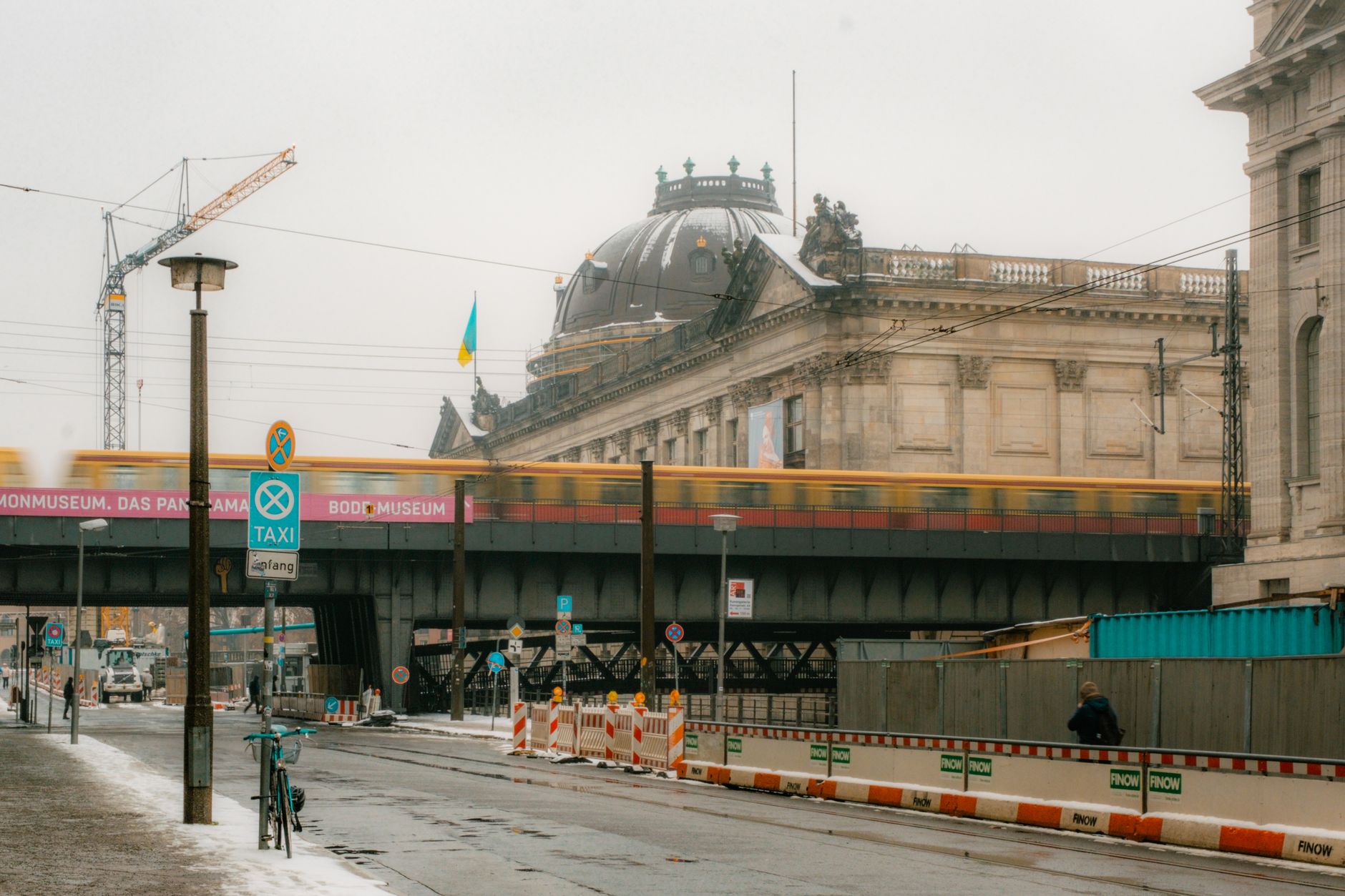
Chancellor Friedrich Merz was notably absent from his planned trip to the United Nations General Assembly in New York. Instead, he remained at the CDU headquarters in Berlin to address the fallout of the election night. Merz described the results as a “disaster” for the political center but immediately pivoted to defending his leadership.
Why It Matters
These German regional elections are more than just local contests; they serve as a bellwether for the stability of the federal government and the health of Germany’s centrist political tradition. The results indicate a widening gap in the electorate, where voters are increasingly abandoning mainstream, centrist parties in favor of more radical alternatives.
According to NPR reporting, the rise of the AfD and Die Linke suggests that radical parties are successfully exploiting a growing decline in trust regarding state institutions. This fragmentation makes the traditional German model of governance—which relies on building consensus through multi-party coalitions—increasingly difficult to execute.
When the political center is squeezed, the ability to pass major legislation at the federal level is compromised. For Friedrich Merz, who co-governs with the SPD at the federal level, these regional defeats signal that the coalition’s popularity is waning, potentially making future federal reforms more difficult to implement.
The CDU Crisis and Merz’s Resilience
For Friedrich Merz, the election results represent a personal and political reckoning. This defeat follows a crushing loss in the state of Saxony-Anhalt just two weeks prior, raising questions about whether his leadership style is compatible with the current political climate.
Alice Weidel, the federal leader of the AfD, has been vocal in her criticism, stating that Merz is “the wrong chancellor for the CDU” and is “dragging the party down with him.” Weidel suggested that the more Merz resists calls for change, the more the AfD stands to gain from the perceived instability of the mainstream.
Despite this, Merz has shown a characteristic refusal to yield. He has framed his continued leadership as a necessity for the country, stating that his planned tax and welfare reforms are “the antidote to the poison of authoritarianism.” Merz emphasized that implementing these reforms will “require backbone, steadfastness and patience,” and he vowed to demonstrate these qualities as “chancellor of our country.”
Political analysts suggest that Merz’s survival may be due to the high bar required to remove a German Chancellor. Sudha David-Wilp of the German Marshall Fund noted to NPR that Merz is likely “loath to throw in the towel” due to his long-standing ambitions, and that the legal and political mechanisms for ousting a sitting chancellor are formidable.
Comparing the Election Results
The following table summarizes the key party performances in the two states where elections were held on September 20, 2026.
| Political Party | Mecklenburg-Western Pomerania (%) | Berlin (%) |
|---|---|---|
| AfD (Far-right) | 38.2% | 16.3% |
| Die Linke (Far-left) | Data not reported | 25.7% |
| SPD (Center-left) | 35.0% | Data not reported |
| CDU (Center-right) | 4.9% | 18.7% |
Note: Percentages are based on exit polls and reported figures from the September 20, 2026, elections.
Stakeholders and Reactions
The Far-Right: AfD
For the AfD, the results are a validation of their strategy. By gaining significant ground in both a rural state and a major urban center like Berlin, the party has demonstrated its ability to appeal to a broad demographic. Alice Weidel is leveraging the CDU‘s weakness to argue that the mainstream conservative movement is in decline, positioning the AfD as the only viable alternative for those disillusioned with the status quo.
The Far-Left: Die Linke
In Berlin, Die Linke has transformed from a niche party into a dominant political force. Leader Elif Eralp has positioned the party as a champion of social justice and an economic bulwark against the AfD. Eralp, whose parents fled Turkey following the 1980 coup d’état, has centered her platform on making the city affordable again. Her proposed policies include a strict rent cap and the seizure of apartments owned by large corporate real estate developers—policies that are expected to be central to her upcoming coalition negotiations.
The Incumbent: SPD
In Mecklenburg-Western Pomerania, the SPD‘s Manuela Schwesig managed to secure second place with 35%. While the AfD beat the SPD, the far-right is unlikely to find the coalition partners necessary to form a government. Consequently, Schwesig is expected to seek allies among other mainstream parties to remain in office, though the path to a majority is becoming increasingly narrow.
What It Means for You
The shifting political landscape in Germany has practical implications for various groups:
Counterpoints and Open Questions
While many see the CDU‘s defeat as a sign of leadership failure, some supporters argue that the party is simply caught in a broader tide of political realignment that is affecting all centrist organizations. There is an ongoing debate within the CDU about whether the party should move further to the right to compete with the AfD or attempt to reclaim the center from the SPD and Die Linke.
Several critical questions remain unanswered:
What Happens Next
In the coming days, the political focus will shift to coalition building. In Berlin, Die Linke will enter negotiations to see if a three-party majority is possible. In Mecklenburg-Western Pomerania, Manuela Schwesig will begin the process of assembling a government that can exclude the AfD while maintaining a functional majority.
On the federal stage, all eyes will be on Friedrich Merz. His ability to manage the internal fallout within the CDU and his success in navigating the upcoming legislative sessions will determine whether he can maintain his grip on the Chancellery or if the pressure for a leadership change will become insurmountable.
Frequently Asked Questions
Why did the CDU lose so many votes in Mecklenburg-Western Pomerania?
The CDU received only 4.9% of the vote, which is significantly lower than its previous performance. Analysts suggest this is due to a combination of voter dissatisfaction with the political center and a successful surge by the AfD, which captured 38.2% of the electorate in the state. The loss is part of a broader trend of declining support for traditional conservative parties in certain regions of Germany.
Can the AfD form a government in Germany?
While the AfD has seen significant electoral gains, such as winning the most votes in Mecklenburg-Western Pomerania, they are unlikely to form a government in the immediate future. This is because other mainstream parties, such as the SPD and CDU, typically refuse to enter into coalition agreements with the far-right, making it difficult for the AfD to reach the necessary parliamentary majority.
What are Die Linke’s main goals in Berlin?
Die Linke, led by Elif Eralp, is focused on addressing the cost of living in the capital. Their primary pledges include implementing a rent cap to keep housing affordable and taking action against large corporate real estate developers, which may include seizing certain apartments to increase social housing availability. These policies are central to their identity and will be key points in coalition talks.
Summary
The German regional elections of September 20, 2026, have marked a turning point in the country’s political trajectory. With the CDU facing a historic crisis and radical parties like the AfD and Die Linke making unprecedented gains, the traditional centrist dominance in German politics is under severe pressure
References
Featured image: Photo by Tahir Xəlfəquliyev on Pexels