hubble space Telescope servicing has become a critical priority for NASA as the agency turns to the private sector to prevent the iconic observatory from falling out of orbit and crashing to Earth.
Key Takeaways
- Urgent Intervention Needed: The hubble space telescope is losing altitude due to atmospheric drag and is projected to re-enter Earth’s atmosphere between 2033 and 2034.
- NASA’s commercial Call: On October 29, 2026, NASA issued a formal Request for Information (RFI) seeking commercial solutions for orbital boosting, technical upgrades, or safe decommissioning.
- Mission Deadline: To be effective, any servicing or rescue mission would likely need to be executed by 2032.
- Three Mission Profiles: NASA is exploring orbital boosting (lifting the telescope’s altitude), capability enhancement (upgrading instruments), and end-of-life management (controlled re-entry).
- Economic Shift: The initiative signals a move toward “Space Servicing, Assembly, and Manufacturing” (ISAM) models, leveraging private industry to maintain aging orbital assets.
- science.nasa.gov
- mashable.com
- gizmodo.com
- fortune.com
- www.theverge.com
What Happened
On October 29, 2026, NASA officially initiated a search for commercial industry partners to potentially extend the operational lifespan of the Hubble Space Telescope. Through a formal Request for Information (RFI), the agency is looking for private sector expertise in the capture, servicing, and orbital management of the observatory, which has been a cornerstone of astronomy since its launch in 1990.
The RFI, which remains open until November 30, 2026, at 3:00 p.m. ET, seeks to identify whether the rapidly evolving commercial space sector can provide the technical capabilities required to manage Hubble’s declining orbit. According to NASA, the telescope lacks an onboard propulsion system, leaving it vulnerable to the constant pull of atmospheric drag.
NASA Administrator Jared Isaacman emphasized the necessity of this exploration, stating that the agency owes it to both the American taxpayer and the scientific community to find “innovative and cost-effective ways to extend the life of an asset already on orbit.” While several outlets, including Gizmodo and Fortune, identify Isaacman as the NASA Administrator, some reports have noted discrepancies regarding his official title, though the agency’s official communications proceed with this designation.
Why It Matters
For over 35 years, the Hubble Space Telescope has fundamentally altered humanity’s understanding of the universe. Its potential loss would mean the end of a continuous stream of groundbreaking scientific data. However, the stakes are not merely scientific; they are also logistical and safety-oriented.
Without intervention, Hubble is on a trajectory toward an uncontrolled atmospheric re-entry, which could occur as early as 2033 or 2034. An uncontrolled descent of a massive piece of space hardware poses a risk of debris hitting populated areas. By seeking commercial partners, NASA aims to transform a potential catastrophe into a controlled mission—either by boosting Hubble back to a stable altitude or by guiding it to a safe, controlled crash site, such as the middle of the ocean.
Furthermore, this move represents a significant shift in how NASA manages its aging infrastructure. With the Space Shuttle fleet decommissioned and no longer available for the type of high-altitude servicing missions performed in the past, NASA must look toward the “new space” economy to bridge the gap between its current assets and future flagship missions.
The Physics of Decay: Why Hubble is Falling
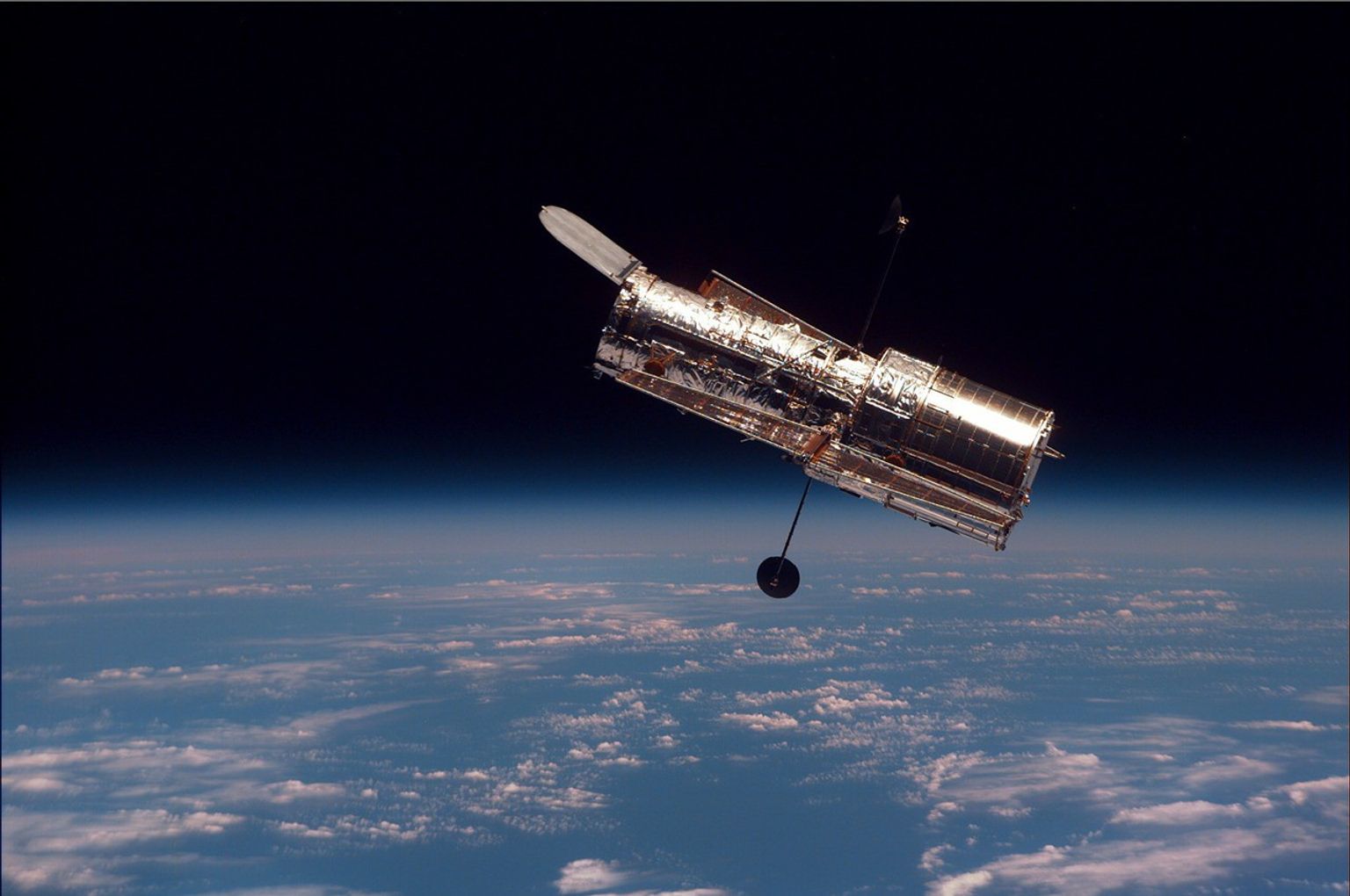
Even in low Earth orbit, space is not a perfect vacuum. The Hubble Space Telescope is subject to atmospheric drag, where thin layers of the Earth’s atmosphere interact with the telescope’s structure. This drag acts as a subtle but constant brake, slowly stripping the observatory of its orbital velocity.
As Hubble loses velocity, its altitude decreases. This creates a feedback loop: as the telescope gets closer to Earth, the atmosphere becomes denser, increasing the drag and accelerating the rate of descent. Because Hubble was not designed with an onboard propulsion system to counteract this drag, it cannot correct its own course.
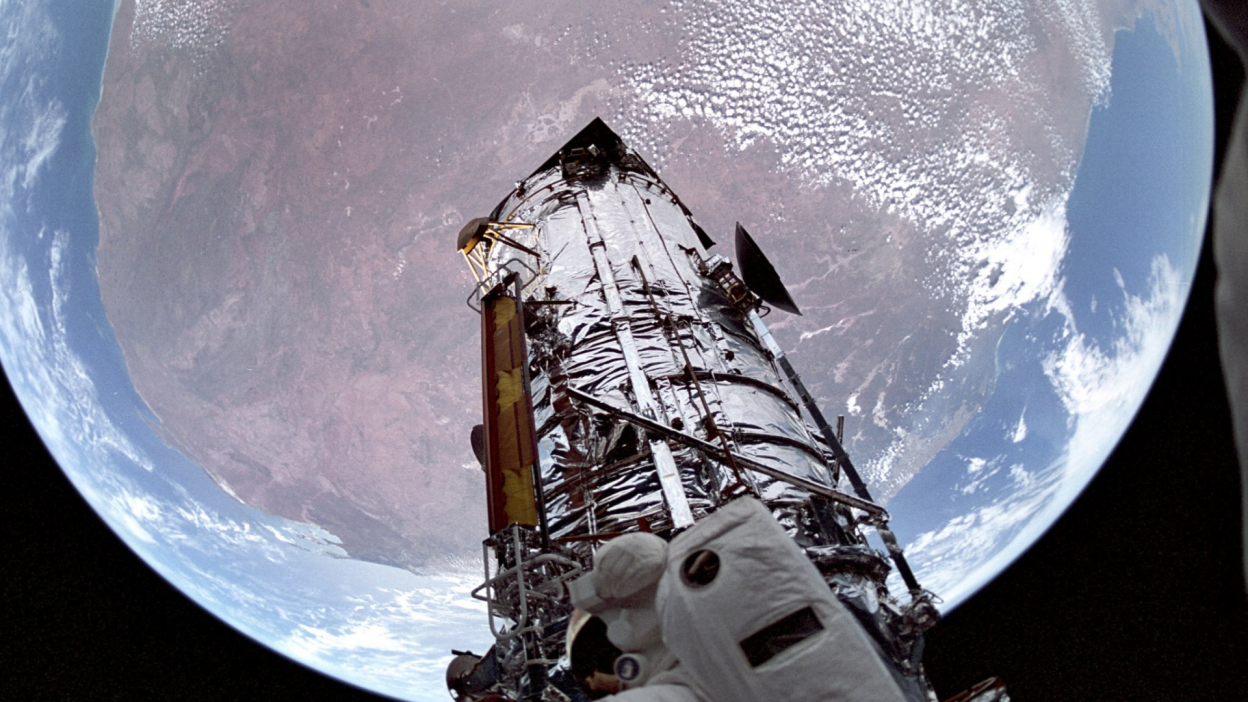
Historically, NASA addressed this issue through human-led servicing missions. For example, in 2002, the Space Shuttle Columbia (mission STS-109) successfully provided a “nudge” that increased Hubble’s orbit and extended its life. However, the era of the Space Shuttle has ended, leaving a capability gap that NASA hopes the commercial sector can fill.
Mission Profiles for Hubble Space Telescope Servicing
NASA’s RFI outlines three distinct paths for commercial entities to propose. These profiles range from life-extension efforts to responsible decommissioning.
| Mission Profile | Primary Objective | Potential Scientific/Safety Outcome |
|---|---|---|
| Orbital Boosting | Lifting Hubble to a higher altitude (target: >373 miles / 600 km) | Significant extension of the telescope’s scientific lifespan |
| Capability Enhancement | Performing technical servicing to upgrade or improve existing instruments | Enhanced data quality and expanded scientific capabilities |
| End-of-Life Management | Executing a safe, controlled re-entry or orbital disposal | Mitigation of risks associated with uncontrolled debris descent |
Stakeholders and Perspectives
The effort to save Hubble involves a complex web of government agencies, private corporations, and the global scientific community.
NASA and International Partners
NASA, in collaboration with the European Space Agency (ESA), remains the primary steward of the telescope. Associate Administrator Nicky Fox, of NASA’s Science Mission Directorate, noted that the commercial industry’s rapid evolution in satellite capture and servicing makes this a timely opportunity. She highlighted that the agency is eager to explore these possibilities while simultaneously developing the next generation of flagship missions.
The Commercial Space Sector
Companies like SpaceX and Rocket Lab are frequently cited as potential collaborators. SpaceX has demonstrated significant reliability in orbital operations and astronaut rescue missions, such as the recent recovery of Suni Williams and Butch Wilmore. Rocket Lab is noted for its expertise in rocket recovery and launch capabilities.
However, the involvement of the private sector is not without debate. Some industry analysts, such as Tejpaul Bhatia, CEO of Nebex, argue that the current “commercial” space market relies too heavily on government subsidies. Bhatia suggests that for the industry to truly mature, NASA should act as a market architect, creating infrastructure that allows for a self-sustaining commercial economy rather than just acting as a single “anchor tenant.”
The Scientific and Taxpayer Interest
For the global scientific community, the priority is continuity. Every year Hubble remains operational is another year of potential discoveries regarding the expansion of the universe and the nature of dark matter. For taxpayers, the focus is on cost-effectiveness. NASA leadership has framed the RFI as a way to maximize the return on previous investments by extending the life of an existing asset rather than immediately funding a multi-billion-dollar replacement.
The Economic and Political Landscape
NASA’s pursuit of commercial servicing comes at a time of significant budgetary tension. While NASA seeks to innovate through private partnerships, critics point to the massive, ongoing contracts awarded to private defense and space firms by the Pentagon and the Space Force.
Some editorial perspectives suggest a disparity in how civilian science agencies are funded compared to military space programs. This tension highlights a broader question in the space economy: how to balance the pursuit of pure scientific discovery with the increasingly lucrative and well-funded demands of national defense and orbital commerce.
What It Means for You
If you are an investor in the space sector:
Expect a shift in focus toward “Space Servicing, Assembly, and Manufacturing” (ISAM). The Hubble RFI is a signal that the market for orbital maintenance, satellite capture, and debris management is moving from theoretical to highly practical. Companies that can demonstrate reliable robotic capture and orbital maneuvering will be well-positioned for future government contracts.
If you are a researcher or astronomer:
The next five to ten years are critical. The success of a commercial servicing mission by 2032 will determine whether your current research projects can continue using Hubble’s unique vantage point or if you must transition entirely to newer, ground-based or next-generation space-based observatories.
If you are a concerned citizen:
The successful management of Hubble’s end-of-life is a matter of public safety. A controlled decommissioning mission ensures that decades-old space hardware does not become an unpredictable hazard during its descent through the atmosphere.
Counterpoints and Open Questions
While the plan to use commercial partners is promising, several significant challenges remain:
Technical Complexity: Capturing and maneuvering a decades-old, non-propulsive telescope is an “astonishingly difficult challenge.” The mission requires extreme precision to ensure that the capture process does not damage Hubble’s sensitive optical instruments.
The “Myth” of the Commercial Market: As noted by industry experts like Tejpaul Bhatia, there is an ongoing debate about whether the space industry is truly self-sustaining. If commercial space servicing relies entirely on NASA’s procurement power, it may not lead to the robust, independent market that proponents hope for.
| Budgetary Constraints: NASA’s ability to fund these missions is limited. The agency must balance the cost of a Hubble rescue mission against the development of future flagship observatories.
Uncertainty of Success: Unlike a new launch, servicing an existing, aging asset carries inherent risks. A failed capture attempt could potentially accelerate Hubble’s decay or cause it to tumble, making future intervention impossible.
What Happens Next
The immediate milestone is November 30, 2026, when the window for industry responses to the RFI closes. NASA will then begin evaluating the technical and financial feasibility of the proposals submitted.
Looking further ahead, the critical window for action is 2032. If a servicing mission is to be successful in extending Hubble’s life, it must be executed by this year. If no viable commercial solution is found, the scientific community must prepare for the telescope’s atmospheric re-entry, forecasted to occur between 2033 and 2034.
Frequently Asked Questions
Why is the Hubble Space Telescope falling toward Earth?
Hubble is in low Earth orbit, where it encounters trace amounts of the Earth’s atmosphere. This causes “atmospheric drag,” a friction-like force that slowly reduces the telescope’s orbital velocity. Because Hubble does not have its own engines to correct this loss of speed, its altitude steadily decreases over time.
How can a commercial company “save” the telescope?
NASA is looking for companies that can perform an “orbital boost.” This involves a spacecraft capturing Hubble and using its own propulsion to lift the telescope into a much higher, more stable orbit—at least 373 miles (600 km) higher. Alternatively, companies could propose ways to upgrade Hubble’s hardware to keep it scientifically relevant for longer.
What happens if Hubble is not saved?
If no intervention occurs, Hubble’s orbit will continue to decay until it reaches the denser parts of the atmosphere. At that point, it will undergo re-entry. NASA’s goal is to ensure this re-entry is controlled—meaning the telescope is guided to a safe location like the ocean—to prevent uncontrolled debris from falling onto populated areas.
Is this the first time Hubble has been serviced?
No. In the past, NASA used the Space Shuttle to perform servicing missions. The most notable was in 2002, when the Space Shuttle Columbia* helped boost Hubble’s orbit. However, because the Shuttle fleet is no longer operational, NASA must now look to the private sector for similar capabilities.
NASA’s move to engage the commercial sector for Hubble Space Telescope servicing marks a pivotal moment in the history of space exploration
References
Featured image: Image via Mashable