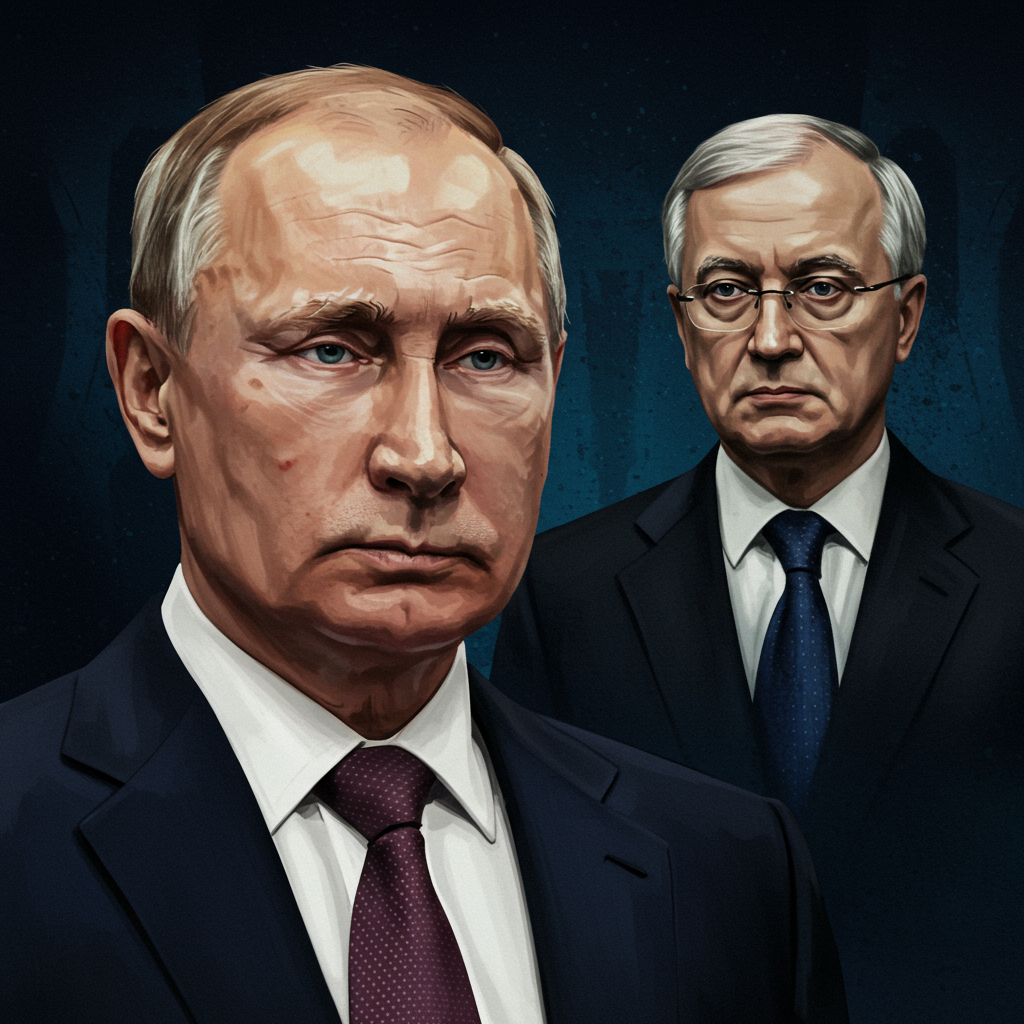
The <a href="https://news.quantosei.com/2025/07/07/russian-minister-dies-by-suicide-hours-after-getting-fired-by-putin-officials-say-2/” title=”Breaking: Russian Minister Dies by Suicide After Putin Firing”>death of a former Russian transport minister, Roman starovoit, under suspicious circumstances has reignited scrutiny over a recurring pattern of sudden, unexplained deaths among Russian officials and prominent business figures. Reports from Moscow indicate Starovoit was found deceased from a gunshot wound just hours after President Vladimir Putin officially removed him from his ministerial post. While state media and official sources quickly pointed to suicide as the likely cause, the timing and nature of his death have fueled widespread skepticism among Western observers and Kremlin critics.
This incident adds another name to a growing list of high-profile Russians whose lives have ended abruptly, often in ways officially deemed suicides or accidents like falls from windows. The circumstances surrounding Starovoit’s death remain under investigation, but the lack of clear, consistent explanations only deepens the mystery surrounding the fates of those who fall out of favor or become entangled in Russia’s opaque political and economic landscape.
Former Minister Found Dead After Swift Dismissal
Roman Starovoit, aged 53, was discovered with a fatal gunshot wound inside his private vehicle in Odintsovo, a neighborhood near Moscow. The discovery was reported mere hours after a presidential decree formally dismissed him as Minister of Transport. The Investigative Committee, Russia’s primary federal investigative authority, initiated a probe into the death. A spokesperson for the committee, Svetlana Petrenko, publicly stated that suicide was being considered the primary theory.
A firearm, reportedly a gun awarded to Starovoit as an official gift by the Ministry of Internal Affairs in 2023, was reportedly found next to his body in the car. Despite the swift dismissal preceding his death, Kremlin spokesman Dmitry Peskov denied that the sacking was due to a “loss of trust.” However, no alternative official reason for his sudden removal was initially provided.
Context of Dismissal: Transport Chaos and Corruption Allegations
Starovoit’s dismissal followed a period of significant disruption within Russia’s transportation sector. In the days immediately preceding his sacking, hundreds of flights were grounded or severely delayed at major Russian airports like Sheremetyevo and Pulkovo. These disruptions were attributed to security threats, including Ukrainian drone attacks impacting air traffic control systems. Adding to the crisis, an explosion on an oil tanker caused an ammonia leak at the Ust-Luga port in Leningrad Oblast shortly before Starovoit’s removal was announced. Starovoit had only been appointed transport minister relatively recently, in May 2024.
Beyond the immediate transport sector issues, Russian media outlets have strongly linked Starovoit’s dismissal and subsequent death to an ongoing criminal investigation. Reports suggest he was a person of interest in a probe concerning the alleged embezzlement of state funds. These funds were earmarked for constructing defensive fortifications in the Kursk region, where Starovoit previously served as governor.
The Kursk Fortification Scandal
The investigation into corruption in Kursk is significant. Media reports indicate that Aleksei Smirnov, who served as Starovoit’s deputy in Kursk and briefly as acting governor, had been arrested earlier on suspicion of embezzling around 1 billion rubles (over $12 million). Smirnov had reportedly provided testimony that implicated Starovoit in the scheme. Several other former deputies who served under Starovoit in Kursk also remain under suspicion in the ongoing probe into large-scale theft of state funds.
This alleged corruption and the resulting deficiencies in defensive structures gained particular prominence following a “stunning” Ukrainian incursion into the Kursk region in August 2024. Ukrainian mechanized units reportedly overwhelmed Russian border guards and conscripts, resulting in hundreds of Russian soldiers being taken prisoner. This event was described as a humiliating setback for the Kremlin and marked the first time Russian territory had been occupied by an invader since World War II. The timing of Starovoit’s death amid an investigation potentially linking him to the failure to adequately fortify the region has raised many questions.
A Disturbing Pattern of Mysterious Deaths
Roman Starovoit’s death is not an isolated incident. It fits into a disturbing pattern of high-profile Russians, including officials, businessmen, and figures linked to state corporations, dying under unusual or officially unexplained circumstances since the start of Russia’s full-scale invasion of Ukraine in February 2022. Many of these deaths have been officially ruled suicides or accidents. Still, the sheer frequency and circumstances often lead to skepticism among international observers and critics of the Russian government.
Notable examples include:
Ravil Maganov (67): Chairman of Lukoil, Russia’s second-largest oil producer. Died September 1, 2022, after reportedly falling from a hospital window in Moscow.
Pavel Antov (65): Wealthy politician and United Russia party member. Died December 25, 2022, after falling from a hotel window in India. He had reportedly criticized the war briefly before retracting the statement.
Ivan Sechin (35): Son of Rosneft chief Igor Sechin. Died February 5, 2024, officially after complaining of kidney pains.
Artur Pryakhin (56): Head of the Federal Antimonopoly Service in Karelia and former police colonel. Found dead February 4, 2024, after falling from a fifth-floor office window, officially ruled a suicide with a note found.
Alexey Zubkov: Investigative Committee Colonel. Survived a fall from a fourth-floor office window in Moscow on February 4, 2024, reportedly with no memory of the fall.
Vitaly Robertus (53): Vice president of Lukoil. Died March 13, 2024, reportedly found hanged in his Moscow office.
Buvaisar Saitiev (49): Former Olympic wrestler and Putin ally. Reportedly found dead March 2, 2025, after falling from a window.
Dzianis Sidarenka (48): Ambassador of Belarus to Germany. Died June 24, 2024, after falling out of a window in Minsk.
Georgy Chibisov (44): Marketing director of the Moscow Exchange. Died July 27, 2024, reportedly found drowned after falling off a cruise ship.
Mikhail Rogachev (64): Former vice president at Yukos. Died October 24, 2024, after falling out of his apartment window.
- Andrei Badalov (62): Vice president of state-controlled pipeline company Transneft. Died July 4, 2025, found below a window. Police described his death as suicide.
- www.smh.com.au
- kyivindependent.com
- timesofindia.indiatimes.com
- euroweeklynews.com
- www.newsweek.com
The striking frequency of these incidents, particularly falls from windows, has led to cynical remarks. Former financier and Kremlin critic Sir William Browder has famously quipped that “Windows are very dangerous in Russia.”
Skepticism and Alternative Theories
Western analysts and human rights advocates often treat the official explanations for these deaths with deep suspicion. Critics frequently suggest that some of these deaths may not be genuine suicides or accidents but could instead be orchestrated by Russian security services acting on orders. The motive could range from silencing potential witnesses in corruption cases to eliminating perceived threats or simply exerting pressure on other figures within the elite.
Ukrainian military analyst Ivan Stupak has suggested that security agencies might orchestrate such deaths as a form of brutal coercion. He theorizes that individuals facing potential arrest and ruin might be presented with a choice: an orchestrated “suicide” that preserves their family and assets from confiscation, or facing imprisonment and destitution. This theory adds a chilling layer to the narrative surrounding these untimely demises.
Adding a specific element of confusion to Starovoit’s death, Andrei Kartapolov, head of the State Duma Defense Committee, reportedly told Russian media outlet RTVI that Starovoit had killed himself “quite a while ago.” This statement led some Russian media to speculate that he might have died before President Putin’s decree dismissing him was even published. This ambiguity in the timeline further complicates the official narrative. Meanwhile, Starovoit’s deputy, Andrey Nikitin, has been appointed as the acting transport minister following the official dismissal.
The death of Roman Starovoit, coming immediately after his removal from a sensitive ministerial post and amid allegations of corruption linked to critical defense infrastructure, underscores the unpredictable and often perilous nature of holding power and wealth within Russia’s political system, especially during times of conflict and heightened internal scrutiny.
Frequently Asked Questions
What are the official circumstances reported regarding Roman Starovoit’s death?
Official reports state that Roman Starovoit, the former Russian Transport Minister, was found dead in his car near Moscow from a gunshot wound shortly after his dismissal by President Putin. Russia’s Investigative Committee has launched a probe, with suicide being stated as the main theory under consideration. An official gift firearm was reportedly found near his body.
Why is Roman Starovoit’s death considered ‘mysterious’ and linked to other cases?
Starovoit’s death is viewed with skepticism due to its timing, occurring mere hours after his sudden dismissal, and its place within a broader, frequent pattern of unexpected deaths among Russian officials and businessmen since 2022. Many of these other cases were also officially ruled suicides or accidents, like falls from windows, but their regularity and the victims’ connections to sensitive areas (like state corporations or past criticisms of the war) lead international observers to suspect foul play potentially orchestrated by security services.
What were the alleged reasons or investigations potentially linked to Starovoit’s dismissal and death?
While the Kremlin stated Starovoit’s dismissal was not due to a “loss of trust,” Russian media widely reported his removal was linked to an ongoing investigation into alleged embezzlement. This probe focuses on state funds allocated for building fortifications in the Kursk region, where Starovoit previously served as governor. The alleged corruption is also reportedly connected to deficiencies in defenses during a Ukrainian incursion in August 2024. Additionally, Starovoit’s dismissal followed recent disruptions at major Russian airports attributed to security threats.
The death of Roman Starovoit serves as a stark reminder of the precarious position of individuals within the Russian power structure, particularly when faced with dismissal, scrutiny, or potential involvement in corruption probes, adding another layer to the ongoing narrative of mysterious demises within the country’s elite.
Word Count Check: 1191