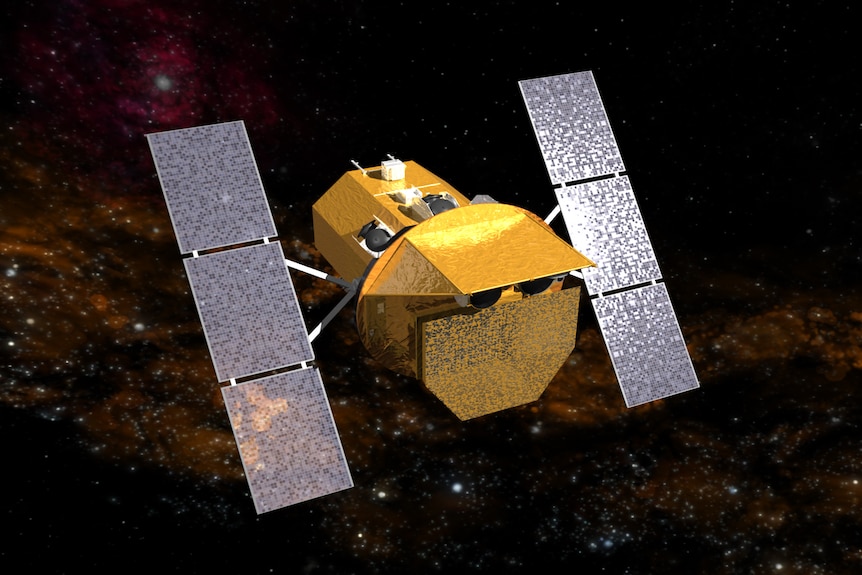
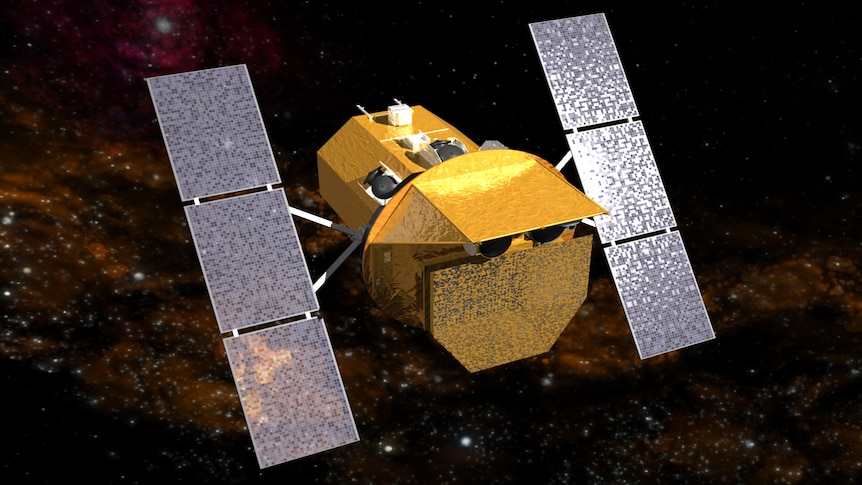
The NASA swift telescope crash over northern Sumatra, Indonesia, on November 4, 2026, marks the definitive end of a 22-year scientific era that fundamentally reshaped our understanding of the high-energy universe.
Key Takeaways
- Atmospheric Re-entry: The 3,200-pound Neil Gehrels Swift Observatory re-entered Earth’s atmosphere at 7:39 a.m. EST on November 4, 2026.
- Failed Rescue Attempt: A $30 million private-sector mission by Katalyst space to boost the telescope’s orbit failed earlier this year.
- Exceptional Longevity: Originally designed for a two-year primary mission, Swift remained productive for over two decades.
- Scientific Legacy: The observatory successfully detected more than 2,000 gamma-ray bursts and 1,400 supernovae.
- Implications for Hubble: The loss of Swift has accelerated NASA’s planning for the potential rescue or controlled re-entry of the hubble space telescope Servicing: NASA's Plan to Save It”>hubble space telescope.
- Gamma-Ray Bursts: Over 2,000 detected and localized.
- Supernovae: Approximately 1,400 observed across various wavelengths.
- Multi-wavelength Observation: The ability to switch between gamma-ray, X-ray, and ultraviolet/optical views in roughly one minute.
- Orbital Boosting: Using a robotic craft to raise Hubble’s altitude.
- System Upgrades: Performing hardware refreshes to extend its functional life.
- Controlled Re-entry: Guiding the telescope to a safe, predetermined splashdown zone.
- Hybrid Approaches: A combination of the above strategies.
- www.abc.net.au
- timesofindia.indiatimes.com
- www.space.com
What Happened: The Final Descent of Swift
On November 4, 2026, at approximately 7:39 a.m. EST (12:39 GMT), the Neil Gehrels Swift Observatory completed its long journey through space by falling uncontrolled into Earth’s atmosphere. The re-entry occurred over northern Sumatra, Indonesia, according to data from the U.S. Space Force and satellite tracker Jonathan McDowell.
While social media began circulating videos of what appeared to be a fiery atmospheric re-entry, these sightings have yet to be independently verified. However, NASA officials had previously predicted that the majority of the minibus-sized spacecraft would disintegrate due to the intense heat of friction during its descent. Despite the 3,200-pound (1,450 kilograms) mass of the observatory, NASA estimated the statistical risk of any surviving debris harming anyone on the ground at just 1 in 2,100.
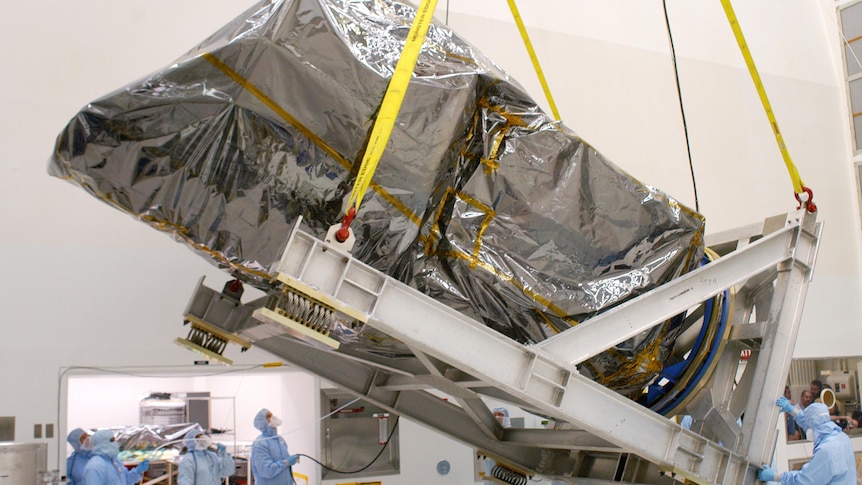
The crash follows a period of accelerating orbital decay. Because the Swift Observatory lacked its own onboard thrusters to counteract the effects of atmospheric drag, it was unable to maintain its altitude as the Earth’s upper atmosphere expanded due to increased solar activity. This environmental shift effectively pulled the telescope toward the planet, a process that had become increasingly difficult to mitigate in the final months of its operational life.
Why It Matters: A Legacy of High-Energy Discovery
The loss of the Swift Observatory is more than just the loss of a piece of hardware; it is the conclusion of a mission that provided an unprecedented window into the most violent events in the cosmos. Launched in November 2004, the telescope was initially intended to serve a primary mission of only two years. Instead, it delivered a return on investment that exceeded its design life by more than 1,000%.
According to Shawn Domagal-Goldman, director of NASA’s Astrophysics Division, the observatory “played a major role in advancing our understanding of the changing universe” and was a catalyst for a revolution in rapid-response astrophysics. Swift’s unique ability to detect and locate gamma-ray bursts (GRBs)—the most powerful explosions in the universe—within seconds allowed other observatories to pivot their instruments and capture the fading afterglows of these cosmic events.
The Scientific Impact in Numbers
Throughout its 22-year tenure, Swift’s instruments provided a massive influx of data that fueled thousands of research papers. Key achievements include:
The Failed Rescue: The High Stakes of Project “Link”
In an attempt to prevent this very outcome, NASA entered into a high-risk, high-reward partnership with the Arizona-based company Katalyst Space. In September 2025, the agency awarded the firm a $30 million contract to design, launch, and operate a robotic servicing spacecraft known as Link.
The objective was ambitious: the Link spacecraft, a refrigerator-sized vehicle equipped with three robotic arms, was intended to rendezvous with Swift in orbit. Once captured, Link would have used its propulsion systems to boost the aging observatory into a higher, more stable orbit, thereby extending its scientific life and preventing its uncontrolled descent.
However, the mission encountered critical technical hurdles. Launched on July 3, 2026, the Link spacecraft suffered significant malfunctions with its propulsion system and its orientation-maintaining reaction wheels. These failures prevented the robotic arms from successfully approaching or securing the Swift telescope. By August 2026, NASA was forced to officially abandon the rescue attempt. The Link spacecraft itself eventually crashed back to Earth in September 2026, just two months before the Swift Observatory followed suit.
Comparing the Swift and Hubble Missions
As NASA looks toward the future, the failure of the Swift rescue mission provides a stark comparison to the agency’s current concerns regarding the Hubble Space Telescope. While Swift’s descent felt like a “rush job,” as described by Nicky Fox, NASA’s Science Mission Chief, the agency has a much longer lead time to address Hubble’s orbital challenges.
| Feature | Swift Observatory | Hubble Space Telescope |
|---|---|---|
| Primary Mission Focus | Gamma-ray bursts & rapid response | General deep-space observation |
| Launch Year | 2004 | 1990 |
| Mission Status | Re-entered atmosphere (Nov 2026) | Active (Operational) |
| Cause of Orbital Decay | Atmospheric drag & solar activity | Atmospheric drag & solar storms |
| Rescue/Servicing Status | Failed (Katalyst Space Link) | Planning/Evaluating industry options |
| Projected Re-entry | N/A | Mid-2030s |
| Critical Decision Deadline | N/A | 2032 |
Deep-Dive: The Physics of Orbital Decay
To understand why the Swift telescope fell, one must understand the relationship between solar activity and Earth’s atmosphere. The spacecraft was primarily hindered by atmospheric drag. Even in low Earth orbit, there are trace amounts of gas that create friction against a moving object.
This drag is not constant. During periods of intense solar activity, such as solar flares or coronal mass ejections, the Earth’s upper atmosphere absorbs significant energy and expands outward. This expansion increases the density of the gases at the altitudes where satellites like Swift operate. As the density increases, the drag increases, slowing the spacecraft down. Because Swift lacked an independent propulsion system to perform regular “station-keeping” maneuvers, it was unable to correct its altitude, leading to a terminal spiral toward the planet.
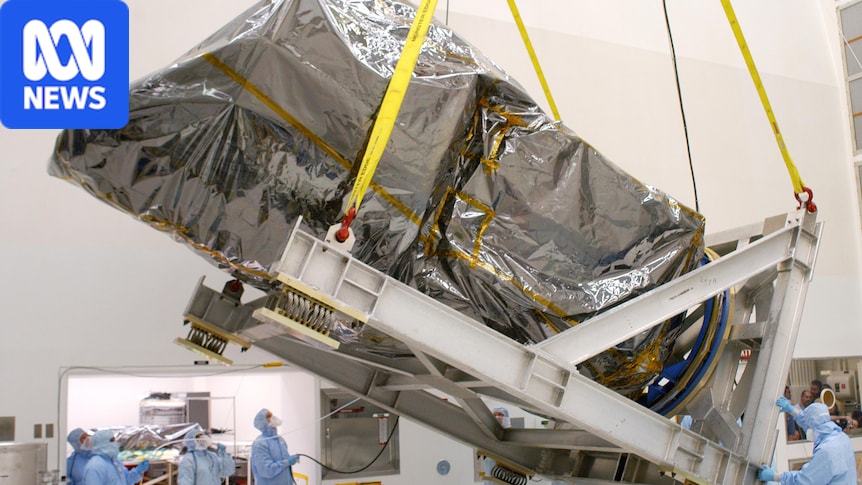
Brad Cenko, a mission chief scientist at NASA, noted that while most of the 1.5-tonne telescope was expected to burn up, certain high-density materials, such as tungsten and specific mirror components, could potentially survive the intense heat of re-entry and reach the surface.
What It Means for You
The conclusion of the Swift mission has practical implications for several different groups:
For the Scientific Community
Researchers must now rely on the archival data provided by Swift, which remains a cornerstone of high-energy astrophysics. The loss of real-time, rapid-response capability for GRBs means that astronomers will need to coordinate more closely with other assets like the James Webb Space Telescope (JWST) to catch transient cosmic events.
For the Aerospace Industry
The failure of the Katalyst Space mission serves as a vital, albeit expensive, case study. For private companies looking to enter the “in-orbit servicing” market, the Link mission highlights the immense technical difficulty of docking with non-cooperative, aging targets. Investors should view this as a signal that while the market for satellite life-extension is massive, the technical maturity of the required robotic systems is still evolving.
For Space Policy Makers
As humanity continues to launch megaconstellations, the management of orbital debris and the ability to de-orbit aging assets becomes a matter of international security and sustainability. The Swift crash underscores the necessity of developing reliable, standardized methods for satellite servicing and decommissioning.
Counterpoints and Open Questions
While the mission’s end is a scientific loss, some analysts argue that the attempt to save Swift was a necessary step in technological evolution. Shawn Domagal-Goldman emphasized that even though the rescue failed, the effort advanced U.S. spacecraft servicing technology and tested unprecedented mission timelines.
However, critics of the mission’s management have raised questions regarding the timing and risk profile. Was the $30 million investment in a “high-risk” mission the most efficient use of funds, or should those resources have been diverted toward more stable, long-term orbital maintenance technologies? Furthermore, the reliance on private-sector solutions for critical NASA assets remains a point of debate within the agency regarding accountability and mission success rates.
What Happens Next
NASA’s attention has already shifted to the Hubble Space Telescope. Unlike the Swift mission, which was characterized by a sense of urgency, NASA is taking a more measured approach with Hubble.
Jared Isaacman, NASA Administrator, stated that the agency is looking at “every reasonable opportunity to keep [Hubble] delivering for as long as possible.” NASA is currently soliciting input from private industry to explore four potential paths for Hubble:
NASA faces a critical deadline: any mission intended to assist Hubble must be implemented and operational by 2032 to prevent an uncontrolled re-entry, which is projected for the mid-2030s.
Frequently Asked Questions
Why did the Swift telescope fall back to Earth?
The primary cause was atmospheric drag, which was significantly worsened by intense solar activity. Solar storms cause Earth’s upper atmosphere to expand, increasing the density of the gases the telescope traveled through. This increased resistance slowed the spacecraft, causing it to lose altitude. Because Swift had no onboard thrusters to correct its path, it eventually fell into the atmosphere.
What was the purpose of the Katalyst Space Link mission?
The Link mission was a $30 million private-sector attempt to perform “in-orbit servicing.” The goal was to use a robotic spacecraft with three arms to capture the Swift observatory and boost it into a higher, more stable orbit, thereby extending its scientific mission life.
Is the Hubble Space Telescope in similar danger?
Yes, Hubble is also experiencing orbital decay due to atmospheric drag and solar activity. However, NASA has more time to act. While Swift’s situation became an urgent “rush job,” NASA aims to have a plan for Hubble in place by 2032, with Hubble’s projected re-entry occurring in the mid-2030s.
Was there any danger to people on the ground?
NASA and the U.S. Space Force monitored the descent closely. Because of the spacecraft’s orbital inclination, any surviving debris was expected to fall within a specific band between 20.6 degrees north and 20.6 degrees south latitude. NASA estimated the risk of any debris causing harm to a person on Earth was extremely low, at approximately 1 in 2,100.
Conclusion
The NASA Swift telescope crash marks the end of a remarkable 22-year chapter in space exploration. While the failed attempt to extend its life via the Link mission highlights the current limitations of robotic servicing, the scientific data gathered by the Neil Gehrels Swift Observatory will continue to inform astrophysics for decades to come
References
Featured image: Image via abc.net.au