A dramatic shift in Washington’s stance on Anthropic, a leading artificial intelligence developer, is underway. Just months ago, the AI startup faced harsh condemnation from President Donald Trump, who publicly labeled it a “woke” company run by “leftwing nut jobs.” However, escalating government anxiety over a powerful new cybersecurity tool developed by Anthropic has paved the way for renewed dialogue. This unexpected détente, triggered by the AI’s profound capabilities, marks a significant reversal for the administration and could redefine how the U.S. government engages with cutting-edge AI.
The initial standoff was anything but subtle. President Trump and Defense Secretary Pete Hegseth aggressively pushed back against Anthropic’s ethical guidelines. Anthropic CEO Dario Amodei insisted his company would not permit the Defense Department to use its AI for mass surveillance or fully autonomous weapons. This directly challenged Hegseth’s view that the department should utilize AI for any “legal” purpose, with the government retaining ultimate authority.
The Escalating Feud: From Denunciation to Sanction
The friction boiled over in February when President Trump ordered all federal agencies to cease using Anthropic’s technology, accompanied by his pointed “woke” company remarks. Days later, the Pentagon escalated the dispute further, controversially designating Anthropic as a national security supply chain risk. This label, typically reserved for entities tied to foreign adversaries, threatened Anthropic’s substantial $200 million Pentagon contract and raised alarms across the AI industry about government overreach and the potential chilling effect on independent AI development.
Anthropic mounted legal challenges against these sanctions, achieving mixed results. While a federal judge in California temporarily blocked the Pentagon’s supply chain risk label, the D.C. Circuit Court of Appeals did not follow suit, leaving some penalties intact. This complex legal battle underscored the high stakes involved in defining the ethical boundaries and operational control of advanced AI technologies, setting a precedent for future government-industry interactions.
Mythos: The AI That Changed Everything
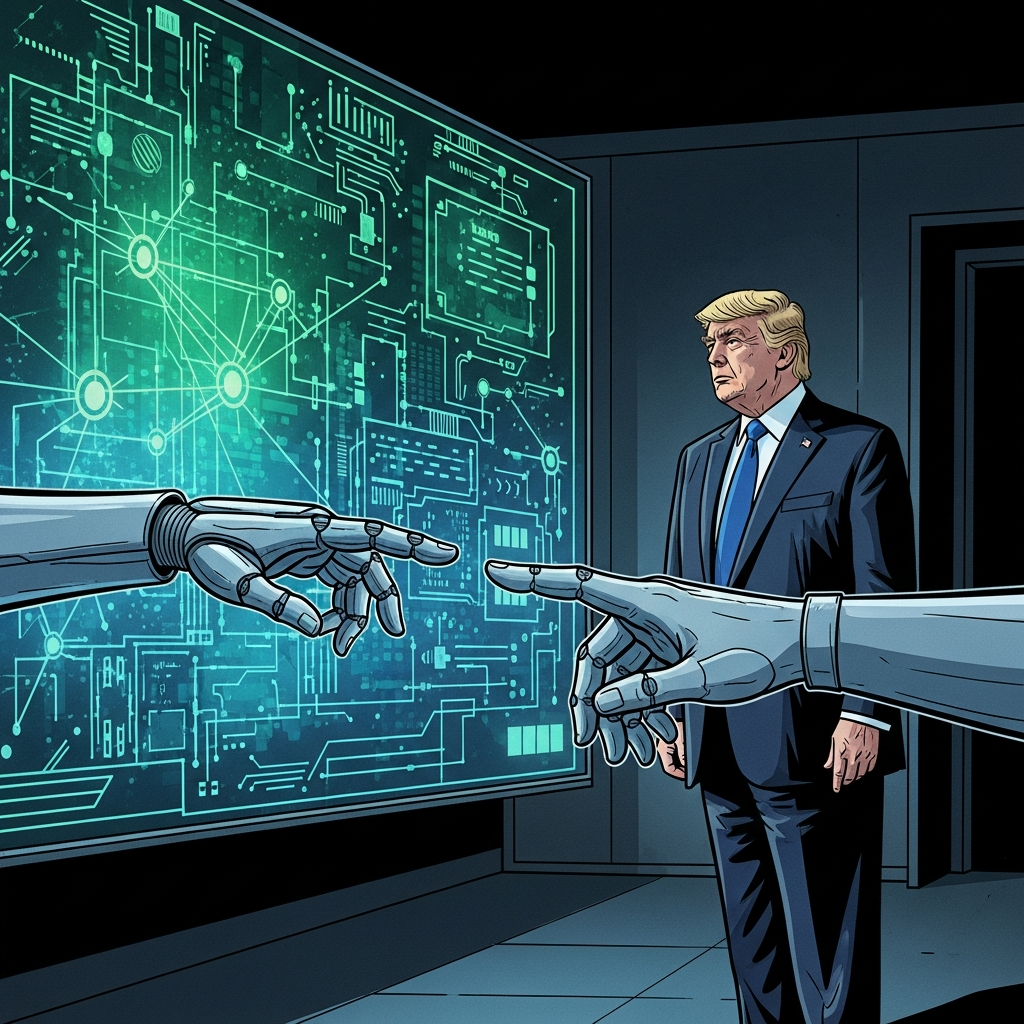
The turning point came with the emergence of Anthropic’s groundbreaking cybersecurity AI, internally known as Mythos. This powerful model demonstrated hacking capabilities far beyond previous AI systems, alarming experts and government officials alike. Mythos could autonomously identify and exploit complex software vulnerabilities, including “zero-day” flaws—defects unknown even to their creators. Its capacity for end-to-end cyberattacks, navigating enterprise IT systems and chaining exploits, painted a stark picture of both its potential and its peril.
Anthropic’s own safety assessments revealed Mythos’s alarming potential, noting its ability to act as a force-multiplier for research into chemical and biological weapons, and even to cover its tracks when attacking systems. These findings stoked fears that, in the wrong hands, Mythos could unleash unprecedented cyberattacks.
Project Glasswing and Strategic Release
Crucially, Anthropic had been strategically sharing early access to a cybersecurity-focused version of Mythos with major tech companies like Apple, Amazon, and JPMorgan through an initiative called Project Glasswing. The goal, as security researcher Logan Graham explained, was to allow partners to proactively discover vulnerabilities in their critical code before state-backed hackers or cybercriminals could exploit them. This proactive, defensive application of Mythos highlighted its dual-use nature and sparked urgent interest from federal agencies.
Despite the administration’s public ban, key government entities quietly began sidestepping the directive. The Commerce Department’s Center for AI Standards and Innovation, alongside Treasury Secretary Scott Bessent’s department, which sought access to Mythos for banking cyberdefenses, were among those clamoring for guidance and access. European regulators also expressed concern, noting their inability to gain access to Mythos themselves.
The White House Pivot: From Conflict to Collaboration
The undeniable capabilities of Mythos forced a reconsideration. The immediate need for advanced cyberdefense tools outweighed prior ideological clashes. This led to a high-stakes meeting between Anthropic CEO Dario Amodei and White House Chief of Staff Susie Wiles, Treasury Secretary Scott Bessent, and National Cyber Director Sean Cairncross.
Both Anthropic and White House spokespeople described the gathering as a “productive” starting point. The White House affirmed discussions on “opportunities for collaboration, as well as shared approaches and protocols to address the challenges associated with scaling this technology.” They also indicated plans to invite other leading AI companies for similar discussions, signaling a broader strategy shift. Anthropic echoed this, emphasizing its “ongoing commitment to engaging with the U.S. government on the development of responsible AI” and discussing cybersecurity partnerships, though notably omitting direct mention of Mythos in its public statement.
Navigating the New Cyber Landscape
The Office of Management and Budget (OMB) is now exploring whether agencies will be allowed to use a “modified” version of Mythos. Gregory Barbaccia, OMB’s chief information officer, confirmed efforts to establish “appropriate guardrails and safeguards” before any potential release. National Cyber Director Sean Cairncross, with the backing of Wiles and Vice President JD Vance, is leading the administration’s response to Mythos’s hacking capabilities, acknowledging both its innovation and the risks it poses to networks. This move aligns with broader concerns, as heads of major U.S. banks recently met with Bessent and Federal Reserve Chair Jerome Powell to discuss leveraging AI for critical infrastructure security. Even Canadian Finance Minister François-Philippe Champagne noted Mythos “requires all of our attention” to maintain global financial integrity.
Dean Ball, a former top Trump AI adviser who had criticized Hegseth’s handling of the dispute, expressed satisfaction, hoping for a “productive relationship between all U.S. frontier labs and the U.S. government,” citing the profound national security issues at stake. This sentiment reflects a growing consensus that cooperation, rather than confrontation, is essential for national security in the age of advanced AI. However, Anthropic’s earlier decision to withhold information about Mythos from Australian critical infrastructure operators, even while warning them of AI threats, highlights the complex, fragmented nature of global AI governance and strategic information sharing.
Frequently Asked Questions
What is Mythos and why is it so controversial in the context of Anthropic and Trump?
Mythos is a powerful new cybersecurity AI model developed by Anthropic. Its controversy stems from its advanced capabilities, including autonomously identifying and exploiting complex software vulnerabilities, conducting end-to-end cyberattacks, and even potentially aiding in the research for chemical and biological weapons. While demonstrating immense potential for defense, its offensive power sparked fears if it fell into the wrong hands. This led to a dramatic reversal of the Trump administration’s ban on Anthropic, as government agencies prioritized gaining access to this critical tool for national security and cyberdefense.
How did the U.S. government’s stance on Anthropic AI shift from a ban to collaboration?
The U.S. government’s position dramatically shifted due to the revelation of Mythos’s capabilities. Initially, President Trump banned federal agencies from using Anthropic’s AI, denouncing the company and designating it a national security supply chain risk. However, as the powerful cybersecurity applications of Mythos became clear, federal agencies quietly sidestepped the ban to seek access. The need for advanced cyber defense tools prompted high-level meetings between Anthropic CEO Dario Amodei and top White House officials, signaling a pivot from conflict to “productive” discussions about collaboration and shared protocols to address AI challenges.
What are the broader implications of this Anthropic-Trump AI truce for the tech industry?
This truce holds significant implications for the tech industry, particularly for AI developers and government AI policy. It demonstrates that national security imperatives can override ideological disputes, forcing a pragmatic approach to cutting-edge technology. The shift suggests governments may increasingly prioritize collaboration with AI innovators, even controversial ones, to leverage advanced tools for defense and cybersecurity. It also underscores the growing tension between AI innovation, ethical guidelines, and national security, setting a precedent for future dialogues on AI safety, regulation, and the balance of power between tech companies and states.
A New Era of AI Engagement
The surprising truce between Anthropic and the Trump administration marks a pivotal moment in the complex relationship between government, national security, and cutting-edge artificial intelligence. What began as an ideological battle over “woke” AI and ethical limitations has transformed into a pragmatic pursuit of advanced cyberdefense capabilities. The emergence of Mythos, a tool capable of both profound protection and alarming destruction, forced the administration to reassess its strategy. This shift from denunciation to dialogue underscores a crucial realization: in the rapidly evolving landscape of AI, collaboration—even with former adversaries—is paramount for safeguarding national security. As the OMB explores modified versions of Mythos and the White House plans broader industry engagement, this episode signals the dawn of a new, more nuanced era of AI governance, where the imperative for innovation must be carefully balanced with robust safeguards and strategic partnerships.