NASA’s Artemis II mission, a landmark crewed journey beyond Earth orbit, delivered a scientific breakthrough: astronauts observed multiple meteoroid impact flashes on the far side of the moon. These fleeting flickers of light, notoriously difficult for cameras to capture, were witnessed by the human eye, underscoring the indispensable role of astronauts in deep space exploration. Scientists are buzzing with excitement, recognizing these observations as crucial data for understanding lunar geology, mitigating risks for future moon bases, and charting humanity’s return to the moon.
Unveiling the Moon’s Hidden Impacts
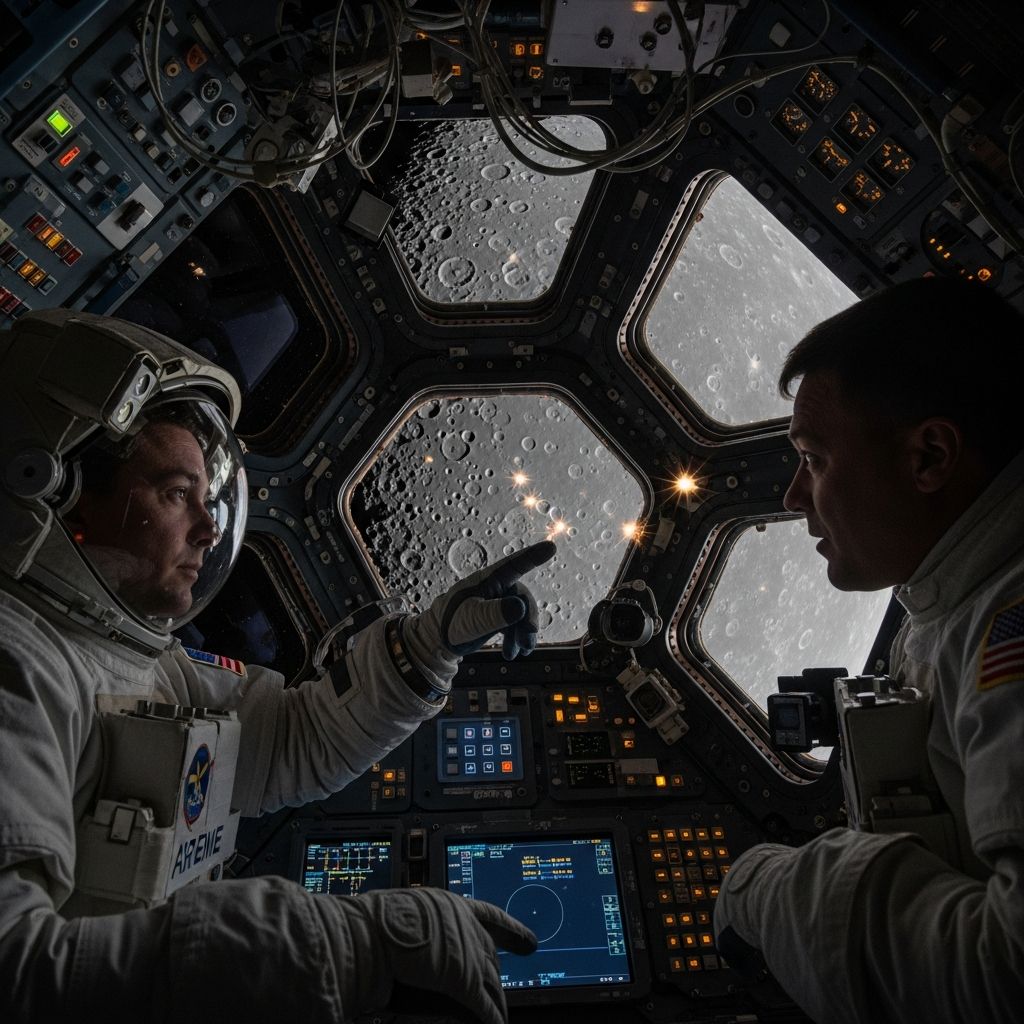
In a significant stride for lunar science, the four-person Artemis II crew diligently scanned the lunar surface during their historic April 6 flyby. Their vigilance was richly rewarded as they reported seeing several “impact flashes.” These luminous events occur when small meteoroids collide with the moon, instantly vaporizing upon contact and creating a fleeting burst of light. Importantly, these observations took place on the moon’s far side, a hemisphere never visible from Earth.
Kelsey Young, NASA Artemis II lunar science lead, highlighted the profound value of these human insights. “It’s extremely difficult to capture impact flashes with a camera,” Young explained, emphasizing that the “unaided eye” of trained crew members offers a unique advantage. This direct human observation capability proved critical where advanced technological cameras struggle, providing data that could not otherwise be easily obtained. The mission, launched on April 1, marked the first crewed flight to the moon since Apollo 17 in 1972, positioning it as a pivotal precursor to sustained human lunar presence.
The Science Behind Lunar Flashes
These brief luminous events are more than just cosmic fireworks; they are vital clues for scientists unraveling the mysteries of the moon. By meticulously tracking when and where impact flashes occur, researchers gain critical insights into several key areas:
Impact Frequency: Understanding how often meteoroids of different sizes strike the moon’s surface.
Crater Formation: Studying the mechanics of how these impacts create new craters and alter the lunar landscape.
- Shock Wave Propagation: Analyzing how the energy from impacts travels through the moon’s interior, offering clues about its internal structure.
- www.space.com
- www.greenmatters.com
- www.leonarddavid.com
- mashable.com
- science.nasa.gov
Such data is indispensable for creating comprehensive models of the lunar environment. The “Impact Flash” citizen science project, part of NASA’s Geophysical Exploration of the Dynamics and Evolution of the Solar System (GEODES) unit, actively enlists amateur astronomers on Earth to contribute to this data collection. While citizen scientists typically wouldn’t observe the same flashes as the astronauts, their collective efforts significantly broaden the scope of observation, providing a richer dataset for analysis.
A Multifaceted Approach to Lunar Research
The Artemis II astronaut observations are a cornerstone of a broader, collaborative scientific strategy. When integrated with data from NASA’s Lunar Reconnaissance Orbiter (LRO), future lunar surface instruments, and the contributions of citizen scientists, the information provides invaluable constraints. This combined dataset helps scientists determine the origins and characteristics of the impactors themselves, as well as the resulting craters.
Benjamin Fernando, a planetary scientist at Johns Hopkins University, underscores the power of this synergy. He and his colleagues, in research posted on EarthArXiv, propose that coordinated impact flash observations from both Earth and lunar missions offer far more detailed information than either method alone. This joint approach allows for a deeper understanding of the timing, precise location, and dynamics of these elusive flashes. Such campaigns are essential for accurately constraining the moon’s overall impact flux and, crucially, assessing the associated hazards for any future human activities on the lunar surface.
Citizen Scientists: Eyes on the Moon
The Impact Flash citizen science project empowers individuals globally to contribute to cutting-edge lunar research. Volunteers equipped with telescopes (four inches or larger) and video recording capabilities are encouraged to submit their observations. This crowdsourced data is invaluable for accurately determining the moon’s current impact rate and monitoring its fluctuations over time. The project collaborates with various amateur astronomy groups, demonstrating a powerful community-driven approach to scientific discovery. The scientific community is particularly excited about the potential to link these impact flash observations with future “moonquakes,” using the data to identify seismic sources and map the moon’s interior.
Preparing for Humanity’s Lunar Future
The enhanced knowledge derived from these Artemis 2 moon impact flashes has significant implications for NASA’s long-term vision: establishing the Artemis Base Camp near the moon’s south pole. Designing a sustainable outpost requires a thorough understanding of all environmental hazards. A 2025 study led by Daniel Yahalomi of MIT highlights radiation, extreme thermal cycling, regolith dynamics, seismic shaking, dust, and, critically, meteoroid impacts as key concerns.
The study suggests that the lunar south pole offers a natural reduction in impact risk compared to equatorial regions, bolstering its selection as a prime location for sustained human presence. Furthermore, Yahalomi and his team concluded that existing shielding technology is “sufficient to suppress micrometeoroid hazards by nearly five orders of magnitude.” This impressive capability significantly reduces the effective risk to a manageable level for current habitat designs, paving the way for safer long-duration stays.
The Broader Scientific Harvest of Artemis II
While hunting for impact flashes was a priority, it was just one of many scientific objectives for the Artemis II astronauts during their epic April 6 flyby. The mission served as a comprehensive test of technology, tools, and communication systems, all vital steps toward enabling future lunar landings and eventual human missions to Mars. The Orion capsule, named “Integrity,” was equipped with 31 cameras, meticulously capturing imagery of Earth and the moon.
The Artemis II Lunar Science Team is currently immersed in analyzing this extensive “science haul.” All collected imagery, audio recordings of the crew’s scientific observations, and accompanying transcripts will be publicly archived on NASA’s Planetary Data System within six months. This open-access approach ensures that the broader scientific community can delve into the mission’s data, accelerating discoveries and fostering innovation. The success of Artemis II, including these crucial impact flash observations, represents a monumental leap in preparing for humanity’s permanent return to the moon.
Frequently Asked Questions
What are lunar impact flashes, and why are they important for science?
Lunar impact flashes are brief bursts of light that occur when a meteoroid strikes the moon’s surface and vaporizes. These flashes are critically important because they provide scientists with direct data on the frequency of meteoroid impacts, the size of the impacting objects, how craters form, and how shock waves travel through the moon’s interior. This information helps create better models of the lunar environment and assesses risks for future human missions and infrastructure.
Why were human observations by Artemis II astronauts crucial for detecting these flashes?
Human observations by the Artemis II crew were crucial because cameras, despite their advanced technology, struggle to capture these extremely fleeting and unpredictable impact flashes. The “unaided eye” of trained astronauts offers a unique capability for real-time detection and reporting of these transient events, especially on the far side of the moon where Earth-based telescopes cannot directly observe. This highlights the irreplaceable value of human perception in deep space exploration.
How do Artemis II observations contribute to planning for future moon bases?
The Artemis 2 moon impact flashes observations contribute significantly to planning for future moon bases, such as the proposed Artemis Base Camp. By improving our understanding of the meteoroid impact flux, scientists can better assess environmental hazards. Research, like the study led by Daniel Yahalomi, indicates that locations like the lunar south pole offer reduced impact risk, and current shielding technologies are sufficient to mitigate micrometeoroid hazards, thus informing safer designs and locations for long-duration human outposts.
The Next Giant Leap
The remarkable observations made by the Artemis II astronauts, particularly the detection of Artemis 2 moon impact flashes, mark a pivotal moment in our journey back to the moon. These insights, combined with citizen science efforts and advanced data analysis, are not merely academic curiosities. They are foundational elements in understanding the lunar environment, developing robust safety protocols, and ultimately, ensuring the success and longevity of humanity’s sustained presence beyond Earth. As the Artemis program progresses towards landing astronauts on the moon once again, every piece of data, every observation, brings us closer to a future where humans thrive on other celestial bodies.