Mastering the Spirhalite Islands: An Essential Survival Roadmap
If you have been looking for an effective Splatoon Raiders guide to navigate your first steps into the mysterious Spirhalite Islands, you have arrived at the right place. Transitioning from the fast-paced competitive turf wars of the past to the methodical, high-stakes survival exploration of this new title requires a complete mental recalibration. When I first stepped onto the islands, I found myself instinctively trying to ink territory for points, which led to a swift defeat by the local Salmonid population. This game shifts the focus entirely toward survival, scavenging, and deep character progression, demanding that players shift their mindset from purely reactive reflexes to calculated decision-making.
Quick Summary
Game Launch: Splatoon Raiders releases July 23, 2026, exclusively on the Nintendo Switch 2.
Core Loop: Focus shifts to a single-player or co-op dungeon-crawling loop involving resource gathering and gear optimization.
Tank System: Players choose between Speed, Power, and Tactical archetypes to survive increasingly difficult Salmonid waves.
Progression: Loot and materials persist after failed runs, meaning you never truly lose progress on your character development.
Multiplayer: While designed for solo play, the game offers robust 4-player online and local co-op for those facing the toughest survivalist challenges.
The Immediate Strategy: Your First Few Hours
To give you the most direct answer possible: do not hoard your early resources. The most critical mistake I made in my first three hours was holding onto scrap metal, thinking a better weapon would unlock later that required specific rare parts. In reality, the early-game progression is designed for constant iteration. You should be spending your Mega Power Eggs at the Gadget Workshop immediately. The sooner you upgrade your basic tank capacity to handle three active gadgets, the smoother your combat encounters will become. This game rewards consistent improvement over perfectionist saving.
Navigating the Three Tank Archetypes
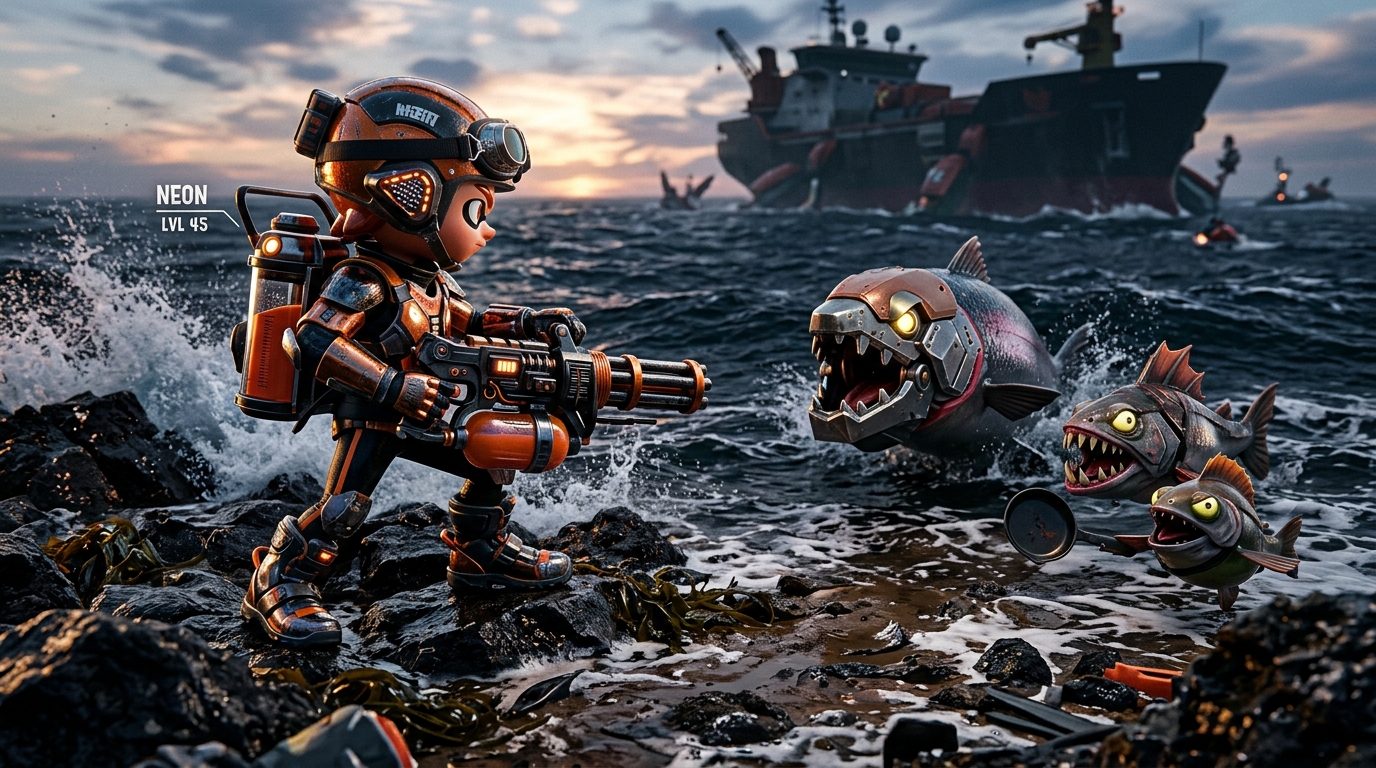
Selecting your tank archetype defines your entire playstyle. In my experience, starting with the Speed Tank is the most effective way to learn the layout of the Spirhalite Islands. The mobility bonuses allow you to dodge the erratic attack patterns of ‘Lesser’ Salmonids while you identify extraction points and resource caches.
However, you will eventually reach a wall where raw movement isn’t enough. When you hit those difficult boss encounters—the elite Seasoned Salmonids—you must pivot. The Power Tank provides the necessary brute force to shatter enemy armor. Using the ‘Splatchet’ gadget effectively allows you to stand your ground. For those playing in co-op, the Tactical Tank becomes indispensable. By deploying the ‘Shot Pot’ turret, you effectively create a safe zone that allows your teammates to collect loot while you hold the perimeter. Balancing these three roles is the key to thriving in the endgame.
Deep-Dive: Managing Resources and Mega Power Eggs
Resource management in Splatoon Raiders revolves around your efficiency as a scavenger. The Mega Power Eggs serve a dual purpose: they are your score and your fuel. I found that ignoring the smaller side-nests of Salmonids in favor of rushing the main objective was a mistake. Those smaller nests are exactly where you find the crafting materials required for meaningful upgrades.
Think of each raid as a cycle of discovery. You enter, gather specific materials to fuel your next upgrade, and extract. Even if you fall during a raid—which I did plenty of times during my initial testing—you keep your scavenged goods. This design choice is brilliant because it removes the ‘game-over’ anxiety that often ruins survival titles. It allows you to experiment with riskier playstyles without worrying that your entire night of gaming was a waste.
Understanding the Gadget Workshop
Your success depends entirely on how you leverage the Gadget Workshop back at the hideout ship. You might be tempted to stick with a familiar loadout, but the upgrade trees can fundamentally change how a gadget functions. For instance, increasing the fire rate on a standard blaster is fine, but adding a ‘knockback gas’ effect changes it into a powerful crowd-control tool. I strongly recommend testing new gadgets as soon as they become available. Even if they feel weak at level one, the secondary effects unlocked at level three often turn them into high-tier survival assets.
Who Should Play (And Who Should Not)
This title represents a significant evolution for the series, and it isn’t necessarily for every long-time fan. This is ideal for:
Gear Progression Fans: Players who love deep RPG systems, crafting, and watching their character stats grow through persistent upgrades.
Co-op PVE Enthusiasts: Gamers who prefer working with a team against complex AI rather than jumping into the high-stress, competitive 4v4 multiplayer modes of the past.
Explorers: Those who enjoy methodical, lore-driven, world-building campaigns that value discovery over pure twitch-based combat.
You might want to skip this if:
Competitive Purists: If you live for the competitive turf war experience and find RPG inventory management tedious, this change in pace might frustrate you.
Reflex-Only Gamers: This is a tactical survival game first and a shooter second. If you aren’t interested in the nuances of tank archetypes and resource loops, the slow-burn progression may feel underwhelming.
The Cost and Value Proposition
Retailing at $60—with occasional pre-order discounts landing at $50—the value of Splatoon Raiders is quite substantial when compared to standard shooters. If you are the type of player who dives into the mechanical depth of upgrade trees, you can easily sink 40 to 60 hours into the campaign and side dungeons. The inclusion of a ‘Tourist’ mode for those who just want to experience the narrative without the high-pressure survivalist mechanics adds significant value. It is essentially two experiences in one, allowing you to tailor the game to your preferred difficulty level.
Common Mistakes to Avoid
- Hoarding Materials for the ‘Perfect’ Loadout: I made this mistake early on. You receive a consistent stream of parts throughout the island. There is no reason to hoard these. Upgrade as soon as you have the materials. You will eventually find enough scrap to max out multiple gadgets, so hoarding only stunts your early-game power.
- Ignoring the Call for Help System: If you are playing solo, it is easy to adopt an ‘I can do it myself’ attitude. However, using the ‘Call for Help’ feature allows you to clear high-difficulty sectors much faster. You earn extra currency for assisting others, which you can then pump back into your own tank. It is an efficient, low-risk way to farm endgame resources.
Frequently Asked Questions
Is Splatoon Raiders primarily a multiplayer or single-player game?
It is designed as a deep, single-player RPG-lite adventure, but it features excellent 4-player online and local co-op. You can play the entire campaign solo if you wish, but the toughest ‘Survivalist’ dungeons are significantly easier (and often more fun) with a coordinated team using a mix of Speed, Power, and Tactical tanks.
What happens if I fail a raid in the middle of a dungeon?
One of the most user-friendly features is the persistence system. Unlike many survival shooters that wipe your inventory upon death, Splatoon Raiders lets you keep your scavenged loot even if your tank is destroyed. You simply return to the ship and try again. This allows you to push deeper into dangerous areas without the constant fear of losing hours of progress.
Do older amiibo figures have any impact on the game?
Yes, legacy Splatoon amiibo provide unique cosmetic outfits for your mechanic. If you purchase the new series of Splatoon Raiders-themed amiibo, they provide exclusive gear sets that offer tangible bonuses to your tank’s durability and reduce gadget cooldown speeds. While not strictly necessary to win, they definitely provide a helpful edge.
How difficult is the game for someone new to the series?
It is highly accessible thanks to the inclusion of three distinct difficulty settings: Tourist, Raider, and Survivalist. If you find yourself struggling with a specific boss or a complex biome, you can toggle down to the Tourist setting to get past the bottleneck and keep the story moving. The developers clearly want players to enjoy the narrative, not just the challenge.
Conclusion
Following the advice in this Splatoon Raiders guide should provide you with a rock-solid foundation for your journey across the Spirhalite Islands. By prioritizing early-game gadget upgrades, choosing the right tank archetype for your playstyle, and learning to effectively manage your resources, you will find that the game shifts from a punishing challenge to an incredibly rewarding exploration loop. My final tip? Do not fear the ‘Survivalist’ encounters. The best gear in the game is hidden behind those high-difficulty walls, and with the persistent loot system, you have nothing to lose by testing your limits. Dive in, experiment with your gadgets, and don’t be afraid to call in friends when the waves get overwhelming. Your adventure on the islands is what you make of it, so make it a calculated and efficient one.