

Key takeaways
- Scientists are shifting focus from single-molecule theories to complex, interconnected chemical networks.
- New genomic data suggests LUCA was a complex organism living in an ecosystem 4.2 billion years ago.
- Researchers are using synthetic biology to build “life-like” cells that demonstrate growth and division.
- The study of life’s beginnings is now bridging the gap between prebiotic chemistry and evolutionary biology.
The study of the origins of life is undergoing a fundamental shift as researchers move away from searching for a single “miracle molecule” to instead investigating the complex, interconnected chemical networks that likely bridged the gap between dead matter and living cells. For decades, the scientific community was divided by fierce debates over whether RNA, lipids, or proteins were the primary architects of the first living systems. However, a new generation of scientists is now looking at the 200-million-year window after Earth became Habitable but before the first known single-celled ancestors appeared.
What happened
Recent advancements in genomic sequencing and synthetic biology have disrupted long-standing hypotheses regarding how life emerged. Historically, the field was defined by “bickering” over which specific molecule acted as the progenitor of all life. In the mid-20th century, the focus was largely on chemistry, epitomized by the 1952 Miller-Urey experiment which proved that amino acids could form in a simulated primordial atmosphere. This was followed by the 1980s discovery that RNA could act as both an information carrier and an enzyme, sparking the highly influential “RNA-world” theory.
By the early 2024s, however, a new consensus began to emerge. Research led by Phil Donoghue at the University of Bristol utilized advanced computational techniques to reconstruct the genome of the Last Universal Common Ancestor, or LUCA. Their findings suggest that LUCA was not a simple, primitive entity, but a complex organism with approximately 2,600 proteins, a functional cell membrane, and even a primitive immune system. This suggests that the transition from chemistry to biology was not a single event but a gradual accumulation of complexity within a larger ecosystem.

Why it matters
This shift in understanding is significant because it changes how we search for life elsewhere in the universe. If life requires a complex, multi-component system rather than a single specific molecule, then our current methods for detecting “biosignatures” must evolve. For astrobiologists, this means looking for the chemical fingerprints of entire ecosystems rather than just isolated organic molecules.
Furthermore, the realization that life’s building blocks—such as amino acids and nucleobases—are common in meteorites like the Murchison meteorite suggests that the ingredients for life are widespread. If the process of life is a continuum of increasing chemical complexity, the probability of life emerging on other worlds, such as Saturn’s moon Enceladus or Mars, becomes a central question for upcoming missions like NASA’s Habitable Worlds Observatory.
The era of molecular bickering
To understand the current revolution, one must look at the decades of conflict that preceded it. During the late 20th century, the field was often described as being in a state of “crisis.” Researchers were deeply entrenched in competing “worlds”: the RNA-world, which prioritized genetic information; the metabolism-first world, which focused on energetic pathways; and the lipid-world, which emphasized cellular compartments.
Matthew Powner, a chemist at University College London, noted that the classic approach was to pick one molecule and assume it was the progenitor while ignoring all others. This led to intense academic friction. In 1992, Discover magazine even reported on the animosity between proponents of the “primordial soup” and the “hydrothermal vent” hypotheses. Michael Travisano, an evolutionary biologist at the University of Minnesota, recalled that there used to be “open fights” at scientific conferences.
| Theory | Primary Focus | Key Proponents/Concepts |
|---|---|---|
| RNA World | Genetic information and self-replication | Thomas Cech, Sidney Altman |
| Metabolism-First | Energy-producing chemical networks | Günter Wächtershäuser, Stuart Kauffman |
| Lipid World | Membrane formation and compartmentalization | Cellular enclosure concepts |
| Systems Approach | Interconnected molecular networks | Modern consensus researchers |
Redefining LUCA and the pre-LUCA window
One of the most significant breakthroughs involves the re-evaluation of LUCA. While many previously viewed LUCA as a simple, near-primitive cell, the data provided by Phil Donoghue’s team paints a much more sophisticated picture. LUCA likely lived around 4.2 billion years ago and was part of a community of diverse cells.
Greg Fournier, an evolutionary biologist at MIT, explains that there are two primary records of past life: the fossil record and the genomic record. While fossils only date back to about 3.5 billion years, the genomic record allows scientists to trace lineages back much further. By comparing the genomes of modern bacteria and humans, phylogeneticists can identify the most ancient genes shared by all life.
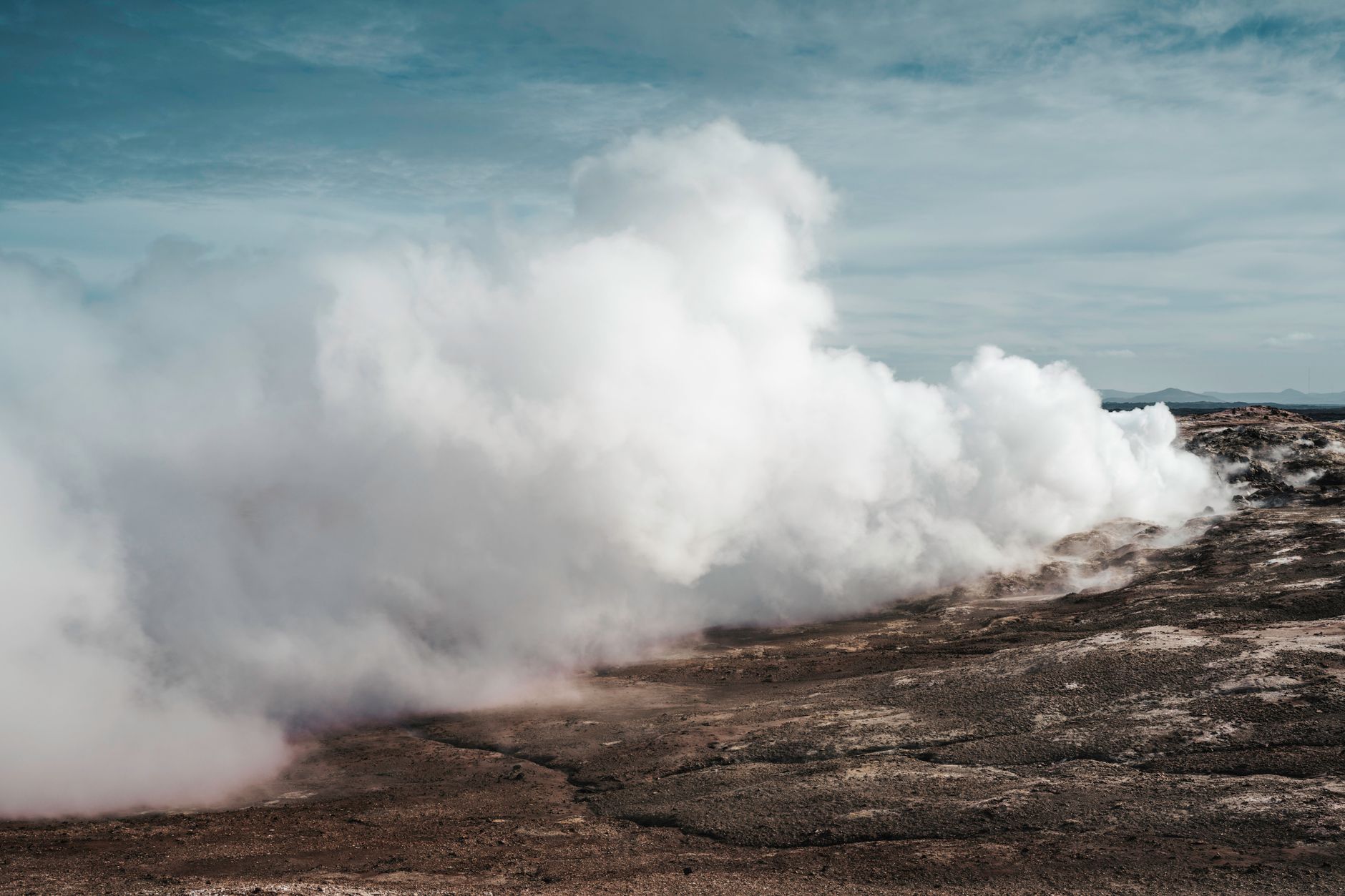
This genomic trail leads into the “pre-LUCA” window—the period where chemistry was actively becoming biology. This is the most difficult era to study because it exists at the edge of what is scientifically tractable. Researchers like Aaron Goldman at Oberlin College are now looking at how environmental conditions, such as those found in hydrothermal vents or warm ponds, might have facilitated these early transitions.
Pushing the boundaries of synthetic biology
While evolutionary biologists work backward from modern life, synthetic biologists are working forward from nonliving matter. They are attempting to build life from the ground up using “informed speculation.”
Klára Hlouchová, a synthetic biologist at Charles University in Prague, is exploring whether life could have emerged using different chemical alphabets. While all modern life relies on 20 specific amino acids, meteorites contain many more. Hlouchová’s research has shown that a reduced alphabet of just 10 amino acids can still support the robust protein folds that are essential to modern biology. This suggests that the specific “ingredients” of life might be more flexible than previously thought.
Similarly, Sijbren Otto at the University of Groningen has moved away from focusing on specific molecules to focusing on biological functions. In 2010, Otto discovered that certain synthetic benzene rings could self-replicate by stacking like poker chips. His lab has since developed “benzene cells” that can replicate, metabolize, and form compartments. While these are not yet truly “alive” because they lack the ability to evolve, they represent a massive step toward understanding the functional essence of life.
The synthetic cell breakthrough
In the summer of 2026, the field reached a new milestone when a team led by synthetic biologist Kate Adamala at the University of Minnesota successfully created a synthetic cell with lifelike behaviors. These cells, enclosed in fatty sacs called liposomes, were packed with DNA replication systems and enzymes.
After months of observation, the researchers witnessed the cells growing, dividing, and exhibiting a crude form of natural selection. Adamala described the components as “disgustingly modern,” noting that the experiment was not a recreation of the actual origins of life but a proof of concept. It demonstrated that one can take “undeniably dead” components and assemble them into a system that performs the fundamental functions of life. However, the cells still require a constant supply of nutrients and lack true, spontaneous evolution, marking the distinction between a highly complex chemical system and a truly autonomous organism.
What It Means for You
If you are an enthusiast of space exploration or astronomy, these findings suggest that the search for extraterrestrial life will become increasingly complex. We can no longer simply look for a single “smoking gun” molecule; instead, we must look for signs of complex, self-sustaining chemical cycles.
For students and professionals in the fields of biotechnology and medicine, the work being done in synthetic biology and protein design is highly relevant. The ability to design proteins with reduced or entirely new amino acid alphabets could lead to new classes of drugs, more efficient enzymes for industrial use, and advanced materials that mimic biological functions. The boundary between “made” and “grown” is continuing to blur.
Counterpoints and open questions
Despite the excitement, significant hurdles remain. The most obvious challenge is the lack of a time machine. Because the transition from chemistry to biology occurred billions of years ago, scientists are forced to rely on indirect evidence and simulations.
Critics of certain hypotheses point out that experiments in the lab are often too small and too short-lived to represent the massive, multi-million-year processes that occurred on early Earth. Furthermore, there is the question of whether the conditions on early Earth—such as the specific gases in the atmosphere or the acidity of the oceans—are accurately represented in modern laboratory setups. As Elisa Biondi, a biochemist at the Foundation for Applied Molecular Evolution, noted, without direct evidence, it is difficult to definitively prove or falsify any single theory.
What Happens Next
Several key developments are expected to shape the field in the coming decade:
- Space Missions: Continued analysis of samples from asteroids like Bennu and upcoming missions to Enceladus will provide more data on the prebiotic availability of organic materials.
- Advanced Telescopes: The launch of the Habitable Worlds Observatory in the 2040s will allow for the first direct searches for complex biosignatures in the atmospheres of distant exoplanets.
- AI-Driven Protein Design: The integration of generative AI into synthetic biology will likely accelerate the ability of researchers to design and test “pre-LUCA” style proteins and metabolic pathways.
- The Evolution of Synthetic Cells: Researchers like Sijbren Otto will continue to work toward the “holy grail” of the field: creating a synthetic system that can evolve independently without human intervention.
As the field moves away from the rigid debates of the past, it is embracing a more integrated, interdisciplinary approach. By combining the tools of chemistry, biology, and computational science, researchers are finally beginning to map the long, complex journey from the first chemical loops to the vast diversity of life on Earth.
Frequently asked questions
What is LUCA?
LUCA, or the Last Universal Common Ancestor, refers to the most recent population of organisms from which all currently living life on Earth descended. Rather than being a single, simple organism, recent research suggests LUCA was a complex community of cells that lived approximately 4.2 billion years ago. It possessed a sophisticated genome, a metabolism for energy production, and even primitive defenses against viruses.
What is the RNA-world theory?
The RNA-world theory is a hypothesis suggesting that the earliest forms of life relied on RNA molecules to both store genetic information and catalyze chemical reactions. This was a significant idea because it solved the “chicken and egg” problem of whether DNA or proteins came first. While RNA is central to life, many scientists now believe it was part of a much larger, more complex system of interacting molecules.
Can scientists create life in a laboratory?
While scientists have successfully created synthetic cells that can grow, divide, and replicate DNA, they have not yet created life that is truly “alive” in the sense of being self-sustaining and independently evolving. Current synthetic cells, such as those developed by Kate Adamala, require constant external supplies of nutrients and lack the ability to undergo natural selection through spontaneous mutation.
How does this research help us find life on other planets?
By understanding the chemical pathways that led to life on Earth, scientists can identify specific “biosignatures”—chemical patterns that indicate biological activity. This knowledge allows astrobiologists to know what to look for when analyzing the atmospheres of exoplanets or the plumes of moons like Enceladus. It shifts the search from looking for specific molecules to looking for complex, life-like chemical systems.
References
- The Evolving Story of How Chemistry Became Biology — quantamagazine.org
Featured image: Photo by Gustavo Fring on Pexels

One thought on “New Research Redefines the Origins of Life on Earth”