Key takeaways
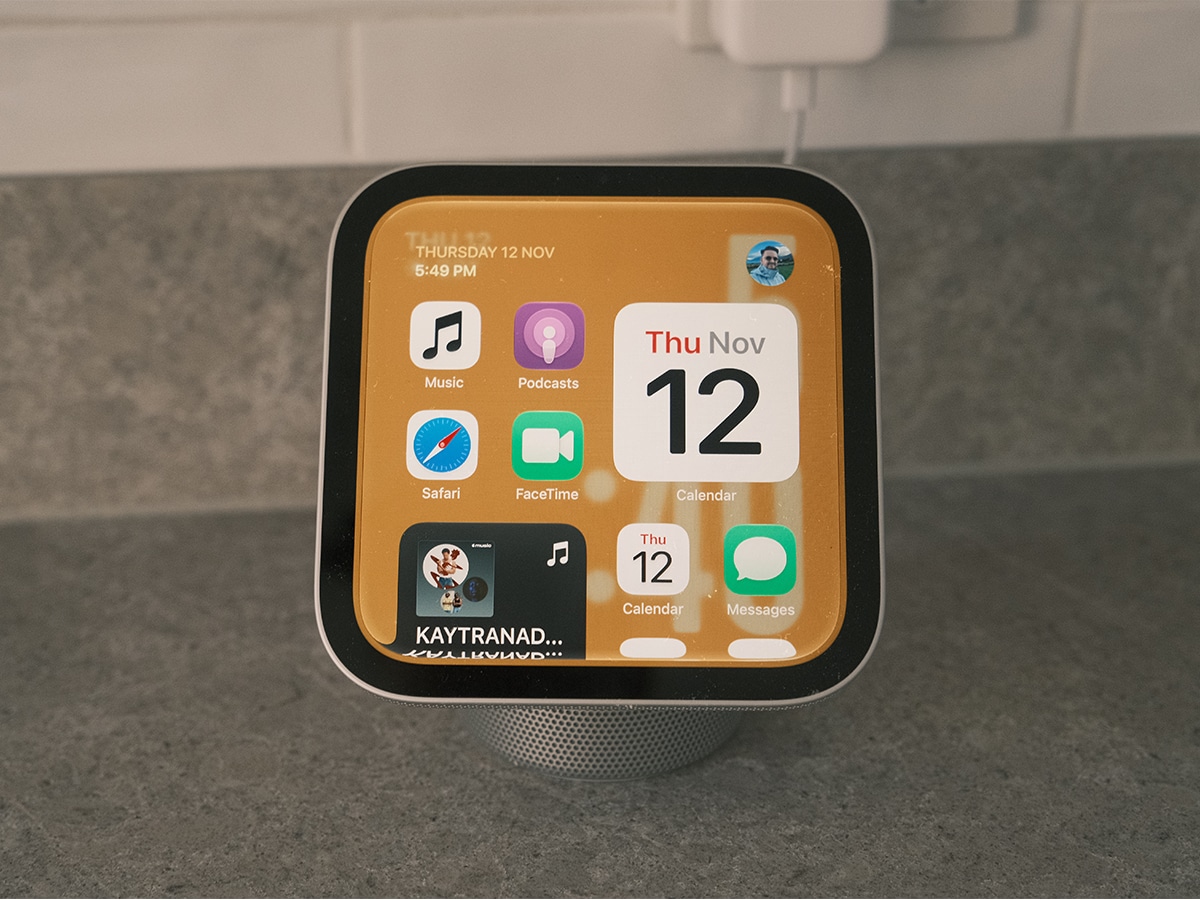
- The Apple HomeView is a $299 smart display that functions as a personalized hub by mirroring apps from a nearby iPhone or iPad.
- The device features an A18 chip and uses facial and voice recognition to support up to six individual user profiles.
- Originally scheduled for a November 13, 2026, release, availability has been delayed to early December 2026.
- Apple is planning a dedicated software update in December to address reported bugs in the Siri AI execution.
- December 2026: The release of the first major software update aimed at fixing Siri AI bugs and improving conversational fluidity.
- Early 2027: The planned release of the Power over Ethernet (PoE) wall mount, which will allow for cleaner, more professional installations in smart homes.
- Long-term AI evolution: As Apple Intelligence matures, the degree to which Siri can handle complex, multi-step household tasks will determine if the HomeView can replace traditional tablets in the kitchen or bedroom.
The Apple HomeView is a new smart display designed to serve as a centralized, intelligent hub for the home, though its most advanced personalized features require the proximity of a paired iPhone or iPad. Announced during Apple’s “Welcome home” event on October 13, 2026, the device represents a significant, albeit delayed, entry into the smart display market. While competitors like Amazon and Google have occupied this Space for nearly a decade, Apple has opted for a unique approach that prioritizes privacy and ecosystem integration over standalone computing power.
What happened
Apple officially introduced the HomeView as a dual-purpose device: a visual interface and a smart speaker capable of managing smart home ecosystems via HomeKit and Matter protocols. The product was announced in mid-October, with an initial general availability date set for November 13, 2026. However, recent reports indicate that the rollout has been pushed back to early December 2026.
According to research into the device’s release cycle, these delays may be linked to software maturity. Early testers and reviewers have noted “underbaked” software performance and bugs within the upgraded Siri AI. Furthermore, Bloomberg reporter Mark Gurman suggested that the delay and specific stock levels might be influenced by rising memory costs associated with the massive data requirements of modern AI data centers.
Why it matters
For Apple, the HomeView is more than just a new gadget; it is an attempt to extend the “intelligence” of the iPhone into the domestic environment. As newly minted Apple CEO John Ternus stated during his first iPhone event this year, there is no product better designed to be an intelligent personal hub than the iPhone. By tethering the HomeView to the iPhone, Apple solves two major hurdles in the smart home market: personalization and privacy.
Because the device does not host personal data locally, it avoids the security risks associated with storing sensitive messages and calendars on a stationary home appliance. Instead, it streams this information from a nearby, recently unlocked iOS device. This creates a “glanceable” experience where information is visible only when the recognized user is present and disappears when they walk away. This strategy reinforces Apple’s ecosystem lock-in, making the HomeView an essential companion for iPhone users while offering significantly less utility to those outside the Apple ecosystem.
Hardware and design: Two distinct paths
The HomeView is available in two primary configurations, catering to different household needs: a tabletop version and a wall-mounted version. Both models are powered by the Apple A18 chip, which provides the computational power necessary for facial recognition and the device’s “distance-adaptive” user interface.
The Tabletop Model
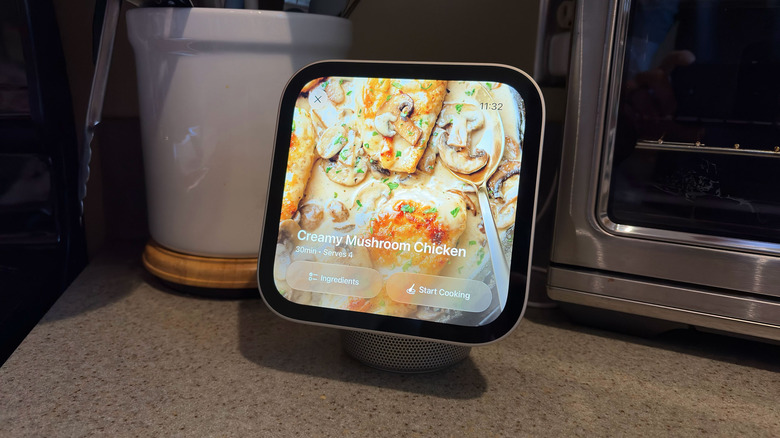
Designed for versatility, the tabletop version features a rounded aluminum base reminiscent of the classic iMac G4. It includes an adjustable stainless steel hinge that allows for tilting. This model is optimized for high-quality audio, featuring two full-range drivers in the display, one custom down-firing woofer in the base, and two force-canceling passive radiators. This configuration supports Spatial Audio with Dolby Atmos, making it a capable media hub.
The Wall-Mounted Model
The wall-mounted variant is designed for permanent installation in high-traffic areas like entryways or hallways. To maintain a slim profile, it lacks the subwoofer and passive radiators found in the tabletop model, instead relying on two custom full-range drivers with on-wall computational tuning. This version is particularly useful for security, as it can livestream up to nine HomeKit or Matter camera feeds simultaneously in a grid view.
| Feature | Tabletop Model | Wall-Mounted Model |
|---|---|---|
| Base Price | $299 | $299 |
| Audio Setup | 2 drivers, 1 woofer, 2 radiators | 2 drivers (computational tuning) |
| Form Factor | Adjustable aluminum base | Permanent installation |
| Color Options | Silver, Starlight, Rose Pink, Space Gray | Silver, Space Gray |
| Primary Use | Kitchen/Nightstand/Media | |
| Max Camera Feeds | 9 feeds |
Software and the Siri AI experience
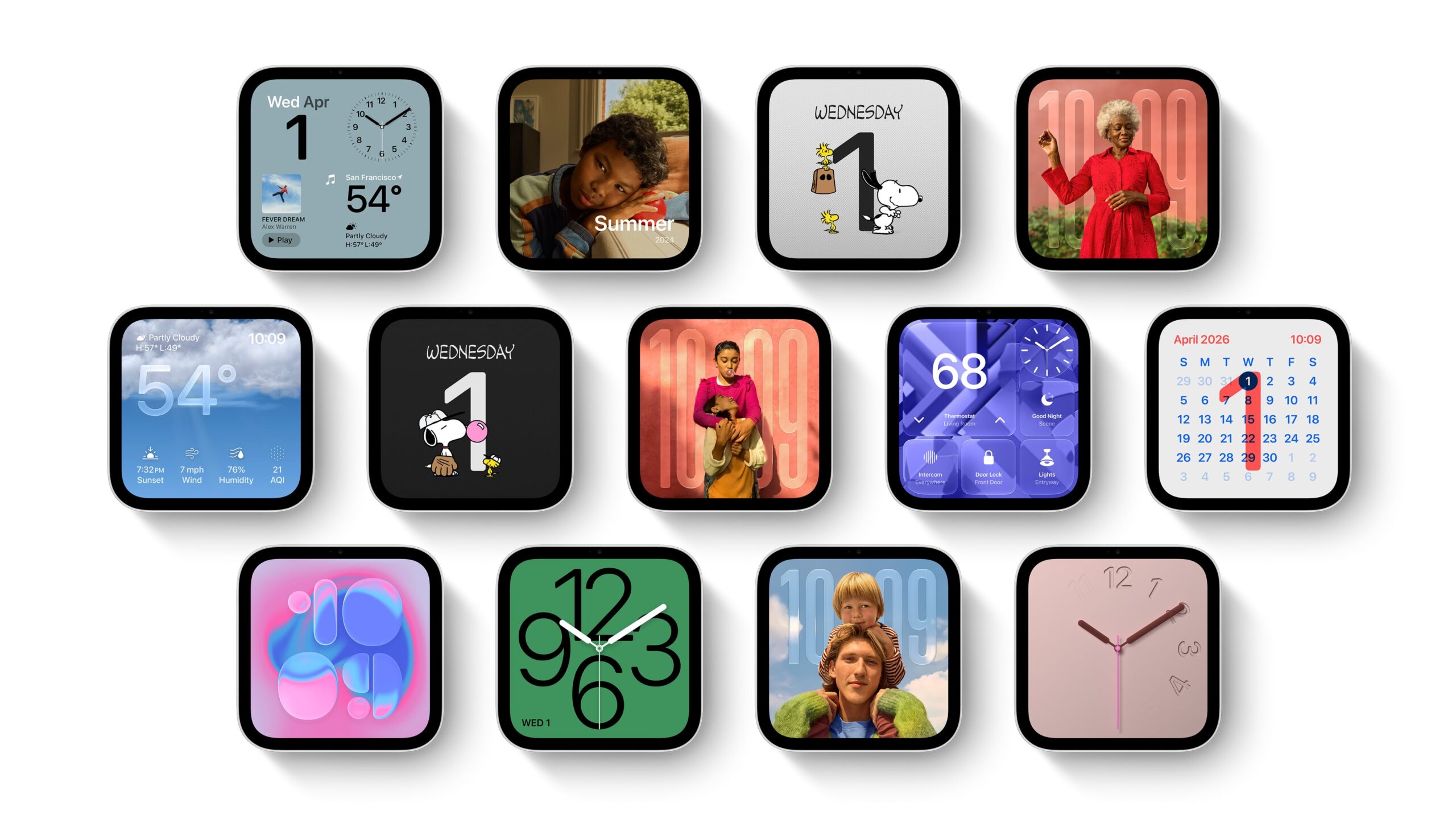
Unlike the iPad, the HomeView does not run a full version of iPadOS. Instead, it utilizes “HomeView Software,” a specialized interface that mirrors compatible apps from a user’s iPhone or iPad using a system similar to Apple CarPlay. This means users cannot simply download new apps from the App Store; they are limited to Apple’s core suite—such as Calendar, Messages, and Weather—and third-party apps that have been optimized for CarPlay-style interaction.
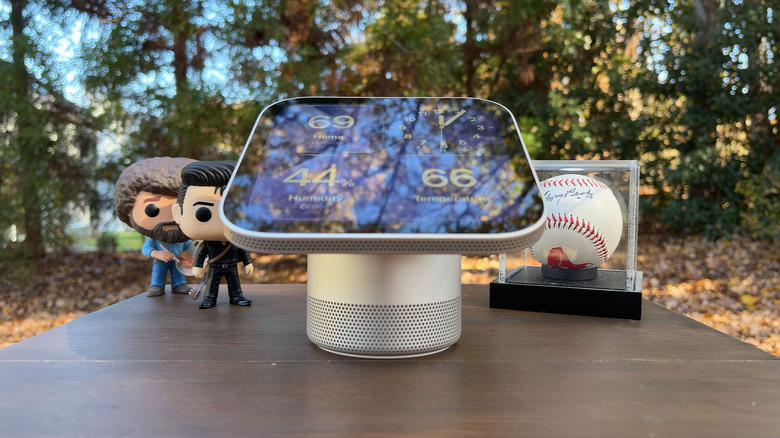
This software approach is central to the device’s identity. Matthew Costello, Apple’s VP of hardware engineering, explained that the design philosophy was “voice first, then touch second.” This explains the intentional absence of physical buttons on the device. The interface is also designed to be “distance-adaptive,” meaning it automatically adjusts the scale of text and widgets based on how close a user is standing to the screen.
However, the Siri AI experience is currently in a beta state. While the upgraded Siri is intended to be more conversational and contextual, early reviews from outlets like TidBITS suggest a steep learning curve. Users must learn not only how to interact with the voice interface but also determine which specific tasks the current AI iteration is capable of performing. Apple has acknowledged these teething issues and has committed to a dedicated software update in December 2026 to resolve Siri execution bugs.
Privacy and the “Secure Exclave” architecture
A primary concern with smart displays is the presence of cameras and microphones in private spaces. Apple addresses this through a hardware-level security architecture known as “Secure Exclaves.”
As reported by Man of Many, the A18 chip contains protected areas that are inaccessible to the operating system, third-party applications, and even Apple itself. Biometric data, including facial recognition profiles and voice prints, is processed within these Secure Exclaves. This allows the HomeView to recognize up to six different household members and switch to their specific profiles—showing their unique calendars and messages—without ever exposing that raw biometric data to the broader software environment.
Stakeholder analysis: A divided reception
Initial critical reception of the HomeView has been polarized, reflecting the device’s ambiguous position between a standalone tablet and a simple peripheral.
On one hand, mainstream tech reviewers have praised the hardware. PCMag awarded the device an “Editors’ Choice” designation, highlighting its intuitive touch controls and seamless facial recognition. Geeking Out described the device as the “central nervous system for smart homes,” specifically noting the clarity of the 12MP Center Stage camera and the depth of the audio.
On the other hand, more specialized critics have expressed skepticism. TidBITS characterized the HomeView as a “peripheral, not a platform,” arguing that its inability to run essential third-party tools like Zoom or Google Meet limits its utility in a modern home. Furthermore, tech commentator John Gruber and other critics have criticized Apple’s promotional materials, claiming the portrayed household behaviors are unrealistic and fail to demonstrate the device’s true necessity.
What It Means for You
If you are a dedicated Apple user: The HomeView will likely feel like a natural extension of your existing hardware. If you already own an iPhone 16 or later (which utilizes the A18 chip) and are invested in HomeKit, the device offers a hands-free way to manage your life and home. The ability to hand off FaceTime calls and music from your phone to the HomeView provides a level of continuity that other smart displays struggle to match.
If you are a smart home enthusiast: The HomeView serves as a powerful command center. With support for Matter and Thread, as well as the ability to monitor nine camera feeds at once, it is a robust tool for security and automation. However, you should be prepared for the “tethered” nature of the device; you cannot move it to a room without a power outlet, as it lacks an internal battery.
If you are a developer: The current software model presents a specific challenge. To reach HomeView users, you must optimize your apps for a CarPlay-style interface. While Apple has invited developers to participate, the lack of a full App Store means the market is currently restricted to those already targeting the automotive or core Apple services sectors.
Counterpoints and open questions
The HomeView is not without significant risks and criticisms. The most prominent is the “ecosystem lock-in.” While Apple markets this as a feature of seamless integration, it effectively renders the device useless for anyone not deeply embedded in the Apple ecosystem. A guest in your home can use basic functions like the weather or music, but they cannot access personalized features without their own Apple device.
There are also practical concerns regarding the wall-mounted version. Unlike the tabletop model, the wall-mount requires additional expenditures. Users must purchase specialized mounts from Schneider Home, which range from $59.95 for a USB-C version to $129.95 for a Power over Ethernet (PoE) version.
Finally, the question of software maturity remains. Can a device that relies so heavily on a beta-stage AI and a limited app ecosystem ever truly become a “hub,” or will it remain a high-end novelty? The upcoming December update will be the first major test of whether Apple can move the HomeView from a hardware-first curiosity to a software-driven essential.
What Happens Next
Several key milestones will determine the long-term success of the HomeView:
The Apple HomeView is a sophisticated attempt to merge high-end hardware with deep ecosystem integration. While it faces hurdles regarding software maturity and app availability, its focus on privacy through Secure Exclaves and its ability to provide a highly personalized user experience position it as a unique contender in the smart home market. Whether it becomes a household staple or remains a specialized peripheral will depend on the success of Apple’s upcoming software refinements.
Frequently asked questions
Does the Apple HomeView have a battery?
No, the Apple HomeView does not include an internal battery. It requires a continuous wired power connection via a USB-C cable for the tabletop model or a hardwired/PoE connection for the wall-mounted version. This means the device must remain placed near a power outlet at all times.
Can I use apps like Zoom or Google Meet on the HomeView?
Currently, you cannot download most third-party applications directly onto the device. The HomeView uses a system similar to CarPlay, meaning it is limited to Apple’s core apps and third-party applications that have been specifically optimized for this interface. As of now, common video conferencing tools like Zoom are not available.
How many people can the device recognize?
The HomeView can recognize up to six individual household members. It uses a combination of facial recognition and voice profiles to identify users, allowing the device to automatically switch to the correct person’s calendar, messages, and personalized widgets.
Is my personal data stored on the device?
No, your personal information is not stored locally on the HomeView. To maintain privacy, the device streams data like Messages, Reminders, and Calendar invites from a paired iPhone or iPad that is nearby and recently unlocked. This ensures that your sensitive information is only visible when you are physically present.
References
- Apple’s HomeView: A Peripheral in Search of a Purpose — tidbits.com
- Apple HomeView review: A versatile smart display and Siri-powered home hub — engadget.com
- HomeView Reviews Are In, and Apple Promises a December Siri Fix — iphoneincanada.ca
- Apple HomeView Review: Does Apple’s First Smart Display Deserve a Spot in Your Home? — manofmany.com
- Apple HomeView Debuts at $299 With Siri AI and Face Recognition — thepcenthusiast.com
- Why Apple’s HomeView Relies So Heavily On Your iPhone — engadget.com
Featured image: Image: Ben McKimm / Man of Many — via Man of Many