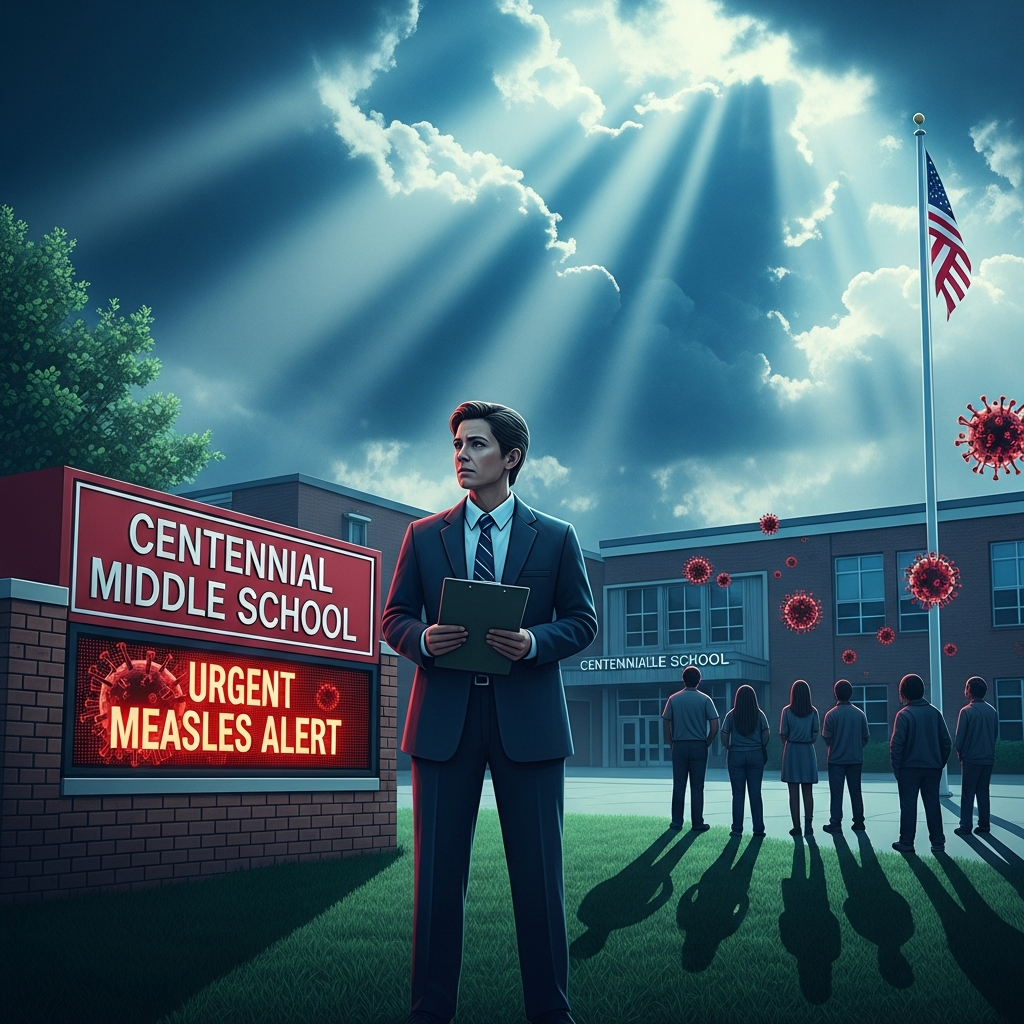
The highly contagious measles virus has prompted an urgent public health alert in Southeast Portland, with officials confirming a significant exposure event at Centennial Middle School. This development marks a critical juncture in Oregon’s ongoing battle against a recent surge in measles cases, highlighting the particular vulnerability of school environments to such rapid transmission. Health authorities are emphasizing immediate action for anyone who may have been present at the school during specific dates and times in early April.
This latest measles exposure underscores the importance of vaccination and swift public health response. As the virus continues to circulate across the state, communities must remain vigilant and informed about protective measures.
Critical Measles Exposure at Centennial Middle School
Oregon public health officials, including the Oregon Health Authority and Multnomah County health department, issued a joint statement detailing potential measles exposure at Centennial Middle School, located at 17650 S.E. Brooklyn St. The exposure occurred over several days, raising concerns about potential widespread transmission. An individual with confirmed measles was present at the school during these periods.
Specific exposure windows were identified as:
April 1: Between 9:20 a.m. and 6 p.m.
April 3: Between 9:20 a.m. and 6 p.m.
April 6-10: Daily, between 9:20 a.m. and 6 p.m.
Anyone who was at Centennial Middle School during these dates and times is strongly urged to contact a healthcare provider without delay. Prompt communication with medical professionals is essential to determine immunity status and guide appropriate next steps.
Why Schools Are Vulnerable to Measles Spread
Schools, with their dense populations and frequent close contact, present a significant risk for the rapid dissemination of highly infectious diseases like measles. Public health experts have long recognized this vulnerability. The virus, known as one of the most contagious respiratory pathogens, can linger in the air for up to two hours after an infected person has left a space. This makes crowded indoor settings particularly susceptible to outbreaks.
Centennial Middle School enrolls 849 students from a diverse population, including significant Latino and Asian American communities. While the school boasts a commendable vaccination rate of 94% among its students, this figure falls just shy of the 95% threshold generally required for “herd immunity.” Herd immunity protects the entire community, especially those too young or medically unable to be vaccinated. Approximately 5% of students have a documented nonmedical exemption for the second MMR dose.
Multnomah County’s Deputy Public Health Officer, Dr. Theresa Everson, expressed cautious optimism regarding containment efforts. This confidence stems from the school’s high vaccination rate and established state-mandated protocols for identifying and managing exposures.
Understanding the Measles Threat and Symptoms
Measles is an incredibly infectious airborne virus. It spreads primarily through respiratory droplets when an infected person breathes, talks, coughs, or sneezes. Unvaccinated individuals are at an extremely high risk, with the Centers for Disease Control and Prevention (CDC) reporting that 9 out of 10 unvaccinated people exposed to the virus will contract it. Notably, an infected person can transmit measles up to four days before the characteristic rash appears and for four days after its onset, making early containment challenging.
Symptoms typically emerge seven to 21 days after exposure. Initial signs often mimic a common cold, including:
Fever
Persistent cough
Runny nose
Red, watery eyes (conjunctivitis)
These early symptoms are followed by the distinctive measles rash. The rash usually starts on the face and spreads downwards to the rest of the body. It’s crucial not to dismiss these symptoms as a simple cold, especially if there has been a known exposure.
Serious Complications and High-Risk Groups
While many people recover from measles, it can lead to severe health complications. These include ear infections, pneumonia (a leading cause of measles-related death in young children), and potentially life-threatening brain swelling (encephalitis). In rare but tragic cases, measles can be fatal.
Certain demographics face a higher risk of developing severe complications:
Infants and children younger than 5 years old
Pregnant individuals
People with weakened immune systems (e.g., due to cancer or HIV)
The phrase “babies are sitting ducks” during measles outbreaks, as experts warn, underscores the extreme vulnerability of this group who are too young to receive their first MMR dose.
Public Health Response and What to Do If Exposed
Oregon health officials are implementing a standard, rigorous containment strategy. Portland Public Schools (PPS) has communicated with families, outlining the school district’s policy. Students and staff who are unvaccinated or cannot provide proof of measles immunity may be excluded from school or work for 21 days following their last date of exposure, potentially extending through May 1. This measure is critical to prevent further community spread.
Identifying susceptible adult staff can be more challenging, as schools typically don’t maintain staff vaccination records. The county health department is directly notifying exposed adults to assess risk and the need for isolation. Conversely, individuals with documented immunity—such as lab records of antibodies, a previous measles diagnosis, birth before 1957, or at least one dose of the measles vaccine—can continue with their regular activities.
If you suspect you have measles symptoms or believe you were exposed:
- Do NOT go directly to a doctor’s office, urgent care clinic, or emergency room without calling ahead.
- CALL AHEAD: Contact your healthcare provider or a local clinic first. This allows medical staff to prepare for your arrival, arrange for safe entry, and prevent potential exposure to others in waiting areas.
- For those without a primary care provider, Multnomah County clinics or student health centers offer appointments. You can call 503-988-5558 to schedule.
The Power of the MMR Vaccine and Oregon’s Measles Landscape
The measles, mumps, and rubella (MMR) vaccine is exceptionally effective in preventing infection. Two doses of the MMR vaccine provide approximately 97% protection against the virus, with one dose offering about 93% lifetime protection. This high efficacy is why vaccination is considered the cornerstone of measles prevention.
Oregon has seen a concerning uptick in measles activity. After only one confirmed case in 2023, the state recorded 31 infections in 2024—the highest total in over three decades. So far this year, Oregon has confirmed 14 cases, although officials caution that the true number is likely higher due to unreported cases. Most confirmed cases involve individuals who were unvaccinated or whose immunization status was unknown.
Wastewater surveillance, a tool used by the state health authority, has detected traces of the virus in several parts of Oregon. While not a definitive measure, this suggests that the virus may be circulating more widely than official confirmed case counts indicate.
The current measles exposure at Centennial Middle School is part of a broader pattern of recent alerts across the Portland area. Other confirmed exposure sites have included an emergency room, a Safeway in Southeast Portland, a restaurant in Gresham, a café in West Linn, and a healthcare facility in Oregon City. This widespread nature of exposures underscores the need for ongoing vigilance and high vaccination rates across all communities.
Frequently Asked Questions
When and where was the measles exposure reported at Centennial Middle School?
A measles exposure was reported at Centennial Middle School, located in Southeast Portland at 17650 S.E. Brooklyn St. The potential exposure periods occurred on April 1, April 3, and daily from April 6 through April 10. During these dates, an infectious individual was present at the school between 9:20 a.m. and 6 p.m. Public health officials have issued an urgent alert for anyone who was present during these specific times to take immediate action.
What steps should I take if I believe I was exposed to measles at Centennial Middle School?
If you were at Centennial Middle School during the specified exposure dates and times, you should immediately contact your healthcare provider. It is crucial to call ahead before visiting any clinic or hospital so that medical staff can make arrangements to prevent further exposure to others. Your provider will assess your immunity based on vaccination records, age, or previous infection and advise you on necessary precautions or testing.
Why is measles considered so dangerous, and how effective is the MMR vaccine?
Measles is highly dangerous due to its extreme contagiousness and potential for severe complications, including pneumonia, brain swelling, and even death. It spreads easily in crowded settings, and an infected person can transmit the virus before showing a rash. The MMR vaccine is highly effective: two doses provide approximately 97% protection against the virus, significantly reducing the risk of infection and severe illness. Vaccination is the most critical tool for preventing outbreaks and protecting vulnerable populations.
Stay Informed, Stay Protected
The measles exposure at Centennial Middle School serves as a powerful reminder of the virus’s persistent threat. While public health officials are working tirelessly to contain the spread, community cooperation is paramount. Knowing your vaccination status, recognizing symptoms, and taking prompt, appropriate action if exposed are vital steps in protecting yourself, your family, and the wider community. Stay informed through official public health channels and prioritize recommended vaccinations to bolster our collective defense against this preventable disease.