The crew of NASA’s Artemis II mission has successfully returned to Earth, marking a monumental achievement for human spaceflight and igniting new momentum for lunar exploration. After a rigorous 10-day journey around the Moon, astronauts Reid Wiseman, Victor Glover, Christina Koch, and Jeremy Hansen safely splashed down in the Pacific Ocean on Friday, April 10, 2026. This historic return, captured in an iconic image of beaming mission pilot Victor Glover and mission specialist Christina Koch, signifies a critical step in humanity’s ambitious journey back to the Moon and beyond.
A Triumphant Return: Artemis II Astronauts Back on Earth
The safe return of the Artemis II crew represents a profound success for NASA and its international partners. On April 10, the Orion capsule executed a precise splashdown in the Pacific, bringing the four astronauts home after their groundbreaking mission. Commander Reid Wiseman, pilot Victor Glover, and mission specialist Christina Koch of NASA, alongside Canadian Space Agency astronaut Jeremy Hansen, emerged from their module to a world celebrating their courage and achievement.
Immediately following splashdown, a meticulously coordinated recovery operation unfolded. The crew was first extracted from the Orion capsule into a small boat, then airlifted by helicopter to the USS John P. Murtha, a U.S. Navy recovery ship. On board the Murtha, they reconnected with NASA team members and personnel, a moment of profound relief and jubilation. The image of Glover giving a thumbs-up and Koch waving, their faces alight with joy, perfectly encapsulated the emotional high point of their safe return.
Navigating the Perilous Journey Home
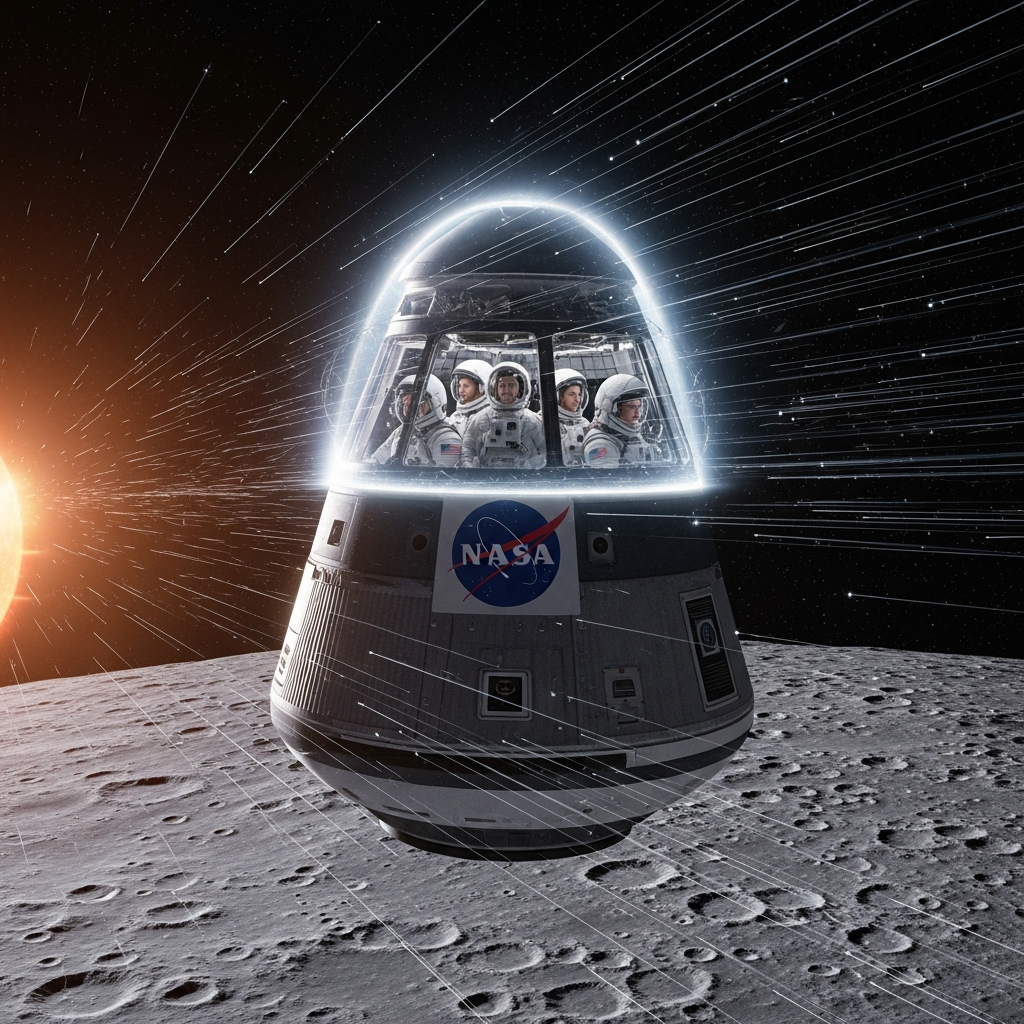
The journey back to Earth was anything but easy, demanding extraordinary resilience from both the crew and their spacecraft. Re-entry into Earth’s atmosphere saw the Orion capsule hurtling at speeds exceeding 24,000 miles per hour (38,000 kilometers per hour). During this blistering descent, the capsule’s exterior endured unimaginable temperatures, soaring up to 5,000 degrees Fahrenheit (2,760 degrees Celsius). This extreme environment tested the limits of engineering and human endurance.
Following atmospheric re-entry, the capsule executed a controlled splash landing, rocking gently on the ocean’s surface while awaiting extraction. The U.S. Navy played a crucial role, with a specialized dive team being the first to reach the Orion, assessing the astronauts’ health before assisting them aboard the USS John P. Murtha. Personnel from Helicopter Sea Combat Squadron 23 ferried the astronauts, showcasing the seamless collaboration between NASA and the military. This complex recovery process, requiring unique skills and equipment, underscores the extensive preparation that went into ensuring the crew’s safety after their deep-space odyssey.
Mission Milestones: A Decades-Long Leap Forward
The Artemis II mission stands as a testament to human ingenuity, marking the first crewed mission to the Moon since the conclusion of NASA’s Apollo program in 1972. Over its 10-day duration, the crew pushed the boundaries of human exploration, traveling an impressive total of 694,481 miles. They reached a maximum distance of 252,756 miles from Earth, surpassing the trajectory of the historic Apollo 13 mission in 1970.
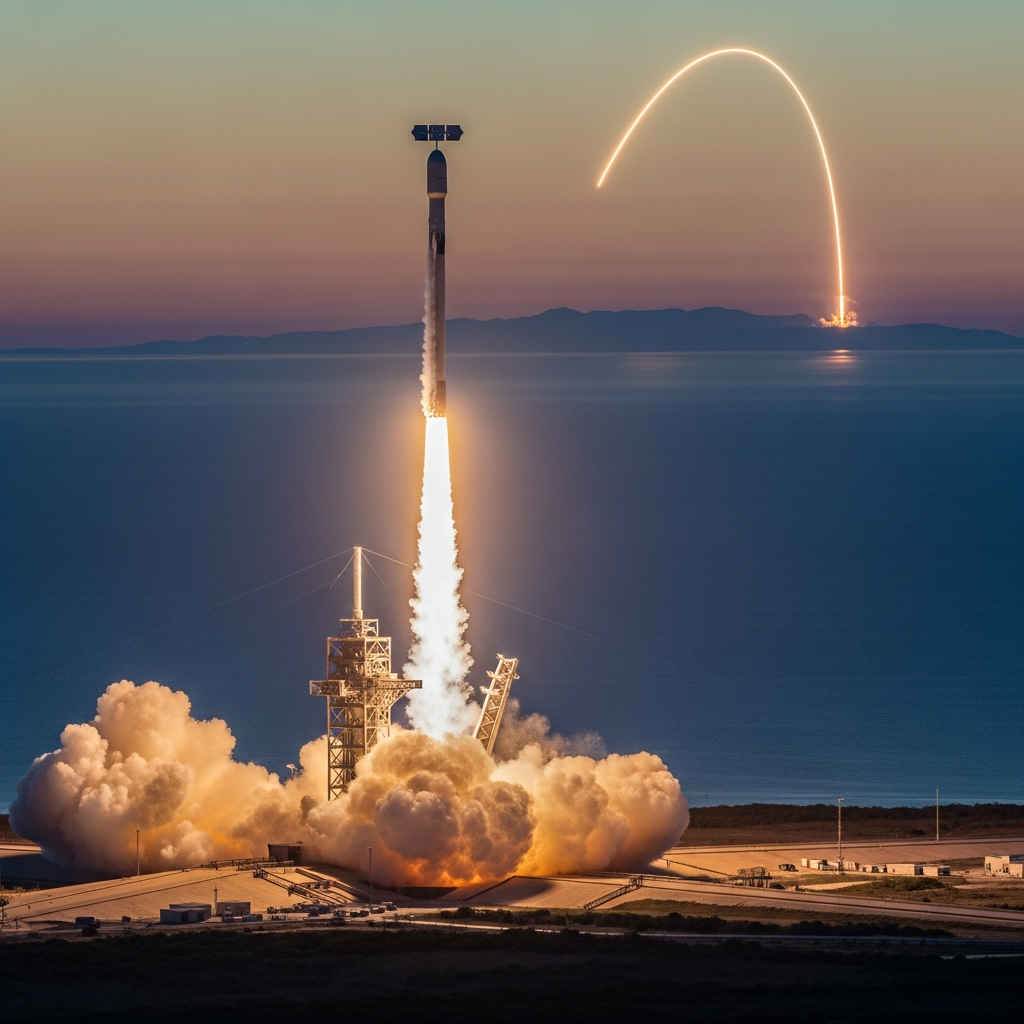
The mission began with a powerful launch on April 1 at 6:35 p.m. ET from Launch Pad 39B at Kennedy Space Center in Florida. The mighty Space Launch System (SLS) rocket generated an incredible 8.8 million pounds of thrust, flawlessly propelling the Orion spacecraft into orbit. Engineers later executed a critical maneuver, using Orion’s service module engine to direct the crew onto a lunar trajectory. This brought them within a close range of 4,067 miles from the Moon’s surface. During their April 6 flyby, the astronauts actively documented the lunar environment, capturing over 7,000 images. These visuals provided invaluable data, including breathtaking views of a solar eclipse and humanity’s first photo taken directly from the far side of the Moon.
Beyond the Technical: The Human Element of Artemis II
While the scientific and technical achievements of Artemis II are undeniably groundbreaking, the mission also powerfully showcased the human spirit. The “infectious joy” and “incredible bond” shared by the crew captured global attention and resonated deeply across social media throughout their journey. Astronauts were frequently seen hugging, cheering each other on, and even snapping photos of one another, demonstrating a profound camaraderie that transcended the immense technical challenges.
The enduring image of Glover and Koch, beaming smiles after enduring the grueling return journey, highlights that Artemis II accomplished more than just its technical goals. It reminded the world of the human element at the core of space exploration – the courage, the teamwork, and the sheer exhilaration of achieving the seemingly impossible. As NASA Associate Administrator Amit Kshatriya aptly put it, the success belonged to “thousands of people across fourteen countries who built, tested, and trusted this vehicle,” emphasizing the global collaboration that protected four human lives traveling at extreme speeds.
The Road Ahead: Paving the Way for Lunar Living
The successful completion of Artemis II is far more than a singular triumph; it is a critical springboard for NASA’s ambitious future lunar exploration plans. This mission served as an essential test flight, rigorously evaluating the Orion spacecraft’s life support systems, navigation capabilities, and even demonstrations of manual piloting by the crew. The data gathered from Artemis II will be instrumental in guiding the preparations for the subsequent Artemis III mission, which is envisioned as another crewed lunar endeavor.
Beyond Artemis III, the agency plans for Artemis IV, aiming for a human moon landing. The ultimate vision of the Artemis program is to establish a sustained human presence on the Moon, utilizing it as a proving ground and a strategic stepping stone for future human missions to Mars. The strong partnership between NASA and the U.S. military, evident in the years-long effort including parachute testing at the U.S. Army’s Yuma Proving Ground, continues to be vital for these pioneering endeavors. The lessons learned and the confidence gained from Artemis II pave a clear path for humanity’s continued journey deeper into the cosmos.
Frequently Asked Questions
What was the primary purpose of the Artemis II mission?
The primary purpose of the Artemis II mission was to serve as a critical test flight for NASA’s Orion spacecraft and Space Launch System (SLS) rocket with a human crew. It was the first crewed mission to orbit the Moon since the Apollo program in 1972. The mission aimed to rigorously test Orion’s systems, including life support, navigation, and re-entry capabilities, and evaluate the crew’s experience in deep space, all without landing on the lunar surface. This was a crucial step to ensure the safety and success of future lunar landing missions.
Where did the Artemis II crew splash down and get recovered?
The Artemis II crew successfully splashed down in the Pacific Ocean on Friday, April 10, 2026. Following their re-entry, the four astronauts were recovered in a multi-stage operation involving the U.S. Navy. They were extracted from their Orion capsule into a small boat, then airlifted by helicopter onto the USS John P. Murtha, an amphibious transport dock ship. This vessel was equipped with a specialized floodable well deck essential for the safe retrieval and initial medical evaluation of both the crew and the Orion spacecraft.
How does the success of Artemis II impact future human space exploration?
The success of Artemis II is profoundly significant for the future of human space exploration. It validates the critical systems and procedures necessary for long-duration crewed lunar missions, building confidence for subsequent endeavors. Specifically, it directly paves the way for Artemis III, which is planned to be another crewed mission to the Moon, and ultimately Artemis IV, which aims for a human moon landing. This mission brings humanity closer to establishing a sustained presence on the Moon and using it as a vital stepping stone for eventual human missions to Mars, expanding our reach deeper into the solar system.
Conclusion: A New Era of Lunar Exploration Begins
The triumphant return of the Artemis II astronauts marks a truly historic moment, not just for space agencies, but for all of humanity. Victor Glover, Christina Koch, Reid Wiseman, and Jeremy Hansen have etched their names into the annals of space exploration, demonstrating incredible bravery and skill. Their 10-day journey around the Moon, culminating in a successful splashdown, has provided invaluable data and reaffirmed the readiness of the Orion spacecraft and SLS rocket for the next ambitious phases of the Artemis program. As the world celebrates this achievement, anticipation builds for Artemis III and Artemis IV, promising a future where humanity once again walks on the lunar surface, setting its sights even further — to Mars.