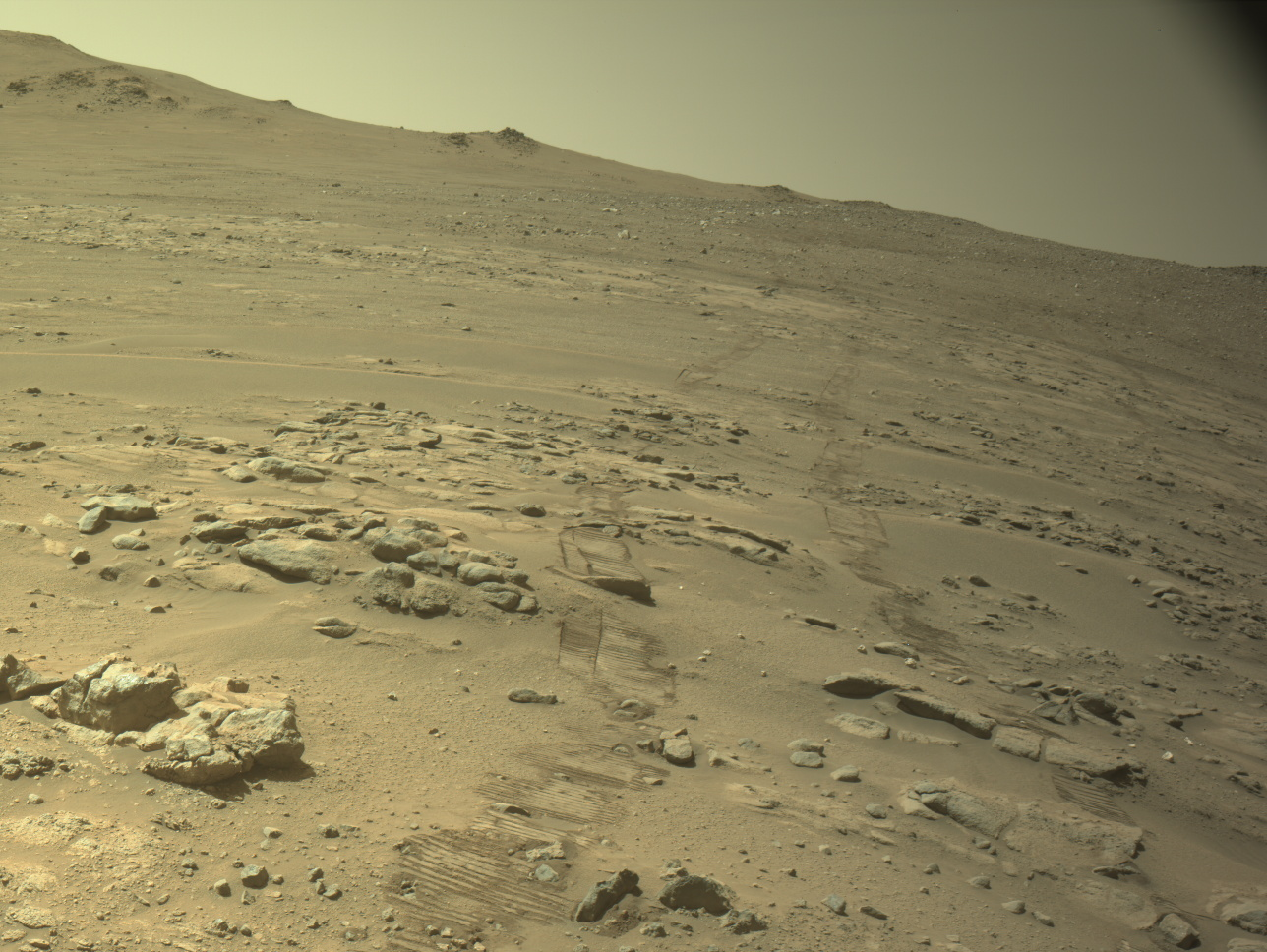
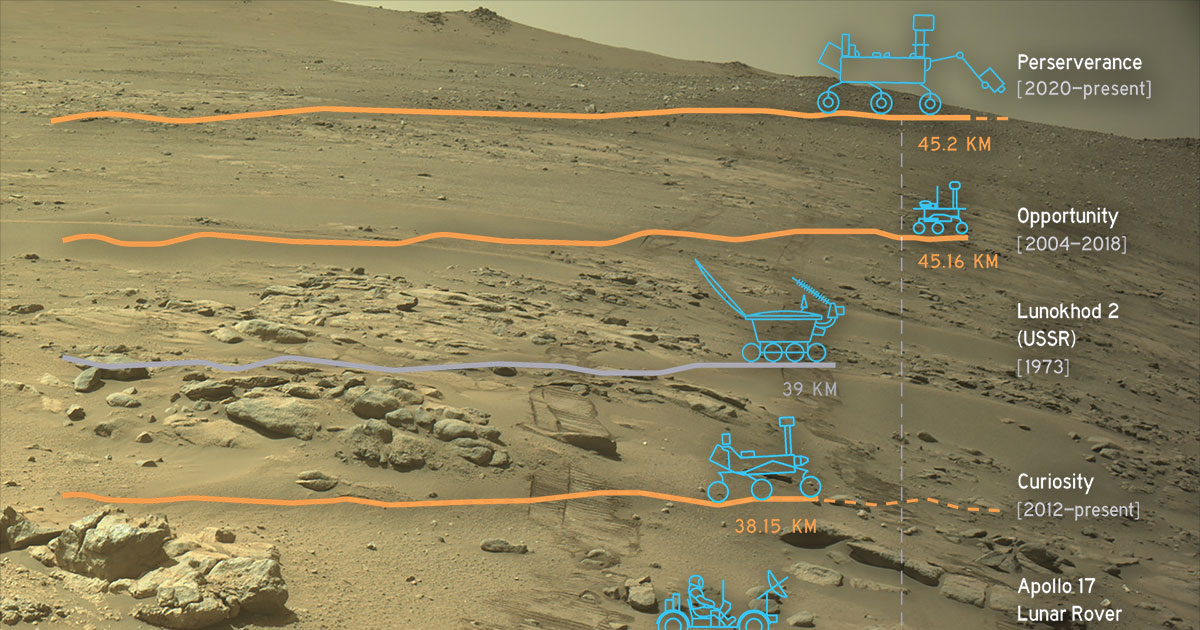
The perseverance Mars rover record for the longest distance traveled on the surface of another world was officially broken on October 11, 2026, as the robotic explorer surpassed the long-standing mileage held by NASA’s Opportunity rover. According to reports from the NASA Jet Propulsion Laboratory (JPL), the rover reached a total distance of 28.10 miles (45.22 kilometers) on its 2,006th Martian day, or sol, marking a pivotal moment in the history of autonomous planetary exploration.
Key Takeaways
- New Distance Milestone: Perseverance has traveled 28.10 miles, eclipsing the previous record of 28.06 miles set by the Opportunity rover.
- Unprecedented Speed: The rover achieved this record in just 5.5 years, whereas Opportunity required nearly 15 years of operation to reach its peak mileage.
- Autonomous Navigation: The feat was driven by the advanced AutoNav system, which allows the rover to “think while driving” by processing 600,000 measurement points per look.
- Mission Extension: NASA has extended the mission through the end of 2028, allowing for continued exploration of the Jezero Crater rim.
- Scientific Objective: The rover is currently targeting the Lac de Charmes and Idubi regions to investigate ancient hydrothermal systems.
- Perseverance: Over 90% of its total distance has been driven using AutoNav.
- Spirit and Opportunity: Approximately 5% of their total distance was covered using autonomous systems.
- For the Scientific Community: The increased mobility means a much higher probability of discovering biosignatures. The ability to reach ancient crustal blocks like Rainbow Falls—a 328-foot-wide structure of ancient crust—allows for a more comprehensive understanding of whether life ever existed on Mars.
- For Robotics and AI Developers: The success of AutoNav serves as a real-world proof of concept for high-level autonomous navigation in extreme, unpredictable environments. The ability to process 600,000 data points in real-time to navigate a hazardous landscape is a benchmark for terrestrial autonomous vehicles and deep-space exploration.
- For Space Enthusiasts and Investors: This milestone validates the long-term investment in Mars exploration programs. It proves that mission extensions are not just theoretical possibilities but are viable, high-yield extensions of existing hardware.
- Exploring the Idubi Region: Searching for evidence of ancient hydrothermal activity.
- Targeting Rainbow Falls: Investigating the 100-meter-wide block of ancient crust to understand the early history of the Martian surface.
- Software Optimization: Implementing new software to allow the rover to “steer less and roll more,” further increasing efficiency.
- Solar Glare Mitigation: Developing better ways to manage navigation camera artifacts to extend daily operational windows.
- www.jpl.nasa.gov
- earthsky.org
- www.collectspace.com
- www.cbsnews.com
What Happened: Breaking the Off-World Barrier
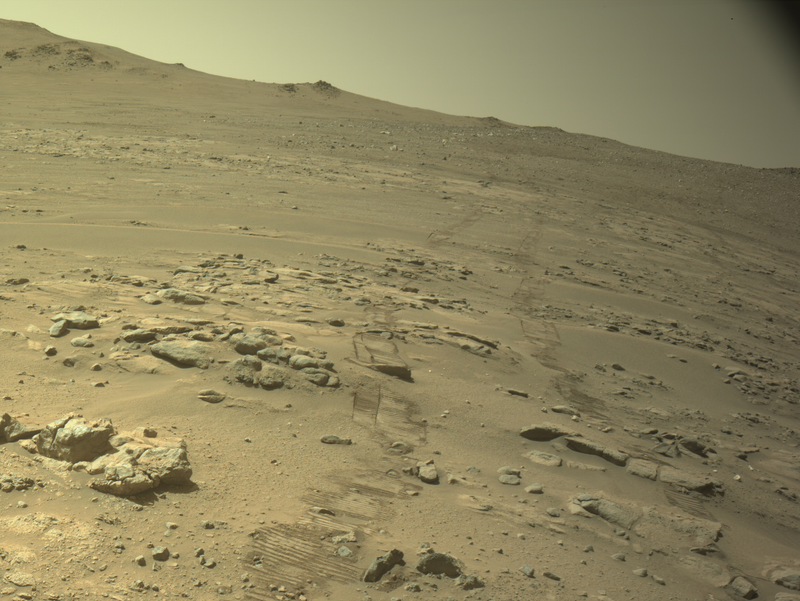
On October 11, 2026, NASA’s Perseverance rover completed a 299.6-foot (91.31-meter) driving segment that propelled it past the previous distance record. This milestone occurred as the rover was traversing the western rim of the Jezero Crater, specifically within the Lac de Charmes region. As of the official announcement, the rover’s total odometer reading stands at 28.10 miles (45.22 kilometers), narrowly beating the 28.06 miles (45.16 kilometers) logged by the Opportunity rover during its mission from 2004 to 2018.
While the distance difference between the two rovers is minimal—only 0.04 miles—the timeframe in which these distances were covered represents a massive leap in mission efficiency. While Opportunity’s journey was a marathon that spanned nearly 15 years, Perseverance reached the same milestone in approximately five and a half years. This rapid progression is a direct result of evolving robotic intelligence and more sophisticated mobility systems.
Why It Matters: The Link Between Mobility and Science
In planetary exploration, distance is not merely a metric of travel; it is a metric of scientific opportunity. Every mile driven by Perseverance represents access to new geological chapters of Mars’ history. The rover’s current trajectory is focused on the western rim of the Jezero Crater, an area that scientists believe contains some of the oldest terrain in the solar system.
By reaching these distant reaches, the science team can investigate the Idubi target area, where they hope to find evidence of ancient hydrothermal systems—underground networks of heated water that could have provided the necessary conditions for microbial life. The ability to move quickly between diverse geological sites, such as the crater floor, delta fans, and crater rims, allows NASA to maximize the scientific yield of every sol. To date, Perseverance has successfully collected 29 rock and regolith samples, providing a diverse catalog of Martian material for future study.
The Evolution of Off-World Driving
The history of driving on other celestial bodies shows a clear trajectory toward increasing autonomy and distance. While humans and robots have traveled significant distances on the Moon, the Martian rovers have pushed the boundaries of how much a machine can accomplish without direct human steering.
| Vehicle | Planet/Body | Total Distance (Miles) | Mission/Era |
|---|---|---|---|
| Perseverance | Mars | 28.10 | 2021–Present |
| Opportunity | Mars | 28.06 | 2004–2018 |
| Lunokhod 2 | Moon | 24.20 | 1973 |
| Apollo 17 (LRV) | Moon | 22.20 | 1972 |
| Curiosity | Mars | ~27.60 | 2012–Present |
| Spirit | Mars | 4.80 | 2004–2010 |
| Sojourner | Mars | 0.06 | 1997 |
Deep Dive: The Technology of “Thinking While Driving”
The primary engine behind the Perseverance Mars rover record is the AutoNav (Autonomous Navigation) system. This technology has fundamentally changed how NASA manages its robotic explorers. Unlike its predecessors, which relied heavily on Earth-based planners to map out every move, Perseverance possesses the onboard capability to navigate complex terrain in real-time.
A Leap in Data Processing
To understand the scale of this technological advancement, one must look at the sheer volume of data being processed. The first Mars rover, Sojourner, assessed its path using only 20 measurement points. In contrast, Perseverance processes 600,000 measurement points with every single “look” it takes. This allows the rover to construct highly detailed 3D hazard maps and plot courses between waypoints simultaneously while in motion.
Mark Maimone, the Deputy Team Chief for Robotic Operations on Perseverance, noted that the rover’s autonomy makes it a superior driver compared to previous generations. “Given the autonomy to just go, Perseverance is a better driver than the one that landed,” Maimone stated. This “thinking while driving” capability allows the rover to operate at or near its top speed, covering as much as 1,351 feet (412 meters) in a single Martian sol.
Efficiency and Autonomy Statistics
The shift from manual to autonomous driving is best illustrated by the percentage of total distance covered using AutoNav:
This massive increase in autonomy means that the mission is no longer tethered to the slow, iterative process of waiting for instructions from Earth for every meter of movement. Instead, the rover can proactively navigate obstacles, allowing for much longer and more productive driving sessions.
Stakeholders and Expert Analysis
The achievement has been met with praise from the leadership at the Jet Propulsion Laboratory (JPL). Steven Lee, the project manager of the Curiosity and Perseverance rovers, emphasized that the milestone was not just an expected outcome but a testament to how far robotic technology has progressed.
“It is an honor to be working on Perseverance at a moment when the technology has evolved to the point that drives like these are routine,” Lee said in a statement. He further noted that the original mission design had only called for 12.4 miles of driving. “We’ve blown well past that, and with all mobility systems fully operational and favorable extended-ground-life test results, we expect Perseverance to keep adding to this record for many years to come.”
The Next Technical Frontier: Overcoming Environmental Constraints
Despite the success, the mission is not without its technical hurdles. One of the most significant challenges facing the rover is the Martian environment itself—specifically, the behavior of light. Currently, sunlight glare in the navigation cameras can hinder the rover’s ability to see clearly.
According to Maimone, this glare is the reason why the rover often has to park by mid-afternoon if it is traveling toward the Sun. However, engineers are already looking toward the future. Maimone suggested that if software can be developed to help the rover “see past” these solar artifacts, it could significantly extend the working day for all future Mars missions.
What It Means for You
The implications of the Perseverance Mars rover record extend beyond the halls of NASA and JPL. Depending on your field of interest, this milestone offers different perspectives:
Counterpoints and Open Questions
While the milestone is a triumph, it is not without its complexities. One critical question remains: how much longer can the mechanical systems endure the harsh Martian environment? While Steven Lee expressed optimism about the rover’s longevity, the physical wear and tear of driving over abrasive Martian regolith is a constant variable.
Additionally, there is the scientific uncertainty inherent in exploration. While the team “hopes” to find traces of ancient hydrothermal systems in the Idubi region, the presence of such systems—and the potential for life within them—remains an unconfirmed hypothesis. The rover’s ability to reach these sites is a prerequisite for discovery, but it does not guarantee it.
What Happens Next
NASA has already approved a mission extension that began in October 2026. This extension is designed to allow Perseverance to continue its intensive exploration of the Jezero Crater rim through the end of 2028.
As the rover moves forward, its primary objectives include:
Frequently Asked Questions
How much further did Perseverance drive than Opportunity?
Perseverance has driven 28.10 miles, which is 0.04 miles further than the 28.06 miles recorded by the Opportunity rover. While the distance gap is small, Perseverance reached this milestone significantly faster, taking about 5.5 years compared to Opportunity’s nearly 15 years.
What is AutoNav and why is it important?
AutoNav is Perseverance’s autonomous navigation system. It is critical because it allows the rover to “think while driving,” meaning it can image terrain, create 3D hazard maps, and plan its own path without waiting for instructions from Earth. This has increased the rover’s driving efficiency from roughly 5% (on previous rovers) to over 90%.
Where is Perseverance currently located?
As of October 2026, the rover is exploring the western rim of the Jezero Crater, specifically moving through the Lac de Charmes region toward the Idubi target area.
How long is a Martian sol?
A sol is a single solar day on Mars. It is slightly longer than an Earth day, which allows scientists to track the rover’s progress and daily activities using a specific Martian calendar.
Closing
The breaking of the Perseverance Mars rover record is more than a simple odometer reading; it is a demonstration of how far autonomous robotics has come. By combining advanced AI with robust mechanical engineering, NASA has transformed the way we explore other worlds, turning what was once a slow, manual process into a highly efficient, self-directed journey of discovery. As the rover continues toward the end of its extended mission in 2028, the scientific community awaits the secrets that the ancient rocks of Jezero Crater may finally reveal.
References
Featured image: Image via jpl.nasa.gov