The dodgers NLCS loss on Monday afternoon at American Family Field has left the Los angeles Dodgers in a precarious position, trailing the Milwaukee Brewers 2-0 in the National League Championship series. In a game characterized by offensive stagnation for Los Angeles and a relentless relief performance from Milwaukee, the 7-4 defeat signals a significant shift in momentum as the series prepares to move to Los Angeles.
Key Takeaways
- Series Deficit: The Dodgers now trail the Brewers 2-0 in a best-of-seven series, marking their largest series deficit since the 2023 NLDS.
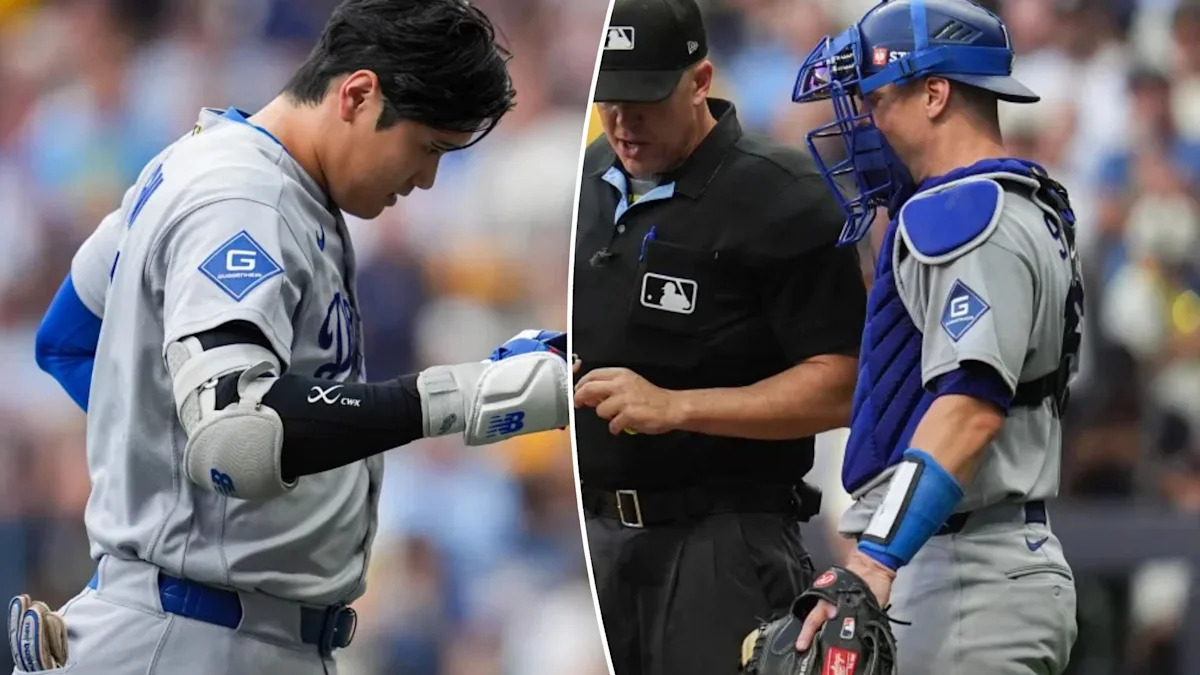
- Offensive Collapse: Los Angeles managed only three total hits during the game, with core stars Shohei Ohtani and Will Smith failing to record a hit.
- Bullpen Dominance: The Milwaukee Brewers’ bullpen was impenetrable, retiring all 15 batters faced over five innings of work to seal the victory.
- Strategic Controversy: Decisions regarding the Automatic Ball-Strike System (ABS) and the choice not to challenge umpire Chris Segal played a role in early Brewers scoring.
- Scoring Context: While the final score was 7-4, analysts noted the score was “flattering” to the Dodgers, as much of their production came from Brewers’ defensive errors and wild pitches.
- Lineup Reconfiguration: With Ohtani and Smith struggling, manager Dave Roberts may need to reconsider the batting order to find more rhythm and avoid predictable matchups.
- Pitching Strategy: The Dodgers must find a way to attack the Brewers’ relievers. The team was hitless in all four at-bats with runners in scoring position against Henderson, and they fared no better against the bullpen.
- Psychological Resilience: Recovering from a 2-0 deficit requires a mental reset. The Dodgers must move past the “chaos” of Game 2 and establish a more disciplined approach at the plate.
- Game 3: Scheduled for Wednesday evening at 5 p.m. on FS1. The Dodgers are expected to start Blake Snell, though Dave Roberts has not yet officially confirmed the rotation. The Brewers are slated to start left-hander Robert Gasser.
- Game 4 Potential: There is speculation that Dustin May could potentially be available to start Game 4 for the Brewers, which would present another significant challenge for the Dodgers’ hitters.
- sports.yahoo.com
- www.truebluela.com
What Happened in Game 2
On Monday, October 13, 2026, the Milwaukee Brewers secured a 7-4 victory over the Los Angeles Dodgers, capitalizing on a combination of pitching volatility and a complete lack of offensive rhythm from the Dodgers’ lineup. The game began with immediate chaos, featuring four lead changes and two ties, before Milwaukee established dominance in the later innings.
Early in the contest, Dodgers starter Yoshinobu Yamamoto struggled to find his command. After single runs were traded in the first inning, Yamamoto faced a grueling battle with Brewers first baseman Jake Bauers. According to the Fox broadcast, the plate appearance lasted seven minutes and 15 seconds, involving 12 pitches—the most in any single appearance of Yamamoto’s major league career. Bauers eventually earned a walk to load the bases, and shortly thereafter, Yamamoto hung a curveball to Christian Yelich, who singled to drive in two runs. This sequence ended Yamamoto’s day after he had thrown only 75 pitches to record eight outs, marking his shortest postseason start with the Dodgers.
While the Brewers’ starter, Logan Henderson, was not perfect, the Dodgers’ offense failed to punish him effectively. Henderson allowed only three hits, but his struggles with control proved costly. A wild pitch in the first inning allowed Mookie Betts to reach third and eventually score, and subsequent throwing errors on pickoff attempts and sacrifice plays allowed Tommy Edman to score multiple times. However, the Dodgers’ inability to generate hits meant they were essentially riding the wave of Milwaukee’s mistakes rather than driving the game themselves.
Why the Dodgers NLCS Loss Matters
The significance of this loss cannot be overstated. In a best-of-seven series, falling behind 2-0 puts immense psychological and mathematical pressure on a team. For the Dodgers, a franchise with championship aspirations, this deficit represents a high-stakes crisis. The series now shifts to Los Angeles, where the Dodgers must win Game 3 to avoid a near-impossible climb toward a series win.
Furthermore, the game highlighted a structural vulnerability in the Dodgers’ lineup. The inability of the No. 4 and No. 5 hitters to produce against high-leverage relief pitching suggests that the Brewers have identified a blueprint for neutralizing Los Angeles. If the Dodgers cannot find a way to counter the Brewers’ bullpen, the series could end prematurely in Milwaukee.
Deep-Dive: The Offensive Void
The most alarming aspect of the Dodgers NLCS loss was the complete silence from the heart of the order. Shohei Ohtani, batting fourth, was unable to provide the power or contact expected of a superstar. While the primary article reported Ohtani was hitless in four at-bats with two strikeouts, other reports from Yahoo Sports indicated a more severe struggle, citing an 0-for-8 performance in Game 2. Throughout this postseason, Ohtani has recorded only three singles in 19 at-bats and has yet to record an extra-base hit.
Will Smith faced similar struggles. Dropped to fifth in the batting order for Game 2, Smith went hitless in four at-bats. His postseason statistics are equally concerning, with only one single in 23 at-bats and eight strikeouts. Smith addressed the media in Milwaukee, stating, “Obviously want the results to be a little better, but at the end of the day, it’s [six] games at the plate. No panic from me. So I’ll be fine.”
| Player | Game 2 At-Bats | Postseason Hits | Postseason Strikeouts |
|---|---|---|---|
| Shohei Ohtani | 4 (or 8 per Yahoo) | 3 singles (in 19 AB) | 3 (in Game 2) |
| Will Smith | 4 (or 8 per Yahoo) | 1 single (in 23 AB) | 8 |
The Strategic Debate: ABS and the Challenge Decision
A critical turning point in the game involved the use of the Automatic Ball-Strike System (ABS) and the decision-making process of the Dodgers’ coaching staff and catcher. In both the first and third innings, the Dodgers missed opportunities to challenge calls that appeared to be third strikes.
In the first inning, Brice Turang battled back from an 0-2 count to eventually score a run. In the third, Turang worked his way from an 0-2 count to a walk. According to Yahoo Sports, catcher Will Smith opted not to challenge umpire Chris Segal on pitches that Yamamoto believed were in the strike zone. Smith later explained his reasoning to reporters: “It was kind of early in the game, we kind of had him on the ropes. I figured we could get him out there [without risking the challenges].”
Yamamoto expressed a different perspective on the margin for error, describing the pitches to Turang as being “too fine a line on the [edge of the] strike zone” to justify a challenge. This tactical hesitation allowed the Brewers to build early momentum and put the Dodgers’ defense on its heels.
The Milwaukee Bullpen: A Wall of Dominance
If the Dodgers’ offense was a non-factor, the Brewers’ bullpen was the deciding factor. After Logan Henderson exited in the fifth inning, the Milwaukee relief corps took complete control of the game. The bullpen—comprising Dustin May, JoJo Romero, Abner Uribe, and Aaron Ashby—faced 15 batters and retired all of them.
This perfect stretch of pitching effectively neutralized any hope of a Dodgers comeback. The appearance of Dustin May was particularly noteworthy; May, a former Dodger, provided crucial relief that limited Los Angeles’ ability to rally. The performance by the Brewers’ bullpen mirrors their success in Game 1, where they provided 4 2/3 scoreless innings.
Aaron Ashby earned the save by pitching multiple innings, demonstrating the depth and reliability of the Milwaukee staff. This level of dominance has become the defining characteristic of the Brewers’ postseason run, as they have consistently found ways to shut down high-profile lineups.
What It Means for the Dodgers
For the Los Angeles Dodgers, the path forward requires immediate and drastic adjustments. Fans and analysts alike are looking toward the following implications:
Counterpoints and Open Questions
While much of the criticism has focused on the Dodgers’ lack of hitting, some analysts argue that the game’s outcome was heavily influenced by the officiating and the nuances of the ABS. Was the decision not to challenge a strategic error, or was it a reasonable way to preserve resources for later in the series?
Additionally, there is the question of whether the Dodgers’ offensive slump is a temporary trend or a systemic issue when facing elite relief pitching. While the score of 7-4 suggests a competitive game, the fact that the Dodgers only recorded three hits raises questions about whether they are truly capable of matching the Brewers’ run production in a high-stakes environment.
There is also the question of the Brewers’ pitching depth. While the bullpen was perfect in Game 2, can they maintain this level of intensity throughout the remainder of the series, or will fatigue begin to play a role?
What Happens Next
The NLCS now shifts to Los Angeles, where the Dodgers will attempt to save their season.
Frequently Asked Questions
Why did Yoshinobu Yamamoto leave the game so early?
Yoshinobu Yamamoto struggled with his command early in Game 2, most notably during a lengthy 12-pitch, seven-minute plate appearance against Jake Bauers. After throwing 75 pitches to record only eight outs, the Dodgers decided to pull him from the game to prevent further damage.
How many hits did the Dodgers record in Game 2?
The Los Angeles Dodgers recorded only three hits throughout the entire game. Most of their scoring was facilitated by errors and wild pitches from Brewers starter Logan Henderson, rather than sustained offensive pressure.
Is Shohei Ohtani struggling in the postseason?
Yes, Shohei Ohtani has faced significant challenges in this postseason. In Game 2, he was hitless in four at-bats (with some reports suggesting he was 0-for-8). His overall postseason stats include only three singles in 19 at-bats, and he has yet to record an extra-base hit.
What is the current status of the NLCS series?
The Milwaukee Brewers currently lead the National League Championship Series 2-0 against the Los Angeles Dodgers. The series is a best-of-seven format, and the next game will take place in Los Angeles.
Closing
The Dodgers NLCS loss serves as a stark reminder of the thin margins in postseason baseball. Between the strategic decisions regarding the ABS and the overwhelming dominance of the Brewers’ bullpen, the Dodgers find themselves on the brink of elimination. As the series moves to Los Angeles, the focus shifts to whether the Dodgers’ star-studded lineup can finally find its footing or if the Brewers’ pitching depth will continue to dictate the terms of the series.
References
Featured image: Image via Yahoo Sports