The Francis Halzen nobel Prize announcement on October 6, 2026, has signaled a transformative moment for the field of astrophysics, recognizing the man who turned the frozen depths of Antarctica into a window to the universe.
Key Takeaways
- The Award: Belgian-American physicist Francis Halzen was awarded the 2026 Nobel Prize in Physics for his leadership in developing the icecube Neutrino Observatory.
- The Discovery: Halzen’s work enabled the detection of high-energy neutrinos, providing a new way to observe violent cosmic events like exploding stars and black holes.
- scientific Impact: The discovery has birthed “multimessenger astronomy,” combining neutrino data with traditional light-based and gravitational-wave observations.
- Engineering Feat: The observatory utilizes a cubic kilometer of Antarctic ice, embedded with over 5,000 sensors to track “ghostly” particles.
- Future Outlook: While the scientific community celebrates, the project faces potential financial hurdles due to proposed U.S. budget reductions for 2027.
- Acceleration: High-energy neutrinos are accelerated at the centers of distant, violent galaxies.
- Collision: As these neutrinos travel to Earth, they occasionally strike an atom in a water ice molecule within the Antarctic ice sheet.
- Light Production: This collision triggers a shower of light (Cherenkov radiation).
- Reconstruction: Specialized sensors, embedded a mile beneath the surface, collect this light to reconstruct the neutrino’s energy and its direction of origin.
- Marie Curie (1903): For her work on radioactivity.
- Albert Einstein (1921): For his discovery of how light and matter interact.
- Frederick Reines (1995): For the discovery of low-energy neutrinos.
- For the Scientific Community: The win validates the “multimessenger” approach, encouraging more collaborative, large-scale experiments that combine different types of data to solve cosmic mysteries.
- For Students and Researchers: It serves as a powerful example of how a single, well-reasoned scientific vision can lead to a global, multi-decade project that changes a field of study.
- For Taxpayers and Policymakers: The tension between the Nobel-level success of IceCube and the proposed 2027 budget cuts highlights the ongoing debate over the value and necessity of funding “big science”—projects that may not have immediate commercial applications but provide foundational knowledge of the universe.
- December 10, 2026: The official Nobel Prize ceremony will be held in Stockholm, marking the anniversary of Alfred Nobel’s death.
- 2027 Budget Cycle: The scientific community will be watching closely to see how the proposed budget cuts to IceCube are handled by the U.S. government.
- IceCube-Gen2 Development: Plans are underway to expand the observatory to cover eight cubic kilometers of ice, a project intended to increase detection capacity by tenfold.
- 2033: This is the projected year when the IceCube-Gen2 extension is expected to become fully operational, potentially revolutionizing our ability to see the most violent parts of the universe.
- www.scientificamerican.com
- www.cbc.ca
- www.cnn.com
The Announcement in Stockholm
On Tuesday, October 6, 2026, the Royal Swedish Academy of Sciences officially announced that Francis Halzen is the recipient of the 2026 Nobel Prize in Physics. The recognition comes for his “decisive contributions to the IceCube Neutrino Observatory and the discovery of high-energy neutrinos of astrophysical origin,” according to the Academy.
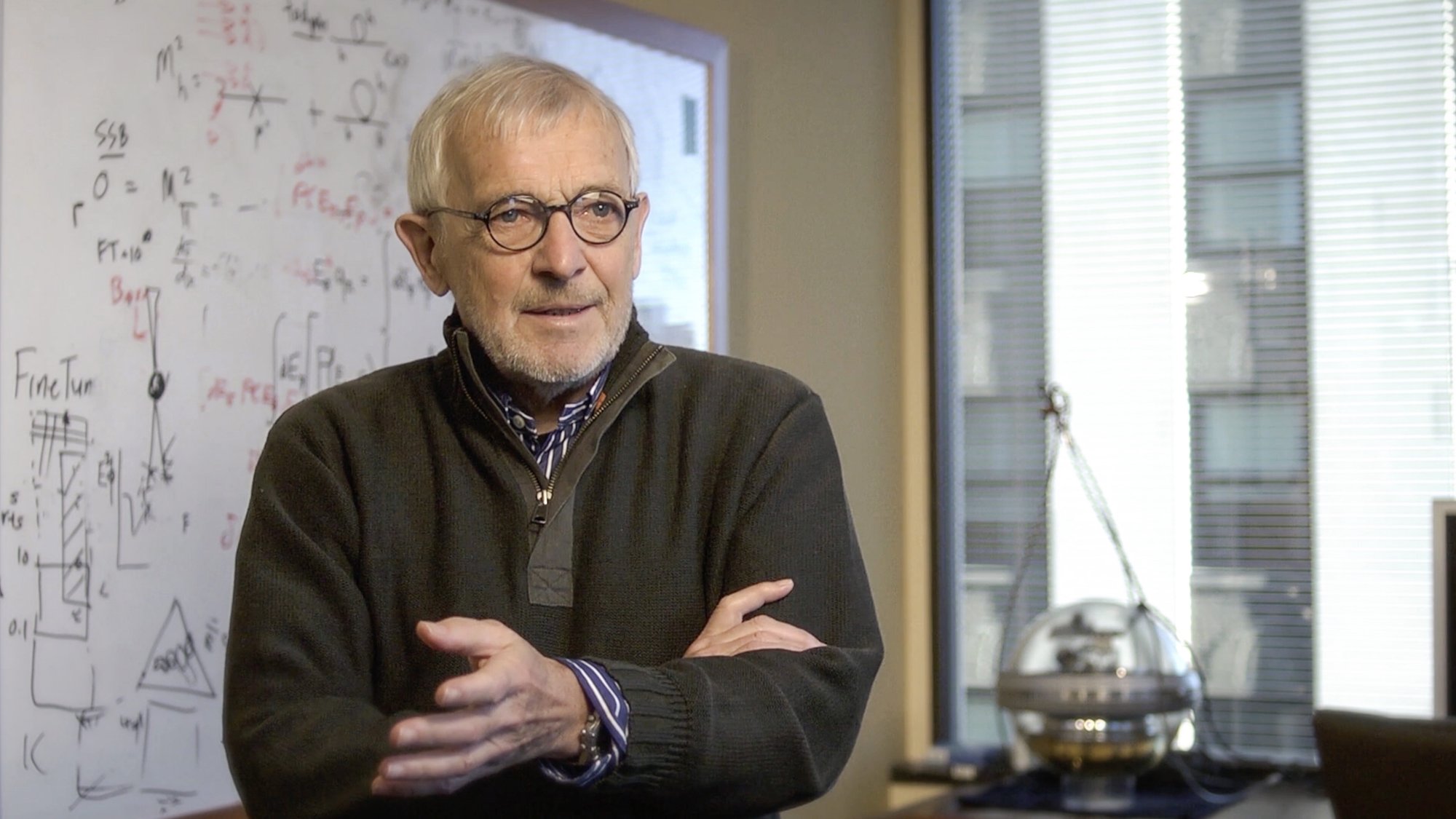
Halzen, an 82-year-old professor at the University of Wisconsin–Madison, received the news while attending a scientific conference in Italy. Speaking via telephone during the Nobel news conference, Halzen described the honor as both a “great surprise” and a “pleasure.”
“When we started this project, everybody realized this was maybe a good idea but very few thought it would work, including myself,” Halzen said, reflecting on the inherent risks of the decades-long endeavor. He further noted that the real scientific work is only beginning, stating, “The astronomy is still to come.”
The prize includes a cash award of 12 million Swedish kronor (approximately $1.2 million USD or $1.7 million CAD). The announcement follows the recent Nobel Prize in Medicine, which was awarded to three scientists for their work on brain decoding, and precedes the upcoming awards in chemistry, literature, and peace.
Why It Matters: The Power of “Ghostly” Messengers
To understand why the Francis Halzen Nobel Prize is so significant, one must understand the nature of the particles he sought to capture. Neutrinos are among the 17 fundamental particles known to science. They are often described as “ghostly” because they possess almost no mass and no electrical charge, allowing them to pass through planets, stars, and even the human body without changing or interacting with matter.
Trillions of these particles pass through a human being every second, most of them originating from the sun. However, the high-energy neutrinos that Halzen focused on come from the most violent and distant reaches of the cosmos. Because these particles can travel through cosmic dust clouds and dense matter that block traditional light, they act as messengers from environments that are otherwise invisible to standard telescopes.
Eva Olsson, a Nobel committee member, explained the importance of these particles during the award presentation in Stockholm. “The messengers bring information from the cosmos. They open the door to distant galaxies and tell us about the processes of exploding stars,” Olsson said.
This capability has paved the way for “multimessenger astronomy.” This scientific approach allows researchers to triangulate astronomical phenomena by combining neutrino data with electromagnetic radiation (light) and gravitational waves. By using multiple “messengers,” scientists can build a much more complete picture of cosmic events, such as the collision of black holes or the mechanics of supernovae.
Engineering an Observatory in the Ice
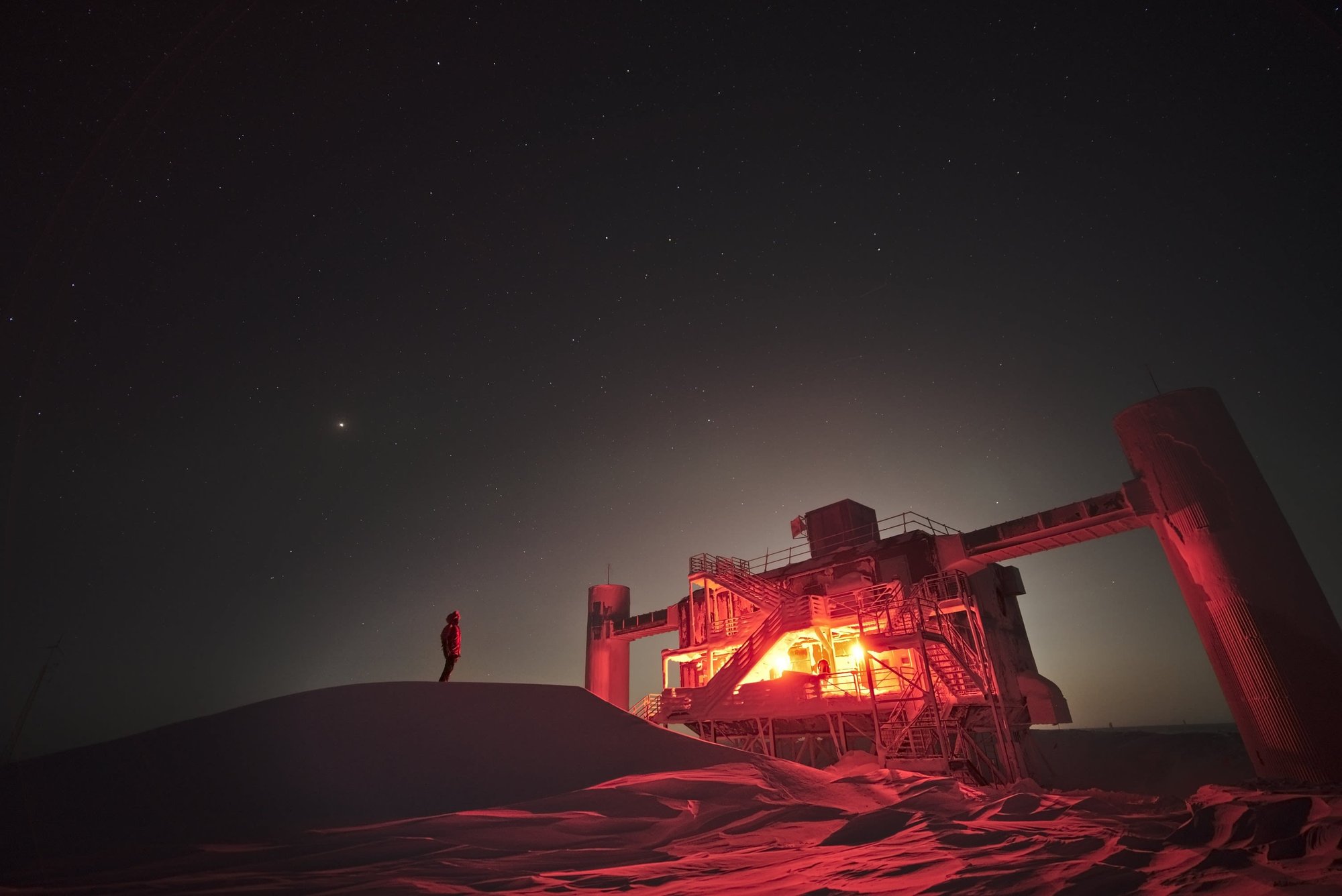
Building a telescope inside a cubic kilometer of ice is an unprecedented feat of engineering. Halzen’s vision, first presented in 1988, required a method to detect the rare moments when a neutrino actually does interact with matter.
When a high-energy neutrino strikes an atomic nucleus within the Antarctic ice, it produces a brief, detectable flash of light. To capture this, Halzen and his international team of researchers and engineers developed a massive array of sensors.
The IceCube Detection Process
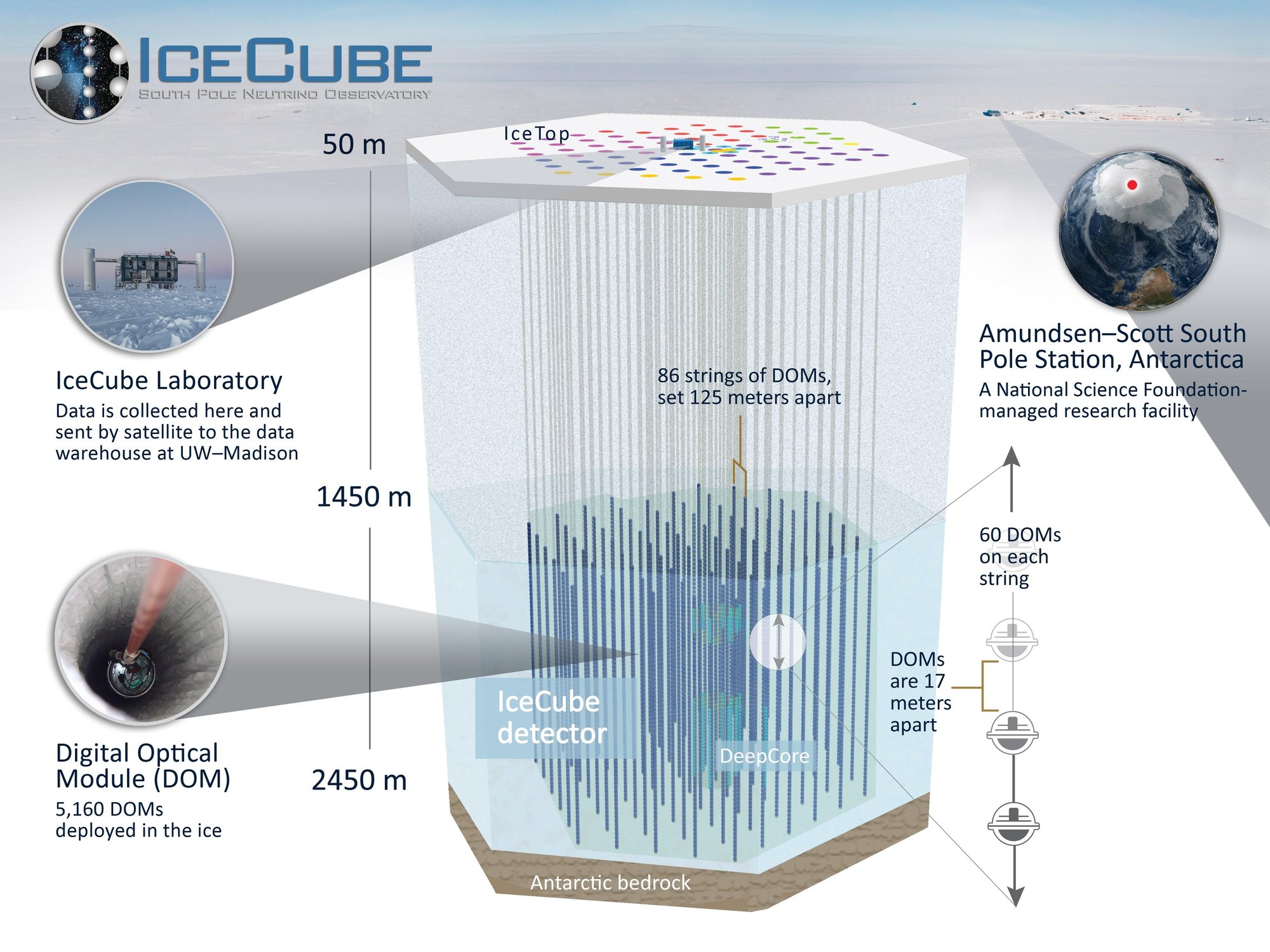
To install this equipment, researchers had to bore kilometer-deep holes into the ice using jets of hot water. They then lowered long strings of sensors, known as cables, into these holes. The completed IceCube observatory, which reached its full scale in 2011, consists of 5,160 light sensors distributed across 86 cables.
| Feature | IceCube Observatory | IceCube-Gen2 (Planned) |
|---|---|---|
| Volume of Ice | 1 cubic kilometer | 8 cubic kilometers |
| Operational Status | Fully operational since 2011 | Projected operational by 2033 |
| Detection Capacity | Baseline capability | ~10x current capacity |
| Primary Location | Amundsen–Scott South Pole Station | Antarctica |
Stakeholder Reactions and Scientific Context
The scientific community has reacted to the Francis Halzen Nobel Prize with widespread acclaim, noting that while the project required hundreds of people to realize, it began with a single, audacious vision.
Richard Fitzgerald, editor-in-chief of Physics Today, remarked on the uniqueness of the award, noting, “It’s been a while since the Nobel Prize has gone to a single individual and that points to the uniqueness of his vision.”
Michael H. Moloney, CEO of the American Institute of Physics, called the recognition “timely and important,” emphasizing that the success of IceCube demonstrates the value of large-scale, publicly funded science. “It shows that when we design audacious experiments, we can discover extraordinary things,” Moloney said.
Jonathan Bagger, CEO of the American Physical Society, highlighted the inherent scientific risk Halzen took. He noted that many scientists were skeptical that extragalactic sources would be bright enough to be detected, but Halzen’s ability to navigate the peer-review process and secure funding was a “testament to the system working.”
Even political leaders have weighed in. Bart De Wever, the Belgian Prime Minister, congratulated Halzen on a life dedicated to “unravelling the greatest secrets of the cosmos through its most minuscule manifestations.”
Historical Context of the Physics Nobel
Halzen joins an elite group of physicists who have shaped our understanding of the universe. The Nobel Prize in Physics has been awarded 119 times to 229 individuals since its inception in 1901.
Notable past recipients include:
Halzen’s win follows a recent trend of prizes focusing on quantum and computational advancements, such as the 2024 prize for techniques in building artificial intelligence models and the 2025 prize for quantum phenomena in macroscopic devices.
Counterpoints and Open Questions
Despite the celebration, the achievement is not without its challenges and controversies. One of the most significant risks was the scientific uncertainty of the project’s inception. As noted by Jonathan Bagger, there was no guarantee that the neutrinos from distant galaxies would be detectable at all. Halzen’s success was, in part, a successful gamble on a theoretical possibility.
Furthermore, the future of this type of science is currently facing political and financial headwinds. While the Nobel Prize celebrates the triumphs of large-scale experimental science, such projects are increasingly vulnerable to shifting political priorities.
In the United States, the Trump administration’s 2027 budget proposal reportedly calls for halving the funding for the IceCube project. This potential reduction in support creates an open question regarding the continuity of long-term astrophysical research and the ability of scientists to complete massive expansions like IceCube-Gen2.

What It Means for You
While the work of a particle physicist may seem distant from daily life, the implications of the Francis Halzen Nobel Prize reach several different groups:
What Happens Next
Several key milestones will shape the future of neutrino astronomy and the legacy of Francis Halzen:
Frequently Asked Questions
What are neutrinos?
Neutrinos are fundamental subatomic particles that are incredibly tiny and have almost no mass. They are often called “ghost particles” because they have no electrical charge and rarely interact with matter, meaning they can pass through entire planets without being stopped. They are produced by various cosmic processes, including nuclear fusion in the sun and the deaths of massive stars.
How does the IceCube observatory detect them?
Since neutrinos rarely hit anything, scientists must build a massive detector to increase the chances of a collision. IceCube uses a cubic kilometer of Antarctic ice as its detection medium. When a high-energy neutrino occasionally strikes an atom in the ice, it creates a flash of light. Sensors embedded deep in the ice capture this light, allowing scientists to calculate where the neutrino came from and how much energy it had.
Who is Francis Halzen?
Francis Halzen is a Belgian-American physicist and a professor at the University of Wisconsin–Madison. He is best known as the principal investigator and visionary behind the IceCube Neutrino Observatory. His work in pioneering neutrino astronomy and his leadership in organizing international research teams earned him the 2026 Nobel Prize in Physics.
What is the difference between IceCube and IceCube-Gen2?
IceCube is the current observatory, covering one cubic kilometer of ice and utilizing 5,160 sensors. IceCube-Gen2 is a planned expansion that will cover eight cubic kilometers of ice. This massive increase in size is intended to make the detector roughly ten times more sensitive, allowing for the observation of much rarer and more distant neutrino events.
Closing
The Francis Halzen Nobel Prize is more than an individual accolade; it is a recognition of a new way of seeing the cosmos
References
Featured image: IceCube Collaboration — via Scientific American