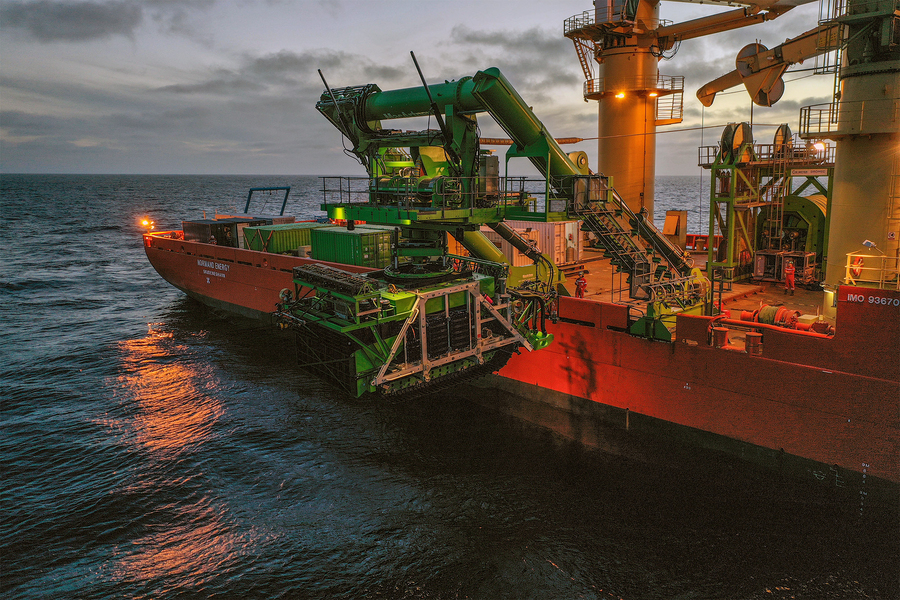
Deep-sea mining risks have emerged as a dual threat to both industrial safety and marine ecology following two major scientific revelations regarding mineral stability and sediment behavior. While the global race to secure metals for the green energy transition intensifies, researchers have identified unforeseen hazards: certain seafloor minerals can spontaneously combust when brought to the surface, and the sediment clouds stirred up by mining vehicles may behave as dense, low-lying “turbidity currents” rather than dispersing into the wider water column.
Key Takeaways
- Spontaneous Combustion: USGS researchers discovered that metal-sulfide rocks from the Escanaba Trough can catch fire in laboratory settings when exposed to oxygen.
- Chemical Culprit: The combustion is linked to nanocrystalline marcasite, an unstable form of iron sulfide that reacts violently to oxidation and mechanical stress.
- Sediment Behavior: MIT studies in the Clarion Clipperton Zone show that mining-induced sediment plumes remain within 2 meters of the seafloor, acting as dense turbidity currents.
- Regulatory Implications: These findings challenge existing environmental impact models and demand new safety protocols for maritime mining operations.
- Industry Tension: The International Seabed Authority (ISA) faces increasing pressure to balance mineral demand with these newly identified physical and environmental hazards.
- Mechanical Stress: The physical act of grinding or crushing the ore to extract precious metals like gold, silver, copper, or zinc.
- Oxygen Exposure: Bringing the ore to the surface introduces the primary catalyst for oxidation.
- Temperature Fluctuations: The change in ambient temperature can accelerate chemical reaction rates.
- For Investors and Mining Companies: The discovery of combustible minerals introduces a significant “hidden” operational cost. Risk management strategies must now account for specialized fire suppression systems and potentially slower, more controlled extraction and transport methods to prevent shipboard fires.
- For Regulators and Policymakers: The International Seabed Authority (ISA) cannot rely on outdated mathematical models. Environmental impact assessments (EIAs) must be updated to account for the dense, low-lying nature of sediment plumes, which may have different toxicological and smothering effects than previously thought.
- For Environmental Advocates: The data provides a new avenue for scientific scrutiny. The ability of sediment to stay concentrated near the seafloor suggests that the “footprint” of a single mining site may be much more intense and localized than previously assumed, potentially causing more severe damage to specific benthic communities.
- ISA Regulatory Frameworks: The next series of meetings by the International Seabed Authority will be crucial in determining whether new safety and environmental standards are codified into the mining code.
- Advanced Modeling: Scientific institutions will likely focus on creating more complex fluid dynamic models that incorporate the “turbidity current” findings to better predict plume spread.
- Pilot Testing: Future mining trials will likely need to include “stress tests” for mineral stability, simulating the transition from seafloor to surface to ensure fire safety.
- news.mit.edu
- www.sciencealert.com
What Happened: The Discovery of Combustible Minerals
In a series of laboratory tests conducted by the United States Geological Survey (USGS), scientists encountered a phenomenon that has fundamentally altered the safety profile of seafloor mineral extraction. During an investigation of the Escanaba Trough—a region located within the U.S. Exclusive Economic Zone (EEZ) off the Oregon–California border—researchers collected 57 hydrothermal rock samples in 2022. This expedition was a collaborative effort involving the Bureau of Ocean Energy Management (BOEM) and the National Oceanic and Atmospheric Administration (NOAA).
While most of the collected samples behaved predictably, two specific samples of metal-sulfide rocks exhibited extreme volatility. When researchers attempted to freeze-dry and crush the samples in a laboratory environment, the rocks spontaneously combusted. According to reports from the USGS, the reaction caused temperatures to spike above 100 °C, resulting in the complete oxidation of the original mineral samples.
This event was not a result of petroleum or tar contamination, as researchers had initially hypothesized. Instead, detailed mineralogical analysis revealed that the combustible samples were composed primarily of nanocrystalline marcasite. This specific form of iron sulfide is highly unstable when it encounters oxygen. The process of crushing and grinding the rocks provides the necessary mechanochemical energy to trigger a rapid oxidation reaction, which in turn generates intense heat, leading to fire.
Why It Matters: Safety and Environmental Complexity
The discovery of these deep-sea mining risks introduces a critical variable into the logistics of mineral transport. If large-scale mining of seafloor massive sulfide deposits proceeds, ships and processing facilities will be required to handle materials that possess the potential for rapid-onset fires. The USGS has warned that the transition from the high-pressure, low-oxygen environment of the deep seafloor to the oxygen-rich, lower-pressure environment of a surface vessel creates a volatile chemical landscape.
Simultaneously, the environmental stakes are being redefined by research into sediment movement. For years, a primary concern among environmentalists was that mining vehicles would create massive sediment plumes that would loft high into the water column, potentially affecting a vast range of marine life across different depths. However, research published in Science Advances by MIT ocean scientists suggests a different, more localized, but potentially more intense environmental impact.
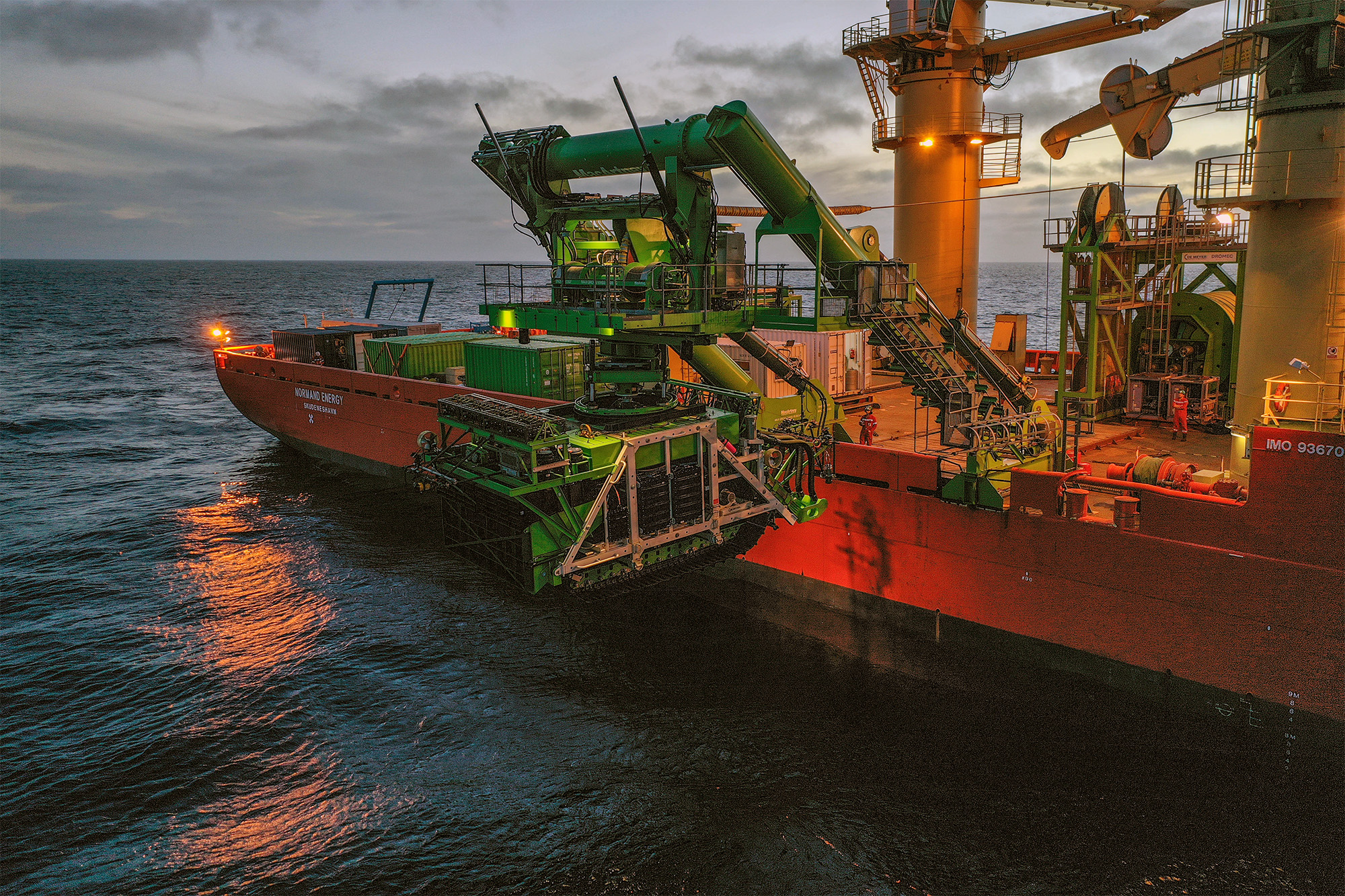
By studying the Patania II collector vehicle in the Clarion Clipperton Zone (CCZ), researchers found that the sediment does not simply float away. Instead, it forms a “turbidity current”—a dense, heavy layer of sediment that stays within 2 meters of the seafloor. While this might seem less disruptive to the upper water column, it means the seafloor ecosystem is subjected to a concentrated, heavy blanket of sediment that can smother benthic life and alter the chemical composition of the seabed for extended periods.
Deep-Dive: The Mechanics of Deep-Sea Hazards
To understand the scale of these challenges, it is necessary to distinguish between the two distinct types of risks: the chemical/operational risk (combustion) and the physical/environmental risk (sedimentation).
The Chemistry of Marcasite and Oxidation
The instability of marcasite is a matter of crystalline structure. Unlike pyrite, which is relatively stable, marcasite is a polymorph of iron sulfide that is much more sensitive to its environment. In the deep ocean, the immense pressure and lack of oxygen keep these minerals in a state of equilibrium. However, the mining process involves several steps that break this equilibrium:
Comparing Mining Environments
The following table illustrates the fundamental differences between traditional land-based mining and the projected realities of deep-sea extraction.
| Feature | Land-Based Sulfide Mining | Deep-Sea Sulfide Mining |
|---|---|---|
| Primary Mineral Type | Various sulfides and oxides | Seafloor massive sulfides/nodules |
| Pressure Conditions | Atmospheric (approx. 1 bar) | Extreme (approx. 450 bar at 4,500m) |
| Oxygen Exposure | Immediate upon extraction | Delayed (until brought to surface) |
| Key Safety Hazard | Dust and structural stability | Spontaneous combustion and fire |
| Environmental Concern | Tailings and acid mine drainage | Dense, low-lying sediment plumes |
| Primary Regulator | National mining agencies | International Seabed Authority (ISA) |
The MIT Sediment Study: A New Model for Impact
In April 2021, an expedition led by Global Sea Mineral Resources NV (GSR) allowed MIT researchers to test the Patania II vehicle at a depth of 4,500 meters. The vehicle, which stands approximately 3 meters high and 4 meters wide, was designed to vacuum up polymetallic nodules.
To track the sediment, the team employed two sophisticated maneuvers. The “Selfie” maneuver involved the vehicle driving in a straight line for 100 meters with suction active, then doubling back to drive through its own cloud to measure concentration. The “Drive-by” maneuver involved placing sensors 50 to 100 meters away to monitor the plume’s evolution over several hours.

Carlos Muñoz-Royo and Thomas Peacock of MIT found that 92% to 98% of the sediment either settled immediately or remained trapped in a low-lying cloud within 2 meters of the seafloor. This finding contradicts previous scientific conjectures that plumes would loft high into the water column, forcing a total rethink of how environmental impact assessments are conducted.
What It Means for You
The implications of these findings vary depending on your role in the global economy and environmental landscape:
Counterpoints and Open Questions
While the research is compelling, several questions remain unanswered. First, is the presence of nanocrystalline marcasite widespread across all seafloor massive sulfide deposits, or is it a localized phenomenon in the Escanaba Trough? If it is rare, the fire risk may be manageable; if it is common, it could be a deal-breaker for certain mining sites.
Second, regarding the sediment plumes, Thomas Peacock noted that there is “no guarantee” that sediment will always stay low. While the Patania II trials showed a turbidity current, different vehicle designs, different seafloor compositions, or different ocean current speeds could potentially loft sediment higher.
Finally, there is the debate over the “green” necessity of these minerals. While nickel and cobalt are essential for electric vehicle batteries and renewable energy storage, the environmental and safety costs of extracting them from the deep ocean remain a subject of intense international debate. Critics argue that the risks to ocean ecosystems might outweigh the benefits of the minerals themselves.
What Happens Next
As the industry moves closer to commercial-scale operations, several catalysts will determine how these risks are addressed:
Frequently Asked Questions
Why do deep-sea rocks catch fire in the lab?
The combustion is caused by a chemical reaction called oxidation. Specifically, certain minerals like nanocrystalline marcasite (an iron sulfide) are unstable when exposed to oxygen. When these rocks are crushed or broken during laboratory testing, the mechanical energy combined with the introduction of oxygen triggers a rapid exothermic reaction, releasing enough heat to cause the rock to catch fire.
How high do mining sediment plumes travel?
nAccording to research from MIT, sediment plumes stirred up by mining vehicles like the Patania II tend to behave as “turbidity currents.” This means the sediment is dense and heavy, typically staying within 2 meters of the seafloor rather than rising high into the water column. However, scientists note this is not a universal guarantee for all mining scenarios.
What minerals are targeted in deep-sea mining?
Deep-sea mining focuses on several high-value resources. Seafloor massive sulfides are rich in metals like copper, zinc, gold, and silver. Additionally, polymetallic nodules, often found in regions like the Clarion Clipperton Zone, are highly sought after for their concentrations of nickel and cobalt, which are essential for manufacturing batteries for electric vehicles.
Is deep-sea mining currently happening?
nWhile exploration contracts have been granted by the International Seabed Authority for specific regions like the Northern Mid-Atlantic Ridge, large-scale commercial mining has not yet officially commenced. The industry is currently in a phase of technological testing and regulatory negotiation.
Closing
The prospect of a deep-sea mineral “gold rush” is increasingly complicated by the physical realities of the ocean floor. From the spontaneous combustion of unstable sulfides to the dense, smothering effect of turbidity currents, the scientific community has identified significant hurdles
References
Featured image: Image via MIT News | Massachusetts Institute of Technology