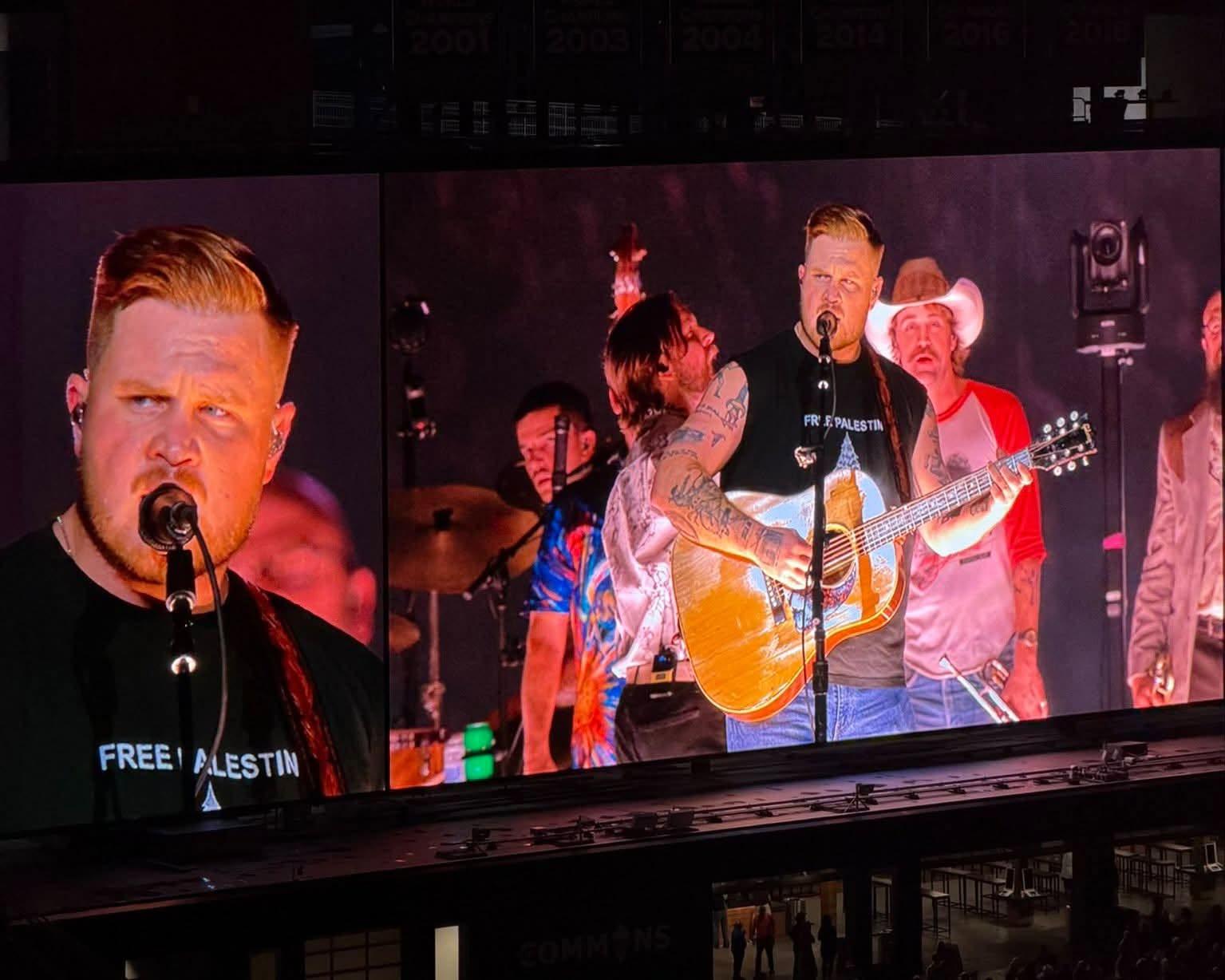
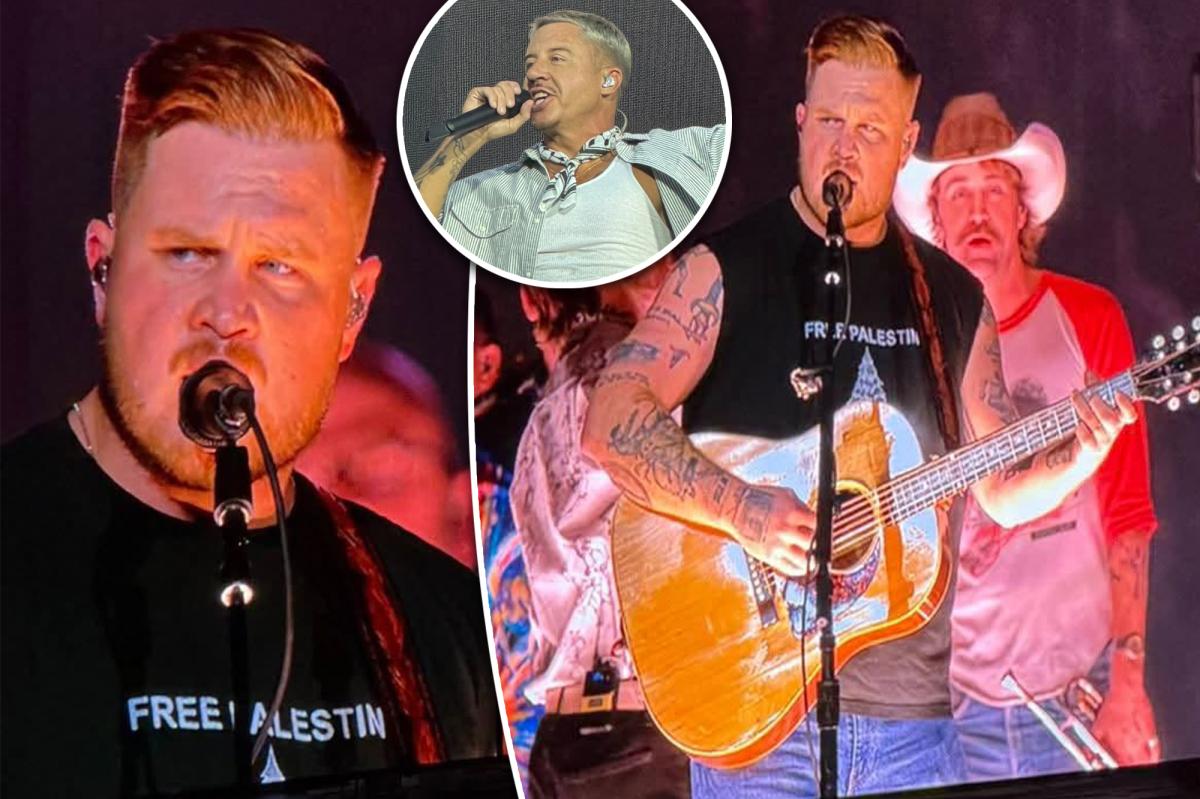
The Zach Bryan Gillette stadium performance on October 2, 2026, became a focal point for intense political tension after the Grammy-winning country singer appeared on stage wearing a “Free Palestine” shirt. The visual protest, occurring at a venue owned by NFL owner Robert Kraft, serves as a direct response to the recent removal of rapper <a href="https://news.quantosei.com/2026/09/25/ed-sheeran-gillette-stadium-cancellation-why-it-matters/” title=”Ed Sheeran Gillette Stadium cancellation: Why It Matters”>macklemore from Ed Sheeran’s “Loop” tour following his outspoken support for Palestinian rights.
Key Takeaways
- Visual Protest: During his sold-out performance at Gillette Stadium, Zach Bryan and members of his band wore apparel expressing support for Palestine.
- Industry Tension: The incident highlights a growing conflict between high-profile musical artists and billionaire venue owners regarding political expression.
- The Macklemore Precedent: The protest follows the removal of Macklemore from Ed Sheeran’s tour after he made political statements at MetLife Stadium.
- Financial Response: Both Robert Kraft and Ed Sheeran have reportedly committed $2 million to Palestinian humanitarian relief efforts amidst the controversy.
- Artist Solidarity: Following Macklemore’s removal, several other artists, including Finneas, withdrew from the “Loop” tour in solidarity.
- If you are a concert fan: Expect more volatility in tour lineups. As artists become more willing to use their platforms for political expression, the risk of last-minute cancellations or changes in supporting acts due to venue policy disputes may increase.
- If you are a touring artist: The “Macklemore/Sheeran” incident serves as a case study in the risks of political speech. You may find yourself choosing between the financial security of a major stadium tour and the ability to express your personal convictions without facing professional repercussions.
- If you are an investor in entertainment or sports: The tension between venue owners (like the Kraft Group) and talent highlights a potential regulatory or reputational risk. The ability of private venue owners to influence content could lead to increased scrutiny regarding the intersection of private property rights and freedom of speech.
- Macklemore’s European Tour: Macklemore has launched his own “Free Palestine Tour,” with dates in Dublin, Paris, and London already reported as sold out. The success of this tour will demonstrate whether an artist can successfully pivot from a major-label, stadium-supported tour to an independent, politically-branded tour.
- Future Gillette Stadium Bookings: The industry will be watching to see if other high-profile artists with known political stances are permitted to perform at Gillette Stadium in the coming year.
- Touring Industry Policy: Promoters may begin implementing more robust “political speech” clauses in their contracts with venues to protect themselves—and their artists—from sudden cancellations.
- pagesix.com
- www.thewrap.com
- m.economictimes.com
- deadline.com
What Happened at Gillette Stadium
On the night of Friday, October 2, 2026, Zach Bryan took the stage at Gillette Stadium in Foxborough, Massachusetts, for the first of two scheduled shows on his “With Heaven on Tour.” Rather than a traditional performance, the night was marked by a significant political statement. Bryan, the 30-year-old singer known for hits like “Something in the Orange,” appeared in a black T-shirt featuring white 3D lettering that read “FREE PALESTINE.”
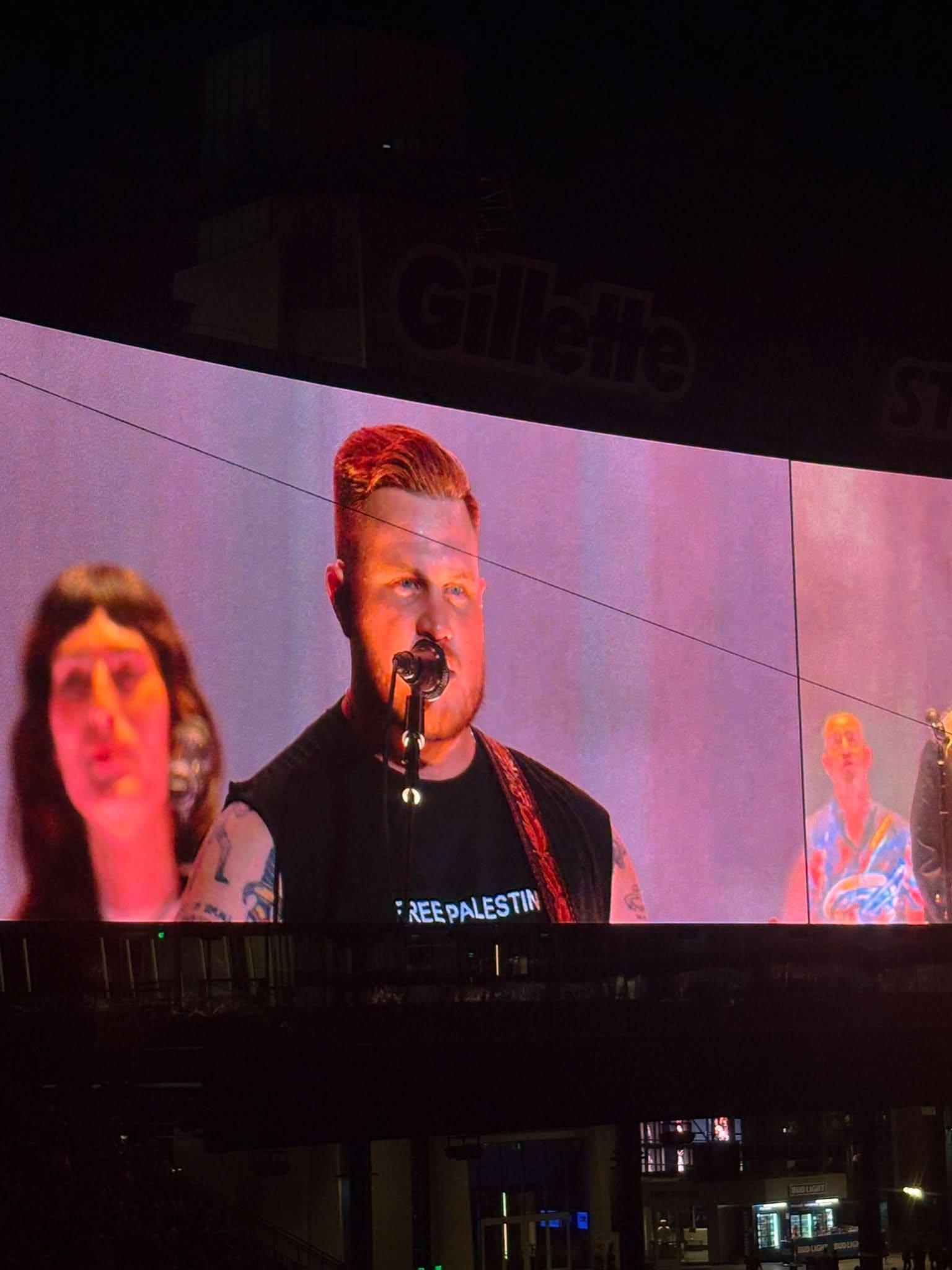
The shirt also featured a pine tree icon and the phrase “AN APPEAL TO HEAVEN.” The political expression was not limited to the headliner; Bryan’s band members also participated. Specifically, guitarist Noah Le Gros was observed wearing a green Palestine soccer jersey while performing in front of Kraft Sports and Entertainment signage.
While Bryan did not deliver a verbal manifesto or address the venue’s ownership directly during the set, the choice of attire was widely interpreted by industry analysts and fans as a calculated act of solidarity with Macklemore. The timing is critical, as the Gillette Stadium venue was at the center of the dispute that saw Macklemore barred from performing at the site on September 25 and 26, 2026.
Why It Matters: The Battle Over Venue Control
The Zach Bryan Gillette Stadium incident is more than a momentary celebrity headline; it represents a deepening rift between the touring economy and the corporate interests of stadium owners. For decades, the relationship between artists and venues has been primarily transactional. However, the events of late 2026 suggest that the political identities of both artists and venue owners are increasingly colliding.
When Macklemore performed at MetLife Stadium on September 4 and 5, 2026, as part of Ed Sheeran’s “Loop” tour, he delivered a speech calling for Palestinian freedom and performed the song “Hind’s Hall.” According to reports from The Economic Times, these actions led to an ultimatum from several NFL owners. Macklemore alleged that Robert Kraft personally contacted Ed Sheeran to ensure the rapper would not be permitted to perform at Gillette Stadium.
This conflict places tour promoters like the Messina Touring Group in an impossible position. They must balance the contractual rights and political stances of their headliners with the demands of the venue owners who provide the infrastructure for the tours to exist. If venue owners can successfully exert pressure to remove specific acts, it sets a precedent that could fundamentally change how international tours are booked and managed.
Deep-Dive: The Macklemore and Ed Sheeran Controversy
To understand the weight of Zach Bryan’s gesture, one must look at the timeline of the “Loop” tour controversy that preceded it. The dispute began in early September and quickly escalated from a single performance into a multi-stakeholder standoff.
Timeline of the “Loop” Tour Fallout
| Date | Event | Key Stakeholders |
|---|---|---|
| Sept 4–5, 2026 | Macklemore performs at MetLife Stadium with pro-Palestine remarks. | Macklemore, Ed Sheeran, Messina Touring Group |
| Mid-Sept 2026 | Macklemore is officially removed from the remainder of the US tour. | Ed Sheeran, Macklemore |
| Sept 25–26, 2026 | Macklemore’s scheduled Gillette Stadium dates are canceled. | Robert Kraft, Macklemore |
| Late Sept 2026 | Artists including Finneas and Lukas Graham drop out of the tour. | Finneas, Aaron Rowe, Beoga |
| Oct 2, 2026 | Zach Bryan performs at Gillette Stadium with pro-Palestine apparel. | Zach Bryan, Robert Kraft |
Conflicting Perspectives
The core of the disagreement lies in how the removal of Macklemore is characterized. There are two primary, competing narratives currently circulating within the industry.
The Censorship Narrative:
Macklemore has been vocal about what he perceives as an attempt to silence political discourse. In a statement posted to Instagram on September 24, 2026, he described a “collective awakening” regarding Palestinian liberation and criticized the “power of billionaires that try to censor that call.” He specifically alleged that Robert Kraft rallied other stadium owners to issue an ultimatum: if Macklemore remained on the tour, the venues would refuse to host Ed Sheeran.
The Antisemitism Narrative:
Conversely, Robert Kraft has defended the decision to bar Macklemore from Gillette Stadium. Speaking to Al Jazeera, Kraft stated that Macklemore’s previous stage material and a “broader history of antisemitic rhetoric and imagery” crossed a line that the venue would not permit. Kraft maintained that while he agrees with the need to address the humanitarian crisis, sharing “selective information and ignoring the actions of Hamas” is divisive and hurtful to the Jewish community.
Stakeholder Reactions and Implications
The fallout from these events has rippled across the entire music industry, affecting everyone from global pop stars to local crew members.
The Headliner’s Position
Ed Sheeran has attempted to maintain a stance of professional neutrality. While Macklemore claims Sheeran was informed of Kraft’s ultimatum, Sheeran released a statement via Instagram clarifying that the decision to drop Macklemore was made by the tour promoter, Messina Touring Group, rather than by him personally. Sheeran emphasized his desire not to abandon his crew or the other musicians who rely on the tour for their livelihoods, suggesting the move was a pragmatic business decision to save the tour itself.
The Solidarity Movement
One of the most significant impacts of the Macklemore removal was the subsequent exodus of other artists. Finneas, the brother of Billie Eilish and a former opening act for Sheeran, was among those who withdrew from the tour. In a statement, Finneas declared, “Artists must not be silenced when they speak up for the oppressed. I stand with Palestine and its people.”
This wave of solidarity suggests that for a segment of the younger, politically active artist population, the risk of losing tour dates is becoming secondary to the risk of being perceived as complicit in censorship.
Analysis: The Symbolism of “Appeal to Heaven”
The use of the “Appeal to Heaven” slogan on Zach Bryan’s shirt adds a layer of historical and cultural complexity to the protest. According to the National Park Service, the “Pine Tree” flag and the “Appeal to Heaven” phrase are historical references to the American Revolutionary campaign under George Washington.
In the context of a modern political protest, this imagery can be interpreted in multiple ways. To some, it evokes a sense of natural rights and the belief that divine justice can be summoned to defend those being oppressed. To others, it is a highly charged symbol that carries various political connotations in contemporary American discourse. By utilizing this specific imagery, Bryan has not only signaled support for Palestine but has also anchored his message in a tradition of American revolutionary sentiment.
What It Means for You
The implications of the Zach Bryan Gillette Stadium protest vary depending on your role in the cultural or economic landscape:
Counterpoints and Open Questions
While the narratives of censorship and antisemitism are clearly defined, several questions remain unanswered.
First, there is the question of the “collective ultimatum.” While Macklemore claims that Robert Kraft organized a coalition of stadium owners, this has not been independently verified by other venue management groups. If such an ultimatum was indeed issued, it would represent an unprecedented level of coordination among private stadium owners.
Second, the role of the promoters remains a point of contention. Ed Sheeran attributes the decision to Messina Touring Group, yet Macklemore suggests the pressure came directly from the top. The exact degree of influence exerted by Kraft versus the decision-making autonomy of the tour promoters remains unclear.
Finally, the effectiveness of the “humanitarian pivot” is an open question. Both Kraft and Sheeran have committed $2 million to Palestinian relief. While this addresses the humanitarian aspect of the crisis, it does not resolve the underlying tension regarding how political speech is managed on the concert stage.
What Happens Next
Several key developments will serve as indicators of how this conflict evolves:
Frequently Asked Questions
Why was Macklemore removed from Ed Sheeran’s tour?
According to Ed Sheeran and tour promoters, Macklemore was removed following political statements made during a performance at MetLife Stadium in September 2026. While Sheeran attributed the decision to the tour promoter, Macklemore alleges that Robert Kraft and other venue owners pressured the tour to drop him to avoid political controversy at their venues.
What did Zach Bryan wear at Gillette Stadium?
During his performance on October 2, 2026, Zach Bryan wore a black T-shirt with the words “FREE PALESTINE” in white 3D lettering. The shirt also included a pine tree icon and the phrase “AN APPEAL TO HEAVEN.” Members of his band were also seen wearing pro-Palestine apparel.
Did Robert Kraft donate to Palestinian relief?
Yes. Following the public backlash and the controversy surrounding the tour, Robert Kraft and Ed Sheeran reportedly committed a combined $2 million to aid in Palestinian humanitarian relief efforts.
Is Macklemore still performing?
Yes. Macklemore has launched a self-branded “Free Palestine Tour” in Europe. His scheduled shows in Dublin, Paris, and London have reportedly sold out immediately.
—
The Zach Bryan Gillette Stadium incident marks a significant moment in the ongoing struggle for influence between the artists who provide the content and the owners who provide the stage
References
Featured image: Facebook/Jessica Golich¿ — via Page Six