Canada’s economic reliance on its southern neighbor, the United States, has historically been a cornerstone of its prosperity. However, Prime Minister Mark Carney recently delivered a stark warning: this deeply integrated relationship, once a profound strength, has now evolved into a critical vulnerability that demands urgent correction. In a comprehensive video address, Carney outlined his government’s proactive strategy for Canada to forge its own path, emphasizing self-reliance in an increasingly volatile global landscape. This pivotal declaration signals a profound shift in Canadian foreign and economic policy, with wide-ranging implications for trade, investment, and national identity.
A Fundamental Shift in the Global Landscape
Speaking from Vancouver, British Columbia, Prime Minister Carney articulated a world fundamentally altered, one he described as “more dangerous and divided.” He pointed directly to the United States’ changed approach to trade, specifically highlighting the re-imposition of tariffs on key Canadian exports like steel, aluminum, and automobiles. These protectionist measures, initiated by U.S. President Donald Trump, have reached levels not seen since the Great Depression, creating immense uncertainty for Canadian industries and workers. This unpredictability, Carney noted, is causing businesses to withhold investments, casting “a pall of uncertainty” over the economy.
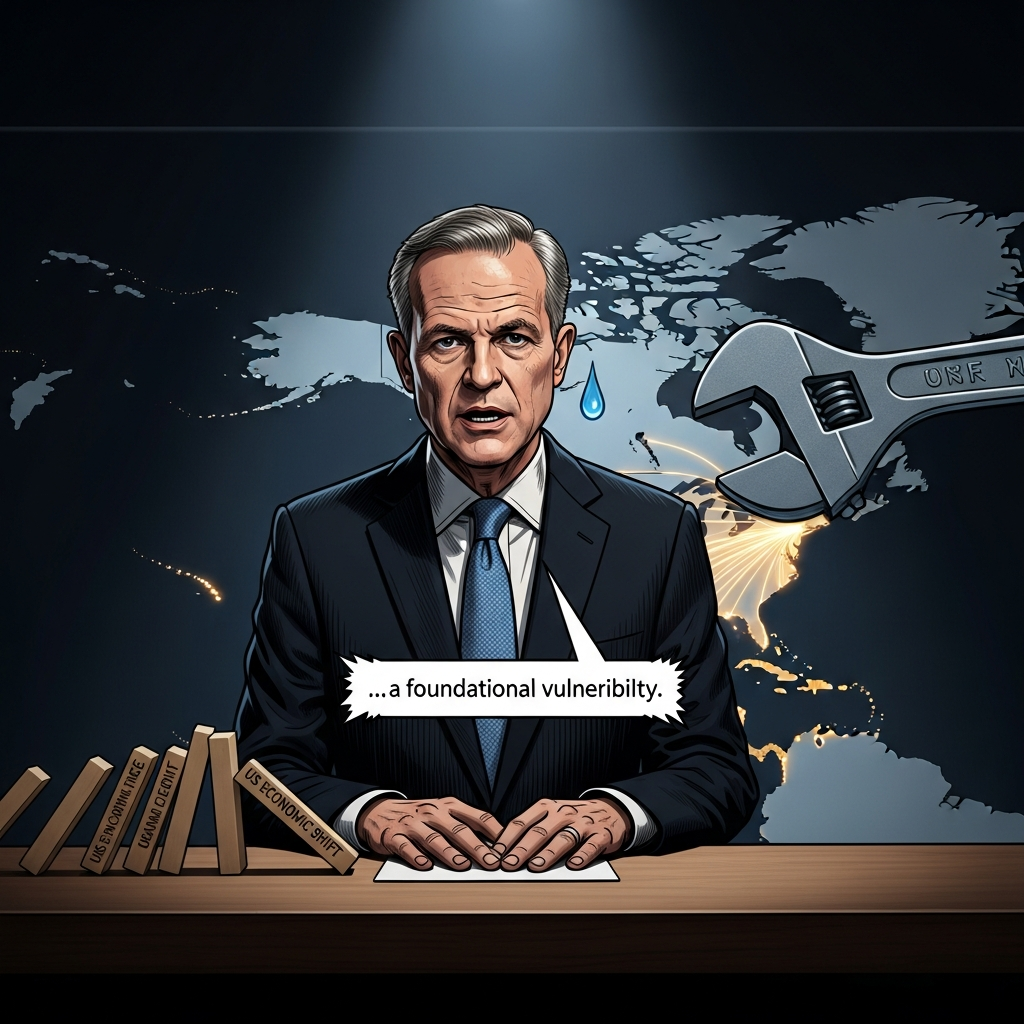
Historically, the intertwined economies of Canada and the U.S. fostered decades of partnership and mutual growth. But Carney asserted that “many of our former strengths, based on our close ties to America, have become weaknesses.” This candid assessment underscores a profound shift in thinking within Ottawa, recognizing that while proximity offers advantages, over-dependence carries significant risks.
Trump’s Rhetoric and Canadian Unease
Beyond economic policy, the Prime Minister also acknowledged the broader political friction impacting the relationship. President Trump’s past suggestions that Canada might become the 51st U.S. state have caused considerable anger and unease among Canadians, touching on fundamental questions of sovereignty and national identity.
This isn’t the first instance of direct tension between the two leaders. Carney, a former central bank governor for both the Bank of Canada and the Bank of England, previously earned widespread praise at the World Economic Forum in Davos for condemning economic coercion by powerful nations against smaller ones. President Trump’s public rebuke followed swiftly, stating pointedly, “Canada lives because of the United States. Remember that, Mark, the next time you make your statements.” Such exchanges highlight the strained political environment in which Canada is now navigating its critical economic strategy.
Charting a Course for Canadian Self-Reliance
Against this backdrop of economic uncertainty and political friction, Prime Minister Carney’s address laid out a comprehensive blueprint for Canada’s economic diversification. His recent electoral success, securing a majority government through special election wins, provides him with significant political capital to pursue these ambitious goals. Carney made it clear that “security can’t be achieved by ignoring the obvious or downplaying the very real threats that we Canadians face.” He pledged “never to sugarcoat our challenges” and committed to providing regular updates on his government’s progress.
The core of Canada’s new strategy revolves around reducing its “excessive reliance” on any single foreign partner, particularly given that nearly 70% of its exports currently go south of the border. This proactive stance aims to build a more robust and resilient Canadian economy capable of withstanding external shocks.
Key Pillars of Canada’s Diversification Strategy:
Attracting New Global Investments: Actively seeking capital from diverse international markets to fuel economic growth and innovation.
Forging New Trade Deals: Pursuing and signing trade agreements with a wider array of countries beyond the North American continent, exploring new export markets.
Doubling Clean Energy Capacity: Investing heavily in sustainable energy projects, aiming to become a global leader in clean technologies and exports.
Reducing Internal Trade Barriers: Streamlining regulations and policies within Canada to foster a more integrated and efficient domestic market.
Increasing Defense Spending: Bolstering national security capabilities in line with Canada’s commitment to global stability and self-protection.
Lowering Taxes: Implementing fiscal policies designed to stimulate economic activity and encourage business growth.
- Making Housing More Affordable: Addressing a critical domestic issue to improve the quality of life for Canadians and ensure a stable labor force.
- www.pbs.org
- www.aljazeera.com
- www.dw.com
- kdhnews.com
Carney emphasized that Canada cannot simply hope for the United States to “return to normal.” He famously stated, “Hope isn’t a plan and nostalgia is not a strategy,” underscoring the necessity of proactive measures. Canada’s path forward is about controlling “what happens here” and building a stronger country resilient to global disruptions.
Echoes of History and the Future of North American Trade
The Prime Minister’s call for self-reliance is not without historical precedent. Carney symbolically referenced General Isaac Brock, a British military commander who defended what is now Canada against U.S. forces during the War of 1812. This historical analogy serves to remind Canadians of past instances where the nation successfully faced down external pressures. “The situation today feels unique,” Carney observed, “but we’ve faced down threats like this before.”
The timing of Carney’s address is particularly significant given the impending review of the North American Free Trade Agreement (NAFTA) – now known as the US-Mexico-Canada Agreement (USMCA) – scheduled for July. U.S. officials have already signaled a desire for major changes, and comments from figures like U.S. Commerce Secretary Howard Lutnick, who recently criticized Canada as a “difficult trading partner,” further complicate the landscape. This review adds urgency to Canada’s pursuit of economic diversification, providing a backdrop against which the nation must assert its economic sovereignty.
Carney reiterated Canada’s long-standing role as a steadfast neighbor, standing with the U.S. in conflicts including Afghanistan and two World Wars. However, he concluded that “The U.S. has changed and we must respond.” This shift, he articulated, is fundamentally about “taking back control of our security, our borders and our future.” Canada is embarking on a deliberate journey to reshape its economic destiny, focusing on resilience and independence in a rapidly evolving global economy.
Frequently Asked Questions
Why does Prime Minister Mark Carney believe Canada’s economic ties with the US are now a weakness?
Prime Minister Mark Carney contends that Canada’s strong economic ties with the U.S., once a strength, have become a weakness due to a fundamental change in the U.S. approach to trade. He specifically cites tariffs imposed by President Donald Trump, which have reached Great Depression-era levels, creating instability for Canadian industries like auto and steel. This unpredictability discourages investment, and Trump’s rhetoric about Canada becoming the “51st state” further exacerbates sovereign and economic anxieties, necessitating a strategic shift away from over-reliance on a single partner.
What key strategies is Canada implementing to diversify its economy away from the United States?
Canada is pursuing a multi-pronged strategy to diversify its economy. Key initiatives include actively attracting new investments from a wider range of global partners and signing new international trade deals to open up diverse export markets. Domestically, the government plans to double its clean energy capacity, reduce internal trade barriers to foster national economic integration, increase defense spending, lower taxes to stimulate growth, and address housing affordability. These efforts aim to build a more resilient and self-reliant national economy.
How might Prime Minister Carney’s economic diversification strategy impact Canadian businesses and investors?
Prime Minister Carney’s diversification strategy will likely introduce both challenges and opportunities for Canadian businesses and investors. Initially, companies heavily reliant on U.S. trade may face adjustments as Canada seeks new markets and supply chains. However, the long-term goal is to foster greater stability and resilience by reducing exposure to U.S. policy shifts. Businesses could benefit from new international trade agreements, increased domestic market efficiency, investments in clean energy, and potentially lower taxes, opening new avenues for growth and making Canada a more attractive destination for diverse global investments.