The alarming rise in colorectal cancer deaths among younger adults has become a significant public health concern. While this trend has garnered increasing attention, a groundbreaking new study reveals a stark, previously unquantified disparity: this tragic increase is overwhelmingly concentrated in individuals with less education. This compelling research shines a critical light on how socioeconomic factors may be driving the escalating mortality rates, offering vital insights for targeted prevention and early detection efforts.
This article delves into the findings of this pivotal study, exploring the profound connection between educational attainment and colorectal cancer deaths in younger adults. We’ll uncover the societal implications, identify key risk factors, and provide actionable steps to combat this growing crisis.
The Alarming Rise in Younger Adult Colorectal Cancer Deaths
For years, healthcare professionals have watched with concern as the incidence of colorectal cancer (CRC) in adults under 50 climbed. High-profile cases, including the deaths of celebrities like Chadwick Boseman, have underscored the urgency of this issue. However, until recently, a comprehensive national picture of who exactly is most affected by this rise remained elusive.
The latest research, published in JAMA Oncology by scientists from the American Cancer Society, provides this clarity. Analyzing government data on over 101,000 younger adults (ages 25 to 49) who died from colorectal cancer between 1994 and 2023, the study paints a sobering picture of health inequality.
A Stark Divide: Education and Mortality Rates
The study’s primary revelation is unambiguous: the increase in colorectal cancer deaths in younger adults occurred almost entirely among those without a four-year college degree. This is a critical distinction that moves beyond general observations to pinpoint a specific demographic facing disproportionate risk.
Consider these impactful statistics from the research:
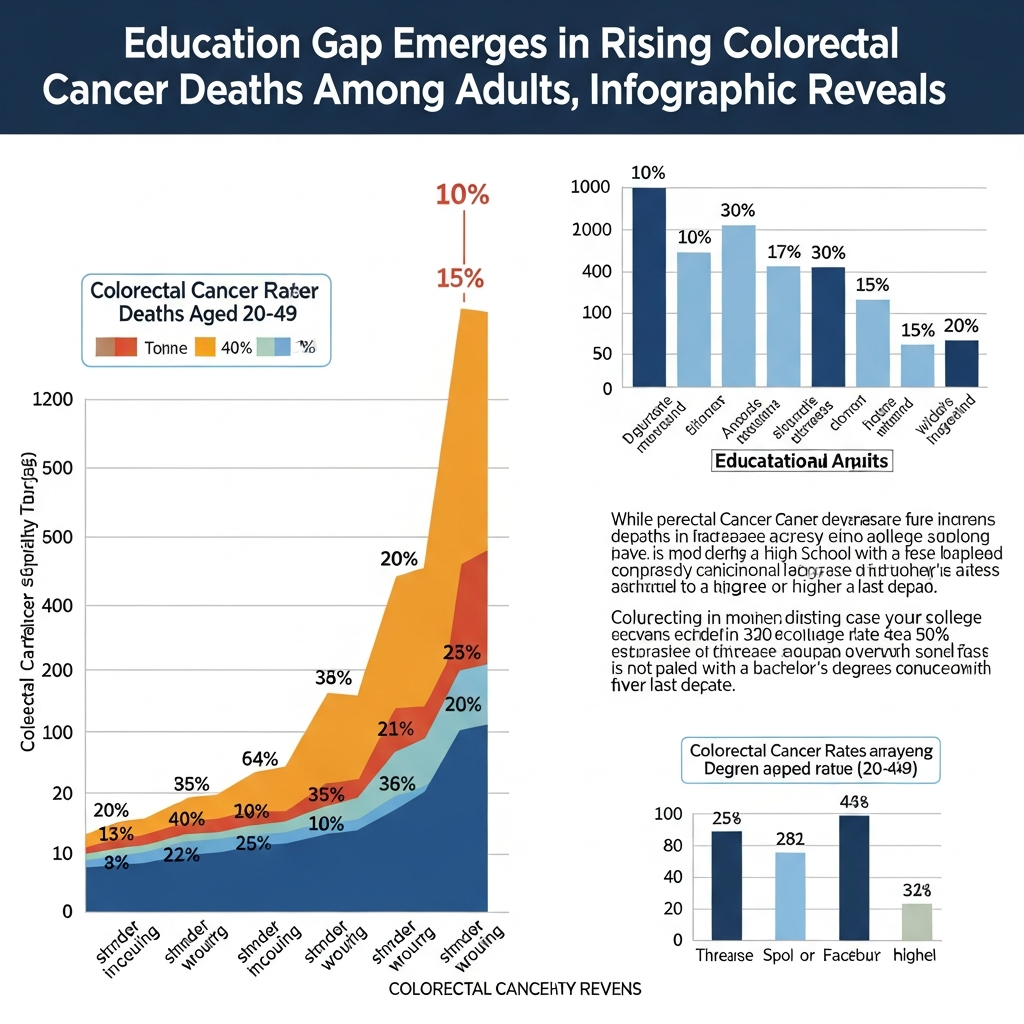
Overall Trend: The colorectal cancer death rate for adults aged 25-49 rose from approximately 3 per 100,000 to about 4 per 100,000 over the three-decade study period.
Less Education, Higher Risk: For individuals whose highest educational attainment was high school, the death rate significantly climbed from 4 to 5.2 per 100,000. This represents a substantial increase in risk.
Educational Protection: In stark contrast, for those with at least a bachelor’s degree, the death rate remained stable at 2.7 per 100,000. This stability suggests that higher education, or the factors associated with it, may offer a protective effect against rising mortality.
These findings highlight a profound and worsening disparity in health outcomes. They underscore that while a college degree doesn’t inherently prevent cancer, it serves as a powerful indicator of a person’s socioeconomic landscape.
Understanding the Socioeconomic Connection
The researchers emphasize that having a college degree doesn’t magically ward off colorectal cancer. Instead, educational attainment acts as a proxy for socioeconomic factors. This means that education level often correlates strongly with a cluster of other life circumstances that profoundly impact health.
As Dr. Paolo Boffetta, a researcher at Stony Brook Cancer Center, noted, the concentration of death risk in less-advantaged groups isn’t entirely unexpected. However, this study is the first national research to empirically demonstrate this specific connection for early-onset colorectal cancer.
Beyond Education: The Proxy for Deeper Disparities
What broader factors does education represent in this context? People with less formal education often:
Earn lower incomes: This can limit access to nutritious food, safe living environments, and quality healthcare.
Have poorer diets: Affordability and availability often dictate food choices, leading to diets high in processed foods and low in fruits and vegetables—known risk factors for CRC.
Engage in less physical activity: Sedentary lifestyles are more common in certain professions and can be exacerbated by lack of safe recreational spaces or time constraints.
Receive less medical care: This includes routine check-ups, preventative screenings, and timely treatment for symptoms. Lack of health insurance or an inability to take time off work are common barriers.
These interconnected socioeconomic factors collectively contribute to a higher overall health burden and, critically, a reduced ability to detect and treat serious conditions like colorectal cancer early. The choice to focus on education in the study was practical, as death certificates reliably include schooling completed, unlike income or health insurance status.
The Broader Landscape of Colorectal Cancer
This specific disparity exists within an already concerning national picture of colorectal cancer. It’s not just a disease of older adults anymore; its impact on younger populations is growing significantly.
The American Cancer Society estimates that over 158,000 cases of colorectal cancer will be diagnosed in the U.S. this year. Overall, it remains the nation’s second leading cancer killer, projected to claim more than 55,000 lives in 2026. This stark reality underscores the pervasive challenge CRC poses to public health.
The Growing Crisis for Under-50s
While representing a smaller fraction of the total, colorectal cancer deaths in younger adults (under 50) are particularly alarming. These deaths account for about 7% of the total, translating to approximately 3,900 lives lost annually in this age group. Even more concerning, research indicates that colorectal cancer mortality in Americans under 50 has increased by 1.1% per year since 2005.
This sustained increase has led to a grim milestone: colorectal cancer is now considered the deadliest cancer in the under-50 age group. This dramatic shift highlights the urgent need for heightened awareness, aggressive screening, and proactive prevention strategies specifically targeting younger populations.
Crucial Risk Factors and Prevention Strategies
While scientists are still working to fully understand the precise reasons behind the overall increase in early-onset colorectal cancer, several well-established risk factors contribute to its development. Recognizing these factors is crucial for prevention and for identifying individuals who may need earlier or more frequent screening.
Key risk factors include:
Obesity and Overweight: Excess body weight is strongly linked to an increased risk of CRC.
Lack of Physical Activity: A sedentary lifestyle contributes to a higher risk.
Dietary Habits: Diets high in red or processed meats and low in fruits, vegetables, and whole grains are associated with increased risk.
Family History: A personal or family history of colorectal cancer or certain types of polyps significantly elevates risk.
Alcohol Consumption & Smoking: Excessive alcohol use and smoking are also risk factors.
Adopting a healthy lifestyle—maintaining a healthy weight, exercising regularly, and consuming a balanced diet rich in fiber—can significantly reduce the risk of developing colorectal cancer. These are tangible, proactive steps individuals can take.
Why Early Screening is More Important Than Ever
Early detection is paramount for improving outcomes in colorectal cancer. When caught early, CRC is highly treatable. Recognizing this, the American Cancer Society updated its screening guidelines in 2021, lowering the recommended age for U.S. adults to begin screening from 50 to 45. This change reflects the growing evidence of early-onset cases.
It’s also critical for everyone, especially younger adults, to be aware of the potential symptoms of colorectal cancer and to consult a doctor without delay if they experience any of them. These symptoms include:
Blood in stool or rectal bleeding
Persistent changes in bowel habits, such as diarrhea, constipation, or narrowing of stool that lasts more than a few days
Unintended weight loss
Cramps or abdominal pain that doesn’t go away
Ignoring these signs can lead to delayed diagnosis and more advanced disease.
What You Can Do: Taking Action Against Colorectal Cancer
The findings of this study are a powerful call to action. While systemic changes are needed to address underlying socioeconomic disparities, individuals can also take proactive steps to protect their health.
Here’s what you can do:
Be Proactive About Screening: If you are 45 or older, talk to your doctor about getting screened for colorectal cancer. If you have a family history or other risk factors, discuss earlier screening options.
Know Your Family History: Understanding your genetic predisposition can help you and your doctor tailor a personalized prevention and screening plan.
Embrace a Healthy Lifestyle: Focus on a diet rich in fruits, vegetables, and whole grains. Limit red and processed meats. Aim for regular physical activity and maintain a healthy weight.
Listen to Your Body: Don’t dismiss symptoms like rectal bleeding or persistent changes in bowel habits. These are not normal and warrant immediate medical evaluation. Early detection saves lives.
Advocate for Public Health: Support initiatives that address health disparities and improve access to preventative care and healthy resources for all communities.
Ahmedin Jemal, the study’s first author, emphasized that these findings underscore the urgent need for public awareness about colorectal cancer and for younger adults to heed screening recommendations. Your health is your most valuable asset.
Frequently Asked Questions
What is the key finding of the recent study on colorectal cancer deaths in young adults?
A groundbreaking study published in JAMA Oncology* revealed that the alarming rise in colorectal cancer deaths among younger adults (ages 25-49) is concentrated almost entirely among individuals without a four-year college degree. While the overall death rate rose from 3 to 4 per 100,000, for those with only a high school education, it jumped from 4 to 5.2 per 100,000. In contrast, rates remained stable for college graduates. This highlights a significant link between educational attainment, serving as a proxy for socioeconomic factors, and increased mortality risk.
When should younger adults start screening for colorectal cancer?
The American Cancer Society updated its guidelines in 2021, recommending that U.S. adults with an average risk begin colorectal cancer screening at age 45, down from 50. If you are 45 or older, discuss screening options with your doctor. Individuals with a family history of colorectal cancer, certain genetic syndromes, or inflammatory bowel disease may need to begin screening even earlier. It is crucial to have this conversation with your healthcare provider to determine the best screening schedule for you.
What lifestyle changes can help reduce the risk of early-onset colorectal cancer?
To significantly reduce the risk of early-onset colorectal cancer, adopting several healthy lifestyle changes is recommended. These include maintaining a healthy body weight, engaging in regular physical activity, and following a balanced diet. A preventive diet should be rich in fruits, vegetables, and whole grains, while limiting red and processed meats. Additionally, avoiding excessive alcohol consumption and quitting smoking are vital steps. These choices can mitigate many of the known risk factors associated with colorectal cancer development.
Conclusion
The new study serves as a critical wake-up call, shining an undeniable spotlight on the profound health disparities that exist within the growing crisis of colorectal cancer deaths among younger adults. It moves beyond general concern to offer a precise understanding of the populations most vulnerable, directly linking educational attainment to life-saving outcomes.
By recognizing education as a proxy for crucial socioeconomic factors like income, diet, physical activity, and access to medical care, we gain invaluable insights for targeted public health interventions. This research isn’t just a collection of statistics; it’s a powerful mandate for increased awareness, proactive screening starting at age 45, and a renewed commitment to addressing the systemic inequalities that disproportionately impact vulnerable communities. By working together—as individuals, healthcare providers, and policymakers—we can turn the tide against early-onset colorectal cancer and save lives.