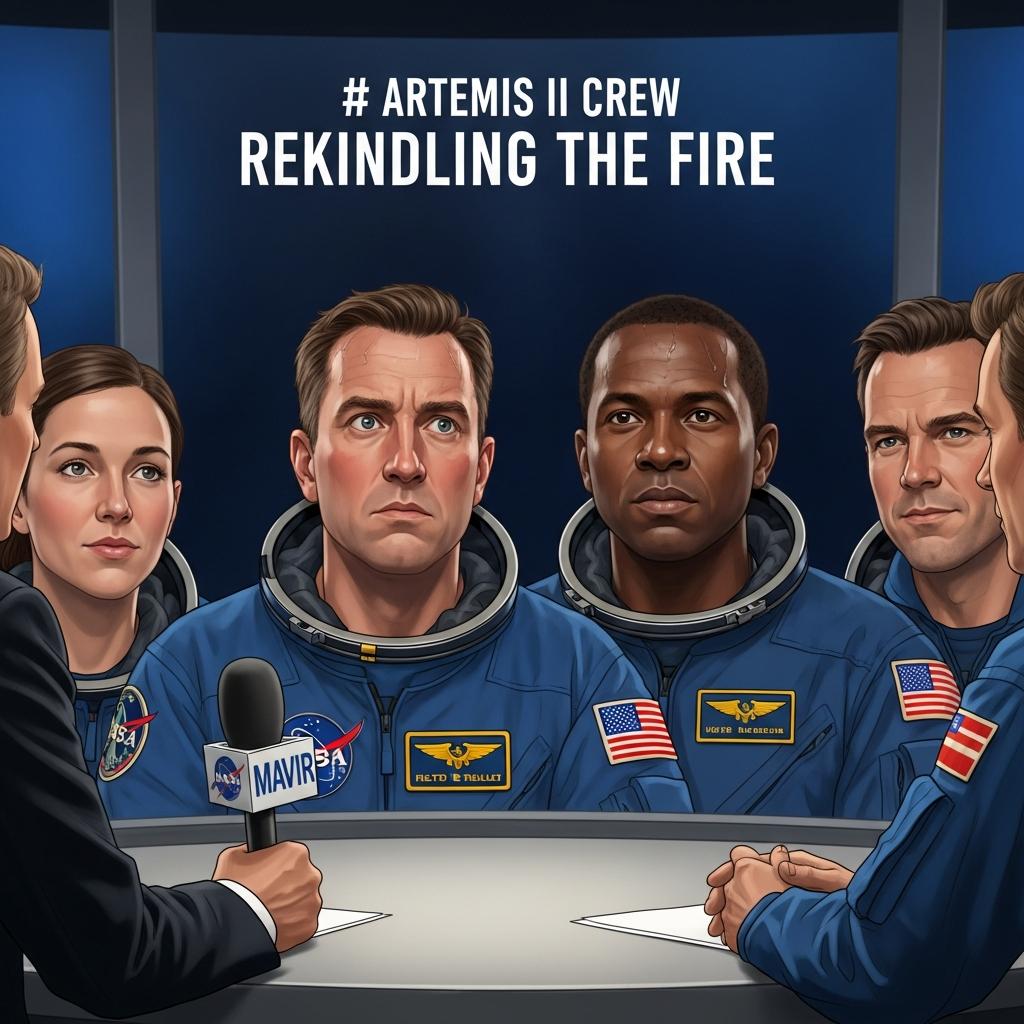
The Artemis II mission captivated the world, but for its four astronauts, the journey concluded with a descent more “intense” and perilous than any rocket launch. Nearly a week after their historic 10-day voyage around the Moon, Commander Reid Wiseman, Pilot Victor Glover, and Mission Specialists Christina Koch and Jeremy Hansen shared their gripping accounts of the Earth’s return in an interview with ABC News’ David Muir. Their vivid descriptions offer a rare glimpse into the extraordinary challenges and profound moments of deep-space reentry, revealing a true testament to human resilience and technological marvel.
Navigating the Fiery Gauntlet of Earth’s Atmosphere
Christina Koch, a seasoned astronaut, immediately dispelled common misconceptions about space travel’s grand finale. She emphasized that reentry is “at least 10 times wilder” than a launch, labeling it “the most phenomenal part, the grand finale of any space flight.” Unlike landing a plane, returning to a planet from lunar orbit is an uncompromising battle against extreme forces. The Orion capsule, carrying the Artemis II crew, faced unimaginable conditions as it hurtled through Earth’s atmosphere at a staggering 25,000 mph (40,000 km/h).
This hypersonic speed creates a shockwave, superheating the air to over 10,000°C – twice the surface temperature of the Sun. This intense friction and compression generate a plasma bubble, a sheath of electrically charged gas that engulfs the spacecraft. For a nerve-wracking six minutes, this plasma caused a complete communications blackout, severing radio signals to and from Mission Control. Koch described looking out her window and witnessing a “fireball” so bright it was “like an arc welder,” almost impossible to view directly. The capsule’s exterior endured temperatures up to a searing 5,000 degrees Fahrenheit (2,760 degrees Celsius), a testament to its robust design. The astronauts also experienced a constant, unsettling “rumbling” that no Earth-based simulation could replicate, underscoring the raw power of reentry.
The Orion Capsule: A Shield Against Extreme Heat
To survive these hellish conditions, the Lockheed Martin-built Orion spacecraft relies on its advanced Thermal Protection System (TPS). This insulating blanket, particularly its heat shield, is the crew’s sole defense against incineration. The heat shield is made of Avcoat, an ablative material that works by slowly charring and burning off, absorbing and radiating heat away from the capsule’s interior. As the spacecraft decelerates, it converts its immense kinetic energy into thermal energy, which the TPS effectively manages.
Engineers meticulously design the trajectory and materials. While the Artemis I uncrewed test flight in 2022 revealed “unexpected behavior” with the heat shield, including “cavities” and the “loss of large chunks of the heat shield char,” NASA addressed these concerns. An agency investigation traced the issue to improper gas venting within the material, leading to pressure buildup. For Artemis II, NASA adjusted the Orion module’s entry conditions and trajectory, opting for a modified “skip reentry” method. This technique involves briefly dipping into the atmosphere, then “skipping” back out to cool down, before a final, controlled descent. This innovative approach, while requiring “extraordinary precision,” helps reduce peak heating and G-forces on the crew. Despite a former NASA expert raising safety concerns about the heat shield’s resilience, NASA officials expressed confidence in the adjusted flight path for Artemis II.
Composure Under Pressure: The Astronauts’ Critical Role
During the most intense phase of reentry, while under a communications blackout, the crew’s training and composure became paramount. Commander Reid Wiseman played a crucial role in maintaining morale, reassuring his fellow astronauts with the phrase, “Everything’s nominal,” or operating normally. Koch humorously recalled her internal thought: “he has no idea if this is nominal, but I’m glad he just said that.” This anecdote highlights the shared trust and leadership vital in such high-stakes environments.
Pilot Victor Glover earned high praise from Wiseman for his exceptional skill during this critical period. For approximately 13 minutes, the crew endured G-forces up to four times their normal weight, causing labored breathing and blood pooling in their legs. Yet, Glover maintained an unwavering “cadence of altitudes and speeds.” Wiseman lauded his pilot, stating, “This man is the real deal… it was the most impressive operational experience I have been through watching him go through entry.”
Glover himself described the heat as “literally and figuratively intense.” He underscored the vital importance of his precise cadence: “In that blackout, not only do we lose the ability to communicate, we lose the ability for Mission Control to command to the vehicle.” This meant the crew had to be ready to intervene if automatic procedures, such as the deployment of the forward bay cover or the drogue and main parachutes, didn’t execute perfectly. Their vigilance ensured they were “on it” for every critical step.
A Spiritual Return: Splashdown and Unforgettable Moments
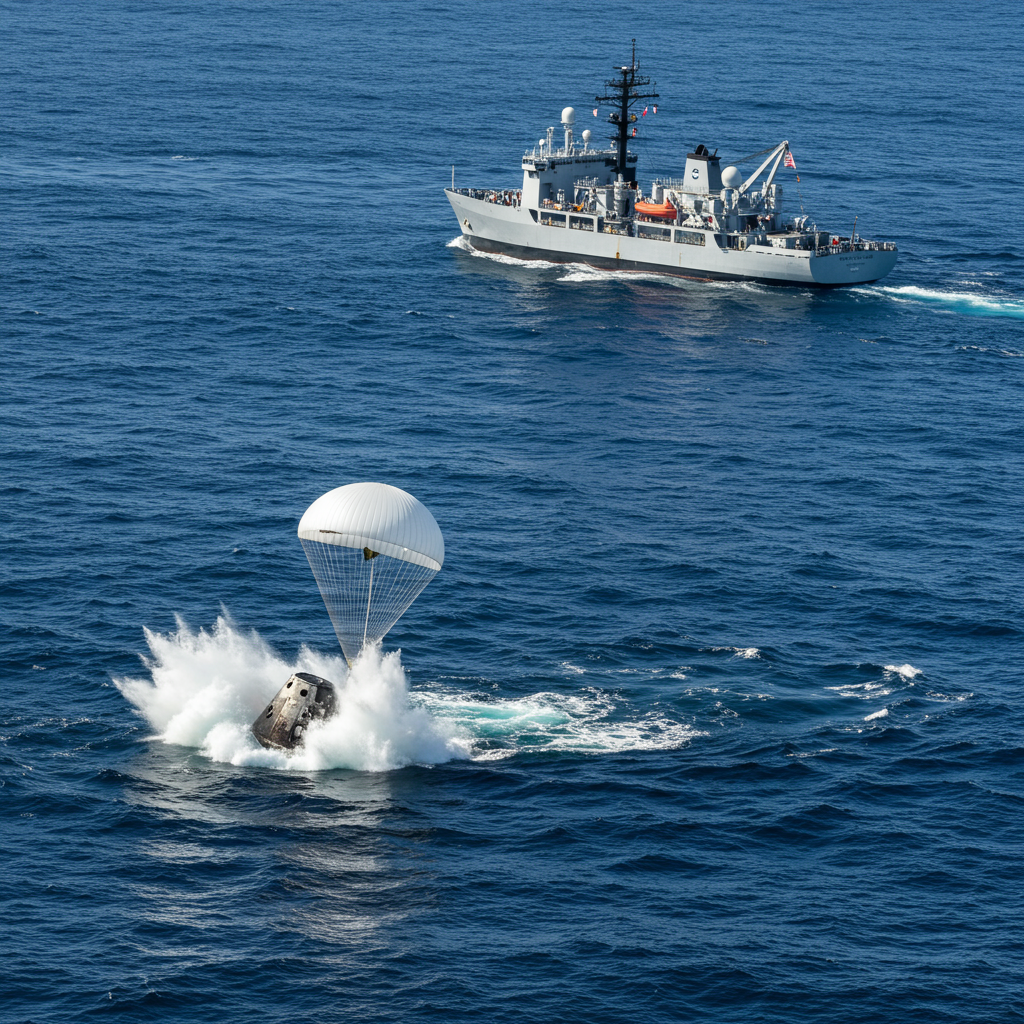
The dramatic splashdown in the Pacific Ocean off the coast of California on April 10, 2026, marked the successful end of the Artemis II mission. Glover recalled the moment as “spiritual,” uttering a simple yet profound “Welcome back to Earth.” Canadian astronaut Jeremy Hansen expressed immense gratitude for the Orion capsule, acknowledging, “It went through a lot and it kept four humans alive.” Recovery teams were swiftly on site to secure the capsule and extract the crew, who were in good health despite reporting minor communication glitches.
Beyond the technical marvels and physical challenges, the mission was deeply emotional. During their lunar journey, the crew decided to propose naming one of the Moon’s craters after Wiseman’s late wife, Carroll. Wiseman called this gesture the “pinnacle of my entire life,” a profound way to honor “an amazing woman” and the mother of his two daughters. He shared that this memory is “etched in my mind forever” and an “unrepayable gift” to his daughters, who watched their father embark on this extraordinary voyage. This human element underscores the profound personal sacrifices and deep connections forged in the pursuit of space exploration.
Historic Achievements and the Future of Lunar Exploration
The Artemis II mission etched several historic “firsts” into the annals of space travel. Victor Glover became the first person of color, Christina Koch the first woman, and Jeremy Hansen the first non-American to journey around the Moon. This diverse crew symbolizes a new era of inclusive space exploration, pushing the boundaries of human potential. Commander Wiseman, reflecting on the mission, shared a profound hope that it could prompt the world to “pause – and remember that this is a beautiful planet in a very special place in our universe,” urging humanity to “cherish what we have been gifted.”
Artemis II was a vital precursor for future lunar endeavors, particularly Artemis IV, which aims to land astronauts on the lunar surface for the first time since the Apollo missions. Engineers will now meticulously analyze data from the Orion capsule’s heat shield performance, navigation systems, and life-support technology. This crucial data will refine technologies and procedures, ensuring the safety of humans venturing deeper into space and eventually establishing a sustainable presence on the Moon. The success of Artemis II reaffirms humanity’s commitment to exploring the cosmos, building on a legacy of courage, innovation, and unwavering determination.
Frequently Asked Questions
What makes the Artemis II reentry so challenging and unique compared to other space missions?
The Artemis II reentry is exceptionally challenging due to the Orion capsule’s return from lunar orbit, necessitating much higher speeds (25,000 mph) than spacecraft returning from low-Earth orbit. This generates extreme temperatures (up to 5,000°F) and creates a plasma bubble, causing a six-minute communications blackout. The mission also employed a precise “skip reentry” technique—dipping into the atmosphere, bouncing out, then reentering—to manage G-forces and heat, a method not used by astronauts returning from lunar distances in half a century.
Where did the Artemis II crew splash down, and how were they recovered after their lunar mission?
The Artemis II crew, comprising Reid Wiseman, Victor Glover, Christina Koch, and Jeremy Hansen, splashed down safely in the Pacific Ocean off the coast of California on April 10, 2026. After a dramatic 13-minute descent, parachutes deployed to slow the Orion capsule’s impact with the water. Recovery teams were quickly on site to secure the capsule and extract the crew. This successful recovery marked the culmination of their historic 10-day journey, bringing them safely back to Earth.
What were the most significant “firsts” and emotional moments of the Artemis II mission?
The Artemis II mission achieved several historic “firsts”: Victor Glover became the first person of color, Christina Koch the first woman, and Jeremy Hansen the first non-American to orbit the Moon. Beyond these pioneering achievements, a deeply emotional moment occurred when the crew proposed naming a lunar crater after Commander Reid Wiseman’s late wife, Carroll, a gesture he described as the “pinnacle of my entire life” and an “unrepayable gift” to his daughters.
The Artemis II reentry was a testament to human courage, advanced engineering, and the profound emotional impact of venturing beyond Earth. The crew’s gripping accounts offer invaluable insights into the future of lunar exploration, paving the way for humanity’s deeper cosmic journey.