The Strait of Hormuz, a critical maritime chokepoint, remains at the heart of escalating tensions between the United States and Iran. As the U.S. imposes a naval blockade on Iranian ports, a key question emerges: what is Iran’s ultimate objective in a potential confrontation? Far from seeking a conventional military victory against the vastly superior U.S. Navy, Iran’s primary goal is to outlast American political will. This strategy leverages asymmetric warfare, aiming to cause enough disruption and attrition to compel a U.S. withdrawal, thereby claiming a strategic victory without direct military conquest.
The Strategic Crucible: The Strait of Hormuz Blockade
The recent U.S. decision to blockade Iranian ports in the Strait of Hormuz marks a significant escalation. President Trump initiated this measure following stalled peace negotiations, aiming to exert maximum economic pressure on Iran. This bold move intends to halt Iran’s oil export profits and its ability to levy tolls on passing vessels, demanding “all or nothing” passage through the vital waterway.
US Imposes Blockade: Economic Pressure as a Weapon
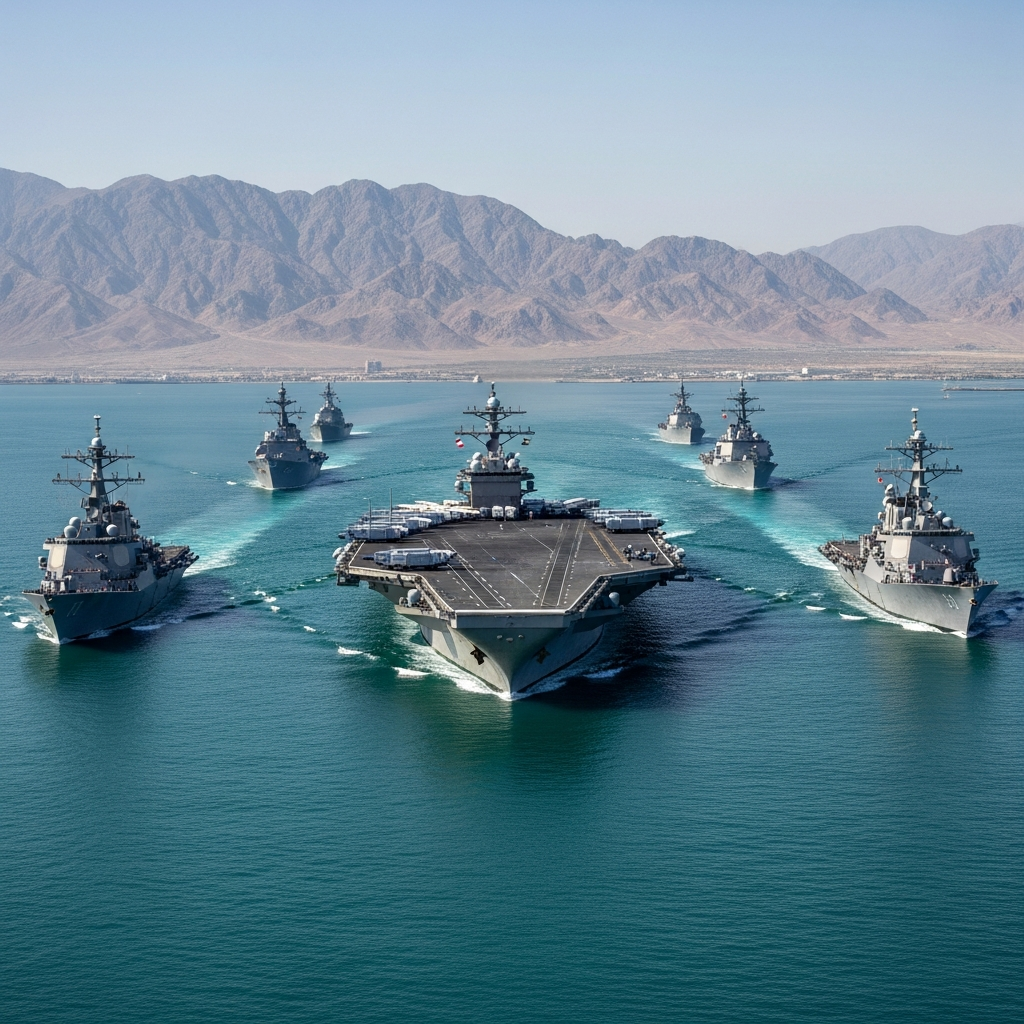
The US Central Command (CENTCOM) announced the blockade would apply to all vessels entering or exiting Iranian ports along the Persian Gulf and Gulf of Oman. Its stated purpose is clear: cut off Iran’s key revenue streams. While the precise deployment locations of U.S. Navy ships remain undisclosed, operations are expected to concentrate around the Gulf of Oman. This strategic positioning avoids placing warships too close to the Iranian coast, mitigating the immediate risk of missile and drone attacks. The U.S. plans to track vessels leaving Iranian ports using satellite and commercial intelligence, intercepting them in the open Indian Ocean. Humanitarian shipments, including food and medical supplies, will be permitted after inspection, but commercial vessels linked to Iran have already been instructed to alter course, some reportedly using “spoofing” techniques to mask their positions.
However, the legality of such a blockade is a contentious issue. The U.N.’s International Maritime Organisation (IMO) Secretary-General argues that international law provides no basis for blocking shipping in international navigation straits. Conversely, international law experts like Donald Rothwell assert that the U.S., as a “belligerent” nation, can legitimately impose a blockade under the law of naval warfare. This legal ambiguity adds another layer of complexity to an already volatile situation.
Iran’s Asymmetric Playbook: Surviving Against Naval Supremacy
Iran fully understands its conventional military limitations. It lacks a modern navy and air force capable of directly confronting and defeating the U.S. Navy in open warfare. This stark reality dictates a different approach: asymmetric warfare. Iran’s strategy is not to win battles outright but to survive, disrupt, and inflict enough pain to erode U.S. political and military resolve. “Time itself is being used as a weapon,” as analysts suggest.
Why Conventional War Isn’t Iran’s Path
Iran’s military doctrine prioritizes defense and deterrence through unconventional means. Recognizing the overwhelming technological and numerical superiority of the U.S. military, Iran focuses on leveraging its geographical advantages and developing a diverse arsenal of low-cost, high-impact weapons. This includes swarms of drones, small fast attack boats, and mini-submarines, designed to create chaos rather than achieve traditional military objectives. The ultimate aim is to create casualties, generate domestic political unrest within the U.S., and compel a withdrawal, allowing Iran to claim a strategic victory.
The Threat of Shahed Drone Swarms
Iran’s primary drone threat lies in sheer volume, not necessarily individual technological sophistication. While a single suicide drone is likely to be detected and intercepted by modern sensors, the concept of a “swarm” is designed to overwhelm U.S. Navy ship defenses. An overwhelming number of drones, approaching from multiple vectors simultaneously, aims to saturate air defenses and blanket an area with attacks. The goal is to cause damage and disruption, testing the limits of even the most advanced defensive systems. The U.S. Navy has, however, rapidly integrated new drone-defense weapons for maritime combat, building on experiences where its Aegis Combat System achieved a “perfect” defensive record against Houthi drone and cruise missile attacks in the Red Sea.
Small Boat Swarms: A Persistent Threat
Similar to aerial drones, Iran is known to possess numerous small, fast attack boats, some of which can be filled with explosives or armed with light weapons. These vessels are reportedly stored in underground facilities, allowing for rapid deployment. When deployed in swarms, these boats aim to overwhelm layered U.S. Navy defenses, potentially ramming warships. While many such boats have been destroyed in past operations, such as “Operation Epic Fury,” the threat persists. U.S. Navy sailors have undergone extensive training, utilizing integrated sensors, interceptors, and deck-mounted weapons to detect and neutralize groups of small boats from standoff distances, preventing them from posing a direct threat to larger warships.
Mini-Submarines: A Calculated Risk
Iran also operates a fleet of diesel-electric submarines and reportedly possesses up to 30 small “mini-subs.” These mini-submarines could potentially be filled with explosives or carry other undisclosed weapons, posing a credible, albeit limited, threat to surface ships. However, U.S. Navy carrier strike groups are equipped with advanced anti-submarine warfare (ASW) capabilities. These include towed-array sonar, helicopter-dropped sonobuoys, and supporting submarines. Furthermore, U.S. Navy undersea drones are capable of mapping and tracking coastal areas within the Strait of Hormuz. Given the comparatively small number of these mini-subs, they are unlikely to pose a lasting strategic threat against such robust ASW defenses.
The Unmet Goals: Assessing the Conflict’s Broader Impact
Despite the U.S. administration’s declarations of overwhelming victory at the onset of the conflict, President Trump’s primary war goals — ending Iran’s nuclear program, destroying its military capabilities, and achieving regime change — remain largely unmet. Paradoxically, the conflict has, in some respects, strengthened Iran’s position and created new challenges.
Iran’s Unexpected Gains from Conflict
One significant and unforeseen outcome is Iran’s solidified control over the economically vital Strait of Hormuz. While previously allowing unimpeded passage, Iran now dictates terms. The ceasefire agreement inadvertently legitimized Tehran’s control, enabling it to permit only “friendly” tankers and levy substantial tolls—up to $2 million—on others. This newfound leverage has led to a global surge in gas prices and thousands of ships awaiting transit, providing Iran with a powerful new economic weapon. Furthermore, efforts to dismantle Iran’s nuclear ambitions may have backfired. With the assassination of then-Supreme Leader Ali Khamenei, whose fatwa previously constrained nuclear weapons development, experts suggest the conflict has given Iran “every incentive” to accelerate its nuclear capabilities. Additionally, the objective of regime change failed; widespread anti-government protests did not materialize into a revolution. Instead, Khamenei’s younger, hard-line son, Mojtaba Khamenei, assumed the top post, leading to an “IRGC-dominated regime” even more resolute than before.
Global Economic and Geopolitical Ripple Effects
The blockade and ongoing tensions have triggered substantial global economic repercussions. Brent crude futures immediately jumped approximately 8 percent upon market opening, exceeding $100 per barrel. The conflict has already removed an estimated 10 million barrels of oil per day from global supply, with the new blockade projected to remove an additional 2 million barrels daily. This instability risks a global recession, potentially driving up petrol and food prices worldwide and limiting access to critical materials such as aluminum, helium, and fertilizer feedstocks. Asian countries, particularly China, which imports approximately 90% of Iran’s oil, face severe disruption. While China possesses significant oil stockpiles, a prolonged export ban from Iran could force it to re-evaluate its supply chains and potentially engage in “diesel diplomacy” to maintain influence with energy-poor Indo-Pacific nations.
In Europe, soaring energy costs contribute to inflation and challenge industrial competitiveness. In Africa, import-dependent nations face fuel shortages and restricted access to fertilizers, exacerbating food insecurity. Conversely, the Western Hemisphere, particularly the United States, Canada, Brazil, and Guyana, stands to benefit from new investment and expanded energy production to meet the intensifying global demand for secure and diversified energy supplies. Beyond economics, the U.S. has also seen its trust with allies eroded and its international standing questioned, with critics suggesting it appears to disregard the “rules-based international order.”
US Naval Dominance: A Shield Against Asymmetric Threats
Despite Iran’s asymmetric capabilities, the U.S. Navy maintains an overwhelming technological and operational advantage. Its defensive systems are highly sophisticated, extensively trained, and proven in combat scenarios.
Aegis Combat System: The Backbone of Defense
The Aegis Combat System is a cornerstone of U.S. naval defense. This integrated system combines advanced radar, command and control capabilities, and ship-launched interceptors to detect, track, and destroy incoming threats, particularly ballistic missiles. Its effectiveness was famously demonstrated in the Red Sea, where it achieved a “perfect” defensive record against Houthi drone and cruise missile attacks on U.S. Navy ships. This combat experience has led to continuous improvements and the rapid integration of new defensive weapons.
Advanced Anti-Submarine Warfare Capabilities
U.S. Navy warships are equipped with comprehensive anti-submarine warfare capabilities. These include towed-array sonar systems that can detect submerged threats from long distances, as well as helicopter-dropped sonobuoys that provide wide-area acoustic surveillance. Furthermore, U.S. Navy carrier strike groups are almost always supported by their own submarines and advanced undersea drones. These assets are crucial for mapping coastal areas, tracking underwater vessels, and neutralizing potential mini-submarine threats before they can pose a significant danger to surface ships. The combination of these layered defenses makes a sustained threat from Iran’s mini-subs highly unlikely.
Frequently Asked Questions
What is Iran’s primary strategic goal in a conflict over the Strait of Hormuz?
Iran’s main strategic goal is not a conventional military victory against the U.S. Navy but rather to outlast American political and military resolve. Lacking a comparable conventional military, Iran employs asymmetric warfare tactics to inflict enough damage, cause casualties, and create chaos. This aims to generate domestic political unrest within the U.S., compelling a withdrawal and allowing Iran to claim a strategic victory without direct military conquest. Essentially, Iran uses “time itself as a weapon.”
How has the US blockade of the Strait of Hormuz impacted global energy markets?
The U.S. blockade has severely disrupted global energy markets, leading to a significant surge in oil and gas prices, with Brent crude futures jumping approximately 8% and exceeding $100 per barrel. This action, following ongoing conflict, has removed millions of barrels of oil from global supply, threatening a global recession. Countries heavily reliant on Middle Eastern oil, especially in Asia like China, face severe supply chain disruptions and higher costs. The situation also affects the availability and price of essential goods like fertilizer, leading to concerns about global food security.
What specific asymmetric tactics would Iran likely employ against the US Navy?
Iran would likely employ three primary asymmetric tactics: Shahed drone swarms, small boat attacks, and mini-submarines. Shahed drones would be used in overwhelming numbers to saturate U.S. Navy air defenses from multiple angles. Small, fast attack boats, some filled with explosives, would also be deployed in swarms to overwhelm surface defenses. Finally, Iran possesses a limited number of explosive-laden mini-submarines designed to threaten surface ships. These tactics aim to cause damage, casualties, and disruption rather than achieving a decisive military victory.
Conclusion: A High-Stakes Geopolitical Chess Match
The situation in the Strait of Hormuz represents a perilous geopolitical chess match, where Iran’s unconventional goals confront the U.S.’s formidable naval power and economic pressure. Iran’s asymmetric strategy, centered on outlasting U.S. political will, leverages drone swarms, small boat attacks, and mini-submarines to create disruption. However, the U.S. Navy’s advanced defenses, including the Aegis Combat System and robust anti-submarine capabilities, have consistently proven effective in countering such threats. The global ramifications, particularly for energy markets and international stability, underscore the critical importance of this strategic waterway. As tensions persist, the world watches to see if political will or strategic attrition will ultimately define the outcome in this high-stakes standoff.