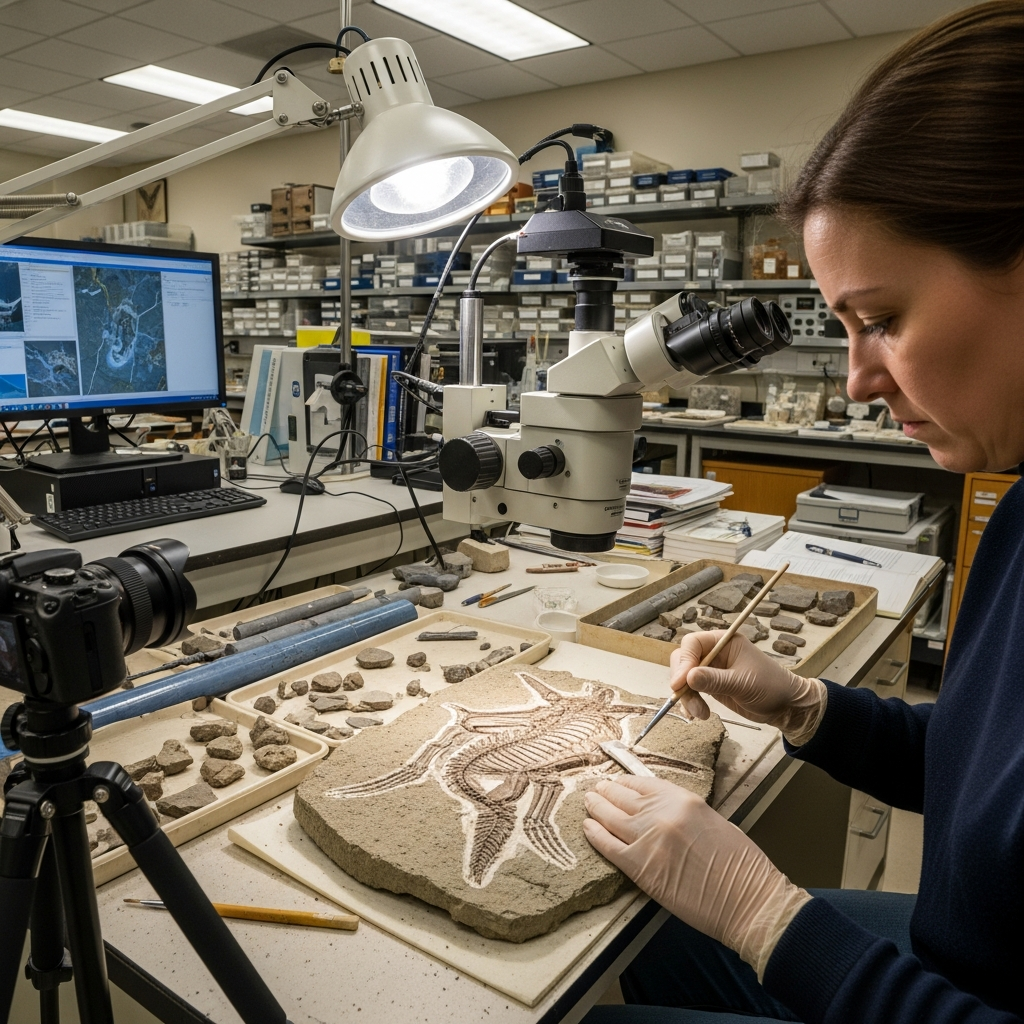
The story of life on Earth is one of continuous transformation, marked by pivotal moments that irrevocably altered the planet’s trajectory. Among the most enigmatic of these periods is the dramatic shift from simple, ancient life forms to the diverse and complex animal kingdom we know today. Recent groundbreaking fossil discoveries in China are now providing scientists with an unprecedented glimpse into this crucial evolutionary leap, revealing that early complex animal evolution began millions of years earlier than previously believed. This finding not only rewrites textbooks but also settles long-standing debates among paleontologists, offering a clearer picture of how our modern animal-dominated biosphere truly emerged.
A Crucial Transition: Earth’s Ancient Dawn
For eons, Earth was home to relatively simple, often microbial life. Then, a profound transition occurred, leading to the complex creatures that eventually colonized every corner of the world and set the stage for humanity. Scientists long believed this critical evolutionary acceleration, famously known as the Cambrian explosion, was a sudden burst of development. However, a remarkable trove of over 700 fossils unearthed in China’s Yunnan province is challenging this established timeline. These fossils, dating back 539 million years ago to the waning end of the Ediacaran period, reveal that sophisticated, three-dimensional animals were already thriving, pushing back the origins of early complex animal evolution by at least 4 million years.
The Paradigm Shift: From 2D to 3D Life Forms
Prior to these findings, the Ediacaran period was characterized by simple, often strange organisms that primarily existed as two-dimensional forms, sprawling across the ocean floor. They lived flat, never venturing upwards or actively burrowing downwards. The new fossils, however, paint a different picture entirely. Many are remnants of more intricate animals that engaged in three-dimensional lives, capable of navigating through water and actively feeding. This capacity for movement and predation was once thought to be a hallmark of the subsequent Cambrian period.
“This really is the first window we have into how basically the modern animal-dominated biosphere was formed,” explained paleontologist Frankie Dunn of Oxford University’s Museum of Natural History, a co-author of the study. She emphasizes the rapid shift from a “two-dimensional world” where life was simpler, to a dynamic planet where animals diversified, spread, and began to fundamentally alter biogeochemical cycles. The site of discovery, an unassuming roadside exposure near a United Nations Chengjiang world natural heritage site, offers a unique “snapshot” of geological time, allowing researchers to literally “walk through time” and witness these evolutionary forces at play.
Unveiling Bilateral Symmetry and Modern Traits
What makes many of these new finds so significant is their sophisticated body plans. The collection includes both ancient, bizarre forms that eventually disappeared, alongside early examples of organisms that exhibit characteristics foundational to modern animals. Crucially, many of these “more modern” animals display bilateral symmetry. This means their bodies are largely identical on the left and right sides, and they possess a distinct head and an anus.
Consider nearly all animal life on Earth today – from humans to starfish – they share this fundamental bilateral symmetry. Before the discoveries in China, scientists had observed fossilized tracks suggesting the presence of such symmetrical creatures, but had never found the actual organisms responsible. “Now we know what’s making them because we have those fossils for the first time,” stated study co-author Ross Anderson, also from Oxford’s Museum of Natural History. This direct evidence of bilateral symmetry in such an early context is a game-changer for understanding early complex animal evolution.
Reconciling “Rocks Versus Clocks”: A Scientific Harmony
The discovery also plays a pivotal role in resolving a long-standing debate within paleontology, often referred to as “rocks versus clocks.” For years, genetic analysis (the “clocks”), which estimates evolutionary timelines based on mutation rates, suggested that the earliest common ancestors of complex animals like humans and starfish emerged during the Ediacaran period. However, the physical fossil record (the “rocks”) lacked concrete evidence to corroborate this. This created a significant discrepancy.
“What our new fossil site tells us is that actually perhaps the rocks and the clocks are in closer agreement than we thought,” Dunn confirmed. This newfound harmony between genetic predictions and fossil evidence strengthens our understanding of the evolutionary timeline. Emily Mitchell, a paleontologist at the University of Cambridge, not involved in the research, affirmed the study’s logical coherence: “The Ediacaran contains animals, we know there must have been a transitional stage between them and the Cambrian fauna. But until now we didn’t really have any evidence of this.” While some external scientists, such as Jonathan Antcliffe, raised questions about classifying these as fully complex, the majority of experts supported the findings.
Beyond the “Explosion”: A Gradual Buildup of Diversity
The traditional view of the Cambrian explosion as an isolated, sudden burst of animal diversity is increasingly being challenged by these and other recent fossil discoveries in China. The evidence now strongly suggests that complex animal life, including major lineages, was already well into a process of diversification millions of years before the Cambrian Period truly erupted.
For instance, the ScienceNews article “Fossils reveal many complex animals existed before the Cambrian explosion” highlights an early deuterostome fossil – a group that includes vertebrates and sea stars – displaying bilateral symmetry and feeding appendages from the Ediacaran. Researchers Gaorong Li and Xiaodong Wang noted this as “new, very early fossil evidence of animals with bilateral symmetry in the Ediacaran Period.” Another discovery mentioned is a Haootia-like animal, an early relative of modern cnidarians (corals, anemones, jellies), further demonstrating this pre-Cambrian diversity. Emmy Smith, a paleontologist at Johns Hopkins University, observed the “abundance and diversity of bilaterian fossil finds” with specialized feeding structures, emphasizing these were “already quite physically complex.” She further argued that “major animal lineages were already diversifying before the Cambrian,” implying a much longer period of evolutionary development preceding the perceived “explosion.” Gaorong Li further explained that these results suggest the Cambrian explosion “didn’t appear out of nowhere,” but rather represented a “gradual buildup of complex animal life” that was actively progressing.
Understanding the “How” and “Why” of Early Life
With the “when” of this evolutionary leap now clearer, scientists are shifting their focus to the more intricate questions of “how” and “why.” Frankie Dunn expressed her interest in understanding the underlying mechanisms. “I’m really interested in understanding, not just when it happened… but how it happened and why it happened the way that it happened,” she remarked. This includes disentangling the intricate feedbacks between Earth and life itself, and between different life forms. Was the presence of Ediacaran life on the seafloor an inevitable precursor to the Cambrian explosion? These are the kinds of questions driving future paleontology research.
Life on Earth began approximately 3 billion years ago, yet it took another 2.4 billion years for complex animals to develop. Once they did, their multiplication and diversification were remarkably rapid. University of California at Berkeley paleontologist Charles Marshall, commenting on the broader context, suggested that Earth needed to build up sufficiently high oxygen levels, and evolution required specific genetic changes to kick in. He theorized that “The Cambrian explosion was sudden because of the already rich developmental system that was in place.” Duncan Murdock, a curator at Oxford’s museum, eloquently summarized the profound impact of this period: “What fundamentally changed across this period is the way the animals on the planet interacted with each other. Once animals turned up and started eating each other and churning up the sediment, they changed the planet forever. And the planet that we live on is very much built on the foundations from the Ediacaran and Cambrian.”
Frequently Asked Questions
What makes these newly discovered Ediacaran fossils significant?
The newly discovered fossils, unearthed in China’s Yunnan province and dating back 539 million years, are significant because they provide the first direct evidence of complex, three-dimensional animal life existing millions of years earlier than previously thought. They challenge the long-held belief that such complex traits only emerged during the Cambrian period. These fossils reveal creatures with bilateral symmetry, distinct heads and anuses, and the ability to move and feed actively, fundamentally reshaping our understanding of early complex animal evolution.
Where were these groundbreaking early animal fossils found?
These pivotal fossils, crucial for understanding early complex animal evolution, were discovered in southwestern China’s Yunnan province. Specifically, they were found in an unassuming exposure along a roadside, a short distance from a United Nations Chengjiang world natural heritage site known for other significant fossils. This particular location allowed researchers to examine different geological layers, effectively “walking through time” to observe the conditions and life forms present during this critical evolutionary period.
How do these new findings impact our understanding of the Cambrian explosion?
These new fossil discoveries profoundly impact our understanding of the Cambrian explosion by suggesting it was less of a sudden, isolated event and more of an acceleration of an ongoing evolutionary process. Evidence now points to a “gradual buildup of complex animal life” that was actively diversifying millions of years prior to the Cambrian. The findings reconcile the “rocks versus clocks” debate, bringing the fossil record into closer agreement with genetic analyses, and indicate that many major animal lineages were already evolving in the Ediacaran period, laying the groundwork for the burst of diversity that followed.
Conclusion
The latest fossil discovery in China represents a pivotal moment in paleontology, offering an unprecedented window into the dawn of early complex animal evolution. By revealing sophisticated, three-dimensional animals with bilateral symmetry millions of years earlier than previously thought, these finds are reshaping our understanding of Earth’s critical evolutionary transitions. They not only reconcile long-standing scientific debates but also shift our focus from “when” complex life appeared to the more profound questions of “how” and “why” such transformative changes occurred. This ongoing research in the Yunnan province and beyond continues to unveil the extraordinary narrative of life on Earth, reminding us of the deep evolutionary roots that underpin the planet we inhabit today.