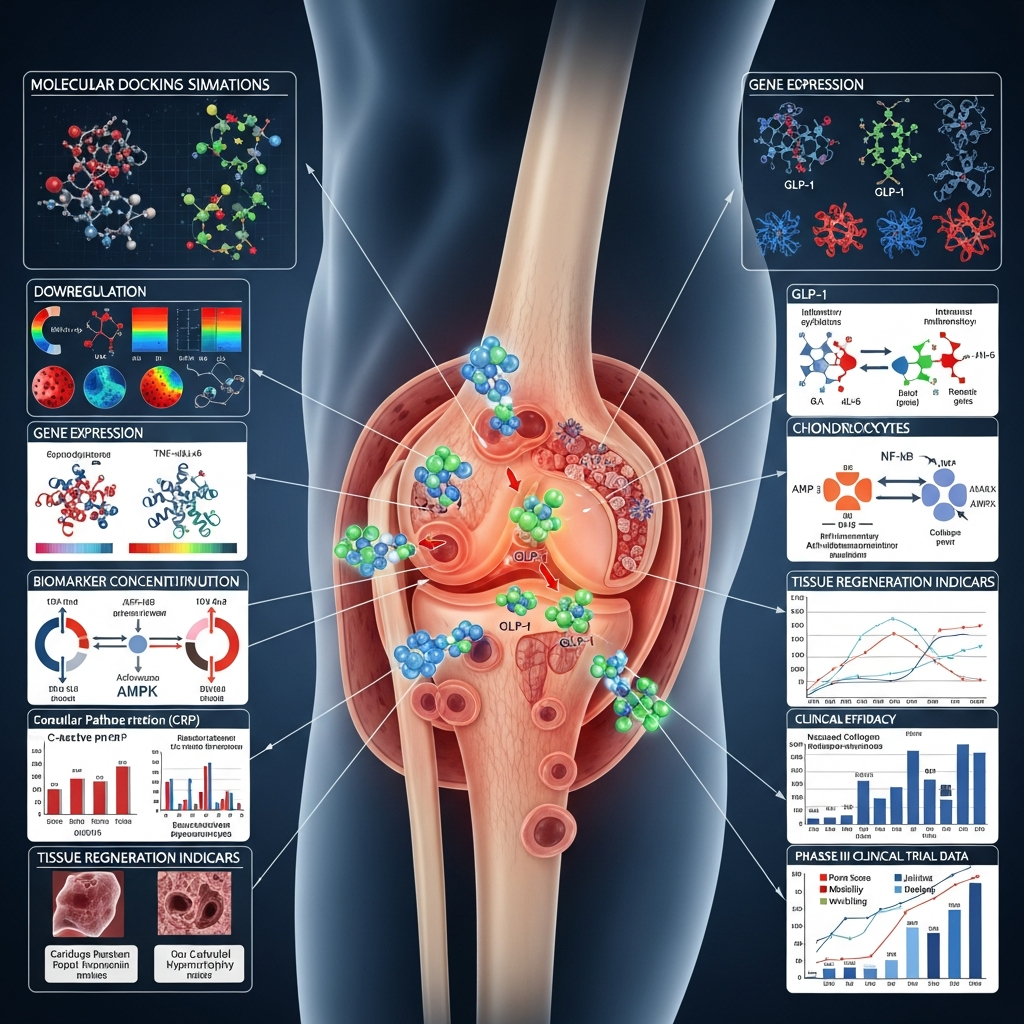
A groundbreaking scientific discovery is challenging long-held assumptions about how arthritis develops and could pave the way for entirely new treatment strategies. Researchers have uncovered an unexpected connection between a metabolic hormone, GLP-1, and joint biology, hinting at previously unexplored mechanisms that drive inflammatory conditions. This exciting revelation suggests that medications primarily known for managing blood sugar and weight might hold a dual power to combat chronic joint pain and stiffness.
Understanding Arthritis: A Widespread & Complex Challenge
Arthritis isn’t a single condition but a broad umbrella term encompassing over 100 distinct joint disorders. These range from autoimmune diseases like rheumatoid arthritis (RA) and psoriatic arthritis (PsA) to degenerative conditions such as osteoarthritis (OA). Despite their varied origins, these conditions share debilitating symptoms: persistent joint pain, swelling, stiffness, and reduced mobility. Such symptoms profoundly impact daily life, making simple tasks challenging and diminishing overall quality of life for millions globally.
Current therapeutic approaches mainly focus on managing symptoms. They aim to control inflammation, slow disease progression in some cases, and alleviate discomfort. However, these treatments often fall short of addressing the fundamental biological mechanisms at play. This gap highlights the urgent need for innovative research to uncover deeper insights into arthritis pathology and unlock more effective, targeted interventions.
The Unexpected Player: GLP-1 Hormone Unveiled in Joints
The recent breakthrough comes from scientists at Aarhus University’s Department of Biomedicine. Their findings, published in the prestigious Lancet Rheumatology, point to an astonishing new player within the joint environment: the GLP-1 hormone. Glucagon-like peptide-1 (GLP-1) is a naturally occurring metabolic hormone. It is primarily recognized for its vital roles in regulating blood sugar levels and controlling appetite.
For years, research focused on GLP-1’s impact on gut and pancreatic function. Excitingly, newer studies from institutions like Duke University School of Medicine have further expanded our understanding of GLP-1. These studies revealed that even pancreatic alpha cells, traditionally known for glucagon production, can also act as significant producers of GLP-1. This natural hormone shift helps maintain blood sugar balance by stimulating insulin release and reducing glucagon. This broader understanding underscores GLP-1’s powerful and multifaceted role across various bodily systems, making its discovery in the joints even more intriguing.
Researchers found GLP-1 present in the joint fluid of arthritis patients—a location where its presence had not been observed before. This discovery offers a compelling new biological pathway. It could reshape how scientists conceptualize and develop treatments for these chronic conditions.
A New Biological Pathway for Joint Health
The Aarhus University study rigorously analyzed blood and joint fluid samples from arthritis patients. Medical doctor and PhD student Mads Brüner, working with PhD student Amalie Broksø, led the data analysis. Their work revealed that while the body’s natural production of GLP-1 within the joints is minimal, its presence is undeniable. This finding suggests a potentially limited natural effect from endogenous GLP-1 in the joint.
However, this observation is precisely what makes the discovery so promising. GLP-1-based medications, such as those used for diabetes and weight management, deliver the hormone at significantly higher doses than the body naturally produces. Tue Wenzel Kragstrup, a key researcher, emphasized this point. He stated that these pharmacologically elevated levels of GLP-1 might directly influence inflammation within the joint tissues. This opens the door to a novel therapeutic strategy.
Beyond Weight Loss: The Dual Effect Hypothesis
GLP-1 receptor agonist medications, such as Wegovy and Ozempic, have gained widespread recognition for their efficacy in promoting weight loss and managing type 2 diabetes. For many arthritis patients, particularly those with osteoarthritis, weight loss is already a crucial part of recommended management strategies. Reducing body weight can significantly alleviate stress on weight-bearing joints and improve symptoms.
The new research proposes an exciting dual effect for these medications. Beyond their established benefits in reducing body weight, GLP-1 medications might also directly modulate joint inflammation. This implies that patients could potentially benefit from two synergistic effects:
- Systemic metabolic improvement and weight reduction: Easing the mechanical burden on joints.
- Direct anti-inflammatory action within the joint: Addressing the underlying biological processes of arthritis.
This hypothesis represents a significant advancement. It moves beyond the idea of GLP-1 solely as a metabolic regulator and positions it as a potential direct therapeutic agent for joint health.
The Scientific Journey: Early Findings and Future Steps
While earlier studies have hinted at the anti-inflammatory properties of GLP-1, this is the first time its presence has been confirmed within the joint fluid of arthritis patients. This provides a crucial biological foundation for future investigations. Kragstrup was careful to temper enthusiasm with scientific rigor, noting that the study has not yet demonstrated that GLP-1-based treatment works against arthritis.
This initial discovery is a vital first step, but it necessitates a comprehensive series of rigorous clinical trials. These trials will be critical to determine several key factors:
Whether GLP-1 medications reach the joints in sufficient quantities to exert a therapeutic effect.
If they can genuinely reduce inflammation and improve symptoms in arthritis patients.
The optimal dosing and administration methods for such a purpose.
The next immediate step for researchers is to delve deeper into these pharmacokinetic and pharmacodynamic questions. This will confirm the therapeutic potential before any clinical recommendations can be made.
Why This Discovery Matters for Patients
For individuals living with chronic arthritis, this discovery offers a renewed sense of hope. The prospect of repurposing existing, well-understood medications to target arthritis in a new way is incredibly exciting. It suggests a potential shift towards more effective treatments that address the disease’s root causes rather than just managing its symptoms.
However, it is vital for patients to understand the current stage of this research. As the scientists themselves emphasize, GLP-1 medications are not currently prescribed specifically for arthritis treatment. Patients should continue with their prescribed regimens and consult their healthcare providers before making any changes to their medication or treatment plans. The path from initial discovery to approved therapy is often long and complex, requiring extensive validation through clinical trials. This research lays a strong foundation for future advancements, offering a beacon of hope for better arthritis care in the years to come.
Frequently Asked Questions
What is GLP-1, and how is this discovery significant for arthritis?
GLP-1 (Glucagon-like peptide-1) is a natural metabolic hormone primarily known for regulating blood sugar and appetite. Recent research from Aarhus University discovered its unexpected presence in the joint fluid of arthritis patients, suggesting a potential direct role in joint biology. This is significant because GLP-1-based medications, already used for diabetes and weight loss, might possess a dual effect: aiding weight reduction (beneficial for arthritis) and directly combating joint inflammation, offering a novel therapeutic pathway beyond existing treatments.
What are the next steps in researching GLP-1 for arthritis, and where are these studies happening?
The immediate next steps involve rigorous investigation into whether GLP-1 medications reach the joints in sufficient therapeutic quantities and can effectively reduce inflammation. Researchers at Aarhus University, who made this initial discovery, will continue to lead these efforts. The findings provide a biological basis for launching extensive clinical trials. These trials will be crucial to confirm the efficacy and safety of GLP-1-based treatments specifically for various forms of arthritis.
Should patients with arthritis consider taking GLP-1 medications now?
No, patients with arthritis should not expect to be prescribed GLP-1 medications specifically for their joint condition at this time. The research, while promising, is still in its early stages. It has identified a potential biological link but has not yet demonstrated that the treatment works against arthritis*. Clinical trials are necessary to prove effectiveness and safety for this new indication. Patients should continue to follow their current treatment plans and consult with their healthcare provider about any questions regarding their medication or condition.
A Promising Horizon for Arthritis Treatment
The detection of the GLP-1 hormone in the joint fluid of arthritis patients marks a pivotal moment in medical research. This unexpected finding by Aarhus University scientists offers a compelling new lens through which to view arthritis and its underlying biological mechanisms. By linking GLP-1 to joint inflammation, this discovery opens the door to potentially repurposing existing medications to provide more targeted and effective treatments.
While the journey from discovery to approved therapy is long, the initial findings are incredibly promising. They suggest a future where arthritis management could extend beyond current symptomatic relief, offering patients a chance at improved mobility and a better quality of life. Continued research and rigorous clinical trials will be essential to fully unlock the potential of GLP-1 in reshaping the future of arthritis treatment.