A critical juncture in global maritime security has arrived, as over 40 nations unite to address the unprecedented closure of the Strait of Hormuz. This vital international shipping lane, now choked by escalating regional tensions, has plunged the global economy into uncertainty. Led by the United Kingdom, this multinational coalition aims to mobilize a full spectrum of diplomatic and economic tools to ensure a “safe and sustained opening” of the Strait, a passage critical for a fifth of the world’s energy supplies. The move comes as the global community grapples with the severe ripple effects of the waterway’s near-total shutdown, threatening everything from fuel prices to food security.
The Strait of Hormuz: A Global Lifeline Under Threat
The Strait of Hormuz, a narrow waterway connecting the Persian Gulf to the open ocean, is an indispensable artery for global trade. Under normal conditions, it facilitates the passage of approximately 20% of the world’s crude oil, natural gas, and jet fuel supplies. Its geographic complexities, including shallow waters and rugged terrain, make it a strategic choke point, historically favoring naval tactics that exploit its unique characteristics.
The current crisis stems from Iran’s retaliatory actions against commercial vessels, triggered by the ongoing war between the United States, Israel, and Iran, which began in late February. British Foreign Secretary Yvette Cooper has openly accused Iran of “hijacking an international shipping route to hold the global economy hostage.” This disruption has led to a near halt in civilian shipping traffic, with reports of 23 direct attacks on commercial vessels in the Gulf and 11 crew fatalities since the conflict’s outset. The remaining vessels are largely engaged in a “murky operation” under Iran’s direct control, where passage is vetted and tolls are imposed.
A United Front: Coalition Formation and Core Objectives
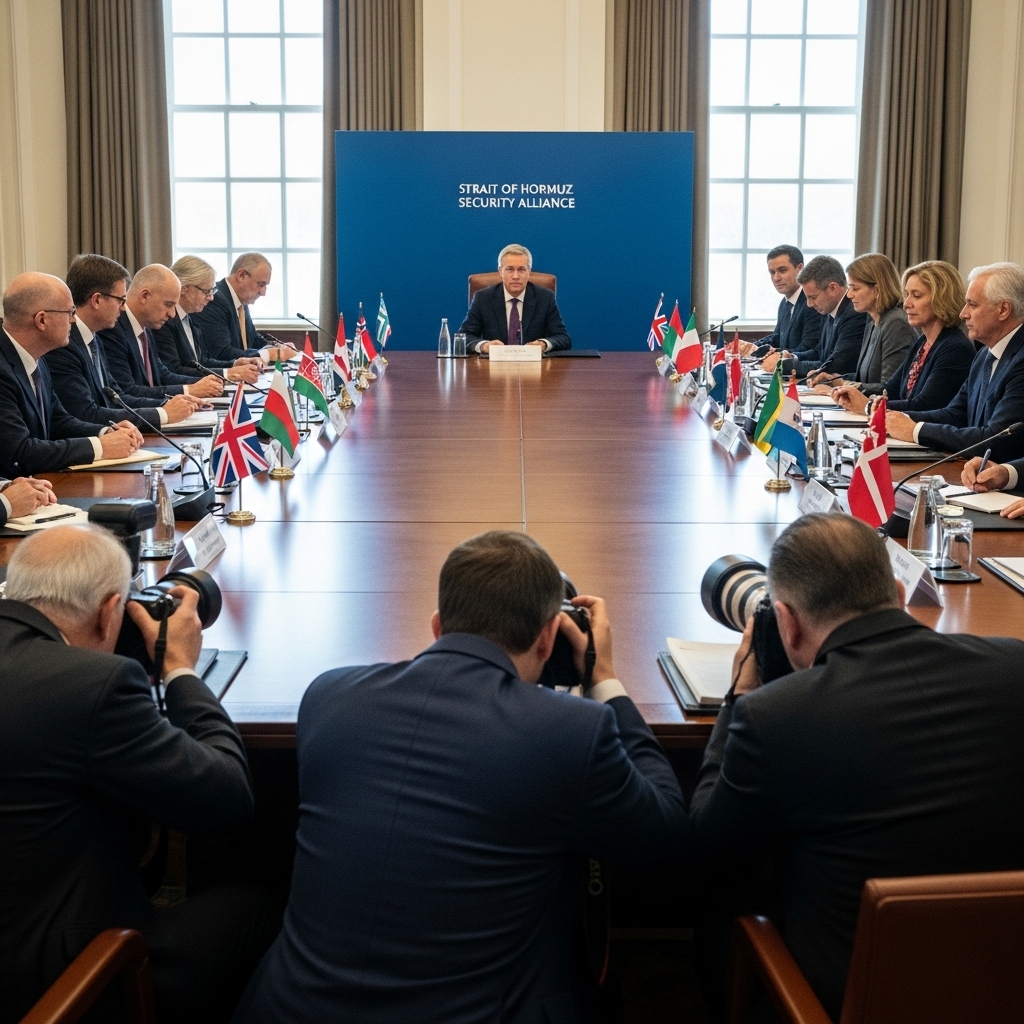
On Thursday, April 2, 2026, over 40 countries convened virtually to launch a multinational coalition dedicated to securing free passage through the Strait of Hormuz. Hosted by British Foreign Secretary Yvette Cooper, the meeting brought together diplomats from diverse regions, including Europe, Asia, the Middle East, and Africa, alongside international organizations such as the European Union and the International Maritime Organization. This broad participation underscores the worldwide impact of the Strait’s closure, which has triggered a significant global economic shock.
The coalition’s primary objective is to restore “safe, toll-free freedom of navigation” in the Strait of Hormuz, consistent with the Law of the Sea. This commitment is viewed as an urgent priority by the European Union, whose High Representative Kaja Kallas stressed the necessity of diplomatic efforts. While the virtual gathering focused on assessing the situation and consolidating support rather than making immediate operational decisions, it marked a significant step towards a coordinated international response. The inaugural meeting specifically aimed to demonstrate to the Trump administration that Europe and its allies are prepared to take greater responsibility for their own security.
Mobilizing Diplomatic and Economic Tools
The coalition’s strategy centers on a “collective mobilization of our full range of diplomatic and economic tools.” This includes increasing diplomatic pressure through international mechanisms, such as the United Nations, and considering fresh economic sanctions on the Iranian regime should the Strait remain closed. Discussions also encompassed cooperating with maritime bodies to secure the release of the estimated 2,000 ships and 20,000 seafarers currently trapped by the conflict. Furthermore, participants explored measures to stabilize global energy markets and enhance coordination with shipping operators to rebuild confidence in transit. Bahrain, for instance, is preparing to table a United Nations Security Council resolution aimed at protecting commercial shipping across the waterway, potentially authorizing states to use “all necessary means” for safe transit without explicitly calling for binding enforcement during the “hot phase” of the conflict.
Post-Conflict Military Planning and Humanitarian Concerns
While diplomatic efforts are paramount, military planners within the coalition are also exploring future defense capabilities. These include demining operations and escorting vessels, but crucially, these actions are planned “once the conflict eases” or “once the hot phase of the war… comes to an end.” This distinction highlights a collective reluctance among participating nations to use military force to reopen the Strait while active hostilities persist, given the significant risks posed by Iran’s capabilities, including anti-ship missiles, drones, and mines.
Adding a crucial layer of urgency, representatives from Italy, the Netherlands, and the United Arab Emirates issued a joint call for a “humanitarian corridor.” This initiative seeks to safeguard the shipping of vital fertilizers to prevent a looming global food crisis, demonstrating the far-reaching consequences of the Strait of Hormuz blockade beyond just energy.
Divided Approaches: US, European, and Regional Perspectives
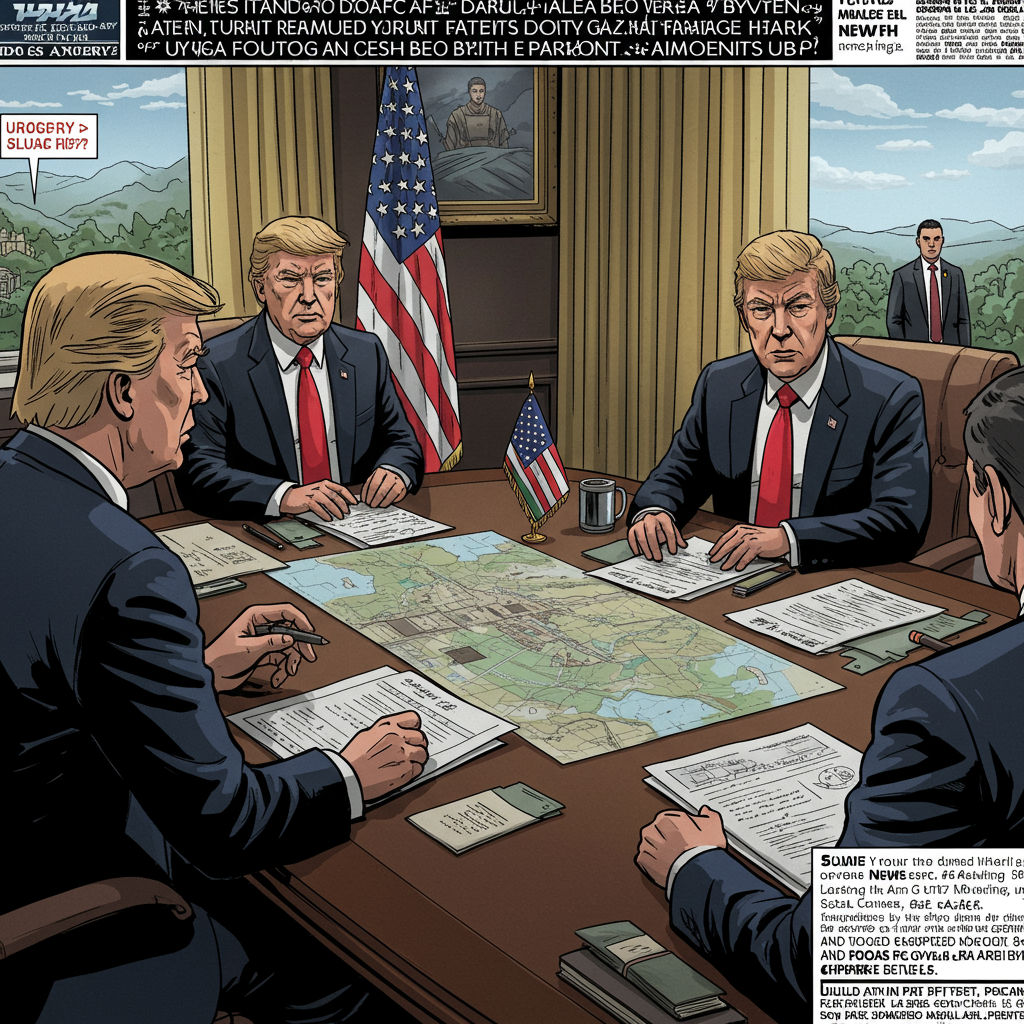
The international response to the Strait’s closure reveals significant divergences, particularly concerning the role of the United States. Notably, the US did not participate in Thursday’s virtual meeting. President Donald Trump has consistently asserted that securing the waterway is “not America’s job,” urging countries dependent on Middle Eastern oil and gas to “take care of that passage” themselves. He has criticized NATO allies for their reluctance to deploy warships to the conflict zone, despite Europe being significantly affected by soaring energy prices, even if its direct energy imports from the region are limited. Trump’s stance even contradicted US Secretary of State Marco Rubio’s G7 statement, which described reopening the waterway as a “post-conflict necessity.”
Conversely, French President Emmanuel Macron has strongly pushed back against Trump’s aggressive stance. Macron deemed any attempt to secure the narrow passage by military force “unrealistic” and fraught with danger. He warned that such an endeavor would be protracted and expose all vessels to significant risks from Iran’s Revolutionary Guards and ballistic missiles, emphasizing that “This is not a show… We’re talking about war and peace. Let’s be serious.” France advocates for an international mission to escort tankers only after hostilities have subsided, necessitating eventual coordination with Iran to establish security guarantees.
The Stakes Are High: Global Economic Fallout and Future Prospects
The closure of the Strait of Hormuz has immediate and severe implications for global supply chains, energy prices, and food security. The near-total cessation of traffic has already led to “unsustainable” spikes in oil and food prices, impacting households and businesses globally. Earlier warnings from the UN World Food Programme indicate that continued disruption could plunge up to 45 million additional people into acute hunger, underscoring the humanitarian dimension of this geopolitical crisis.
The formation of this broad coalition, without direct US participation in the meeting, signals a significant shift in international responsibility. It forces other nations to forge new alliances and strategies in the face of a global crisis and a powerful nation’s disengagement. The “capabilities question” remains: can this diverse coalition effectively enforce its objectives without substantial naval power, particularly if diplomatic efforts falter? The initial meeting was a foundational step, with “working-level meetings” planned to finalize details and for military planners to meet next week to discuss post-conflict security measures.
Navigating the Path Forward: Challenges and Hopes
The path to fully reopening the Strait of Hormuz is fraught with challenges. The ongoing conflict between the US, Israel, and Iran creates an volatile environment, making any immediate military intervention prohibitively risky. The divergence in strategic approaches between the US and its European allies further complicates a unified, rapid response. Moreover, Iran maintains that only “non-hostile” ships are permitted transit, asserting that the waterway is closed only to vessels belonging to enemy countries and their allies, framing their actions within their geopolitical struggle.
Despite these hurdles, the formation of a wide-ranging coalition offers hope for a multilateral solution. The collective commitment to diplomatic and economic pressure, coupled with post-conflict military planning, demonstrates a united resolve to protect global maritime trade. The call for a humanitarian corridor highlights the broader human impact and the need for pragmatic solutions even amidst conflict. The ultimate success of this coalition will hinge on sustained diplomatic pressure, robust international cooperation, and the careful navigation of complex geopolitical dynamics, striving for a future where the world’s most critical energy artery flows freely once more.
Frequently Asked Questions
What is the significance of the Strait of Hormuz, and why is its security critical?
The Strait of Hormuz is one of the world’s most vital maritime choke points, serving as the sole sea passage from the Persian Gulf to the open ocean. It facilitates the transit of approximately 20% of the world’s traded crude oil, natural gas, and jet fuel, making it indispensable for global energy security and supply chains. Its security is critical because any disruption, such as the current near-total closure due to Iranian actions, leads to severe economic shocks, causing oil and gas prices to soar, disrupting fertilizer shipments, and driving up the overall cost of living worldwide. The impact extends to food security, threatening to plunge millions into acute hunger.
How is the international community, particularly the new coalition, addressing the closure of the Strait of Hormuz?
Over 40 countries, led by the United Kingdom, have formed a multinational coalition to address the closure of the Strait of Hormuz. Their strategy focuses on a “collective mobilization of our full range of diplomatic and economic tools.” This includes increasing diplomatic pressure, considering fresh economic sanctions on Iran, cooperating with maritime organizations to release trapped vessels and crews, and stabilizing energy markets. Military planners are also exploring post-conflict defense capabilities like demining and escorting, but military intervention during active hostilities is largely rejected as “unrealistic” due to significant risks. Bahrain is also preparing a UN Security Council resolution to protect shipping.
What are the potential global economic impacts if secure passage through the Strait of Hormuz is not restored?
If secure passage through the Strait of Hormuz is not restored, the global economic impacts could be severe and far-reaching. The current near-total closure has already caused “unsustainable” spikes in oil, gas, and jet fuel prices, directly affecting consumers and businesses worldwide. It disrupts global supply chains, particularly for energy and critical commodities like fertilizers, leading to shortages and increased costs. Furthermore, the UN World Food Programme has warned that continued disruption could push an additional 45 million people into acute hunger, highlighting the profound humanitarian and economic consequences of this geopolitical crisis.