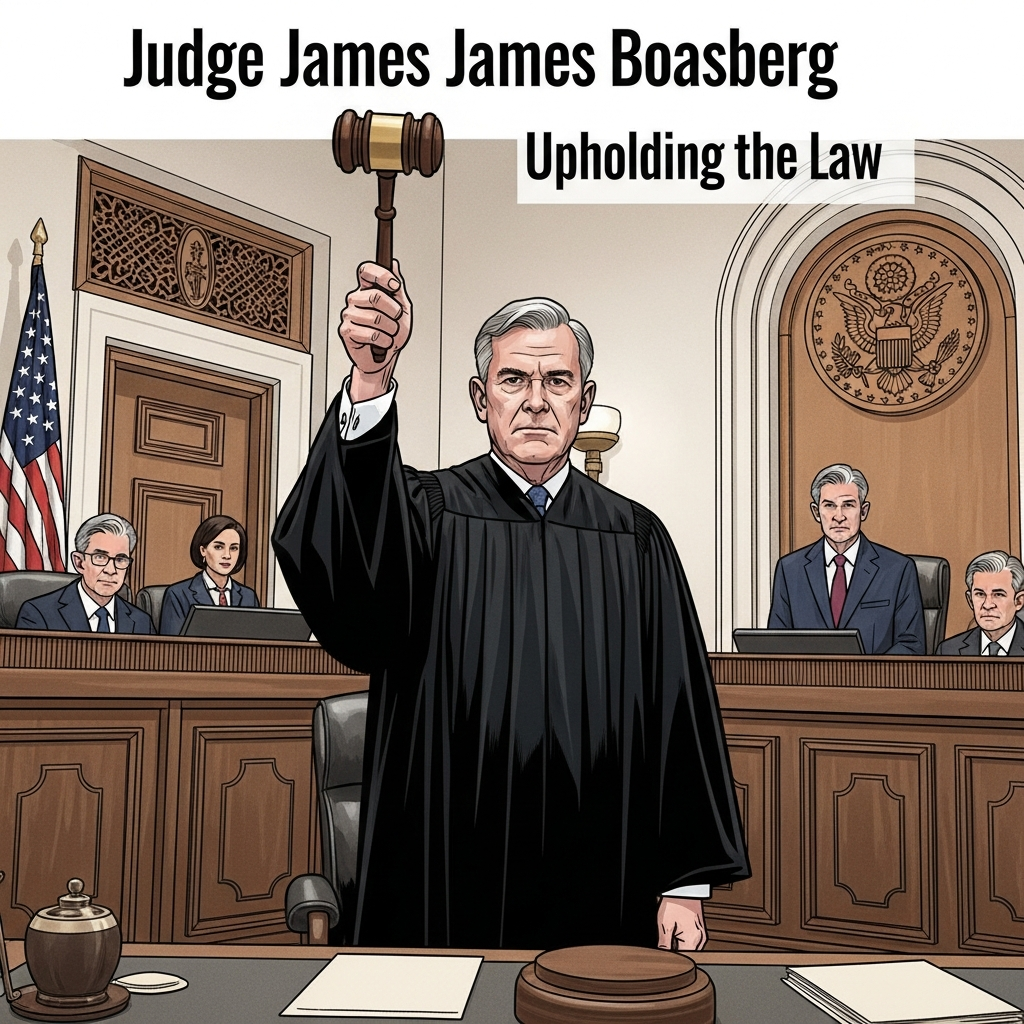
In a landmark decision safeguarding the operational independence of the U.S. central bank, a federal judge has decisively blocked subpoenas issued by the Department of Justice (DOJ) targeting Federal Reserve Chair Jerome Powell. This pivotal ruling, handed down by U.S. District Court Judge James Boasberg in Washington D.C., represents a significant rebuke to executive branch attempts to exert influence over monetary policy. The judge’s unsealed opinion concluded that the DOJ’s criminal probe against Powell was an “improper campaign,” driven by political motives rather than legitimate legal grounds, marking a critical moment for the Federal Reserve’s autonomy.
The Landmark Ruling Unveiled Against DOJ’s Probe
The judicial hammer fell in March 2026 when Judge Boasberg halted the DOJ’s investigation into Federal Reserve Chair Jerome Powell. This high-stakes legal battle centered on subpoenas issued by the Department of Justice in January of the same year. While the DOJ ostensibly sought information regarding alleged cost overruns on the extensive renovation of the Fed’s headquarters, Judge Boasberg found a starkly different motive. His ruling underscored a profound concern about political interference in an institution vital to the nation’s economic stability. The decision sent clear signals about the judiciary’s role in upholding the separation of powers.
The judge’s opinion delivered a scathing assessment of the DOJ’s case. He explicitly stated that prosecutors presented “essentially zero evidence” that Powell had committed any crime. Conversely, Boasberg detailed “abundant evidence” suggesting the subpoenas’ primary purpose was to “harass and pressure Powell either to yield to the President or to resign.” This finding directly challenged the integrity of the Justice Department’s actions, portraying them as a tool for political leverage rather than impartial law enforcement.
The Pretext vs. The Pressure Campaign
At the heart of the controversy was the alleged justification for the subpoenas. The DOJ claimed its investigation, which reportedly began in November 2025, focused on potential discrepancies in Powell’s prior Senate testimony concerning the multi-billion-dollar headquarters renovation project. U.S. Attorney Jeanine Pirro, whose office initiated the probe, publicly maintained her actions were not politically motivated. She asserted her job was simply to investigate potential misuse of public funds and false statements.
However, Judge Boasberg thoroughly dismantled this argument. He characterized the government’s stated justifications as “thin and unsubstantiated,” concluding they were “pretextual.” The judge found no genuine evidence linking Powell to any wrongdoing beyond “displeasing the President.” This conclusion highlighted a pattern of executive branch hostility toward the Federal Reserve, particularly in its independent stance on interest rates. The ruling made it clear the court saw through the stated reason, identifying a deeper, political agenda.
A Battle for Federal Reserve Independence
This entire episode emerged as a critical test of the Federal Reserve’s ability to maintain its independence. The central bank’s mandate includes setting monetary policy, such as interest rates, based on economic conditions. Political pressure to influence these decisions can undermine economic stability and public trust. The judge’s ruling firmly reinforced the principle that the Fed must operate free from executive branch coercion. It was a powerful judicial defense against an “improper campaign.”
Federal Reserve Chair Jerome Powell himself had previously, in an unprecedented January video statement, addressed the threatened indictment. He asserted that the legal action was a direct consequence of the Fed setting interest rates based on economic conditions, not presidential preferences. Powell framed the probe as a politically motivated attempt to influence the Federal Reserve’s interest rate policy, calling it an “unprecedented action” within a context of “threats and ongoing pressure.” This public stand highlighted the gravity of the situation and the perceived threat to the Fed’s autonomy.
Executive Branch Interference and Historical Context
The judge’s order placed the DOJ’s actions within a broader pattern of the Trump administration’s efforts to target perceived enemies and influence independent institutions. Throughout his presidency, Donald Trump had consistently demanded lower interest rates and frequently attacked Powell and other top Fed officials. Specific examples included threats to fire Powell and attempts to remove other central bank members. This historical context strongly supported Judge Boasberg’s finding that the subpoenas were part of an ongoing effort to influence or remove Powell, rather than a genuine criminal investigation. This ongoing pressure campaign was a key factor in the judge’s determination.
Political Fallout and Congressional Reactions
The ruling immediately triggered strong reactions across the political spectrum. U.S. Attorney Jeanine Pirro, facing a significant setback, expressed anger and vowed to appeal Judge Boasberg’s decision. She criticized Boasberg as an “activist judge,” arguing that his ruling “neutered the grand jury’s ability to investigate crime” and effectively granted “immunity” to Jerome Powell. Pirro insisted her actions were solely focused on potential misuse of public funds, maintaining politics played no role.
Conversely, the ruling garnered significant praise from members of Congress, particularly from Republicans who emphasized the importance of Fed independence. Senator Thom Tillis (R-N.C.), a key member of the Senate Banking Committee, lauded the decision. He characterized the criminal investigation as “weak and frivolous” and “nothing more than a failed attack on Fed independence.” Tillis went further, issuing a public warning. He threatened to block the confirmation of President Trump’s nominee to succeed Powell, Kevin Warsh, until the Justice Department’s probe was dismissed, using the upcoming leadership transition at the Federal Reserve (Powell’s term expires in May) as political leverage. This congressional pushback highlighted the deep partisan divisions surrounding the central bank’s role.
Understanding the Stakes: Why Fed Independence Matters
The conflict between the executive branch and the Federal Reserve, culminating in Judge Boasberg’s ruling, underscores the vital importance of an independent central bank. The Federal Reserve’s primary mandate is to manage the nation’s money supply, control inflation, and promote maximum employment. To effectively achieve these goals, its decisions on interest rates and other monetary policies must be insulated from short-term political pressures. When political leaders attempt to dictate monetary policy, it can lead to erratic economic decisions, undermine investor confidence, and ultimately harm the economy.
An independent Fed provides a crucial check and balance against the political cycle. It allows for long-term economic planning without the distraction of election cycles or partisan agendas. The judge’s decision in the Jerome Powell subpoenas case serves as a powerful affirmation of this principle. It reinforces the idea that institutional safeguards are essential to protect foundational pillars of democratic governance and economic stability. The Federal Reserve, by design, needs to operate outside the direct influence of the White House to maintain its credibility and effectiveness both domestically and globally.
Frequently Asked Questions
Why did Judge Boasberg rule against the DOJ’s probe into Federal Reserve Chair Jerome Powell?
Judge James Boasberg ruled against the DOJ’s probe because he found “essentially zero evidence” of any crime committed by Jerome Powell. Instead, he concluded there was “abundant evidence” that the subpoenas’ dominant purpose was to “harass and pressure Powell either to yield to the President or to resign.” The judge deemed the DOJ’s stated justifications for the investigation, ostensibly related to Fed headquarters renovation cost overruns, to be “thin and unsubstantiated” and merely “pretextual.” He characterized the probe as an “improper campaign” driven by political motives to influence the Federal Reserve’s interest rate policy.
Who was Jeanine Pirro, the U.S. Attorney behind the blocked Jerome Powell subpoenas?
Jeanine Pirro was the U.S. Attorney for the District of Columbia whose office initiated the subpoenas against Federal Reserve Chair Jerome Powell. She was a key figure in the DOJ’s probe, which reportedly began in November 2025. Following Judge Boasberg’s ruling blocking the subpoenas, Pirro strongly criticized the decision. She labeled Judge Boasberg an “activist judge” and announced her office’s intention to appeal, arguing that the ruling wrongly granted Powell “immunity” and “neutered the grand jury’s ability to investigate crime.” Pirro maintained that her actions were not politically motivated.
How does the ruling on Jerome Powell’s subpoenas affect the Federal Reserve’s future independence?
The ruling on Jerome Powell’s subpoenas significantly reinforces the Federal Reserve’s independence. By blocking the politically motivated probe, Judge Boasberg’s decision established a strong judicial precedent against executive branch interference in the central bank’s operations. It upholds the principle that the Fed must be free to make monetary policy decisions based on economic conditions, not political pressure. This outcome helps safeguard the Fed’s credibility and its ability to effectively manage the U.S. economy, sending a clear message that attempts to undermine its autonomy through legal means will face judicial scrutiny and resistance, thereby bolstering its future independence.
The outcome of this legal challenge served as a powerful affirmation of the Federal Reserve’s crucial role in maintaining economic stability, free from undue political influence. While the DOJ vowed to appeal the decision, the initial ruling stood as a stark reminder of the judiciary’s power to protect essential democratic institutions from executive overreach. The ongoing discussions, particularly from congressional leaders, underscored the critical nature of maintaining the central bank’s autonomy in a healthy economic and political system.