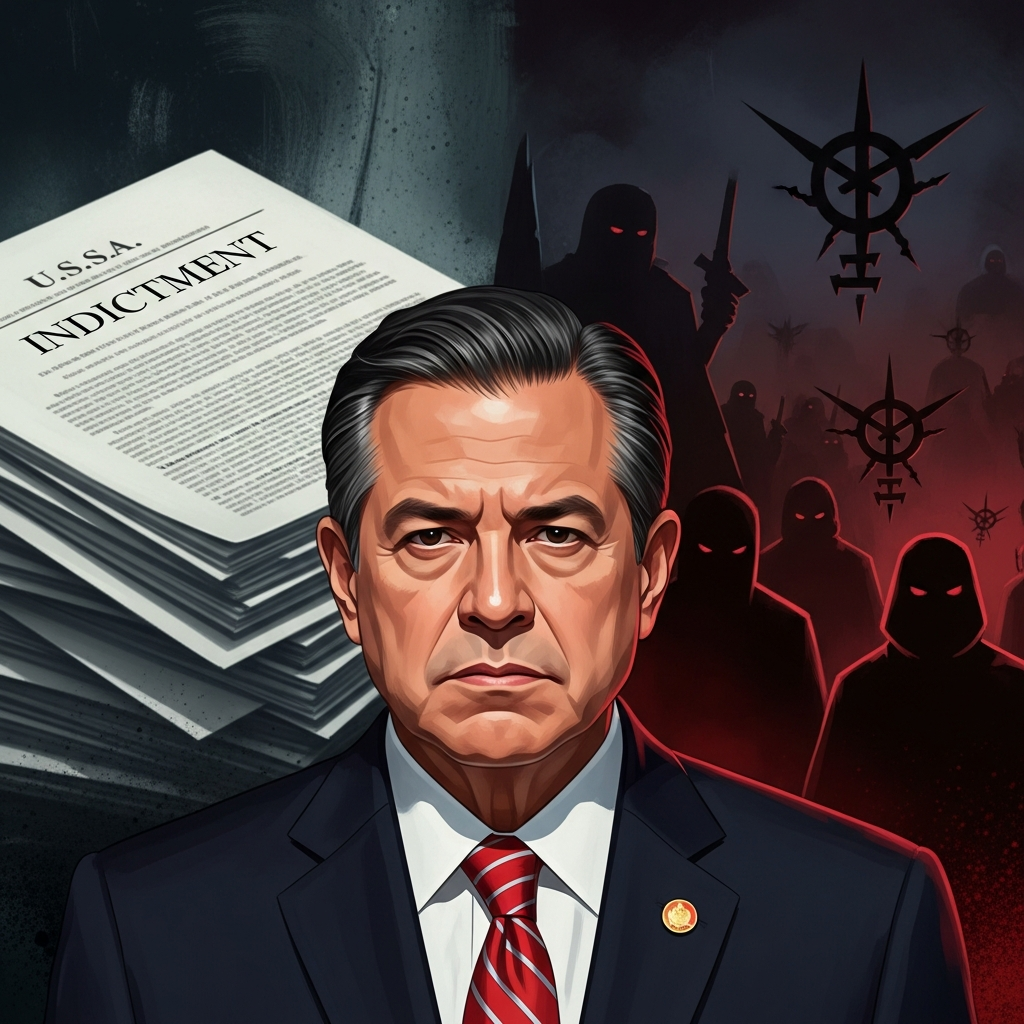
The United States has unveiled a monumental indictment, charging Mexico’s sitting Sinaloa state governor, Rubén Rocha Moya, and nine other current and former Mexican officials with drug trafficking and weapons offenses. This unprecedented legal action accuses high-ranking individuals of colluding directly with the powerful Sinaloa Cartel, specifically its “Los Chapitos” faction, to flood the U.S. with illicit narcotics. The move sends shockwaves across the political landscape of both nations, revealing a deeply entrenched nexus between organized crime and state power in Mexico.
The Indictment Unsealed: Shockwaves Across Borders
On April 29, 2026, a federal indictment unsealed in New York laid bare allegations against a network of Mexican government and law enforcement officials. At the heart of these charges is Rubén Rocha Moya, 76, who has served as the Governor of Mexico’s Sinaloa state since November 2021. He faces severe accusations including narcotics importation conspiracy and possession of machine guns and destructive devices. If convicted, Rocha Moya could face a mandatory minimum of 40 years or even life behind bars, a stark testament to the gravity of the U.S. charges.
U.S. federal authorities assert that these officials played crucial roles in facilitating the shipment of deadly drugs, including fentanyl, heroin, cocaine, and methamphetamine, from Mexico into the United States. The indictment specifically points to their close alignment with the “Los Chapitos” faction, led by the sons of infamous cartel leader Joaquín “El Chapo” Guzmán. The Sinaloa Cartel, a formidable transnational criminal organization, is among eight Latin American groups designated as terrorist organizations by the U.S. government due to its extensive violence and destabilizing influence.
Allegations of Deep-Seated Corruption and Electoral Interference
The depth of the alleged corruption is particularly startling. Prosecutors claim that the implicated officials leveraged their positions of trust to protect cartel operations, ensuring a continuous pipeline of illicit drugs into the U.S. U.S. Attorney Jay Clayton highlighted that such sophisticated drug trafficking organizations could not operate so freely “without corrupt politicians and law enforcement officials on their payroll.” DEA Administrator Terrance Cole echoed this sentiment, emphasizing that the defendants “allegedly used positions of trust to protect cartel operations, enabling a pipeline of deadly drugs into our country.”
Even more disturbing are the allegations surrounding Governor Rocha Moya’s 2021 election. The indictment asserts that the “Los Chapitos” faction directly assisted his campaign by stealing ballots, and by kidnapping and intimidating political opponents. Prosecutors claim Rocha Moya held multiple meetings with cartel leaders, both before and after his election, promising support for their drug operations and guaranteeing impunity within Sinaloa. These alleged meetings were reportedly guarded by individuals armed with machine guns, underscoring the cartel’s direct influence. Enrique Diaz Vega, who later became Rocha Moya’s secretary of administration and finance, is accused of providing the cartel with a list of opponents’ names and addresses to aid their coercion tactics.
Specific instances of bribery outlined in the indictment paint a grim picture. One unnamed law enforcement official allegedly received $11,000 monthly from the “Chapitos,” in exchange for preventing cartel arrests and providing advance warnings about U.S.-backed operations. A high-level police commander is accused of accepting $41,000 monthly, distributing it among himself and other officers. This arrangement purportedly gave the cartel “full access to the intelligence, operations, and resources” of the police department, even allowing them to utilize official patrol cars and radios. As a tangible example of the cartel’s operations facilitated by this corruption, prosecutors cited a May 2022 incident where a massive shipment, including 189,000 fentanyl pills and significant quantities of fentanyl powder, cocaine, and methamphetamine, was trafficked before being seized in Phoenix.
Political Fallout: A “Nuclear Option” for Mexico
This indictment, especially against a sitting governor from Mexico’s ruling party, represents a rare and aggressive move by Washington. Experts, such as Vanda Felbab-Brown of the Brookings Institution, describe it as a “very big step, almost a ‘nuclear option’,” signaling a new, intensified focus on the alleged crime-politics nexus. The charges pose a significant political headache for Mexican President Claudia Sheinbaum, as several indicted officials, including Rocha Moya, belong to her progressive Morena party. This situation arises amid mounting pressures from the Trump administration to combat drug trafficking.
Governor Rocha Moya has vehemently rejected the accusations. In a public statement on social media, he “categorically and absolutely” denied all charges, labeling them an “attack” and a “perverse strategy to violate the constitutional order,” specifically Mexico’s national sovereignty. He further asserted that the accusations were part of a broader political attack against the “Fourth Transformation,” referring to the political project championed by former President Andrés Manuel López Obrador, Sheinbaum’s mentor, which Rocha Moya enthusiastically backed. López Obrador built his political platform on railing against endemic corruption, making these charges particularly ironic and damaging to the party’s image.
Mexico’s Response and the Extradition Dilemma
In response to the U.S. indictment, the Mexican government acknowledged receiving multiple extradition requests from the U.S. without identifying those requested. However, the Mexican foreign ministry issued a statement asserting that the documents “do not include the elements of proof” necessary to substantiate the accusations. The ministry indicated that the final decision regarding these requests would rest with the Attorney General’s office, which also announced its own investigation to assess the legal grounds of the U.S. claims. This diplomatic tension highlights the complex relationship between the two nations, especially concerning legal jurisdiction and national sovereignty.
President Sheinbaum, while facing intense scrutiny, responded by stating her government has seen “no evidence” of the alleged corruption and emphasized that any U.S. investigation against Mexican individuals must have its evidence reviewed by the Mexican Attorney General’s Office. The dilemma for Sheinbaum is acute: failing to cooperate with U.S. requests could strain vital bilateral relations, potentially impacting crucial USMCA trade negotiations. Conversely, acting against prominent Morena party members could undermine her domestic political standing and control over her party.
A History of US-Mexico Anti-Drug Efforts and Pressure
The U.S. has a history of pursuing drug trafficking charges against high-ranking Mexican officials, though indicting a sitting governor from the ruling party is highly unusual. A notable precedent occurred in 2023 when Genaro García Luna, a former Mexican public security secretary under former President Felipe Calderón, was convicted by a U.S. court and sentenced to 38 years in prison for taking bribes from the Sinaloa Cartel. García Luna denied the allegations and is currently appealing his conviction.
This latest indictment follows a recent announcement by U.S. Ambassador to Mexico Ronald Johnson, who stated the U.S. administration would launch an anti-corruption campaign targeting Mexican officials linked to organized crime. Johnson underscored the broader impact of corruption, noting it “not only hinders progress, it distorts it. It increases costs, weakens competition, and erodes the trust upon which markets depend.” These charges also provide a stark counterpoint to former President López Obrador’s “Hugs, Not Bullets” policy, which advocated avoiding direct confrontation with powerful drug cartels, a policy that Rocha Moya enthusiastically supported. The indictment of Rocha Moya is made even more notable by his alleged involvement in a 2023 scandal where his name appeared in a letter from a kidnapped Sinaloa cartel capo, who believed he was en route to meet the governor. The continued struggle for territorial control between warring cartel factions has ravaged Sinaloa state in recent years, demonstrating the urgent need for effective anti-crime measures.
Frequently Asked Questions
What specific charges face Governor Rocha Moya and the other officials?
Sinaloa Governor Rubén Rocha Moya is charged with narcotics importation conspiracy, possession of machine guns and destructive devices, and an additional conspiracy count. These charges carry a potential sentence of a mandatory minimum of 40 years or even life in prison. The nine other current and former Mexican officials face similar drug trafficking and weapons offenses, all stemming from allegations of their direct involvement in aiding the Sinaloa Cartel’s operations.
How does this indictment impact U.S.-Mexico diplomatic relations and President Sheinbaum’s administration?
The indictment introduces significant diplomatic tension, described by experts as a “nuclear option.” It places immense pressure on Mexican President Claudia Sheinbaum, as several implicated officials, including Rocha Moya, belong to her ruling Morena party. Sheinbaum faces a dilemma: cooperation could strain domestic political ties, while non-cooperation risks alienating the U.S., potentially impacting critical trade negotiations. Mexico’s government has challenged the evidence and launched its own investigation into the U.S. allegations.
What role did the Sinaloa Cartel allegedly play in the 2021 Sinaloa gubernatorial election?
According to the U.S. indictment, the “Los Chapitos” faction of the Sinaloa Cartel actively assisted Rubén Rocha Moya’s 2021 gubernatorial campaign. Allegations include cartel operatives stealing ballots and kidnapping or intimidating political opponents to ensure his victory. In return, Rocha Moya allegedly held meetings with cartel leaders, promising them support for their drug trafficking operations and guaranteeing impunity within Sinaloa once he was in office.
Conclusion: An Unprecedented Challenge
The U.S. indictment against Governor Rubén Rocha Moya and other Mexican officials marks an unprecedented moment in the ongoing battle against transnational organized crime and corruption. It underscores the profound challenges faced by both the United States and Mexico in dismantling the powerful cartels that fuel drug trafficking. The charges not only highlight the alleged deep infiltration of cartels into the highest levels of Mexican governance but also ignite a complex political and diplomatic firestorm for President Claudia Sheinbaum. As the legal process unfolds and both nations navigate the delicate balance of justice and sovereignty, the world watches to see how this “nuclear option” will reshape the future of US-Mexico relations and the fight against the devastating flow of illicit drugs.