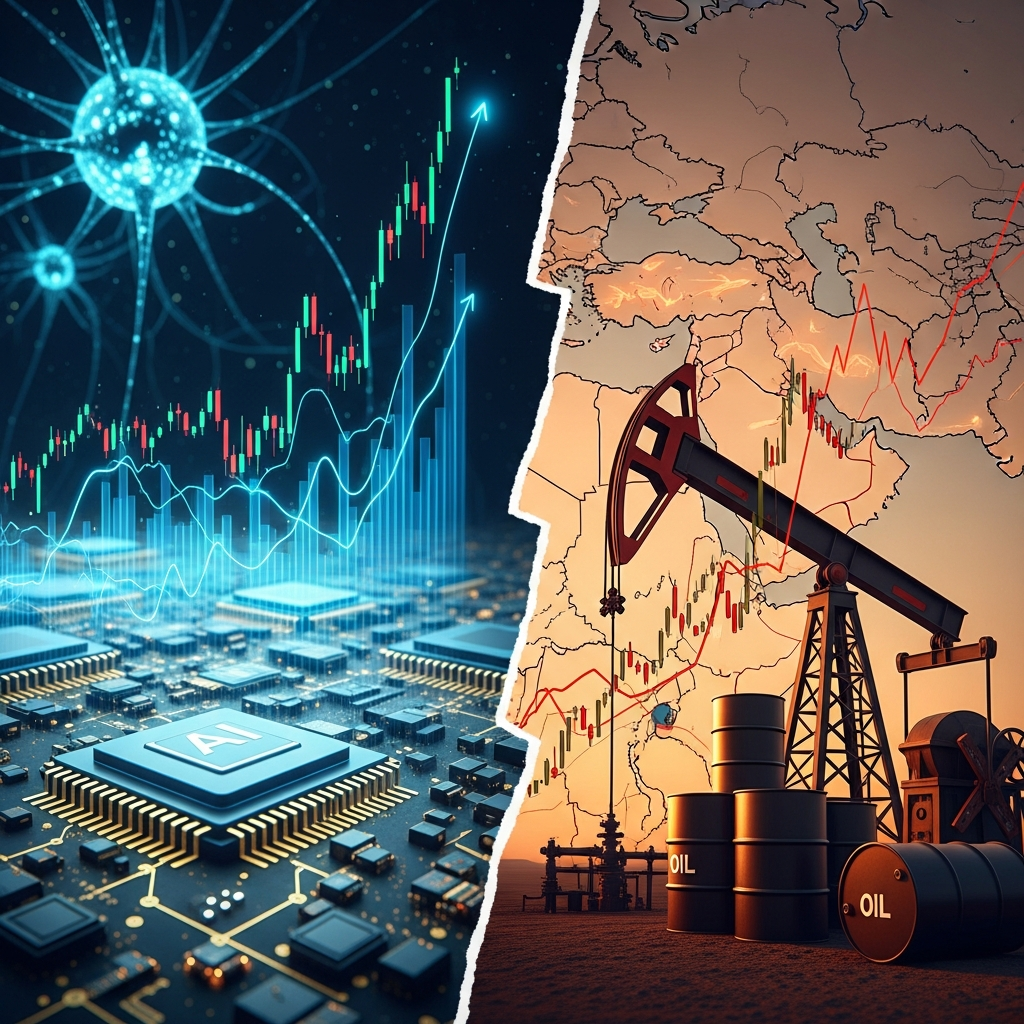
Global markets are buzzing as April 2026 draws to a close, witnessing a powerful dual surge across technology stocks and crude oil prices. A renewed wave of optimism surrounding artificial intelligence (AI) spending is driving chipmakers to record highs, echoing the dot-com boom but fueled by cutting-edge innovation. Simultaneously, geopolitical tensions in the Middle East, particularly stalled U.S.-Iran peace talks, are pushing oil markets significantly higher. This volatile blend of tech frenzy and energy uncertainty creates a complex landscape for investors, with central banks poised for critical decisions and major tech earnings on the horizon.
Global Markets Roar: Tech Surges, Oil Climbs
The global financial stage is set for an electrifying period, characterized by remarkable growth in the tech sector and a concerning rise in energy costs. Investors are navigating a period of both immense opportunity and significant risk. Key market indices, including the S&P 500 and Nasdaq, recently hit fresh all-time highs. This momentum largely stems from a concentrated surge within the technology space, particularly in semiconductors.
AI Optimism Ignites Semiconductor Rally
Excitement over AI spending is reaching fever pitch, propelling chip stocks to unprecedented valuations. Intel, a bellwether for the semiconductor industry, recently posted first-quarter financial results that dramatically exceeded analyst expectations. This performance, coupled with a robust profit forecast for the spring quarter, sent Intel’s stock soaring by an astounding 23.6% in a single day—its best gain since 1987. CEO Lip-Bu Tan attributed this stellar growth to the “next wave of artificial-intelligence technology,” underscoring the insatiable demand for Intel’s advanced chips and products. The ripple effect is clear: the total market value of chipmaker-heavy exchanges in Taiwan and South Korea now surpasses even Germany’s. High-net-worth investors in South Korea, for instance, strategically shifted significant capital into semiconductor leaders like Samsung Electronics and SK Hynix in March, actively taking profits from defense-related stocks. This signals a strong, deliberate move towards the AI-driven tech sector.
Crude Oil Prices Jump on Middle East Tensions
While tech shines, the energy sector is grappling with renewed volatility. Benchmark Brent crude futures climbed more than 2%, touching a three-week high of $107.97 a barrel in Asian trading. This sharp increase is largely a direct consequence of stalled U.S.-Iran peace negotiations. The protracted conflict in the Middle East continues to signal potential disruptions to vital energy exports from the region. This climb in crude prices has predictably fueled inflation worries, prompting traders to significantly adjust expectations for interest rate cuts in developed markets this year. Even with a “tenuous” ceasefire in place, the underlying tensions persist, creating persistent upward pressure on energy costs.
Geopolitical Crossroads: The Strait of Hormuz & Beyond
The geopolitical backdrop remains a dominant factor influencing global energy markets. The delicate situation in the Middle East has far-reaching implications, particularly concerning critical shipping routes. Understanding these dynamics is essential for investors tracking commodity prices.
Stalled Peace Talks Fuel Energy Supply Worries
The breakdown in U.S.-Iran talks has left markets on edge, focusing intently on the potential for further Middle East energy disruption. While U.S. envoys, including Steve Witkoff and Jared Kushner, were dispatched for negotiations in Pakistan, an Axios report suggested Iran might prioritize a deal on opening the Strait of Hormuz over nuclear discussions. This indicates a complex diplomatic dance where immediate economic concerns take precedence. Goldman Sachs analysts have reacted by lifting their year-end Brent oil price forecasts to $90 a barrel from $80, predicated on a return to normal Gulf exports by June. They issued a stark warning: “Non-linear price increases are likely if inventories drop to critically low levels, which we have not seen in the last few decades.” This highlights the fragility of global oil supplies.
LNG and Oil: Divergent Impacts of a Critical Chokepoint
The Strait of Hormuz disruption has a varied impact across different energy commodities. While concerns are high for crude oil, the effect on global liquefied natural gas (LNG) markets appears even more severe. The waterway, a crucial chokepoint, sees barely any ships carrying oil and gas currently. This has led to the average LNG price for June delivery into northeast Asia soaring to $16.70 per million British thermal units last week. This figure stands nearly 61% above pre-war levels, indicating the profound strain on LNG supplies compared to crude. This divergence reflects distinct market dynamics and supply chain vulnerabilities for each commodity.
Navigating Supply Chain Headwinds: The Tech Sector’s New Challenge
Beyond the immediate market surges, the ongoing geopolitical landscape is creating significant, long-term challenges for the global tech supply chain. The Iran conflict’s reach extends far beyond oil, impacting fundamental components of modern electronics.
Iran Conflict Disrupts Critical PCB Production
The Iran war is severely disrupting the global supply chain for printed circuit boards (PCBs). PCBs are indispensable components in virtually all electronic devices, from everyday smartphones to advanced AI servers. This conflict has created a fresh wave of challenges for electronics manufacturers already battling soaring memory chip costs. A major cause of this disruption was Iran’s attack on Saudi Arabia’s Jubail petrochemical complex in early April. This strike halted the production of high-purity polyphenylene ether (PPE) resin. SABIC, a company operating in Jubail, accounts for roughly 70% of the world’s high-purity PPE supply. The inability to resume output has caused a severe global scarcity of this essential material. Compounding the material shortage, shipping activities in and out of the Gulf have also been severely hampered by the war.
Rising Costs for AI Servers: Cloud Providers Absorb the Blow
Consequently, PCB prices have seen an accelerated and dramatic increase. Industry sources and Goldman Sachs analysts reported that PCB prices surged by as much as 40% in April alone from March levels. This spike is driven by both the raw material shortages and the escalating demand for AI servers. Cloud service providers, anticipating that AI server demand will continue to outstrip supply, are reportedly willing to absorb these escalated costs. The global PCB industry is projected to grow by 12.5% to reach $95.8 billion in 2026, further emphasizing the pressure on supply. Beyond PPE resin, copper foil prices have also surged by up to 30% this year. Copper accounts for approximately 60% of total raw material costs in PCB manufacturing, according to Victory Giant Technology, a key Chinese PCB supplier for Nvidia. Major South Korean PCB maker Daeduck Electronics, supplying giants like Samsung and AMD, is already in talks with customers about price adjustments.
Corporate Earnings & Central Bank Watch: Key Week Ahead
As markets digest current trends, attention is rapidly turning to upcoming corporate reports and crucial central bank announcements. These events hold significant sway over market direction in the immediate future.
Tech Giants Brace for Q1 Reports
The coming week is packed with critical Q1 tech earnings reports. Approximately 44% of the S&P 500 by market capitalization is set to report. Investors will particularly focus on capital expenditure plans from tech behemoths. Microsoft, Alphabet, Amazon, and Meta Platforms are scheduled to release their results mid-week, with Apple following a day later. These reports will offer vital insights into the health of the tech sector and, crucially, how much these giants plan to invest in AI infrastructure and development. Strong spending forecasts could further fuel the AI optimism currently gripping the markets.
Central Banks Hold Steady, But Future Hikes Loom
Amidst inflation worries fueled by rising oil prices, major central banks are widely expected to maintain their current interest rates this week. The Bank of Japan is set to kick things off, anticipated to keep its short-term policy rate steady at 0.75%. The U.S. Federal Reserve is also expected to hold rates, in what might be the final meeting chaired by Jerome Powell before Kevin Warsh takes the helm. The European Central Bank and the Bank of England are similarly projected to hold. However, their forward guidance and economic outlooks will be closely scrutinized. Aggressive market pricing for future rate hikes in Britain and Europe could be challenged if policymakers adopt a more cautious tone, reflecting a delicate balance between controlling inflation and supporting economic growth.
Investor Insights: Strategic Shifts and Diversification
In such a dynamic and complex market environment, investors are constantly re-evaluating their strategies. Understanding where capital is flowing and identifying potential safe havens is crucial for portfolio optimization.
High-Net-Worth Investors Pivot to Semiconductors
The recent actions of high-net-worth investors in South Korea offer a compelling glimpse into evolving market sentiment. As mentioned, these sophisticated investors significantly increased their exposure to semiconductor stocks like Samsung Electronics and SK Hynix in March. This strategic rotation suggests a belief in the long-term growth trajectory of AI-driven tech. Concurrently, they took profits from sectors like defense and nuclear-related shares, which had seen rallies due to heightened geopolitical risks. This indicates a move away from short-term, event-driven plays towards more fundamental growth stories.
Energy Sector’s Role in a Volatile Market
Despite the ongoing shift to tech, the energy sector maintains its critical role, especially as an inflation hedge. Companies like ExxonMobil have shown strong performance, with its stock up approximately 26% in early 2026, outperforming the broader S&P 500. Investors view ExxonMobil as a potential safe haven during inflationary periods, partly due to its consistent dividend growth. The company has a history of raising its dividend for decades and currently offers a yield more than double the S&P 500 average. While commodity prices are inherently volatile, the long-term strategic value of dominant players in the oil and gas industry remains relevant. Potential future supply sources, such as Venezuela’s vast reserves, could influence the long-term outlook, though significant investment and time would be required to bring them online. This could offer diversification in a portfolio heavily weighted toward tech.
Frequently Asked Questions
What key factors are driving the current surge in global markets?
The current surge in global markets is primarily driven by two powerful forces. Firstly, a massive wave of AI spending optimism is propelling semiconductor and broader technology stocks to record highs, exemplified by Intel’s outstanding earnings. Secondly, rising crude oil prices are a significant factor, fueled by stalled U.S.-Iran peace talks and ongoing geopolitical tensions in the Middle East, which threaten energy export stability from the crucial Strait of Hormuz. These two dynamics create a complex and somewhat contradictory market environment.
How is the Iran conflict specifically impacting the global tech supply chain and energy markets?
The Iran conflict is impacting both tech supply chains and energy markets. For energy, stalled peace talks and continued Middle East instability are directly causing oil prices to climb, raising concerns about crude oil and significantly driving up LNG prices (up 61% above pre-war levels). For tech, the conflict has severely disrupted the printed circuit board (PCB) supply chain. An attack on Saudi Arabia’s Jubail complex halted production of high-purity PPE resin, a critical PCB material, leading to severe scarcity. This, along with other material shortages like copper foil, has caused PCB prices to surge by as much as 40%, particularly impacting the cost of AI servers.
Should investors consider oil stocks like ExxonMobil amidst current geopolitical tensions and AI tech rallies?
Amidst the current market dynamics, investors might consider oil stocks like ExxonMobil for portfolio diversification and as an inflation hedge. While AI tech stocks offer high growth potential, the energy sector can provide stability, especially during periods of rising oil prices and inflation. ExxonMobil has shown strong performance in early 2026, with its stock up 26%, and offers a consistent dividend yield. However, investing in commodity-sensitive stocks carries inherent volatility risks due to geopolitical events. For long-term investors seeking income and diversification, major energy players can be a valuable component, but short-term trading based solely on oil prices is advised against.
Conclusion: A Complex Outlook for Investors
The global market is presenting a fascinating paradox: unprecedented optimism in AI-driven technology juxtaposed with deep uncertainty in global energy markets due to geopolitical strife. While chip stocks ride the wave of innovation and strong earnings, the specter of high crude oil prices and supply chain disruptions looms large, feeding inflation concerns and influencing central bank decisions. Navigating this landscape requires a keen understanding of both technological breakthroughs and geopolitical realities. Investors are urged to stay informed about upcoming tech earnings and central bank pronouncements, while considering strategic diversification to manage the inherent volatility. The interplay between these powerful forces will undoubtedly shape market trends for the foreseeable future.