
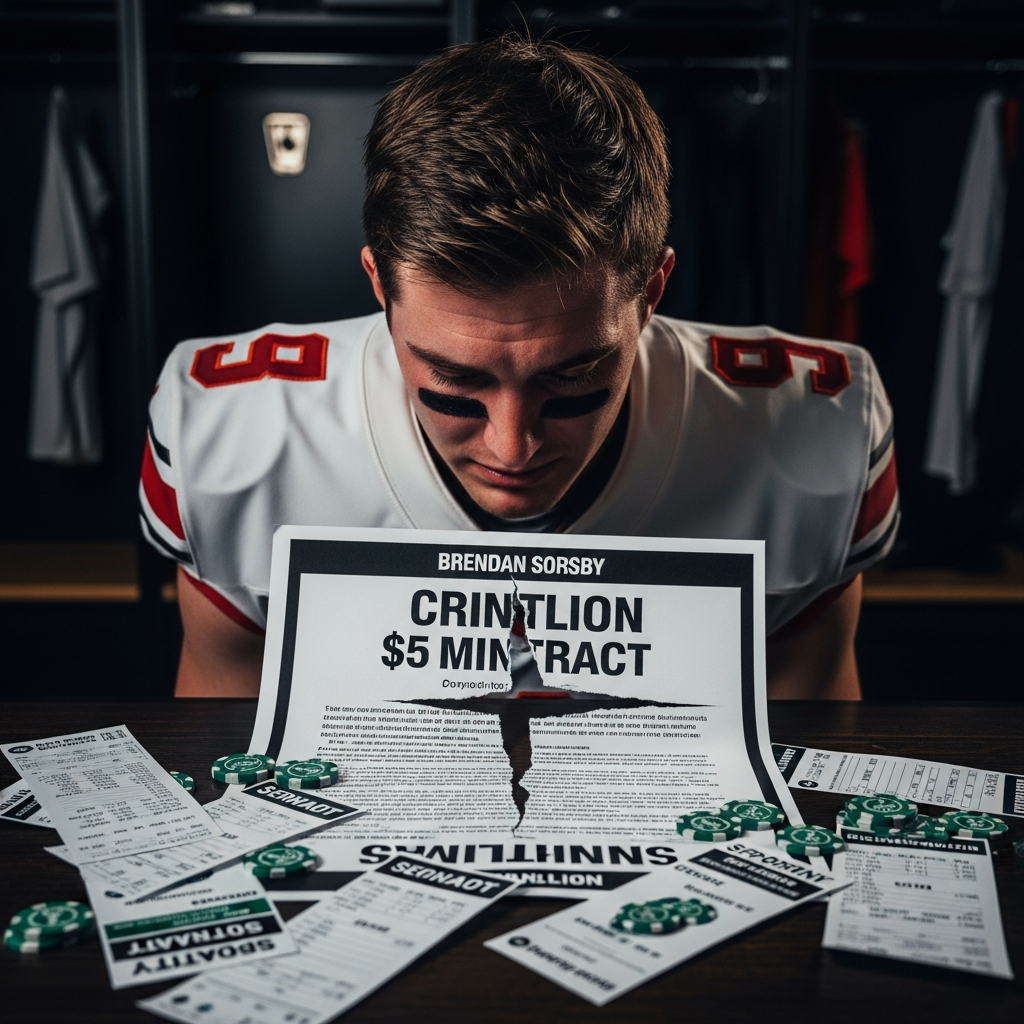
College football once promised Brendan Sorsby millions. As a prominent quarterback navigating the highly competitive transfer portal, he secured a lucrative $5 million deal to play for Texas Tech. Yet, in a shocking turn of events, Sorsby’s burgeoning career has come to an abrupt, tragic halt. This isn’t just a personal downfall; it’s a stark reflection of a growing problem: the unchecked influence of NCAA sports betting and the predatory design of many online sportsbooks.
The case of Brendan Sorsby is more than a cautionary tale. It has become a pivotal moment in the ongoing debate surrounding legal sports betting in America. His alleged actions expose deep flaws in an industry that seemingly prioritizes rapid engagement over responsible gambling. The fallout reveals how easily a high-profile athlete, despite significant earnings from NIL deals, can succumb to a gambling addiction fueled by accessible, high-frequency betting platforms.
Brendan Sorsby’s Downfall: A Multimillion-Dollar Mistake
Brendan Sorsby, 22, was a significant player in the college football landscape. After transferring from Cincinnati, where he also earned substantial NIL compensation, he was set to receive around $5 million at Texas Tech for the upcoming season. The transfer portal, a dynamic ecosystem where top talent like Sorsby can command massive deals, highlights the immense financial stakes for these athletes. Fox Sports reports on the chaotic nature of this portal, with quarterbacks like Sorsby frequently moving for better opportunities and compensation. His value as a top QB was undeniable, putting him in a class with highly recruited players who often go on to NFL careers, as highlighted in analyses of recruiting classes by the New York Times.
However, Sorsby is now under NCAA investigation, and potentially law enforcement scrutiny, for thousands of sports bets. The most egregious allegation is that in 2022, while playing for Indiana, he bet on his own team to win. Though ESPN reported he did not play in those specific games, betting on one’s own team is a cardinal sin in college athletics, likely career-ending. Beyond this, a deeper issue emerged: Sorsby frequently engaged in “live wagers” from the stands at Reds games, placing tiny bets ($1-$2.50) on individual pitch outcomes. These incessant micro-bets, coupled with the alleged bets on his own team, paint a devastating picture.
The True Cost of “Easy” Betting
The sheer volume and nature of Sorsby’s bets are what transform his story from a personal misstep into a public policy imperative. Despite his multi-million dollar NIL earnings, he found himself placing small, repetitive wagers on trivial in-game events. This tragic irony underscores the insidiousness of gambling addiction, which can ensnare anyone, regardless of their financial status. Texas Tech announced Sorsby has entered a “residential treatment program for a gambling addiction,” acknowledging the severity of his situation.
The sports betting industry often frames cases like Sorsby’s as proof of its market’s transparency. They argue that he was caught because the legal betting market is highly mechanized. This argument, however, is deeply disingenuous. While true that a private bookie might not have caught him, the industry overlooks a critical factor: the ease with which these bets were placed. Before heavily advertised, computerized online sports betting, it was virtually impossible for a college student to place thousands of small bets on minute events within a single game.
The Predatory Design of Online Sportsbooks
The core problem, critics argue, lies in the design of modern online sportsbooks. Unlike regulated financial trading platforms, which often require users to acknowledge risks for speculative investments or undergo approval for complex trades, sports betting apps offer almost no friction. Want to buy a Bitcoin ETF on Fidelity? You’ll check a “big, scary box” acknowledging risks. Want to trade stock options on Robinhood? There’s a nominal approval process.
Contrast this with a sports betting app. There’s “no similar process” to deter someone from placing a multitude of micro-bets during a live game. There’s no “grizzled attendant” to raise an eyebrow at a bet with terrible odds. Instead, these apps are designed for “pure sugar rush.” They make betting look like “pure fun,” encouraging degenerate, repetitive wagering without a moment’s pause for reflection. This frictionless experience, optimized for instant gratification, is a key driver behind the rise of college football gambling scandal cases.
Who Truly Benefits from This System?
The current sports betting landscape undoubtedly benefits a select few. Sportsbooks are reaping massive profits, especially from parlays and micro-bets that offer low returns for bettors. Professional leagues also benefit from sponsorships and increased viewership from fans with “vested interest.” However, the author of the original Slate article questions whether this system truly works for anyone else. Bettors’ “collective losses” are described as “sleazy and unsustainable,” contributing to struggling retirement accounts and rising debt.
The Sorsby case vividly illustrates this imbalance. A young athlete, with millions at stake, fell victim to an industry designed to encourage “moronic behavior.” His situation is an unambiguous black mark for the entire enterprise of legal sports betting. It serves as a stark reminder that while the legalization of sports betting was pitched as a cleaner, safer alternative to the black market, its current iteration has created new, equally dangerous pitfalls.
Urgent Calls for Reform in Sports Betting
The system, as it stands, is “screaming out for more friction.” Policy changes are desperately needed to protect vulnerable individuals, including high-profile college athletes. One “obviously illegal” practice that remains unchecked is the ability to deposit funds into betting accounts using credit cards, which encourages borrowing to gamble. This practice should be banned immediately.
Furthermore, placing highly speculative wagers, such as parlays or bets on individual pitches, should be as challenging as trading other high-risk financial instruments. These reforms, while perhaps not preventing every case like Sorsby’s, would introduce crucial “gating mechanisms” that are currently absent. They would force bettors to pause, think, and acknowledge the significant risks involved, rather than merely chasing a “sugar rush” facilitated by slick app design. This systemic vulnerability, which contributed to Sorsby’s involvement in the college football gambling scandal, demands immediate attention from regulators.
The integrity of college sports is also at stake. The NCAA has struggled to adapt its rules to the new betting landscape. While it has liberalized some rules regarding athletes betting on professional sports, the rules surrounding betting on one’s own team or sport remain strict and for good reason. Maintaining trust in the fairness of competition is paramount.
Frequently Asked Questions
What exactly led to Brendan Sorsby’s college football career ending?
Brendan Sorsby’s college football career ended due to his involvement in a widespread college football gambling scandal. He is under NCAA investigation for thousands of sports bets, including critical allegations that he bet on his own team (Indiana) to win in 2022, even though he reportedly did not play in those games. Additionally, he engaged in frequent, low-stakes “live wagers” from the stands, betting on individual pitch outcomes ($1-$2.50) during Reds games. These actions, combined with a diagnosed gambling addiction, led to Texas Tech announcing his entry into a residential treatment program, effectively ending his eligibility.
How does the current online sports betting industry facilitate risky behavior among athletes?
The modern online sportsbooks industry facilitates risky behavior through its frictionless design and aggressive marketing. Unlike financial trading platforms that require risk acknowledgment or approval processes, sports betting apps allow instant, high-frequency “micro-betting” without any significant deterrents or “gating mechanisms.” These apps are built for a “pure sugar rush,” encouraging constant engagement and repetitive wagering on events with poor odds, making it easy for individuals, including athletes with NIL deals, to develop a gambling addiction without pausing to consider the consequences.
What reforms are being proposed to prevent future college football gambling scandals?
To prevent future NCAA sports betting scandals and safeguard athletes, several key reforms are being proposed. These include making it explicitly illegal to deposit funds into betting accounts using credit cards, thereby preventing individuals from gambling with borrowed money. Additionally, there are calls to make highly speculative wagers, such as parlays or bets on individual pitch outcomes, as difficult to place as trading other high-risk financial instruments. These measures aim to introduce greater “friction” into the betting process, encouraging more responsible behavior and reducing the predatory nature of current online sportsbooks.
The case of Brendan Sorsby is a stark reminder of the fragile line between opportunity and downfall in the world of college athletics. His story, deeply intertwined with the rise of NCAA sports betting and multi-million dollar NIL deals, demands a critical re-evaluation of the sports gambling industry. It’s time for regulators, institutions, and the industry itself to implement meaningful friction and safeguards. Only then can we hope to protect promising careers and uphold the integrity of college sports against the seductive, yet destructive, allure of unchecked gambling.


One thought on “Star QB’s $5M Career Ruined: Inside the Betting Scandal”