The intricate web of global energy security often finds its most complex threads leading back to Iran. What many refer to as the “Iran oil crisis” isn’t a singular event, but a persistent geopolitical dynamic shaped by decades of volatile relations, strategic resource control, and its far-reaching implications for international oil markets. This deep dive unravels the historical roots, current realities, and potential future trajectories of Iran’s pivotal role in global energy, examining the profound risks and complex opportunities at play. Understanding this crisis is crucial for anyone keen on the future of energy, international relations, and economic stability.
A History of Shifting Sands: US-Iran Relations and the Revolution
The foundation of today’s “Iran oil crisis” is deeply embedded in a long, often hostile, relationship between Iran and Western powers, particularly the United States. This historical context is essential to grasp the nation’s current geopolitical stance and its influence on oil markets.
Early US Intervention and the Seeds of Resentment
The deterioration of US-Iran relations began decades ago, evolving from an alliance to deep animosity. A critical turning point occurred in 1953 when US and British intelligence orchestrated a coup. This intervention ousted democratically elected Prime Minister Mohammad Mosaddegh, who had dared to nationalize Iran’s oil production. The coup restored Mohammad Reza Shah Pahlavi, installing a pro-Western monarchy and securing significant oil ownership stakes for US, British, and French companies. This act, later admitted by the CIA in 2013, sowed deep-seated resentment within Iran. For decades, the US supported the autocratic Shah, even providing nuclear technology, further deepening public discontent.
The Transformative 1979 Iranian Revolution
This simmering dissatisfaction boiled over in the 1979 Iranian Revolution, a popular uprising that fundamentally reshaped Iran. The Shah fled, paving the way for exiled cleric Ruhollah Khomeini’s triumphant return. Khomeini, who famously labeled the United States “the Great Satan,” established an Islamic republic. This revolution, driven by a desire to end autocratic rule and curb Western interference, unified a diverse spectrum of Iranians. It led to the 1979–1981 Iran hostage crisis, where 66 Americans were held captive for 444 days, profoundly impacting US foreign policy and public sentiment.
Decades of Hostility, Wars, and Sanctions
The post-revolution era was marked by escalating tensions. The 1980–1988 Iran-Iraq War saw the US support Iraq against Iran, even as Iraq used chemical weapons. Subsequent events, like the 1983 Beirut barracks bombings (attributed to Iran-backed Hezbollah) and the 1985–1987 Iran-Contra Affair (secret arms sales to Iran despite an embargo), further solidified Iran’s designation as a “state sponsor of terrorism” and showcased the complex, often clandestine, nature of relations. Throughout the 1990s, the US imposed extensive economic sanctions, notably the Iran and Libya Sanctions Act of 1996, aimed at curbing Iran’s actions, though with limited direct impact on the government.
Nuclear Deal and Renewed Tensions
A brief “thaw” in relations occurred around the turn of the millennium, but ended abruptly with President George W. Bush’s 2002 “Axis of evil” speech, which included Iran. Years later, the 2013–2018 Iran nuclear deal (JCPOA) represented a significant attempt at normalization. Iran agreed to dismantle nuclear facilities and limit enrichment in exchange for sanctions relief. However, in 2018, President Donald Trump unilaterally withdrew the US from the JCPOA, intensifying sanctions and designating Iran’s Revolutionary Guard Corps a terrorist organization. Tensions peaked in 2020 with the US assassination of Qassem Soleimani, a highly provocative act that further strained diplomatic avenues.
Iran’s Pivotal Role in Global Oil and Energy Security
Iran’s significance in the global oil market cannot be overstated. Holding vast oil reserves, the nation’s output and its geopolitical stability directly influence international crude oil prices and the security of global energy supplies. The “Iran oil crisis” thus translates directly into concerns over supply disruptions and market volatility.
Strategic Chokepoint: The Strait of Hormuz
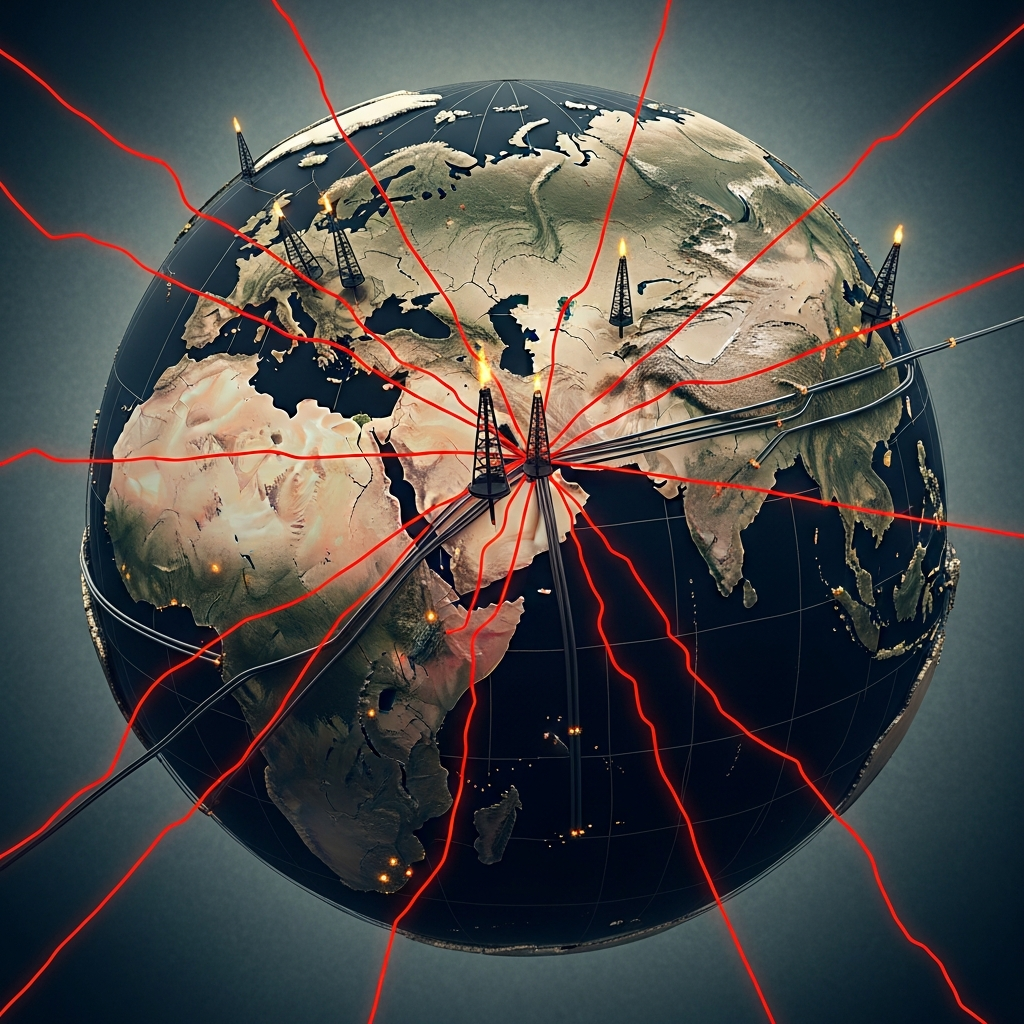
Central to Iran’s energy leverage is its control over the Strait of Hormuz. This narrow waterway is arguably the world’s most critical oil transit chokepoint. Approximately half of all imported crude oil globally, and a substantial portion of natural gas, traverses this strait. Its effective closure, as recent events in West Asia have sometimes threatened, would trigger an immediate and severe global oil shock. The mere threat of disruption here causes significant market anxiety and price spikes, highlighting the strategic vulnerability it represents for many oil-importing nations.
Global Ramifications: The Oil Shock Risk
The specter of an “Iran oil crisis” translates into a “very high” risk of oil shock for many economies, particularly those heavily reliant on imports. The repercussions extend far beyond just the price of crude.
India’s Vulnerability: A Case Study
India stands as a prime example of a nation acutely vulnerable to the Iran oil crisis. With nearly 90% reliance on crude oil imports, roughly half of which pass through the Strait of Hormuz, India faces immense exposure. Recent disruptions have forced Indian refiners to pivot back to Russian crude oil, despite prior US pressure to reduce such purchases. A US waiver, allowing transactions for Russian crude loaded before March 5th, enabled major Indian refiners like Indian Oil Corp. and Reliance Industries to quickly secure millions of barrels. This pragmatic shift highlights the urgent need for energy security amidst geopolitical turmoil. However, Russian crude, previously sold at a discount, is now commanding premiums, indicating the increased cost of securing alternative supplies.
Economic Ripples: Inflation and Currency Weakening
The economic consequences for countries like India are stark. The Asian Development Bank (ADB) and Moody’s Ratings warn of immediate impacts:
Higher Energy Prices: Already, domestic LPG prices in India have risen.
Inflation Surge: Increased energy costs invariably lead to broader inflationary pressures across the economy.
Weakened Currency: Costly energy imports would likely weaken the Indian rupee, further increasing import bills.
Deteriorating Current Account: The massive import bill, already around $180 billion, would swell significantly with rising oil prices. Estimates suggest every $10 per barrel increase adds about $14 billion to India’s annual fuel import bill.
Supply Chain Disruptions: Beyond crude, broader logistical challenges, including shipping rerouting and delays, can elevate logistics costs and impede trade across Asia.
Limited Reserves: India’s crude oil reserves, at around 100 million barrels, cover only 40-45 days of consumption, making it exceptionally susceptible compared to countries like China with months of reserves.
These factors demonstrate how geopolitical tensions centered around Iran can directly destabilize national economies, trigger inflation, and threaten financial markets globally.
Beyond Conflict: Paths to Engagement?
While the relationship between Iran and the US has been characterized by “twenty-five years of bitter hostility” since the Iranian Revolution, some analysts argue for potential common ground. The article “Iran in 2006: A Country at a Crossroads” suggests that, despite profound differences, both nations share significant interests that could foster an alliance.
Bridging the Perception Gap
A key obstacle to reconciliation lies in deeply ingrained, clashing perceptions. Washington often views Iran as a “rogue state” susceptible to pressure. In contrast, Iranians see their country as an ancient civilization with a rich history, finding it “ludicrous” that a “new country” like the US presumes to dictate to them. Narrowing this gap in self-identity and global outlook is crucial for any meaningful dialogue.
Shared Interests Amidst Divisions
Despite the rhetoric, underlying common interests exist. These include a mutual wariness of Sunni Arab states and a shared detestation for radical Sunni movements like the Taliban and al-Qaeda. Furthermore, Iran’s vast oil reserves are a significant economic interest for the US, the world’s largest consumer. Influential figures, like those on a 2004 Council on Foreign Relations task force, have advocated for “a revised strategic approach to Iran,” proposing selective engagement to promote regional stability, deter nuclear proliferation, and ensure reliable energy supplies. Such a framework, akin to the 1972 Shanghai Communiqué between the US and China, could define dialogue and reassure domestic constituencies on both sides.
The ongoing nuclear program, however, continues to place Iran at the center of a potentially deadly confrontation with the international community. The militancy displayed by leaders in both Tehran and Washington significantly erodes chances for compromise, pushing the world closer to a global crisis.
Frequently Asked Questions
What historical events primarily shaped the volatile US-Iran relationship?
The volatile US-Iran relationship began to deteriorate significantly in 1953 with a US and British-orchestrated coup that ousted democratically elected Prime Minister Mohammad Mosaddegh, restoring the pro-Western Shah. This act, driven by oil interests, fostered deep resentment. The 1979 Iranian Revolution solidified this animosity, leading to the Iran hostage crisis and Supreme Leader Khomeini labeling the US as “the Great Satan.” Subsequent events like US support for Iraq during the Iran-Iraq War, sanctions, and the US withdrawal from the nuclear deal (JCPOA) in 2018 have further deepened the divide, creating a persistent geopolitical tension.
Why is the Strait of Hormuz so crucial to global oil supplies?
The Strait of Hormuz is critical because it is the world’s most important oil transit chokepoint. Located between Iran and Oman, this narrow waterway sees approximately half of the world’s imported crude oil and a significant portion of natural gas pass through it daily. Its strategic location makes it indispensable for major oil-producing nations in the Middle East to export their resources to global markets. Any disruption or perceived threat to navigation in the Strait, often linked to geopolitical tensions involving Iran, can lead to immediate spikes in global oil prices and severe concerns about energy security.
How does the Iran oil crisis specifically impact major oil-importing nations like India?
Major oil-importing nations like India face a “very high” risk from the Iran oil crisis due to their extreme reliance on crude oil imports, often nearing 90% of total requirements. Geopolitical instability, particularly threats to the Strait of Hormuz, directly jeopardizes these vital supply routes. The impacts include increased energy prices (e.g., LPG price hikes), a surge in inflation, weakening of the local currency (like the Indian rupee), and a deterioration of the current account balance due to a ballooning import bill. Moreover, limited strategic oil reserves (e.g., India’s 40-45 days of supply) make these nations exceptionally vulnerable to supply disruptions, forcing them to seek costly alternative sources.
Conclusion
The “Iran oil crisis” is a multifaceted challenge, deeply rooted in a complex history of foreign intervention, revolution, and persistent geopolitical tensions. Its ripple effects extend globally, profoundly impacting energy markets, economic stability, and international relations. While the immediate focus often falls on oil prices and supply chain disruptions, the underlying conflict of perceptions and historical grievances between Iran and nations like the United States remains a critical barrier to long-term stability. Understanding this dynamic—from the strategic importance of the Strait of Hormuz to the economic vulnerabilities of major importers like India—is paramount. As the international community grapples with ensuring global energy security, navigating the complexities of the Iran oil crisis with informed diplomacy and a deep appreciation for its historical context will be essential for forging a more stable future.