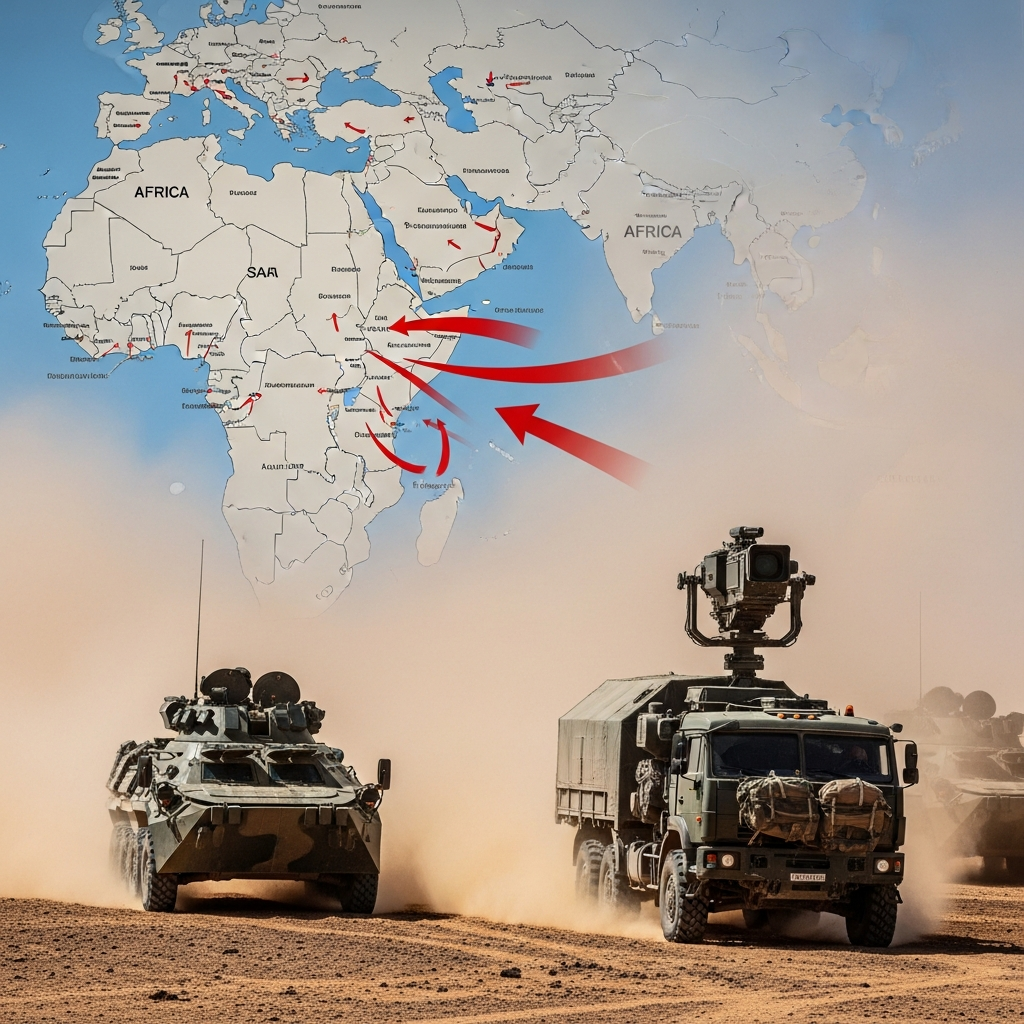
The recent withdrawal of Russia’s Africa Corps from Kidal, a key northern city in Mali, marks a significant shift in the country’s volatile security landscape. This strategic retreat follows a weekend of intense, coordinated attacks by powerful separatist and jihadist groups across the West African nation. The developments challenge Russia’s credibility as a reliable security partner in the Sahel and raise critical questions about the future of Mali’s military junta and regional stability.
Major Setbacks for Russian and Malian Forces
Mali, an impoverished West African nation, has grappled with years of persistent insurgencies. On a recent weekend, coordinated assaults by various militant and separatist factions rocked the country. This surge in violence led to Russia’s Africa Corps, alongside Malian troops, confirming their departure from Kidal. The Africa Corps, a successor to the notorious Wagner Group, announced their “secure withdrawal” via social media posts, stating they had “left the locality.” This retreat is a notable reversal, as Wagner-backed Malian forces had only recently recaptured Kidal in late 2023.
The scale of the attacks highlighted severe vulnerabilities for both the Malian government and its Russian allies. One of the most high-profile casualties was Mali’s Defence Minister, Sadio Camara. He was reportedly killed in an apparent suicide truck bombing at his residence near the capital, Bamako. Camara was a key figure in forging Mali’s alliance with Russia. A Russian helicopter was also reportedly shot down near Gao, leading to further fatalities among Russian personnel. These events have prompted experts to describe the situation as a major blow to Moscow’s influence.
Kidal’s Strategic Importance Recaptured by Rebels
Kidal, a city in northern Mali on the southern fringes of the Sahara desert, holds immense strategic and symbolic value. For over a decade, it served as an unofficial headquarters for the Azawad Liberation Front (FLA), a separatist group seeking a breakaway state for northern areas dominated by ethnic Tuaregs. Its recapture by the Malian army with Russian mercenary support in late 2023 was hailed as a major victory.
However, the recent coordinated attacks have dramatically altered this reality. The FLA swiftly claimed control of Kidal, declaring it “now free” after negotiating the withdrawal of Russian and Malian forces. An FLA spokesman confirmed that an agreement was reached for a “secure withdrawal from the fighting.” While Malian authorities have not officially confirmed the FLA’s re-taking of the city, sources close to the local governor affirmed that Malian and Russian forces are “no longer there.” This swift reversal underscores the persistent challenges faced by the Malian military government.
The Weekend of Coordinated Attacks: A Detailed Account
The coordinated offensive on Saturday saw explosions and sustained gunfire in multiple parts of Mali. Beyond the capital, Bamako, attacks were reported in the central cities of Sevare and Mopti, as well as the northern cities of Gao and Kidal. In Kati, a town near the capital and home to a major military base, the assault on Defence Minister Camara’s residence occurred.
Reports suggest a two-pronged attack strategy. The FLA primarily focused its efforts on northern cities, aiming to re-establish control over its historical strongholds. Simultaneously, the jihadist group Jama’at Nusrat al-Islam wal-Muslimin (JNIM), an al-Qaeda affiliate, staged widespread attacks in other areas. This dual pressure stretched Malian and Russian forces thin. JNIM even claimed that Mali’s army had surrendered to its fighters in Tessit, south of Gao, allowing them to disarm and withdraw safely – a claim unverified by the Malian army. The Alliance of Sahel States (AES), comprising military-led Mali, Burkina Faso, and Niger, condemned these attacks as a “monstrous plot” against regional liberation.
The Evolution of Russia’s Military Presence in Mali
Mali’s military junta, led by Assimi Goïta, seized power in 2021 and dramatically shifted its international alliances. It expelled French forces, who had been supporting counter-terrorism efforts, and turned to Russia as its primary security partner. This pivot saw the deployment of approximately 2,000 Russian troops, initially through the Wagner Group.
Following the death of Wagner leader Yevgeny Prigozhin in 2023, the Kremlin absorbed most of the group’s African operations into the newly formed Africa Corps, directly controlled by Russia’s defense ministry. This entity is overseen by Russian Deputy Defence Minister Yunus-Bek Yevkurov, with operations managed by Maj-Gen Andrey Averyanov of the GRU military intelligence service. Russia’s involvement is often linked to securing access to crucial natural resources, such as gold, diamonds, and uranium, with reports suggesting monthly payments of $10 million from Mali. However, like Wagner, the Africa Corps faces accusations of committing numerous atrocities against civilians.
Africa Corps’ Limitations and Growing Setbacks
The recent events in Mali have starkly exposed the limitations of Russia’s military power and influence. Experts note a discernible decline in the effectiveness of Russia’s military presence since the transition from the Wagner Group to the Africa Corps. While Wagner achieved initial battlefield gains, the Africa Corps reportedly struggles to match its predecessor’s prowess. Analysts and former Wagner members attribute this to factors like low morale, unqualified commanders, and the deployment of more capable forces to Ukraine.
The Africa Corps acknowledged losses during the recent operations, evacuating wounded personnel and heavy equipment from Kidal. A previous ambush in summer 2024 reportedly killed up to 50 Russian soldiers, marking Russia’s deadliest single incident on the continent. Ulf Laessing of the Konrad Adenauer Foundation highlighted the mercenaries’ apparent lack of intelligence regarding the assaults and their inability to protect major cities, noting their approach has often exacerbated conflicts by failing to distinguish between combatants and civilians. These setbacks significantly damage the credibility of Russia’s security solutions in Africa.
Broader Geopolitical Implications for the Sahel
Mali’s strategic pivot towards Russia, replicated by neighboring Burkina Faso and Niger, aimed to create a Russian-aligned bloc in the Sahel. However, the recent militant successes in Mali cast a shadow over this ambition. The loss of Kidal, a strategically vital town, represents a major symbolic setback for Russia and its Malian allies.
While Russia’s Foreign Ministry condemned the attacks, it also suggested that Western security agencies might have been involved in training the militants—a claim made without specific evidence. The United States, meanwhile, strongly condemned the “terrorist attack in Mali,” reiterating its commitment to regional peace and stability. Despite the reversals, some analysts suggest that without Russian backing, the Malian junta’s losses might have been even more catastrophic. However, the crisis undeniably raises serious questions about the long-term viability and military effectiveness of Russia’s strategy in Africa, particularly with a perceived weakening of its mercenary forces.
Frequently Asked Questions
What is the significance of Russia’s withdrawal from Kidal?
Russia’s withdrawal from Kidal is a major symbolic and strategic blow. Kidal is a historically important stronghold for Tuareg separatists, which Malian forces, with Russian support, had only recently recaptured. Its loss back to the Azawad Liberation Front (FLA) demonstrates the enduring power of separatist and jihadist groups. It also highlights the limitations of Russia’s Africa Corps in stabilizing a complex security environment, challenging Moscow’s credibility as a dependable security partner in the Sahel region.
Which militant and separatist groups are primarily active in Mali’s security crisis?
Mali faces threats from several key groups. The Azawad Liberation Front (FLA) is a prominent separatist movement, primarily composed of ethnic Tuaregs, seeking autonomy in northern Mali. Simultaneously, jihadist groups such as Jama’at Nusrat al-Islam wal-Muslimin (JNIM), an al-Qaeda affiliate, and elements linked to the Islamic State group, are active. These groups frequently launch coordinated attacks across the country, targeting both military and civilian interests, and often exploiting existing ethnic and political grievances.
How does this withdrawal impact Russia’s broader influence and strategy in the Sahel region?
This withdrawal significantly impacts Russia’s broader influence. It exposes the vulnerabilities of Russia’s military strategy in the Sahel, particularly after the restructuring from the Wagner Group to the Africa Corps. While Russia aims to expand its geopolitical sway and secure access to natural resources, the setbacks in Mali raise questions about its ability to deliver effective, long-term security solutions. This could lead to a reassessment of its engagements by other African nations considering Russian partnerships, potentially undermining Moscow’s ambition to be a dominant security provider in the region.
Conclusion: An Uncertain Future for Malian Security and Russian Ambitions
The recent events in Mali, marked by the significant retreat of Russia’s Africa Corps from Kidal amidst widespread militant attacks, paint a complex and challenging picture. The coordinated assaults underscore the severe security threats confronting the Malian military government and highlight the limitations of its current security alliances. While Russia continues to assert its presence, the setbacks in Mali question the effectiveness and long-term viability of its mercenary-backed model in addressing deeply rooted insurgencies.
The future of Mali’s stability remains precarious, with various armed groups demonstrating renewed strength. The geopolitical implications for Russia’s ambitious African strategy are also profound, potentially forcing a reevaluation of its approach in the Sahel. As the situation unfolds, the international community watches closely to see how this critical region navigates its ongoing security crisis and the shifting dynamics of external influence.