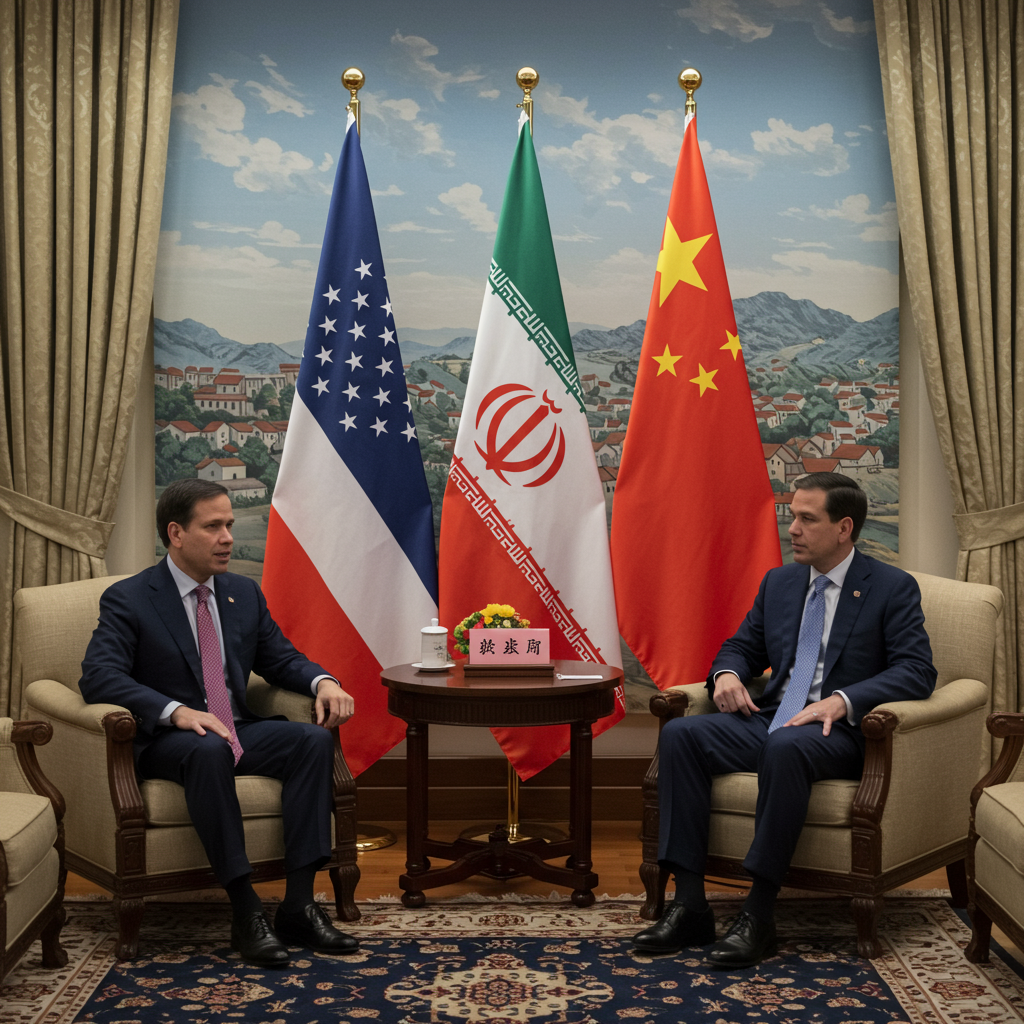
A significant geopolitical proposal has emerged from Tehran, with Iran offering to reopen the strategically vital Strait of Hormuz in exchange for the lifting of the existing U.S. blockade. This complex offer, first reported by Axios, critically suggests deferring intricate nuclear negotiations to a later stage, aiming to de-escalate immediate tensions. However, Washington’s response remains firm: the United States insists on a comprehensive agreement addressing Iran’s nuclear program as a prerequisite for any permanent ceasefire or the reopening of the crucial waterway. This high-stakes diplomatic standoff has captured global attention, influencing everything from international relations to oil markets.
Iran’s Gambit: A Conditional Offer Unveiled
In a surprising move, Iran has presented a new proposal to the United States, relayed through Pakistani intermediaries. The core of this Iran Strait of Hormuz deal is remarkably straightforward yet strategically complex: Iran suggests immediately reopening the Strait of Hormuz for maritime traffic and ending the ongoing conflict. Crucially, this comes with a condition – the U.S. must first lift its current blockade on Iranian ports and assets in the Strait. Notably, the proposal advocates for deferring nuclear negotiations to a later, separate stage, attempting to compartmentalize the immediate conflict resolution from the more entrenched issue of Iran’s atomic program.
The Core Proposal: Hormuz Now, Nukes Later
The Iranian Foreign Ministry, led by Abbas Araghchi, has articulated this stance during a recent diplomatic tour. Tehran’s perspective frames the immediate reopening of the Strait of Hormuz as a path to de-escalation, beneficial for all littoral states and global trade. By separating this from the highly contentious nuclear talks Iran, the Iranian leadership appears to seek a rapid alleviation of economic pressure, recognizing the immense impact of the blockade. This strategy aims to restore critical access to a waterway essential for its oil exports and overall economy without conceding on its nuclear ambitions upfront.
Washington’s Firm Stance: Blockade as Leverage
The United States, under President Donald Trump, has unequivocally rejected Iran’s proposed sequencing. Washington maintains that the existing blockade on Iranian assets is its primary leverage against the Iranian regime. President Trump has repeatedly stated his unwavering commitment to maintaining this pressure until a comprehensive nuclear agreement is reached. Defense Secretary Pete Hegseth echoed this sentiment, emphasizing that the U.S. is not rushed to conclude military operations and expects European allies to show more urgency regarding the Strait. For the U.S., any Iran Strait of Hormuz deal must be holistic, ensuring Iran’s atomic program is addressed as a foundational element of regional stability.
The Geopolitical Chessboard: US, Iran, and Regional Players
This diplomatic exchange unfolds against a backdrop of complex geopolitical maneuvering. Both the U.S. and Iran are engaging in strategic plays, with regional allies and international mediators caught in the balance. The ongoing tensions highlight the intricate web of alliances and rivalries defining the Middle East.
Trump’s “All the Cards” Strategy
President Trump has consistently asserted that the U.S. holds “all the cards” in this negotiation. He views the economic pressure from the blockade as a decisive factor, expecting Iran to initiate any further discussions. Trump also voiced concerns about the clarity of leadership within Iran’s theocracy, suggesting this internal ambiguity hinders the prospect of reaching a definitive agreement. His stance underscores a belief that the U.S. can dictate the terms, leveraging its economic and military might to compel Iran into a broader nuclear deal rather than a partial, conditional arrangement.
Diplomatic Overtures: Iran’s Regional Tour
In response to the mounting pressure, Iranian Foreign Minister Abbas Araghchi embarked on a significant diplomatic tour. Following visits to Pakistan and Oman, Araghchi traveled to Russia to meet with President Vladimir Putin. These engagements were framed as opportunities to coordinate with Moscow in the aftermath of the broader conflict involving Israel and the United States. During his stop in Oman, Araghchi emphasized that their discussions focused on “bilateral matters and regional developments,” with a particular emphasis on ensuring safe transit through the Strait of Hormuz, benefiting all neighboring states. He reiterated Iran’s commitment to prioritizing its neighbors, signaling a desire for regional cooperation amidst the global standoff.
International Mediation and Rising Tensions
Mediation efforts are actively underway, primarily led by Pakistani officials, who are attempting to bridge the significant gaps between the U.S. and Iranian positions. Despite showing some progress in earlier talks, negotiations in Islamabad ultimately failed due to what Iranian officials termed Washington’s “excessive demands.” This breakdown led to the cancellation of a planned trip by top U.S. envoys to Islamabad, further highlighting the deep chasm in expectations. The prolonged US Iran relations impasse has sustained high tensions, contributing to instability across the Middle East.
Economic Fallout: Oil Markets and the Strait’s Critical Role
The Strait of Hormuz, a narrow passage connecting the Persian Gulf to the open ocean, is a choke point through which a substantial portion of the world’s oil supply passes. The ongoing standoff and the U.S. blockade have profound economic implications, particularly for global energy markets.
The Blockade’s Devastating Impact on Iran
President Trump has graphically illustrated the economic leverage provided by the blockade. He asserted that if the “vast amounts of oil pouring through [Iran’s] system” are prevented from being loaded onto ships, Iran’s critical oil infrastructure would “explode from within” within approximately three days. He claimed such an event would permanently damage Iran’s oil capacity, reducing it to merely 50% of its current output. The U.S. military’s Central Command has actively enforced this blockade, reportedly turning around 38 ships as part of its operations, visually demonstrating the immense pressure Iran is currently experiencing. The USS Rafael Peralta (DDG 115), a guided-missile destroyer, has been pictured preventing Iranian-flagged ships from reaching their ports.
Global Oil Prices React to Uncertainty
The geopolitical instability surrounding the Strait of Hormuz has had a direct and immediate impact on global oil prices. With an existing ceasefire already in place, oil prices nonetheless rose due to the ongoing Middle East conflict and the U.S.-Iran standoff. The uncertainty surrounding supply disruptions stemming from the potential closure or continued blockade of the Strait naturally pushes prices upward, reflecting market anxiety about future access to crude oil.
Prediction Markets Signal Cautious Optimism
Financial prediction markets have closely tracked these developments, offering insights into market sentiment. The market for “Trump announcing the lifting of the Hormuz blockade by May 31” initially saw a dip in certainty, moving from 90% a week prior to 60.5%. However, the news of Iran’s recent proposal prompted an immediate 5-point spike, signaling a temporary injection of optimism. Conversely, the odds of WTI crude oil prices hitting $160 in April 2026 have sharply decreased, reflecting a bearish sentiment that a reopened Strait would alleviate supply concerns, making such a price spike far less probable. These market reactions underscore the direct link between diplomatic developments and economic forecasts.
Broader Conflict Context and Human Cost
Beyond the diplomatic and economic maneuvers, the region continues to grapple with the human cost of ongoing conflicts. The broader context of the Middle East conflict provides a somber backdrop to the US-Iran negotiations. At least 3,375 people have been killed in Iran, with 2,509 casualties in Lebanon where Israel-Hezbollah fighting resumed shortly after the broader Iran conflict began. Additionally, 23 people have died in Israel, over a dozen in Gulf Arab states, 15 Israeli soldiers in Lebanon, 13 U.S. service members in the region, and six U.N. peacekeepers in southern Lebanon. These tragic figures highlight the urgent need for comprehensive de-escalation and lasting peace in the region.
The Path Forward: High Stakes and Unpredictable Outcomes
The future of the Iran Strait of Hormuz deal remains highly uncertain. The fundamental disagreement over sequencing—Iran’s “Hormuz first, nukes later” versus the U.S.’s “nukes first, Hormuz second”—represents a significant hurdle. For any resolution to emerge, one side, or perhaps both, will need to show flexibility. Key statements from figures like former President Donald Trump and Iranian Foreign Minister Abbas Araghchi will continue to heavily influence the situation and market odds. The diplomatic dance continues, with regional and international players closely watching for any signs of a breakthrough or further escalation. The stakes are immense, impacting global energy security, regional stability, and the future of international diplomacy.
Frequently Asked Questions
1. What is the core of Iran’s latest proposal to the United States?
Iran has put forward a proposal to the United States suggesting the immediate reopening of the strategically vital Strait of Hormuz and an end to the current conflict. This offer is contingent upon the U.S. lifting its existing blockade on Iranian ports and assets. Crucially, Iran proposes to defer negotiations concerning its nuclear program to a later, separate stage, aiming to de-escalate immediate tensions and alleviate economic pressure before tackling the more complex nuclear issue.
2. Why is the Strait of Hormuz so strategically important to global trade and oil markets?
The Strait of Hormuz is a narrow waterway connecting the Persian Gulf to the Arabian Sea and the broader Indian Ocean. It is one of the world’s most critical choke points for global oil supply, with a significant portion of the world’s seaborne oil passing through it daily. Any disruption or blockade in the Strait can dramatically impact global oil prices, energy security, and international trade routes, making its free navigation paramount for the global economy.
3. How is the US blockade impacting Iran’s economy and oil infrastructure?
The U.S. blockade is exerting immense economic pressure on Iran, particularly by hindering its ability to export oil, which is a primary source of national revenue. President Trump has stated that preventing vast amounts of Iranian oil from being loaded onto ships could cause Iran’s oil system to “explode from within,” potentially reducing its oil capacity by 50%. The U.S. military actively enforces this blockade, turning around numerous ships and significantly disrupting Iran’s access to international markets.
Conclusion
The latest proposal from Iran to reopen the Strait of Hormuz while delaying nuclear talks presents a critical juncture in the fraught relationship between Tehran and Washington. While Iran seeks to alleviate immediate economic hardship and de-escalate regional tensions, the United States remains resolute in its demand for a comprehensive nuclear agreement as the precondition for lifting its powerful blockade. The ongoing standoff impacts global oil markets, fuels regional instability, and highlights the immense challenges facing international mediators. The coming weeks will undoubtedly reveal whether diplomatic efforts can bridge these fundamental differences, or if the high-stakes geopolitical chess match will continue to shape the future of the Middle East and beyond.