The world of endurance running witnessed an unprecedented moment in London, as two elite athletes shattered the long-held two-hour marathon barrier. This historic achievement has sent ripples across the athletic community, profoundly impacting the understanding of human limits and the future of distance running. BYU coach Ed Eyestone, a respected figure in the sport, offers his expert perspective on this “perfect storm” of athletic prowess and technological innovation, marking a pivotal shift in the pursuit of marathon world records. This breakthrough not only redefines what’s possible but also sets a thrilling new benchmark for aspiring runners worldwide.
The Unthinkable Becomes Reality: A Historic Day in London
For decades, the idea of completing a marathon in under two hours remained a mythical quest, often deemed impossible within a lifetime. BYU’s Director of Track and Field and Men’s Cross Country coach, Ed Eyestone, himself a former NCAA cross country national champion and U.S. Olympian with an impressive 2:10:59 marathon time in his prime, once echoed this sentiment. A quarter-century ago, as he retired from competitive running, Eyestone stated emphatically, “Not in my lifetime,” when asked about the sub-two-hour mark, reasoning that the scarcity of sub-60-minute half-marathoners made the prospect distant.
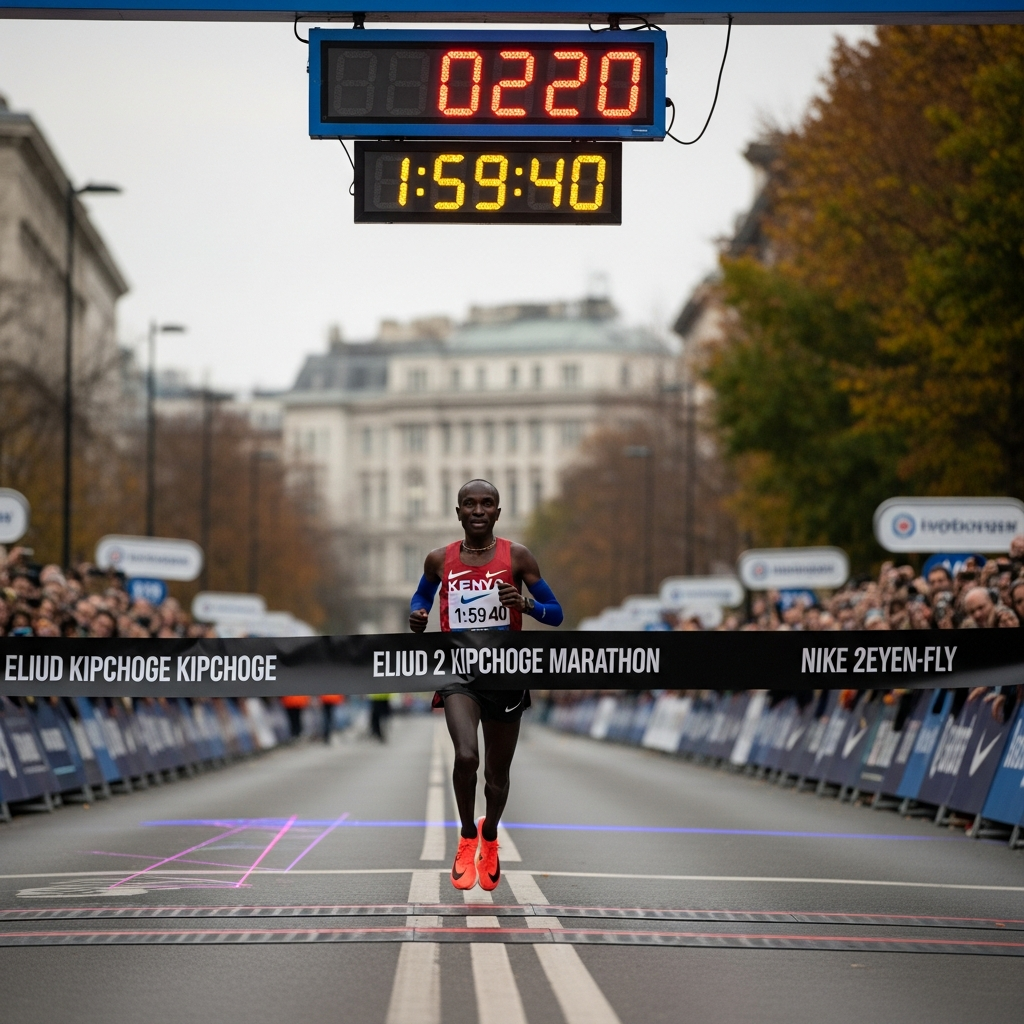
However, Sunday, April 26, 2026, irrevocably changed that perception. In a breathtaking display of athleticism at the London Marathon, Kenya’s Sebastian Sawe crossed the finish line in a staggering 1:59:30, making history. Hot on his heels, Ethiopia’s Yomif Kejelcha followed suit, clocking an incredible 1:59:41. This dual triumph resonated deeply with Eyestone, who immediately recognized its monumental significance. He drew a parallel to Roger Bannister’s iconic breaking of the four-minute mile in 1954, asserting that April 26th should be etched into history with similar reverence. The fact that two individuals achieved this once-impossible feat on the same day only amplified its profound impact.
The “Perfect Storm”: Unpacking the Marathon Breakthrough
While the timing of this groundbreaking record surprised Eyestone, he acknowledged that the path to this moment had been evolving for many years. He describes the confluence of factors as a “perfect storm for marathon speed.” This includes a sophisticated blend of world-class athletes pushing their physical boundaries, cutting-edge training methodologies, advanced nutritional science, and the widespread sharing of secrets and innovations facilitated by the internet. Each component plays a crucial role in optimizing performance, creating an environment where such a record-shattering achievement could finally materialize.
The Revolutionary Impact of “Super Shoes”
According to Eyestone, the single most significant catalyst in this “perfect storm” is the advent of the modern “super shoe.” These aren’t just incremental improvements; they represent a fundamental shift in running technology. Today’s elite racing shoes are remarkably lightweight, often weighing around 97 grams—roughly the same as a small apple. Sebastian Sawe, for instance, wore the Adidas Adizero Adios Pro Evo 3 for his record-breaking run, a testament to the advanced engineering now common across serious shoemakers.
These shoes offer more than just reduced weight. Eyestone explains that their core innovation lies in their internal mechanics: carbon-plated midsoles that deliver superior energy return and specialized, highly responsive foam for enhanced cushioning. This mechanical advantage fundamentally alters the runner’s experience. Historically, marathoners would often “hit the wall” as fatigue set in during the latter stages of the race. Now, with the support of these technologically advanced shoes, combined with optimized nutrition and refined training strategies, athletes are empowered to “run right through the wall,” maintaining pace and efficiency in ways previously unimaginable. This technological leap has democratized elite performance, pushing the entire field to new speeds.
Setting a New Standard: Eyestone’s Challenge to BYU Runners
For Coach Eyestone, who oversees the development of BYU’s track and field and men’s cross country programs, the shattering of the two-hour marathon barrier isn’t just a historical event; it’s a powerful motivator. Witnessing this unprecedented accomplishment, he promptly sent a message to his current, future, and former distance runners. His directive was clear: “Well, that gives us another goal to shoot for. We’ve got to keep working. We’ve got to close the gap.” This record serves as a vivid new benchmark, inspiring his athletes to elevate their own aspirations and intensify their training efforts. It underscores his philosophy that excellence is a continuous journey, always pushing the boundaries of what is believed possible.
Eyestone’s Legacy: Shaping Elite American Distance Running
Eyestone’s influence extends far beyond the BYU campus. He has been instrumental in shaping a generation of elite American distance runners. Among the world-class athletes he has coached are former Olympians like Conner Mantz, Clayton Young, and Rory Linkletter. His guidance has left an indelible mark: a remarkable nine of the 50 fastest American marathoners have been coached by Eyestone during their time at BYU.
The current landscape of American elite marathon running vividly demonstrates his impact. For example, former BYU star Clayton Young recently achieved a personal best at the Boston Marathon, clocking an impressive 2:05:41. This performance places him as the fifth-fastest American ever on point-to-point courses. Young’s journey to this feat was particularly challenging, as he overcame an ankle injury that limited his training to just eight weeks. Relying heavily on cross-training, he eventually adopted an aggressive program of 130 miles per week. Despite the incredibly fast field at Boston, where the top six spots were claimed by African-born runners and the winner, John Korir, set a course record of 2:01:51, Young emerged as the top native-born American finisher. His former BYU teammate, Rory Linkletter, also achieved a personal record with a 2:06:04 finish, further highlighting the caliber of athletes emerging from Eyestone’s program. These achievements underscore Eyestone’s pivotal role in nurturing top-tier talent and preparing them for the global stage.
Beyond the Barrier: What Comes Next for Marathon Running?
The breaking of the two-hour marathon barrier is more than just a new record; it signals a new era for endurance sports. The “perfect storm” described by Eyestone—combining human potential with technological and scientific advancements—will continue to evolve. Future training methodologies will undoubtedly incorporate learnings from these landmark achievements, pushing athletes to new frontiers. Innovations in running gear, nutrition, and recovery are also expected to advance rapidly, further shaving seconds and minutes off race times. This historic moment will inspire countless individuals to pursue their own athletic goals, proving that with dedication, optimal conditions, and the right tools, yesterday’s impossible becomes tomorrow’s standard. The journey towards even faster marathon times has only just begun, promising more thrilling spectacles for fans of the sport.
Frequently Asked Questions
What were the key factors contributing to the breaking of the two-hour marathon barrier?
BYU coach Ed Eyestone highlights a “perfect storm” of elements. These include the exceptional talent of world-class athletes, highly advanced training techniques, cutting-edge nutrition strategies, and the widespread sharing of knowledge through the internet. Most significantly, Eyestone credits the revolutionary “super shoe” technology, featuring lightweight design, carbon-plated midsoles, and specialized foam cushioning, for providing a mechanical advantage that allows runners to sustain higher performance throughout the race.
Which “super shoes” are mentioned as instrumental in elite marathon performance?
The article specifically mentions the Adidas Adizero Adios Pro Evo 3 as the model worn by Sebastian Sawe during his record-breaking run at the London Marathon. Eyestone notes that virtually every serious shoemaker now produces a similar model, all incorporating key design principles such as reduced weight (around 97 grams), carbon-plated midsoles for energy return, and advanced foam for superior cushioning. These technological advancements are critical for modern marathon speeds.
How does BYU coach Ed Eyestone use this historic achievement to motivate his current and future runners?
Upon witnessing the dual breaking of the two-hour barrier, Coach Eyestone immediately sent a text message to his distance runners. His message was direct and inspiring: “Well, that gives us another goal to shoot for. We’ve got to keep working. We’ve got to close the gap.” He uses this historic event as a tangible new benchmark, encouraging his athletes to intensify their training, elevate their aspirations, and relentlessly pursue excellence in their own running careers.