
The NYT strands Guide is becoming an essential resource for daily players looking to master the New York Times’ evolving word-search puzzle. As the digital gaming landscape shifts toward more complex, multi-layered challenges, Strands has emerged as a unique hybrid of classic word search and modern deductive logic. Unlike its predecessor, Wordle, which focuses on a single five-letter word, Strands requires players to navigate a grid of letters to uncover an entire theme, making it a more time-intensive and cognitively demanding experience.
Key Takeaways
- Complex Mechanics: Strands utilizes a grid where words can be formed by connecting letters in any direction—up, down, left, right, or diagonally.
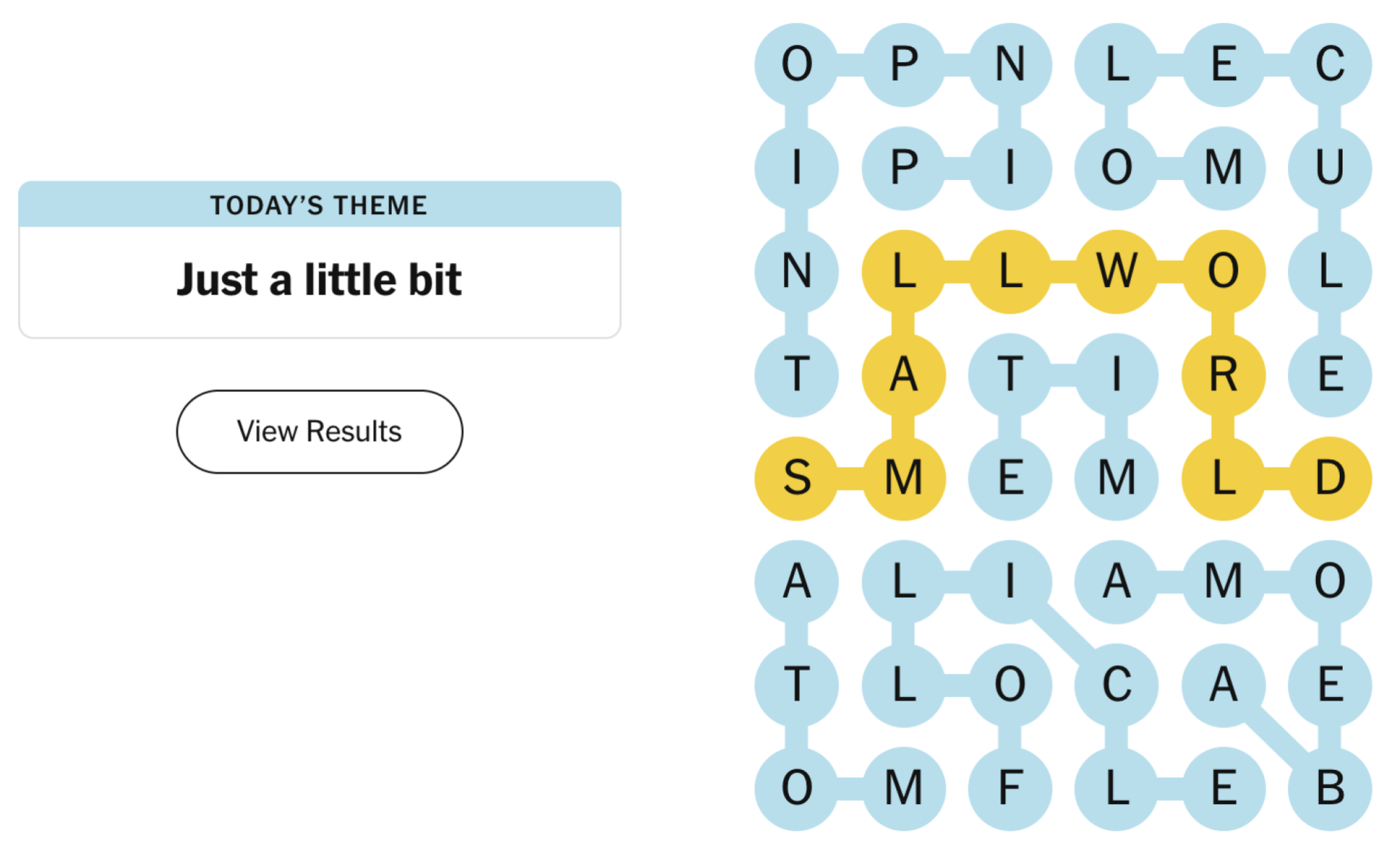
- The Spangram Factor: Every puzzle features a “spangram” that summarizes the theme and spans the entire board, highlighted in yellow upon discovery.
- Strategic Hint System: Players can earn hints by finding “non-theme words” that are at least four letters long.
- Difficulty Variance: While Wordle relies on limited guesses, Strands offers unlimited attempts, though its multi-word structure often makes it more difficult.
- Daily Rotation: The New York Times releases new puzzles daily, with themes ranging from Greek mythology to fitness gear.
- Yellow: Indicates the discovery of the spangram. This word or phrase is the most vital element, as it must touch two opposite sides of the grid and serves as the thematic anchor.
- Blue: Indicates the discovery of a standard theme word.
- Theme Diversity: Watch if the NYT begins to move away from common themes (like fitness or mythology) into more niche or abstract territory.
- Difficulty Ratings: Monitor whether the “moderate” rating becomes the new standard or if the NYT introduces more frequent “hard” puzzles.
- Feature Updates: Keep an eye on the NYT Games app for potential updates to the hint system or new ways to share puzzle results on social media, which has historically been a driver of game popularity.
- lifehacker.com
- www.pcguide.com
- mashable.com
What Happened: A Week of Puzzles in October 2026
Throughout the third week of October 2026, players of the New York Times Games app have encountered a diverse array of themes that test both vocabulary and pattern recognition. According to reports from Mashable, Lifehacker, and PC Guide, the puzzles released between October 16 and October 19 have showcased the game’s ability to pivot between vastly different subject matters.
On October 16, 2026, Strands puzzle #957 challenged users with the theme “Just a little bit,” according to Lifehacker. The solution required players to identify small entities, including words like ATOM, MOLECULE, and AMOEBA. The spangram for that day was SMALLWORLD.
By October 18, the theme shifted toward physical activity. Mashable reported that the puzzle focused on items used during exercise, specifically “Running Gear.” While the source noted an initial hint related to “fast fashion,” the actual word list provided included SNEAKERS, VEST, WATCH, HEADPHONES, and SUNGLASSES, with the spangram being RUNNING GEAR.
Most recently, on October 19, 2026, the difficulty level was officially designated as “moderate” by the New York Times for puzzle #960. PC Guide reported that the theme for this iteration was “It’s all Greek to me,” requiring players to find mythological figures and concepts such as DEITY, DRYAD, FATES, FURIES, MUSES, NYMPHS, and SATYR. The 12-letter spangram for this puzzle was MYTHOLOGICAL.
Why It Matters: The Evolution of Digital Word Games
The rise of Strands signifies a broader trend in the digital media industry: the move toward “elevated” casual gaming. While the initial wave of viral word games focused on simplicity and speed, the New York Times is now leveraging its brand to provide deeper, more meditative puzzles that require longer periods of engagement.
This shift has significant implications for the gaming market. By offering games like Strands, which take significantly longer to solve than Wordle or Connections, the NYT is increasing the “stickiness” of its Games subscription model. For players, this means a more rewarding, albeit more challenging, daily ritual. For the industry, it demonstrates that there is a growing appetite for puzzles that reward persistence and lateral thinking rather than just quick deduction.
Deep-Dive: Understanding the Mechanics of Strands
To excel at the game, players must move beyond traditional word-search strategies. The mechanics of Strands are specifically designed to prevent players from simply scanning for linear strings of letters.
The Grid and Movement
Strands typically utilizes a grid—such as the 6×8 (48-letter) layout seen in puzzle #960—where letters are interconnected. Unlike a standard word search where words are strictly horizontal or vertical, Strands allows for diagonal connections and, most importantly, allows words to change direction mid-stream. This creates “quirky shapes and patterns” that can easily mislead a casual observer.
The Spangram and Theme Colors
The game employs a color-coded system to provide feedback to the player:
The Hint Economy
One of the most significant departures from other NYT games is the built-in hint system. According to Lifehacker, players do not simply wait for a clue; they earn it through gameplay. By identifying “non-theme words”—words that appear on the board but do not belong to the daily theme—players can earn credit.
To be valid for a hint, a word must be at least four letters long. After submitting three such words, the “Hint” button becomes active. Activating a hint will highlight all the letters of a specific theme word, though the player must still manually connect them in the correct order. This mechanic ensures that even when players are stuck, they remain engaged with the board rather than feeling defeated.
| Feature | Strands | Wordle | Connections |
|---|---|---|---|
| Primary Objective | Find all theme words + spangram | Find a single 5-letter word | Group words into categories |
| Guess Limits | Unlimited | Typically 6 guesses | Typically 4 guesses |
| Failure State | None (can keep playing) | Player can run out of guesses | Player can run out of guesses |
| Hint System | Earned via non-theme words | Limited/None | None |
| Complexity | High (multi-word/patterns) | Low (single word) | Moderate (categorical) |

What It Means for You
How you approach Strands depends largely on your personal gaming style.
For the Casual Player: If you enjoy the low-pressure environment of games like Sudoku or Mahjong, Strands offers a stress-free experience. Because there is no possibility of “failing” or running out of turns, you can take as much time as you need to enjoy the linguistic challenge.
For the Competitive Strategist: If you are a player who thrives on efficiency, you should treat the board as a resource. Do not ignore the non-theme words. If you find yourself struggling to find the spangram, intentionally look for four-letter words that aren’t part of the theme to unlock a hint. This turns the game into a tactical exercise in resource management.
For the Tech-Savvy Gamer: As the NYT continues to integrate these games into its digital ecosystem, expect more sophisticated interfaces and perhaps even more complex mechanics. The success of Strands suggests that the future of mobile gaming lies in high-quality, intellectually stimulating content that fits into short bursts of daily downtime.
Counterpoints and Open Questions
Despite its popularity, the complexity of Strands is not without its critics. Some players find the “change of direction” mechanic to be frustratingly opaque, leading to a sense of guesswork rather than pure deduction. There is also the question of difficulty scaling; as the NYT introduces more “moderate” or “hard” puzzles, there is a risk of alienating the casual user base that was attracted to the simplicity of Wordle.
Furthermore, an open question remains regarding the long-term sustainability of the “hint economy.” As players become more adept at finding non-theme words to bypass the actual challenge, does the game lose its intended difficulty? The balance between accessibility and intellectual rigor is a fine line that the NYT must continue to navigate.
What Happens Next
As we move through the remainder of October 2026, players should watch for several key signals:
Frequently Asked Questions
What is a “spangram” in NYT Strands?
A spangram is a special word or phrase that describes the puzzle’s overall theme. Unlike regular theme words, which are highlighted in blue, the spangram is highlighted in yellow once discovered. It is a critical component of the game because it must span the entire length of the grid, either horizontally or vertically, effectively connecting two opposite sides of the board.
How do I earn hints if I am stuck?
nYou can earn hints by finding words on the grid that are not part of the daily theme. According to Lifehacker, these “non-theme words” must be at least four letters long. Once you have successfully identified and submitted three such words, the hint button will become active, allowing you to reveal the letters of a specific theme word.
Is Strands harder than Wordle?
Generally, yes. While Wordle only requires you to find a single five-letter word, Strands requires you to find a spangram plus several other theme words (often seven or more) to fill the entire grid. Additionally, the ability for words to move diagonally and change direction makes the search pattern more complex than the linear search used in traditional word games.
Can I lose a game of Strands?
No. Unlike Wordle or Connections, which have limited guess counts that can lead to a “failure” state, Strands allows for unlimited guesses. The game is designed to be a meditative experience where the player can take as much time as necessary to complete the grid without the pressure of a ticking clock or a limited number of attempts.
Closing
Whether you are searching for RUNNING GEAR or navigating the world of MYTHOLOGICAL figures, the NYT Strands Guide highlights a game that is as much about pattern recognition as it is about vocabulary
References
Featured image: Photo by Efrem Efre on Pexels