
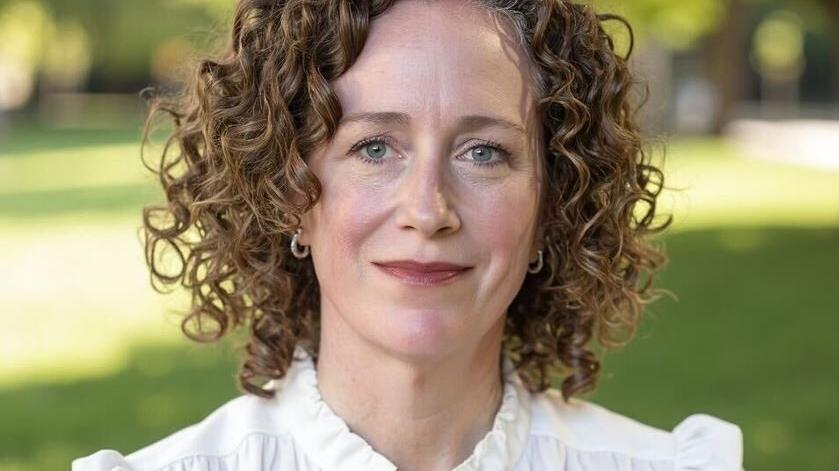
The anthropic public benefit fund was officially unveiled as the artificial intelligence giant announced a commitment to dedicate at least 5% of its company shares to a new entity designed to support the “public good.”
Key Takeaways
- Major Equity Pledge: Anthropic is committing a minimum of 5% of its total shares to a new public benefit fund, with the potential for an additional 2% at the board’s discretion.
- Massive Valuation at Stake: The announcement comes as the company prepares for a potential blockbuster IPO in November 2026, which could value the firm at over $1 trillion.
- Addressing AI Disruption: The fund is intended to support nonprofit organizations and mitigate the societal impacts of AI, specifically regarding job market displacement.
- Polarized Industry Reaction: While some see it as an “extraordinary gift,” critics like Elon Musk and Gary Marcus have labeled it a “PR gambit” or a method to concentrate founder control.
- Corporate Structure: Anthropic operates as a public benefit corporation, a designation intended to balance profit with social impact.
- How independent will the fund truly be? If the fund is managed by a separate corporation controlled by the same founders, will it truly act in the public interest, or will it serve as a tool for founder-led influence?
- How will “public good” be defined? There is currently no transparent framework for how the fund will decide which nonprofits receive money or which populations receive direct distributions.
- Will valuation volatility affect the social impact? Because the fund is tied to Anthropic’s share value, a market downturn could significantly reduce the actual capital available for social programs.
- Is this a distraction from regulation? Some observers wonder if large-scale philanthropy is being used to preempt more stringent government oversight and legal mandates.
- The November 2026 IPO: This will be the ultimate test of Anthropic’s valuation and the market’s appetite for a company with such a large philanthropic equity commitment.
- Valuation Milestones: Anthropic has indicated that the percentage of shares dedicated to the public good may increase if the company reaches certain valuation targets.
- Regulatory Engagement: The new AI taskforce in the US, led by Director of National Intelligence Jay Clayton, will likely play a role in how the government interacts with companies like Anthropic regarding their social responsibilities.
- www.businessinsider.com
- www.ktvn.com
- www.bbc.com
What Happened
On Sunday, February 22 or 23, 2026, Anthropic announced the creation of the Anthropic Public Benefit Fund. According to reports from 2news.com (KTVN) and Business Insider, the company will dedicate at least 5% of its total equity to this new internal entity. The fund is intended to be managed by a separate corporation to facilitate large-scale donations and potentially implement direct distributions to specific populations.
This move is part of a broader strategy by the Claude developer to dedicate approximately 20% of its total shares to the “public good,” a figure that may fluctuate based on future valuation milestones. The announcement is strategically timed as Anthropic lays the groundwork for a massive Initial Public Offering (IPO) projected for as early as November 2026.

Anthropic’s leadership has already demonstrated a high level of commitment to this philanthropic model. The company’s cofounders, including CEO Dario Amodei, have pledged to donate 80% of their personal wealth. Furthermore, an internal equity donation match program has seen approximately 50% of Anthropic employees pledging their own shares to support the company’s mission.
Why It Matters: The Stakes of AI Wealth and Safety
The scale of the Anthropic public benefit fund is significant because it addresses the two most pressing anxieties surrounding the rapid advancement of artificial intelligence: economic displacement and existential risk.
The Economic Displacement Crisis
As AI models become more capable, the threat to global labor markets has moved from theoretical to imminent. Research published by the International Monetary Fund (IMF) in 2024 suggested that nearly 40% of jobs globally could be affected by AI, a figure that climbs to 60% in advanced economies. Anthropic has acknowledged these risks, previously committing $200 million specifically to study the labor market impacts of AI progress.
By earmarking billions of dollars in equity (given the company’s projected $1 trillion valuation) for the public good, Anthropic is attempting to create a financial buffer for the very society its technology may disrupt. Some analysts, including Andrew Curran, suggest this could be the precursor to a “self-directed global UBI” (Universal Basic Income), where AI companies take on roles traditionally reserved for governments to mitigate unemployment.
The Safety and Existential Risk Debate
Beyond economics, the fund is a response to growing scrutiny over AI safety. In its initial public offering (IPO) filings, Anthropic reportedly stated that AI could pose “catastrophic or existential risks to humanity.” This concern is not limited to the company’s internal assessments. In September, a researcher who resigned from Anthropic, Jacob Coxon, told the BBC that employees were “genuinely frightened” by the speed of AI development, suggesting that without a slowdown, humanity could face immediate danger.

Deep-Dive: Stakeholder Perspectives and Critiques
The announcement has not been met with universal acclaim. Instead, it has triggered a fierce debate among the world’s most influential tech leaders and academics regarding how wealth should be distributed and who should control it.
The Distribution Debate: Direct vs. Institutional
One of the primary points of contention is how the money should reach the people. Elon Musk, CEO of SpaceXAI, responded to the news on social media by suggesting that Anthropic should bypass institutions entirely. “I recommend giving the shares directly to the public,” Musk stated, adding that he intends to follow a similar path with his own wealth.
Patrick Moorhead, CEO of Moor Insights and Strategy, echoed this sentiment. He argued that citizens are better equipped to decide how to use funds than “bureaucratic institutions,” questioning why the company wouldn’t simply provide direct benefits to the public.
The “Reverse OpenAI” and Control Concerns
Some critics view the fund not as a philanthropic gesture, but as a sophisticated structural maneuver. Sam Hogan Heutmaker, CEO of Inference, proposed a theory known as the “reverse OpenAI” model. He suggested that while OpenAI transitioned from a nonprofit to a commercial entity to raise capital, Anthropic may be doing the opposite: starting as a C corp to build massive value, then creating an “independent” nonprofit to concentrate that value under the control of the original founders.
“This will come to be known as ‘the reverse OpenAI’… start as C corp, raise lots of money > once successful, start ‘independent’ non profit > start concentrating value into this new entity, which you and your homies control,” Heutmaker wrote on social media. He characterized the move as “genius” in its ability to consolidate power.
Geopolitical and PR Critiques
Palmer Luckey, cofounder of Anduril Industries, raised concerns about the national interests of the United States. He questioned whether the definition of “public good” would prioritize American citizens or global interests. Luckey characterized the move as “USAID 2.0,” alleging it could be a mechanism to funnel wealth out of the domestic economy and into global interests rather than bolstering the American economy.
Meanwhile, Gary Marcus, a professor at New York University (NYU), offered a more cynical view, dismissing the announcement as a “PR gambit.” Marcus argued that the move is an attempt to “curry public favor” while the company continues to avoid transparency and maintain strict control over its operations, stating the move “reeks of desperation.”
Comparative Analysis of Stakeholder Views
| Perspective | Core Argument | Key Proponent/Critic | |
|---|---|---|---|
| Direct Dividend | Wealth should go directly to citizens to avoid bureaucratic waste. | Elon Musk, Patrick Moorhead | Critics |
| Global UBI | The fund may act as a self-directed global basic income. | Andrew Curran | Analyst View |
| Nationalist | The fund might act as “USAID 2.0,” draining US wealth. | Palmer Luckey | Critic |
| Structural Control | The “Reverse OpenAI” model concentrates power in founders. | Sam Hogan Heutmaker | Critic |
| Philanthropic Scale | The pledge is an extraordinary and massive gift. | Brad Gerstner | Supporter |
| PR Manipulation | An attempt to gain favor while resisting transparency. | Gary Marcus | Critic |
What It Means for You
The implications of the Anthropic public benefit fund vary significantly depending on your role in the global economy.
For Investors
If you are tracking the tech sector, the most critical signal is the upcoming Anthropic IPO in November 2026. The company’s revenue surged by 45% to $16.8 billion in the three months ending in September, signaling massive profitability potential. However, the commitment of 20% of equity to a public benefit fund means that a significant portion of the company’s value will be tied up in a non-commercial entity, which may influence long-term share structure and dividend expectations.
For the Workforce
If you work in industries susceptible to automation—such as data entry, customer service, or even specialized professional roles—the fund represents a potential safety net. While it is not a guaranteed government program, the scale of the fund could lead to direct financial distributions or significant funding for retraining programs aimed at those displaced by AI.
For Tech Developers and Researchers
Anthropic’s status as a public benefit corporation sets a precedent. It signals a shift where “frontier” AI companies are expected to internalize the social costs of their technology. Developers may see this as a move toward more responsible, safety-oriented engineering, even as critics argue it is a way to manage public perception.

Counterpoints and Open Questions
Despite the ambitious nature of the pledge, several critical questions remain unanswered:
What Happens Next
As the industry moves toward the end of 2026, several key catalysts will determine the success of this initiative:
Frequently Asked Questions
What is the Anthropic public benefit fund?
The Anthropic public benefit fund is a new entity created by the AI company Anthropic to manage at least 5% of the company’s shares (with a potential total of 20% dedicated to the “public good”). The fund is designed to make large-scale donations to nonprofits and potentially provide direct financial support to populations affected by AI-driven economic changes.
How does this fund relate to AI safety?
Anthropic has expressed concerns about the “existential risks” posed by AI. The fund is intended to provide the “flexibility and scale” needed to address these societal impacts, including the economic disruptions caused by rapid AI advancement, which is a key component of the broader safety conversation.
Will Anthropic’s IPO be affected by this pledge?
While the pledge is a major part of Anthropic’s corporate identity, it is also a significant financial commitment. The company is planning a “massive” IPO in November 2026. Investors will need to weigh the company’s high revenue growth—$16.8 billion in the recent quarter—against the fact that a large portion of its equity is earmarked for non-commercial public benefit purposes.
Is this a form of Universal Basic Income (UBI)?
While not a government-mandated UBI, some analysts, such as Andrew Curran, believe the fund’s ability to make “direct distributions to specific populations” could function as a form of self-directed, private-sector global UBI to mitigate AI-driven job loss.
Anthropic’s move to establish the Anthropic public benefit fund represents a landmark attempt to reconcile the pursuit of trillion-dollar valuations with the massive social responsibilities inherent in developing artificial intelligence
References
Featured image: Image via 2 News Nevada

One thought on “Anthropic Public Benefit Fund: Why the 5% Pledge Matters”