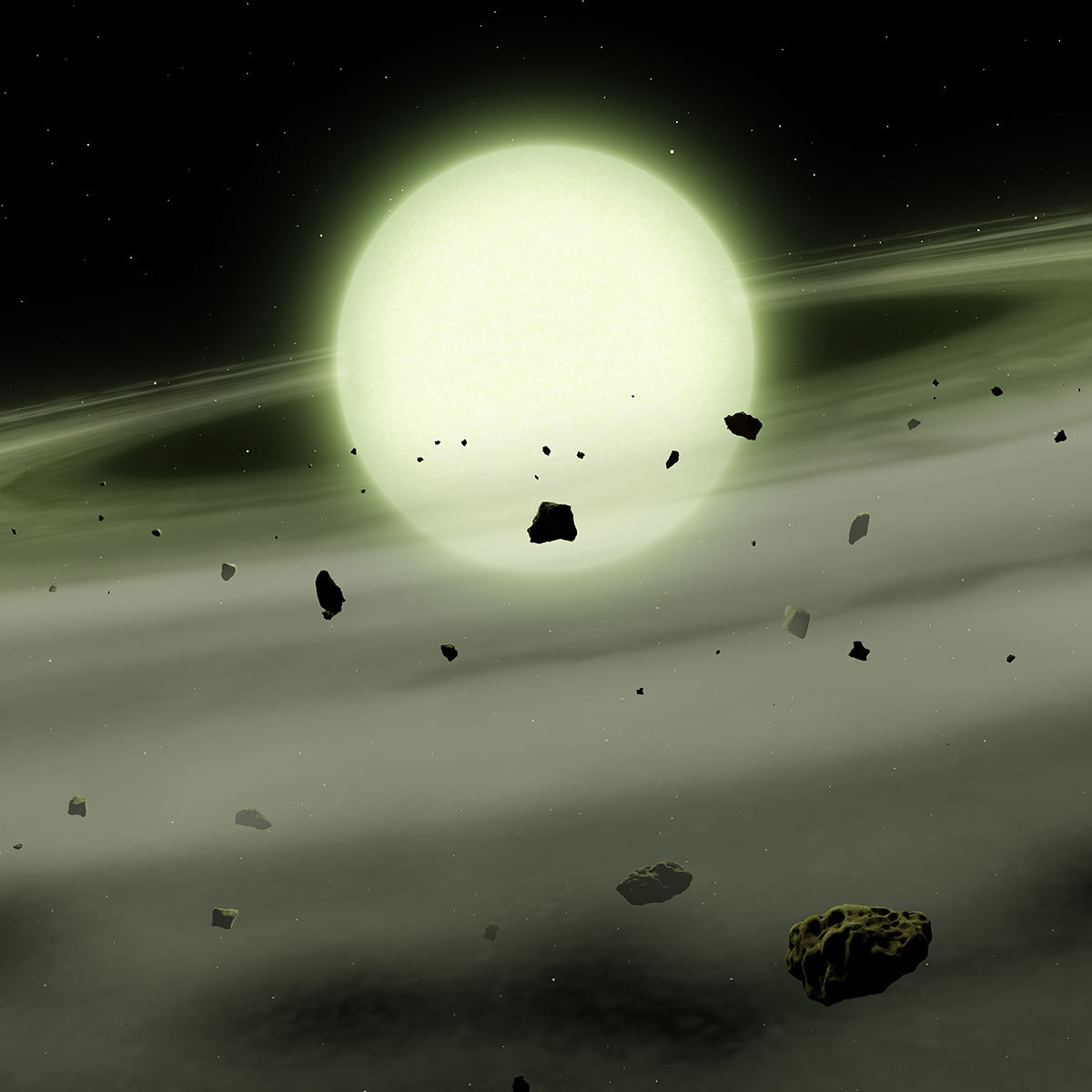
The recent green star discovery by astronomers at the University of Warwick has upended long-held astronomical assumptions about the limited palette of the cosmos. For decades, the scientific consensus suggested that stars, as “perfect radiators,” were restricted to a predictable spectrum of colors—primarily red, orange, white, and blue—dictated almost entirely by their surface temperature. However, new research published in the journal RAS Techniques and Instruments (RASTI) demonstrates that the extreme physical conditions within white dwarf stars can produce unconventional hues, including a star that would appear distinctly green to the human eye.
Key Takeaways
- First Green Star Identified: Researchers identified WDJ1330+6435 as a candidate for the first known genuinely green star in the Galaxy.
- Chemical Influence Over Temperature: Unlike standard stars where color is a function of heat, white dwarf colors are heavily influenced by atmospheric density and chemical composition.
- Planetary “Crime Scenes”: The unique colors of these stars act as diagnostic tools, revealing the chemical makeup of destroyed planets and asteroids.
- Extreme Density: The atmospheres of the coolest white dwarfs can reach densities of 1 gram per cubic centimeter, comparable to water.
- Broad Implications: Astronomers estimate that approximately one in 30 white dwarfs in the universe may exhibit these “strange” colors.
- If you are a student of science: This research serves as a prime example of how multidisciplinary approaches—combining chemistry, physics, and biology—can lead to unexpected breakthroughs.
- If you are an amateur astronomer: This highlights the value of spectroscopic data over simple visual observation. The “true” nature of the universe is often hidden in the wavelengths we cannot see without specialized tools.
- If you follow space exploration: Expect future missions to prioritize the chemical analysis of stellar atmospheres, as these “crime scenes” provide the most direct way to study the building blocks of planets without ever leaving our solar system.
- How common is accretion? While 1 in 30 white dwarfs may show strange colors, we do not yet know if this is a constant state or a temporary phase in a star’s life.
- Can we find more? The study was limited to stars within 65 light-years. How many green or pink stars exist in the far reaches of the Milky Way?
- What is the limit of color deviation? Are there white dwarfs that could appear in colors even more exotic, such as deep violet or bright magenta?
- www.skyatnightmagazine.com
- earthsky.org
- www.rnz.co.nz
What Happened: Breaking the Stellar Color Rule
On October 17, 2026, researchers led by Dr. Mark Hollands, an astrophysicist at the University of Warwick, announced findings that challenge the fundamental understanding of stellar appearance. By analyzing the spectra of 151 known white dwarf stars located within a radius of approximately 65 light-years of Earth, the team discovered that a small but significant minority of these objects do not follow the standard temperature-color relationship.
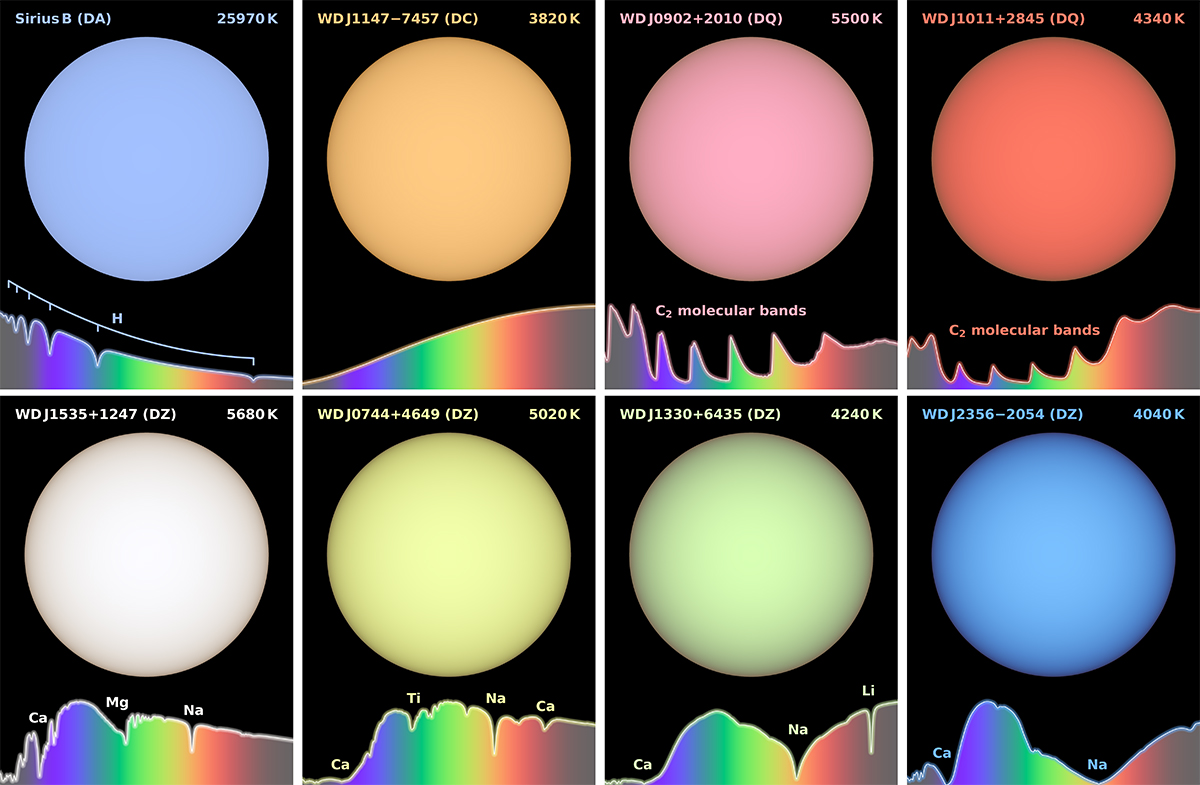
While the vast majority of the sample—146 out of 151 stars—glowed with a standard “warm white” light, five specific white dwarfs exhibited anomalous colors, including yellow, pink, and green. The most significant of these is WDJ1330+6435, a white dwarf with a temperature of approximately 4,000°C (7,200°F). Through detailed spectroscopic analysis, Hollands and his team determined that this star would appear green to a human observer.
This discovery was made possible by using stellar spectra—the “fingerprint” of light produced when starlight is split into its constituent wavelengths, similar to how a prism splits sunlight into a rainbow. By running these spectral fingerprints through models of human color vision, the researchers could translate raw data into a visual representation of what these distant objects would actually look like if they were close enough to be seen directly.
Why the Green Star Discovery Matters
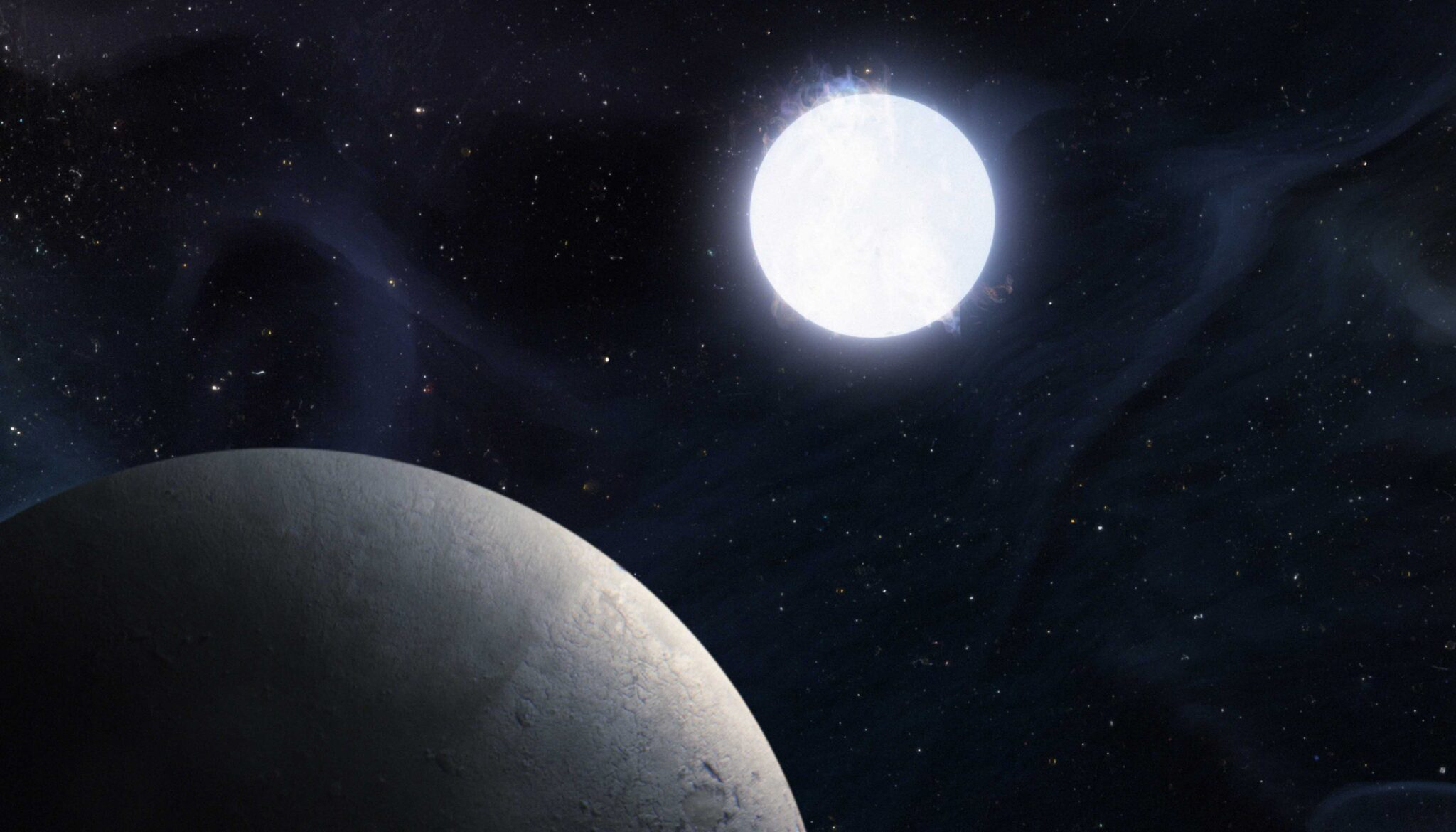
The significance of this finding extends far beyond mere aesthetics. It provides a new method for astronomers to study the history of planetary systems. White dwarfs are the dense, cooling remnants of sun-like stars that have exhausted their nuclear fuel. As these stars die, their gravitational influence can disrupt the orbits of nearby planets, asteroids, or comets.
According to Dr. Mark Hollands, these celestial bodies can be “shredded up into dust” and subsequently fall onto the white dwarf. As this rocky debris is accreted into the star’s outer layers, it alters the star’s atmospheric chemistry. This process effectively turns the white dwarf into a diagnostic tool. By observing the specific colors produced by these chemical interactions, scientists can measure the exact proportions of elements like iron, magnesium, sodium, and calcium that once comprised a nearby planetary system.
Adam Burgasser, a professor of astronomy and astrophysics at the University of California San Diego, described the phenomenon as a cosmic investigation. “It is a crime scene, and we’re kind of piecing through the evidence that we have left available to us,” Burgasser said. “That’s allowing us to kind of piece the story of what the planet was and how it was made way, way, way back in history.”
The Physics of Unconventional Stellar Colors
To understand why a star would appear green, one must look at the intersection of extreme density and chemical absorption. In most stars, the photosphere is relatively thin, and light escapes without significant interference from trace elements. However, white dwarfs are incredibly compact. The atmospheres of the coolest white dwarfs can reach densities of approximately 1 gram per cubic centimeter, a figure millions of times denser than the photosphere of our Sun.
At these extreme densities, trace elements interact with the surrounding helium plasma in ways that do not occur in lighter stars. These elements can absorb specific, wide ranges of the light spectrum. In the case of the green star, WDJ1330+6435, the primary drivers are calcium, sodium, and lithium.
Specifically, the presence of sodium in the atmosphere causes the star to absorb the orange portion of the visible spectrum. When the orange light is filtered out, the remaining light that reaches the eye is dominated by the green wavelengths, creating what Hollands described as a “ghostly green glow.”
A Spectrum of Anomalous White Dwarfs
The Warwick study identified several distinct color groups based on the specific chemical interactions occurring in their high-density atmospheres. The following table summarizes the key findings regarding these uniquely colored stars:
| Star Designation | Perceived Color | Primary Driver | Key Elements Identified |
|---|---|---|---|
| WDJ1330+6435 | Green | Sodium absorption of orange light | Calcium, Sodium, Lithium |
| WD J1011+2845 | Salmon-Pink / Red | Carbon molecular distortion | High-density Carbon |
| WDJ0902+2010 | Pink / Purple | Deep convection lifting carbon to surface | Carbon |
| Unspecified | Yellow | Accretion of asteroids and comets | Mixed rocky debris |
| Unspecified | Cyan / Pale Blue | Mixed hydrogen and helium atmospheres | Hydrogen, Helium |
The Role of Spectroscopy in Modern Astronomy
The green star discovery highlights the increasing importance of spectroscopic surveys in mapping the universe. Because white dwarfs are relatively dim and distant, they cannot be observed directly with the naked eye or even through standard optical telescopes in a way that reveals their true color. Instead, astronomers rely on the “fingerprints” left in their light.
Professor Boris Gänsicke from the University of Warwick noted that while the number of strangely colored stars found in this specific study is small, the implications for the wider universe are vast. “One in thirty might not sound like a huge fraction, but across the entire population of white dwarfs in the Universe, that is still a lot of oddly coloured stars out there,” Gänsicke said.
This research moves astronomy closer to a more “human” way of observing the cosmos. By translating complex spectral data into colors that the human eye can recognize, researchers can create a more tangible connection to these distant, extreme objects. Agnès Kim, an astrophysicist at Penn State Scranton, remarked that the study represents a “cool intersection of physics and biology,” bridging the gap between the mathematical reality of light wavelengths and the biological reality of human perception.
What It Means for You
For the general public and space enthusiasts, this discovery changes the way we visualize the “death” of solar systems. Rather than seeing the end of a star’s life as a simple fade into darkness, we now know it can be a vibrant, multicolored event.
Counterpoints and Open Questions
Despite the excitement, it is important to note that the green star discovery is currently based on computational models and spectroscopic data rather than direct visual confirmation. Because no white dwarf can be seen directly from Earth with the naked eye, the “green” and “pink” descriptions are interpretations of what a human would see if they were positioned to observe the star clearly.
Furthermore, some scientists may argue that these color deviations are specialized cases rather than a new rule for stellar evolution. While the study identifies a pattern, the mechanism of how these colors manifest depends on highly specific, localized conditions—such as the exact amount of sodium or carbon being accreted at any given time.
Key open questions remain:
What Happens Next
The field of stellar spectroscopy is on the verge of a massive expansion. Dr. Mark Hollands indicated that the next phase of research will involve analyzing a much larger tranche of stars as new spectroscopic surveys begin delivering data to the scientific community.
“We’ll be getting a tenfold increase in the number of white dwarfs that have spectra,” Hollands said. “And so maybe if we’re lucky, we’ll go from one or maybe two green white dwarfs to 10 or 20.”
As these surveys progress, astronomers will be able to map the chemical diversity of the white dwarf population with unprecedented precision, potentially turning the study of stellar color into a standardized method for identifying the remains of destroyed planetary systems across the galaxy.

Frequently Asked Questions
Why can’t most stars be green?
Most stars are “perfect radiators,” meaning their color is determined by their temperature. A star’s temperature dictates which wavelengths of light it emits most strongly. Because of the way light works, stars typically emit light in a way that our eyes perceive as red (cool), white (medium), or blue (hot). To appear green, a star must not only have the right temperature but also specific elements in its atmosphere that absorb other colors (like orange) to leave only green light behind.
What exactly is a white dwarf?
A white dwarf is the incredibly dense, hot core left behind after a star like our Sun has exhausted its nuclear fuel and shed its outer layers. They are roughly the size of Earth but contain a mass comparable to the Sun, making them extremely compact and capable of exerting massive gravitational forces on nearby objects.
How do scientists know the color if they can’t see it directly?
Scientists use a technique called spectroscopy. When starlight passes through a prism or a diffraction grating, it is split into a spectrum of colors. Certain elements in the star’s atmosphere absorb specific wavelengths of this light, leaving dark lines in the spectrum. By analyzing these “fingerprints,” scientists can determine exactly which elements are present and use mathematical models to calculate how those elements would affect the star’s perceived color to a human observer.
Can a green star tell us about Earth?
Indirectly, yes. By studying the chemical composition of the debris being swallowed by white dwarfs, astronomers can understand the types of rocky materials—like those found in Earth’s crust—that exist in other solar systems. This provides a window into the chemical evolution of planets throughout the universe.
Ultimately, the green star discovery serves as a reminder that the universe is far more complex and visually diverse than our traditional models suggest
References
Featured image: Image via BBC Sky at Night Magazine