

The spacex Crew-12 mission successfully concluded its nearly eight-month residency aboard the International space Station (ISS) on Thursday, October 8, 2026, as the four-person international crew splashed down in the Pacific Ocean off the coast of Los Angeles.
Key Takeaways
- Successful Return: The international crew—comprising astronauts from the U.S., France, and Russia—returned to Earth via a spacex crew Dragon capsule.
- Medical Relief Mission: The crew was originally dispatched to the ISS to replace a previous team following NASA’s first medical evacuation in 65 years.
- Scientific Advancements: The mission facilitated critical research into microgravity’s effects on bone loss, stem cells, and material science.
- SpaceX Milestone: This successful landing marks the 20th time SpaceX has successfully sent humans into orbit.
- Station Maintenance: The crew performed extensive orbital maintenance, including seven total spacewalks by mission members Jessica Meir and Sophie Adenot.
- Microgravity Biology: Researchers utilized the crew’s time to study the effects of weightlessness on human stem cells and the rate of bone density loss. These findings are critical for developing countermeasures for future astronauts.
- Material Science: The crew investigated how crystals grow in a space environment, a process that differs significantly from Earth-based laboratories due to the absence of convection and sedimentation.
- For the Aerospace Industry: The successful completion of this mission, despite a three-week delay for capsule repairs, reinforces the reliability of the SpaceX-NASA partnership. It signals to investors and government agencies that private-sector transport is capable of handling complex, high-stakes rotations.
- For Future Space Travelers: The data gathered regarding bone loss and stem cell behavior directly informs the safety protocols for the next generation of explorers, including those slated for the Artemis lunar missions.
- For Scientific Researchers: The successful execution of microgravity experiments ensures a steady stream of data that will eventually trickle down into terrestrial medical and material science advancements.
- Crew-13 Performance: Whether the new crew can maintain the momentum of research established by Crew-12.
- SpaceX Hardware Reliability: Continued monitoring of the Crew Dragon capsule maintenance protocols to prevent future delays.
- ISS Longevity: The results of the recent hardware upgrades performed by Adenot and Meir, which will determine the station’s operational health through 2027.
- www.npr.org
- www.theguardian.com
- www.ksl.com
What Happened: The Descent and Splashdown
On Thursday, October 8, 2026, the SpaceX Crew-12 mission transitioned from orbital flight to terrestrial recovery. According to reports from NPR, the descent began approximately 45 minutes prior to the splashdown in the Pacific Ocean. The crew traveled at an orbital velocity of 17,500 mph before the SpaceX Crew Dragon capsule utilized its thrusters to exit orbit and initiate a high-velocity reentry into Earth’s atmosphere.
During this intense reentry phase, which lasted approximately 30 minutes, the spacecraft’s ablative heat shield was tasked with protecting the occupants from extreme temperatures that reached as high as 3,500 degrees Fahrenheit. As the capsule decelerated from orbital speeds to a few hundred miles per hour, four orange-and-white parachutes were deployed to manage the final descent. These parachutes slowed the spacecraft to a landing speed of 16 mph before it entered the water off the coast of Los Angeles, California, as reported by The Guardian.
Moments after the splashdown, NASA Commander Jessica Meir radioed the recovery team, expressing the crew’s relief and excitement. “We are so excited to be back on Planet Earth after an incredible mission on the International Space Station,” Meir stated. While still in orbit, she had noted that the crew experienced “a lot of mixed, swirling emotions” regarding the transition from the microgravity environment to the complexities of life on Earth.
Why the SpaceX Crew-12 Mission Matters
The significance of this mission extends far beyond the successful return of four individuals. The SpaceX Crew-12 mission served as a vital bridge for the operational continuity of the International Space Station during a period of unexpected medical crisis.
By completing their eight-month rotation, the crew ensured that the 28-year-old orbital outpost remained fully functional and staffed. Their work contributed to two major pillars of modern spaceflight: scientific discovery and infrastructure maintenance. The biological research conducted—specifically regarding stem cells and the physiological impact of bone loss in microgravity—provides essential data for future long-duration human missions, including potential voyages to Mars.
Furthermore, the mission demonstrated the increasing reliability of the SpaceX/NASA rotation model. As SpaceX marks its 20th successful human orbital flight, the seamless transition between the departing Crew-12 and the incoming Crew-13 highlights the maturation of private-sector involvement in human space exploration.
Deep-Dive: Background and Mission Timeline
The origins of the SpaceX Crew-12 mission are rooted in a historic medical emergency. The crew was launched from Cape Canaveral, Florida, in February 2026 aboard a SpaceX Falcon 9 rocket to replace a previous crew that had to be evacuated early. This evacuation, necessitated by the illness of NASA astronaut Mike Fincke, marked the first medical evacuation in the 65-year history of human spaceflight.
Mission Timeline
| Date | Event | Details |
|---|---|---|
| February 2026 | Launch | Crew-12 departs Cape Canaveral via SpaceX Falcon 9. |
| February 2026 | Docking | Successful docking with the International Space Station. |
| September 2026 | Pre-departure | Crew conducts news conference from the ISS. |
| Late September 2026 | Crew Rotation | Crew-13 arrives to begin a six-month rotation. |
| October 8, 2026 | Splashdown | Crew-12 returns to Earth in the Pacific Ocean. |
While the mission was intended to be a standard rotation, the homecoming was slightly delayed. The Guardian reported that the crew’s return was stalled by approximately three weeks due to necessary repairs required for the capsule, underscoring the technical scrutiny required for safe human spaceflight.
Key Figures: The Crew-12 International Team
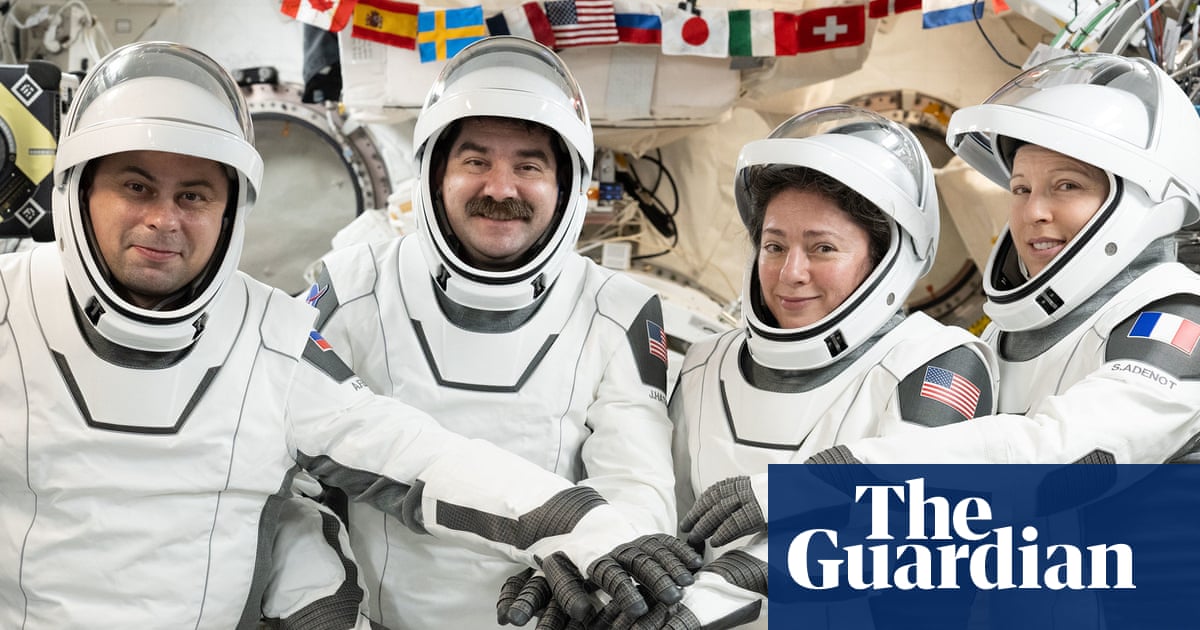
The crew was a diverse international group, representing the United States, the European Space Agency (ESA), and Roscosmos. Each member played a distinct role in the mission’s success, from scientific experimentation to high-stakes orbital maintenance.
| Name | Role | Agency | Notable Contribution |
|---|---|---|---|
| Jessica Meir | Mission Commander | NASA | Conducted 4 spacewalks (27+ hours) |
| Jack Hathaway | Pilot | NASA | Maintained specialized grooming/brand |
| Sophie Adenot | Mission Specialist | ESA | Conducted 3 spacewalks |
| Andrey Fedyaev | Mission Specialist | Roscosmos | Mission Specialist |
Individual Contributions and Human Interest
Jessica Meir was a central figure in the mission’s maintenance efforts. She participated in four separate spacewalks (Extravehicular Activities or EVAs), totaling more than 27 hours of time spent outside the station. Beyond her technical duties, Meir provided a unique cultural contribution, joining the Boston Pops via the station to play the piccolo during a Fourth of July concert.
Jack Hathaway, the mission pilot, became a minor sensation among ground controllers for his perfectly groomed naval aviator-style mustache. Hathaway noted in August that the mustache had become part of his “brand” while in orbit, noting that maintaining it in weightlessness was no more difficult than on Earth.
Sophie Adenot of the ESA was also instrumental in the station’s upkeep, completing three spacewalks focused on hardware upgrades and maintenance of the aging 28-year-old outpost.

Scientific and Operational Impact
The SpaceX Crew-12 mission was not merely a relief effort; it was a period of intense scientific productivity. The crew engaged in dozens of experiments that will influence the next decade of space medicine and engineering.
Biological and Material Research
Orbital Maintenance
As the International Space Station enters its third decade of operation, maintenance is paramount. The seven total spacewalks performed by Meir and Adenot were essential for performing hardware upgrades and ensuring the continued functionality of the station’s life support and power systems.
What It Means for You
The conclusion of the SpaceX Crew-12 mission has practical implications for several different groups:
Counterpoints and Open Questions
Despite the mission’s success, several challenges and unanswered questions remain. The three-week delay caused by capsule repairs highlights a potential vulnerability in the current rapid-rotation model. While the specific nature of the repairs was not detailed in public reports, the delay underscores the ongoing technical scrutiny required to ensure spacecraft reliability.
Furthermore, the aging nature of the International Space Station presents a continuous risk. At 28 years old, the outpost requires increasingly frequent and complex spacewalks to maintain operational integrity. The recent medical emergency involving Mike Fincke also serves as a reminder that even with advanced training, the human element remains the most unpredictable variable in spaceflight.
Questions persist regarding how NASA and its partners will manage future medical emergencies in orbit. While the Crew-12 mission successfully mitigated the crisis, the event has prompted discussions about the necessity of more robust medical evacuation protocols for long-duration missions.
What Happens Next
The departure of Crew-12 makes way for the Crew-13 mission, which is currently scheduled for a six-month rotation aboard the ISS. This incoming crew will continue the scientific research and maintenance work established by their predecessors.
Observers will be watching for several key signals in the coming months:
Frequently Asked Questions
Who were the members of the SpaceX Crew-12 mission?
The international crew consisted of four astronauts: Jessica Meir (NASA, USA), Jack Hathaway (NASA, USA), Sophie Adenot (ESA, France), and Andrey Fedyaev (Roscosmos, Russia).
Why was this mission considered a medical relief mission?
The Crew-12 mission was launched to replace a previous crew that had to be sent home early following a medical emergency involving NASA astronaut Mike Fincke. This was the first medical evacuation in NASA’s 65-year history of human spaceflight.
What did the astronauts study while on the International Space Station?
The crew conducted extensive research in several fields, including biological studies on stem cells and bone loss in microgravity, and material science research focused on crystal growth in a space environment.
How many spacewalks did the crew perform?
Jessica Meir performed four spacewalks, totaling over 27 hours of extravehicular activity (EVA). Sophie Adenot performed three spacewalks to assist with station maintenance and upgrades.
Closing
The successful splashdown of the SpaceX Crew-12 mission marks the end of a high-stakes, eight-month chapter in human spaceflight
References
Featured image: Photo by Nothing Ahead on Pexels

One thought on “SpaceX Crew-12 Mission: Inside the Successful Return”