The lunar occultation of jupiter provided a breathtaking celestial spectacle on Tuesday, October 6, 2026, as a slender crescent moon passed directly in front of the gas giant. This rare alignment, where one celestial body obscures another from the perspective of an observer on Earth, was visible to millions of stargazers across several continents, marking a significant moment for both casual observers and professional astrophotographers.
Key Takeaways
- event Timing: The occultation took place on the night of October 6, 2026.
- Visibility Path: The full occultation was observable across North America, Western Africa, and the Atlantic Ocean.
- Celestial Mechanics: A 20%-lit crescent moon moved across the face of Jupiter, briefly hiding the planet and its moons.
- Photographic Achievement: Amateur and professional photographers successfully captured the event, balancing the extreme brightness of the moon with the subtle light of Jupiter and its four largest moons.
- Scientific Interest: The event highlighted the parallax effect, allowing observers outside the direct path to see Jupiter positioned near the moon.
- For Casual Observers: Even if you miss the direct path of an occultation, the parallax effect means you can still see spectacular close approaches. Always check your local sky charts for the specific path of totality versus the visible proximity path.
- For Astrophotographers: This event highlights the importance of mastering exposure settings. Learning to balance the high dynamic range between a sunlit moon and a distant planet is a foundational skill for capturing complex celestial events.
- For Equipment Enthusiasts: The variety of tools used—from large Dobsonian telescopes to specialized Maksutov-Cassegrain setups—shows that there is no single “correct” way to observe the sky, provided your gear is matched to your specific goals (e.g., high-speed video vs. long-exposure stills).
- Upcoming Planetary Guides: The October 2026 guide suggests watching for Saturn’s brightness and Mars’s movement near the Beehive cluster.
- Lunar Cycles: Monitoring the moon’s phases will be critical for identifying future opportunities where a crescent moon might provide the necessary dark background to highlight nearby planets.
- Technological Advancements: As smart telescopes and more accessible astronomy cameras become more common, the ability for the general public to capture high-quality occultation data will likely increase.
- www.space.com
What Happened: The October 6 Alignment
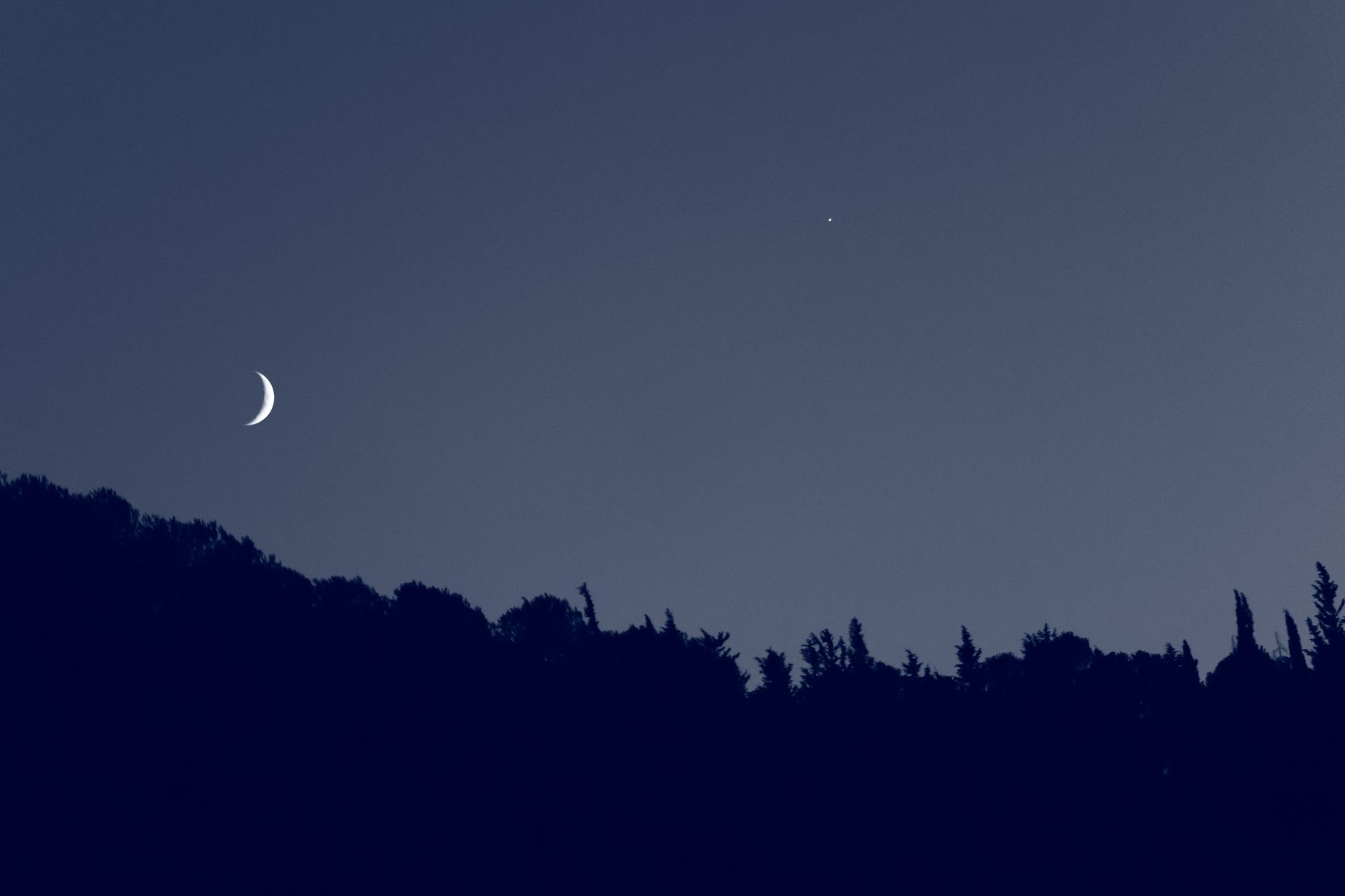
On Tuesday, October 6, 2026, the solar system presented a dramatic visual display as the moon performed a lunar occultation of Jupiter. As the moon’s thin, 20%-lit crescent moved through the night sky, it crossed the orbital path of Jupiter, the largest planet in our solar system. For those positioned within the specific path of the occultation—spanning much of North America, the Atlantic Ocean, and parts of Western Africa—the planet appeared to vanish behind the lunar disk.
This event was not merely a disappearance but a complex dance of orbital mechanics. While the primary path saw the planet completely obscured, observers located outside this direct line of sight still witnessed a remarkable proximity between the two bodies. This was due to the parallax effect, a phenomenon where the apparent position of a nearby object (the moon) shifts relative to a distant object (Jupiter) depending on the viewer’s specific location on Earth. Even for those who did not see Jupiter disappear, the moon appeared to pass just degrees away from the gas giant, creating a striking visual pairing.
Why It Matters: The Intersection of Science and Art
The significance of the lunar occultation of Jupiter extends beyond simple skywatching. For astronomers, such events provide opportunities to observe the precise timing of celestial movements, which helps refine our understanding of orbital paths. For the broader public, it serves as a reminder of the dynamic and ever-changing nature of our solar system.
However, the event also serves as a rigorous test for the field of astrophotography. Capturing an occultation requires more than just a steady hand; it demands an understanding of light physics, rapid-fire timing, and advanced optical equipment. As the moon and Jupiter move at different apparent speeds across the sky, photographers are forced to push the limits of their gear to freeze a moment that is both incredibly bright (the sunlit moon) and incredibly faint (the moons of Jupiter).
The Science Behind the Lunar Occultation of Jupiter
To understand why this event was so difficult to document, one must look at the physics of light and motion involved. An occultation is a specific type of astronomical event where a foreground object blocks the light of a background object. Unlike an eclipse, where the celestial bodies are often much larger or more centrally aligned, an occultation can involve a small, slender object like a crescent moon passing in front of a massive planet.
The Challenge of Luminance
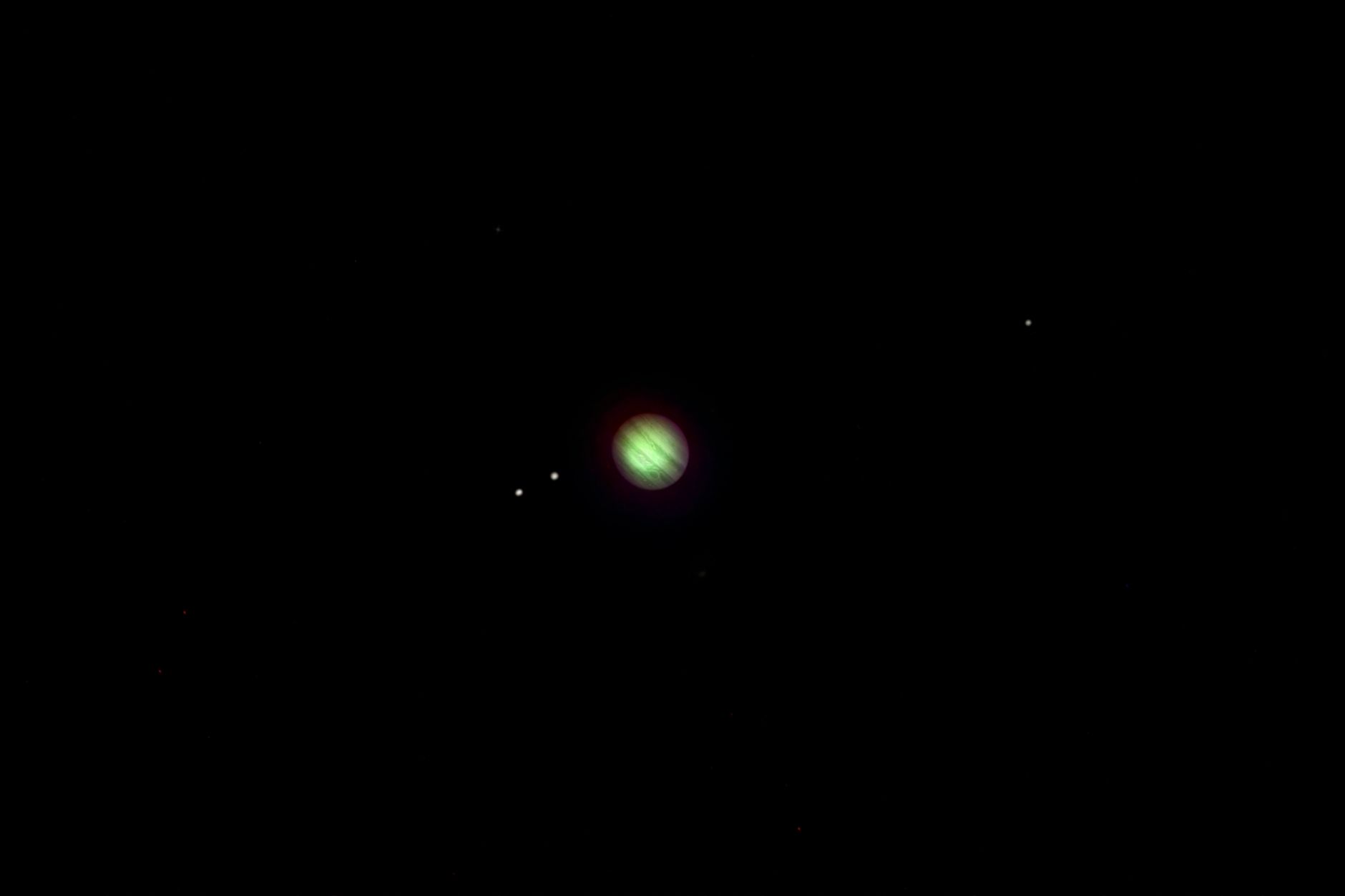
One of the primary technical hurdles identified by observers is the extreme difference in luminance. The sunlit portion of the moon is highly reflective, while Jupiter and its moons, such as Io, Europa, Ganymede, and Callisto, are significantly dimmer.
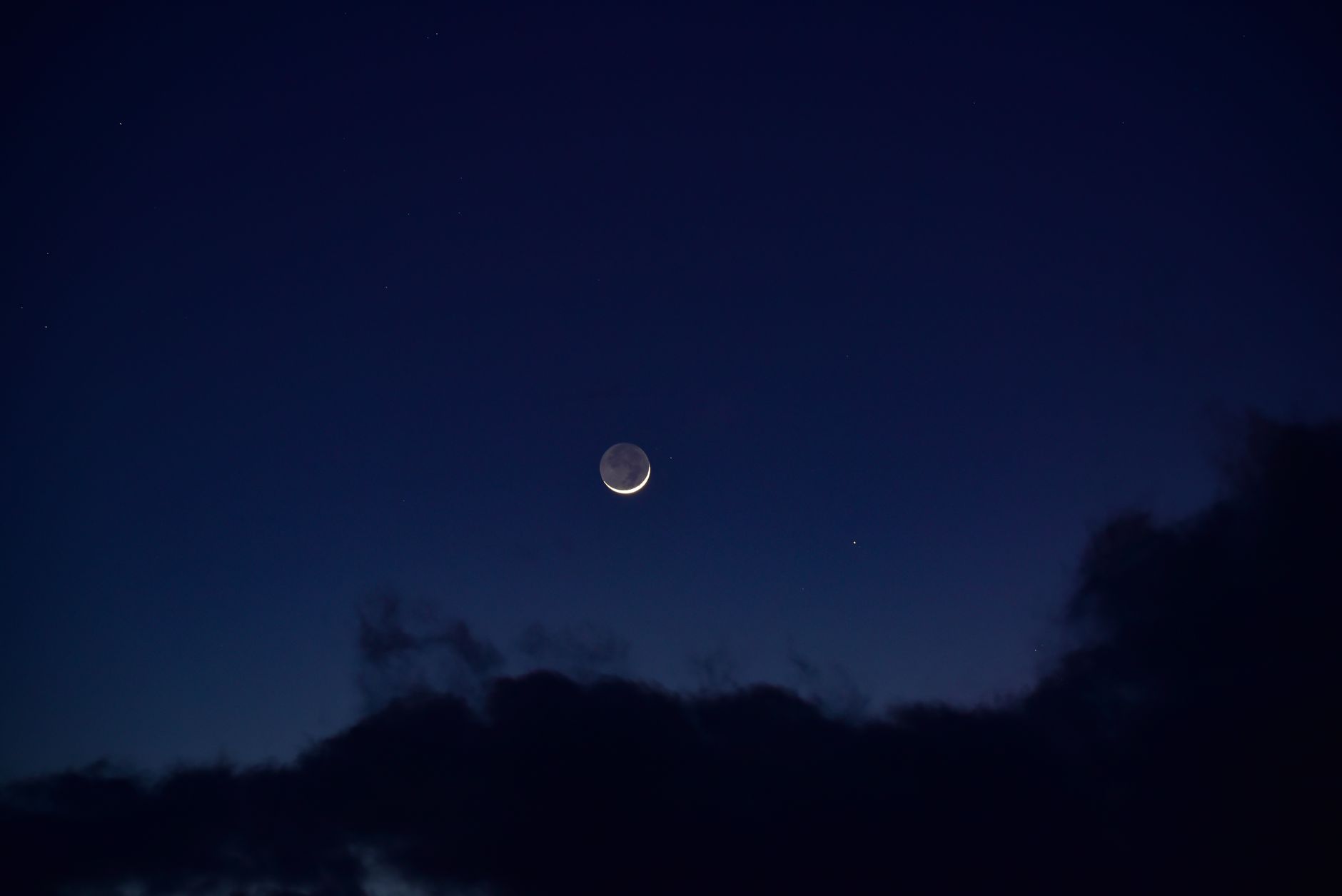
Peter Zay, a photojournalist who captured the event in North Carolina, noted the difficulty in finding a middle ground for exposure. According to Zay, a setting that is perfect for revealing the 20% sunlit arc of the moon would often fail to reveal the four Galilean moons of Jupiter. Success required a delicate balance to ensure that lunar craters, earthshine, and the background stars were visible without blowing out the highlights of the moon or losing the planet in the shadows.
Orbital Motion and Stacking
Another complication arises from the relative motion of the two objects. In many forms of astrophotography, a technique called “stacking” is used, where multiple images are combined to reduce noise and increase detail. However, as Steven Bellavia explained to Space.com, stacking does not work effectively when two objects are moving at different rates across the sensor.
Bellavia, observing from Potters County, Pennsylvania, utilized an Explore Scientific 152mm Maksutov-Cassegrain telescope paired with a ZWO ASI 662MC astronomy camera. To combat the motion, he relied on high-speed video recording (SER videos) and selected the best single 50-millisecond capture rather than attempting to stack multiple frames. This approach ensured that the planet and moon remained sharp despite their independent movements.
Perspectives from the Field: The Photographers’ Experience
The October 6 event drew a wide array of observers, each utilizing different methods to document the celestial rendezvous.
| Photographer | Location | Primary Equipment | Key Observation |
|---|---|---|---|
| Peter Zay | North Carolina | Professional DSLR/Mirrorless | Captured Jupiter’s emergence from the lunar shadow |
| Steven Bellavia | Potters County, PA | 152mm Maksutov-Cassegrain & ZWO ASI 662MC | Focused on high-speed single-frame captures |
| Josh McCollum | Emmaus, PA | Skywatcher 400P & Celestron C11 Schmidt Cassegrain | Observed Ganymede and the moons’ return |
| EricTheCat | Minnesota | Social Media/Mobile/Telescope | Captured time-lapse and moon/earthshine details |
Josh McCollum, observing from Emmaus, Pennsylvania, reported that despite non-ideal atmospheric conditions, the visibility of Jupiter’s moons was a highlight. Using a Skywatcher 400P Flextube dobsonian and a Celestron C11 Schmidt Cassegrain, McCollum noted that Europa and Io were the first to emerge from behind the moon’s silhouette, followed by Jupiter itself. He described the sight of the moon’s silhouette as Jupiter “stepped back into our night sky” as an “extremely surreal” experience.
What It Means for You
If you are an amateur astronomer or a budding astrophotographer, the lunar occultation of Jupiter offers several practical lessons:
Counterpoints and Open Questions
While the event was a success for many, it was not without its limitations. Atmospheric conditions played a significant role in the quality of the observations. As Josh McCollum noted, atmospheric turbulence can obscure fine details, making it difficult to see the surface features of Jupiter even when the planet is clearly visible.
Furthermore, there is an ongoing debate in the astrophotography community regarding the use of composite images. While many photographers, such as Peter Zay, advocate for “authentic captures” that avoid composite exposures to maintain journalistic integrity, others argue that composites are necessary to truly represent the human eye’s ability to perceive both the bright moon and the dim planet simultaneously. This tension between scientific accuracy and visual representation remains an open question in the hobby.
What Happens Next
As the 2026 celestial calendar progresses, stargazers should look for other planetary alignments. While the lunar occultation of Jupiter was a standout event for October, the solar system continues to shift.
Observers should keep an eye on:
Frequently Asked Questions
What is a lunar occultation?
A lunar occultation occurs when the moon passes in front of a celestial object, such as a planet or a star, from the perspective of an observer on Earth. Because the moon has a visible disk, it can completely hide the background object for a period of time. In the case of the October 6, 2026, event, the moon’s crescent shape provided a dramatic backdrop for Jupiter.
Why couldn’t everyone see Jupiter disappear?
Whether or not Jupiter disappears depends on your exact location on Earth. Because of the parallax effect, the moon appears to be in a slightly different position depending on where you are standing. Only those in the direct “path of occultation” saw the planet vanish. Those outside that path saw the moon pass near Jupiter, but not directly in front of it.
What are the Galilean moons?
The four moons mentioned in reports—Io, Europa, Ganymede, and Callisto—are the largest moons of Jupiter. They were discovered by Galileo Galilei in the early 17th century. During an occultation, these moons may be hidden by the moon or may emerge from behind it at different times, providing a multi-layered visual experience for observers.
How can I prepare for the next skywatching event?
To prepare, it is helpful to use astronomy apps to track planetary movements and local weather forecasts to ensure clear skies. Investing in basic binoculars or a small telescope can significantly enhance your view of planets and their moons. For those interested in photography, practicing with high-speed video settings is recommended for fast-moving events.
Following the spectacular display on October 6, the astronomical community continues to process the images and data captured during this unique window of orbital mechanics
References
Featured image: Photo by Raoni Aldrich Dorim on Pexels