The apple Huxe AI deal has surfaced through a European Union regulatory filing, revealing a strategic move by the tech giant to absorb specialized talent and intellectual property from the recently shuttered startup, Huxe AI. According to the European Commission’s Digital Markets Act (DMA) transparency database, Apple has secured the right to make employment offers to specific Huxe employees and has obtained a non-exclusive license to the startup’s intellectual property. This transaction, which Apple reportedly notified the bloc of in June 2026, follows the abrupt shutdown of Huxe in late May 2026.
Key Takeaways
- Strategic Talent Grab: Apple is utilizing an “acqui-hire” model to secure key developers from Huxe AI without a full corporate acquisition.
- Expertise Acquisition: The Huxe team consists of former Google NotebookLM developers who specialize in personalized, generative audio content.
- Regulatory Scrutiny: The deal comes as the FTC and DOJ investigate whether “acqui-hires” are being used to bypass traditional merger reviews.
- AI Roadmap: This deal is part of a broader Apple AI strategy focused on voice, vision, and context-aware personal assistants like Siri.
- Rapid Iteration: The Huxe team moved from Google to a successful $4.6 million startup to an Apple-aligned entity in less than two years.
- Acqui-hires: The hiring of key personnel from a startup.
- Reverse acqui-hires: Complex arrangements where talent and IP are exchanged.
- Non-exclusive IP licenses: Deals where a large company pays for the right to use a startup’s technology without owning it.
- FTC Rulemaking Progress: Any formal announcement regarding the new premerger reporting rules will be a major indicator of how much harder it will be for tech giants to conduct acqui-hires.
- Siri Feature Updates: Watch for any new Siri capabilities in upcoming iOS updates that involve personalized audio, summaries, or podcast-style interactions. This will be the first true test of the Huxe integration.
- Apple’s Next AI Transaction: Whether Apple pursues another full acquisition (like Q.ai) or continues with the talent-focused model (like Huxe and Animato) will reveal their long-term appetite for regulatory risk.
- finance.biggo.com
- 9to5mac.com
What Happened: The Huxe AI Arrangement
On June 9, 2026, the European Union’s Digital Markets Act transparency website disclosed details regarding an arrangement between Apple Inc. and Huxe AI, Inc. The filing clarifies that Apple will have the right to hire certain employees of Huxe and will receive a non-exclusive license to the company’s intellectual property.
This specific structure is often referred to in the industry as an “acqui-hire” or, as some reports from NewsCord have characterized it, a “reverse acqui-hire.” Unlike a standard acquisition where one company purchases the entirety of another’s assets and business operations, an acqui-hire focuses on the human capital and specific technological components. This allows the larger entity, in this case, Apple, to integrate high-level talent and specialized IP while avoiding the complexities and regulatory hurdles of a full-scale merger.

Huxe AI, which specialized in creating personalized audio briefings, officially ceased operations on May 28, 2026. Before its shutdown, the company had successfully raised $4.6 million in a funding round in September 2025. While the company’s website stated at the time of its closure that the team was simply “moving on to new things,” the subsequent EU filing provides a much clearer picture of the team’s destination.
Why It Matters: The Battle for Context-Aware AI
The importance of the Apple Huxe AI deal lies in the specific technology being brought into the Apple ecosystem. Huxe AI was not just another chatbot; it was a tool designed to synthesize personal data—such as emails and calendar entries—into natural, podcast-style audio briefings.
For Apple, this represents a significant step toward making Siri AI more proactive and context-aware. Current AI assistants often rely on a command-and-response model, where a user must explicitly ask a question to receive an answer. By integrating the technology developed by the Huxe AI founders, Apple could transition Siri into a proactive assistant capable of summarizing a user’s morning through a personalized audio feed, discussing news or sports in a conversational format, and providing updates based on the user’s unique schedule.
This move highlights a broader shift in the generative AI landscape: the move from text-based interaction to seamless, multi-modal audio experiences. As users become more accustomed to interacting with AI through voice, the ability to generate high-quality, human-like audio that understands personal context becomes a critical competitive advantage.
Deep-Dive: The Journey from Google to Huxe
To understand the value of this deal, one must look at the pedigree of the talent involved. The founding team of Huxe AI includes three veterans from Google’s most successful recent AI experiments.
In December 2024, Raiza Martin, the project lead for Google’s NotebookLM (which has since been renamed Gemini Notebook), departed the search giant. Martin was joined by designer Jason Spielman and engineer Stephen Hughes to form Huxe AI. Their work at Google had focused on an experimental research and note-taking tool that could answer questions based on a user’s own documents. One of the most popular features of that tool was the ability to create “Audio Overviews”—simulated, podcast-style conversations between two AI personas discussing a set of documents.
Huxe AI took this concept and expanded it. Instead of just summarizing documents, the Huxe app was designed to listen to a user’s digital life. It could take a chaotic inbox and a crowded calendar and turn them into a coherent, spoken briefing.
Apple’s Aggressive AI Acquisition Timeline
Apple has not relied solely on Huxe to bolster its AI capabilities. The company has been engaged in a series of rapid-fire transactions to secure leadership in the generative AI space. The following table compares Apple’s most significant recent AI-related moves:
| Transaction | Entity | Structure | Primary Focus |
|---|---|---|---|
| Q.ai Acquisition | Q.ai (Israel) | Full Acquisition | Facial movement and whispered speech recognition |
| Animato Agreement | Animato | Talent & IP Licensing | AI-generated avatars and digital personas |
| Huxe AI Arrangement | Huxe AI | Acqui-hire & IP Licensing | Personalized audio and podcast-style AI |
While the Q.ai acquisition in January 2026 was a massive, $2 billion deal focused on the intersection of vision and speech, the Huxe and Animato deals show a more surgical approach to talent acquisition. Apple is picking specific, high-value teams to solve specific problems within its ecosystem.
AI Acqui-hire Regulation: A Growing Legal Conflict
The way Apple has structured the Huxe AI deal is precisely what has drawn the attention of United States regulators. For years, large technology companies have used acqui-hires to bring in top-tier talent without triggering the intense scrutiny that accompanies large-scale mergers.

Critics argue that these arrangements allow Big Tech to effectively “roll up” potential competitors before they can grow large enough to be considered a threat to market competition. Because these deals do not technically involve the purchase of a business entity, they often fall below the monetary thresholds that require mandatory reporting to antitrust authorities.
FTC Chair Andrew Ferguson has been vocal about this trend. In January 2026, Ferguson stated that the Federal Trade Commission would begin to “examine such arrangements [acqui-hires] more closely.” Furthermore, in March 2026, the FTC and the Department of Justice (DOJ) formally began seeking public comment on new premerger reporting rules. These proposed rules are specifically designed to address:
While there has been little official movement on these rules since the comment period, the Huxe AI deal serves as a real-world example of the exact type of transaction that regulators are looking to bring under their microscope.
What It Means for You
The implications of the Apple Huxe AI deal vary depending on which part of the tech ecosystem you inhabit.
For Consumers and Apple Users
If you are an iPhone or Mac user, expect a significant evolution in how you interact with your devices. The integration of Huxe’s technology likely means that Siri will move away from being a tool you “talk to” and toward being a tool that “talks with you.” You may soon see features that provide a morning audio summary of your day, or the ability to ask Siri to “summarize my recent emails about the upcoming trip in a podcast format.” This could make personal organization much more hands-free and natural.
For Tech Investors and Startup Founders
For those in the venture capital and startup space, this deal underscores the viability of the “acqui-hire” as a legitimate exit strategy. Even if a startup like Huxe AI fails to achieve long-term independent scale or struggles to maintain its funding, its underlying talent and IP remain highly valuable to the industry giants. However, the increasing scrutiny from the FTC means that founders must be more transparent about their deal structures to avoid legal complications.
For AI Developers
For developers, the movement of the Huxe team suggests that specialized expertise in audio synthesis and personal context is currently one of the most sought-after skills in the industry. The ability to bridge the gap between large language models (LLMs) and natural, human-like audio output is a frontier that the largest players in tech are willing to pay a premium to control.
Counterpoints and Open Questions
Despite the strategic logic behind the deal, several questions and risks remain unaddressed.
First, there is the question of regulatory blowback. If the FTC or DOJ successfully implements the proposed new reporting rules, Apple’s ability to quickly absorb talent through these non-traditional deals could be significantly hampered. This would increase the cost and time required for Apple to integrate new AI capabilities.
Second, there is the issue of product integration. It remains unconfirmed whether Huxe’s technology will be integrated into the core iOS operating system, used to power a new standalone service, or simply used to improve the underlying models that drive Siri. The lack of detail in the EU filing leaves much to speculation.
Finally, there is the competitive landscape. While Apple is making aggressive moves, competitors like Google (with Gemini) and OpenAI are also racing to dominate the personalized audio space. Whether Apple’s “acqui-hire” strategy can outpace the massive R&D budgets of its rivals is an open question.
What Happens Next
As the industry watches Apple’s next moves, several key signals will indicate the direction of the AI arms race:

Frequently Asked Questions
What is an acqui-hire?
An acqui-hire is a type of corporate transaction where a larger company acquires a startup primarily to recruit its talented employees, rather than to absorb its products or customer base. Often, these deals also include licenses to the startup’s intellectual property, allowing the larger company to utilize the technology the team developed without a full business merger.
Who were the founders of Huxe AI?
Huxe AI was founded by Raiza Martin, a former project lead for Google’s NotebookLM, along with designer Jason Spielman and engineer Stephen Hughes. All three were part of the original development team behind Google’s highly popular AI research and note-taking tool.
Why did Huxe AI shut down?
While the company’s official statement at the time of its closure on May 28, 2026, was vague—stating the team was “moving on to new things”—the subsequent EU filing suggests that the company’s assets and talent were transitioned to Apple through a strategic arrangement rather than a traditional business failure.
How does this deal affect Siri?
While Apple has not officially confirmed the details, the deal is widely expected to bolster Siri’s ability to understand and generate personalized audio. This could lead to Siri providing more proactive, conversational, and context-aware updates, such as daily audio briefings based on your personal calendar and emails.
Apple’s arrangement with Huxe AI is a clear signal of the company’s intent to lead in the realm of personalized, generative audio. As the line between human conversation and machine intelligence continues to blur, the talent and technology secured in this deal may become a cornerstone of the next generation of personal computing.
References
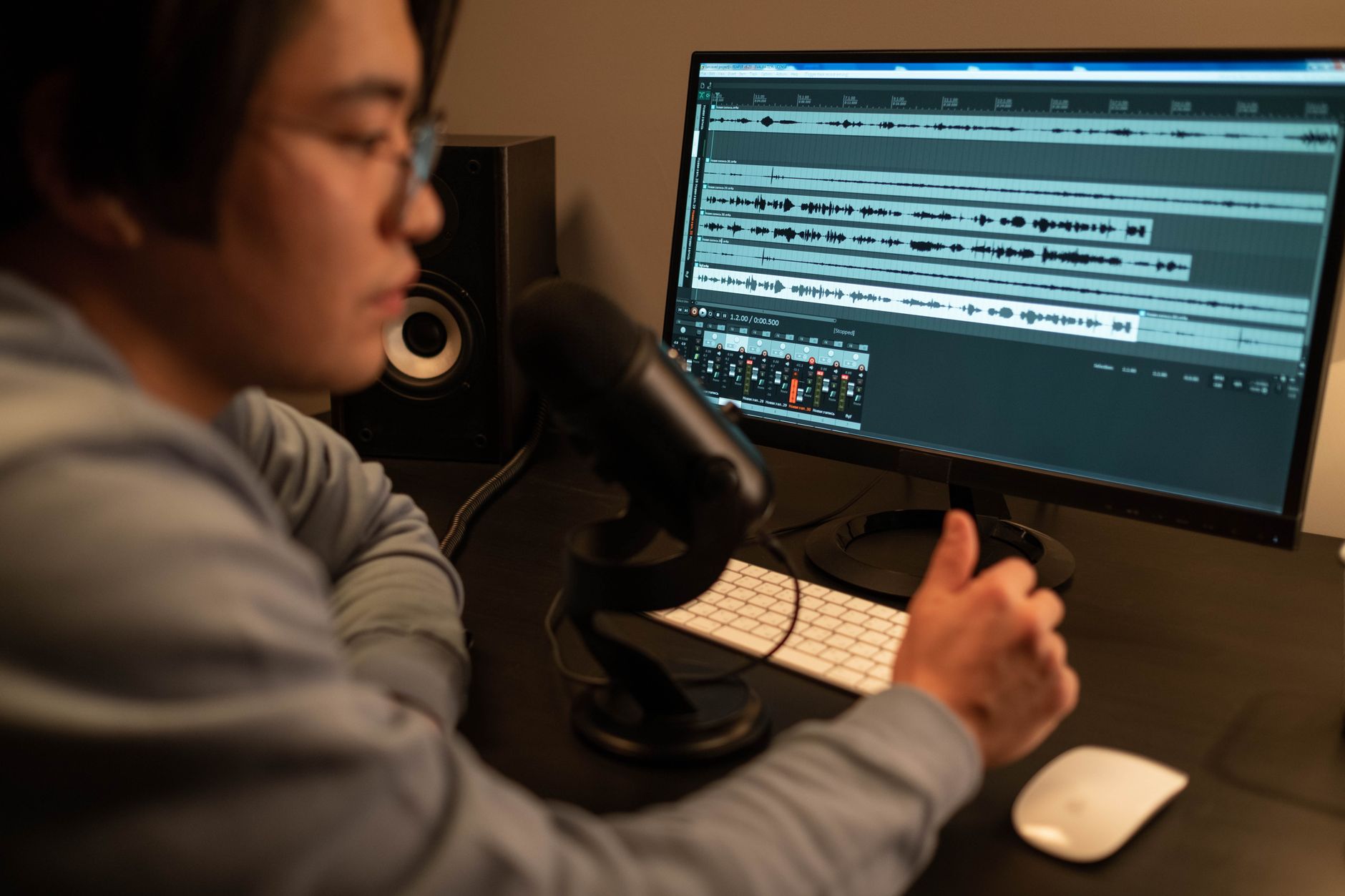
Featured image: Photo by cottonbro studio on Pexels