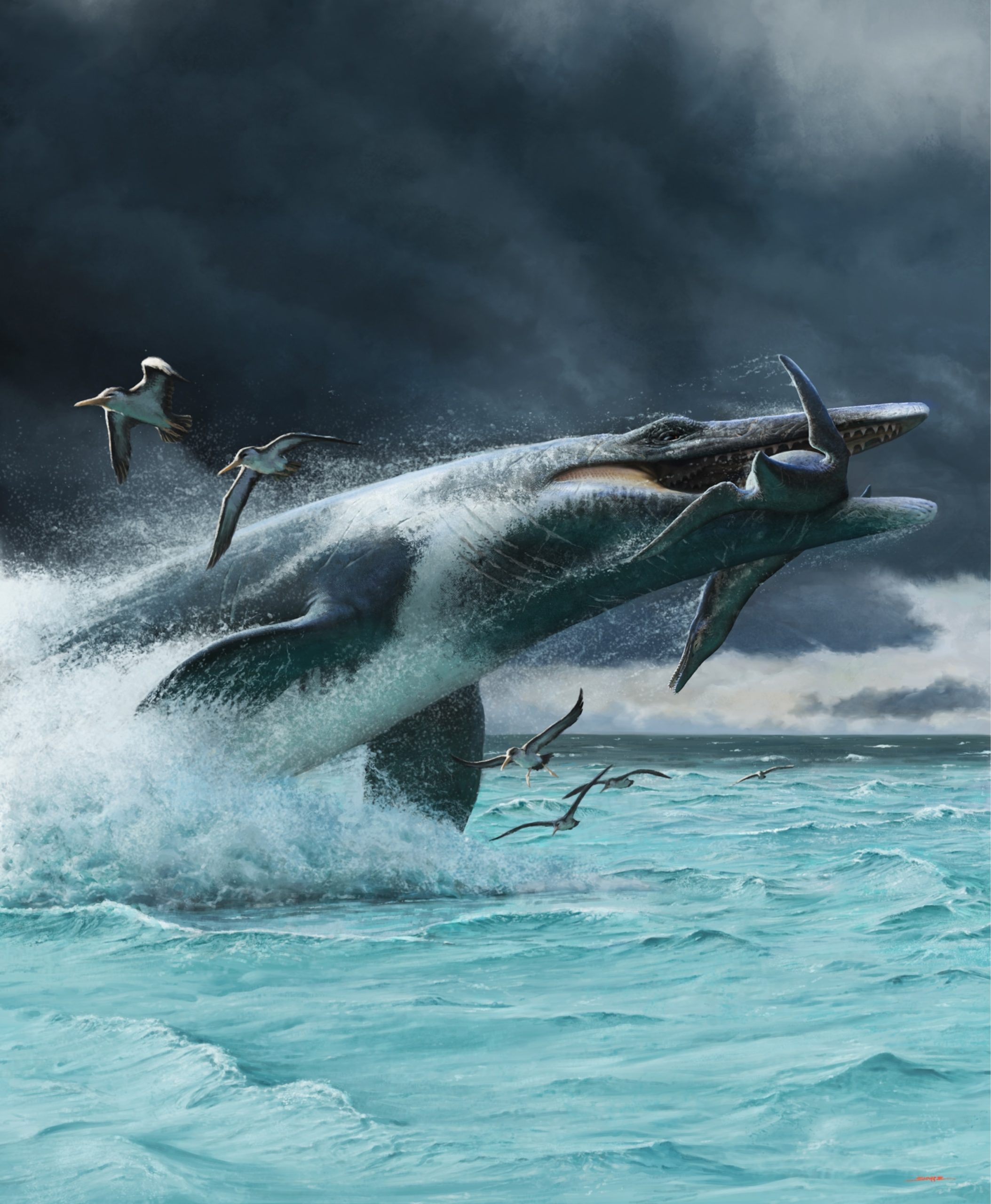
new research into mosasaur swimming capabilities has revealed that these Cretaceous apex predators were far more efficient and explosive hunters than previously understood, with some species capable of lunging at speeds that surpass modern great white sharks.
Key Takeaways
- Enhanced Efficiency: Mathematical modeling shows mosasaurs were dynamic, efficient swimmers rather than slow, serpentine creatures.
- Extreme Lunge Speeds: The massive Tylosaurus rex could potentially lunge at 15 miles per hour, exceeding the 11 mph burst speed of a great white shark.
- Evolutionary Divergence: Mosasaurs split into two distinct lineages: long-tailed ambush predators and short-tailed pursuit predators.
- New Biomechanical Models: Researchers used museum fossils and digital scaling to reconstruct the movement of extinct marine titans.
- Ecological Impact: This specialized hunting allowed different mosasaur families to dominate different oceanic niches, from shallow coasts to the deep open sea.
- Platecarpus: Identified as the “zippiest” member of the family, possessing the highest acceleration capabilities.
- Tylosaurus proriger: A formidable predator capable of rapid bursts.
- Tylosaurus rex: A massive titan, comparable in size to a humpback whale, capable of devastating lunges.
- Plotosaurus: A specimen used extensively in the study’s measurements.
- Mosasaurus: The genus that defines the family, including the massive Mosasaurus hoffmannii.
- For Students and Educators: This research serves as a prime example of how interdisciplinary science—combining biology, physics, and mathematics—can overturn long-held academic dogmas.
- For Science Enthusiasts: The study provides a new framework for visualizing prehistoric life, moving away from the “slow monster” tropes of early cinema toward a more accurate, high-octane reality.
- For the Scientific Community: The methodology established by Formoso and her team provides a blueprint for studying other extinct megafauna, potentially unlocking the secrets of how other massive predators operated.
- www.nationalgeographic.com
- www.yahoo.com
What Happened
On Wednesday, October 8, 2026, a groundbreaking study was published in the journal Current Biology, fundamentally altering the scientific community’s perception of the Cretaceous period’s most feared marine reptiles. The research, led by Kiersten Formoso, a vertebrate paleontologist at Rutgers University in New Jersey, utilized a combination of physical fossil measurements and advanced mathematical modeling to reconstruct the swimming mechanics of the mosasaur family.
For over a century, the prevailing scientific consensus was that mosasaurs moved through the water in a serpentine, eel-like fashion. This theory was based on the observation that their tails lacked the specialized structures seen in modern high-speed swimmers like sharks or dolphins. However, the new data suggests that these reptiles were actually highly specialized predators with distinct, optimized swimming styles tailored to their specific environments.
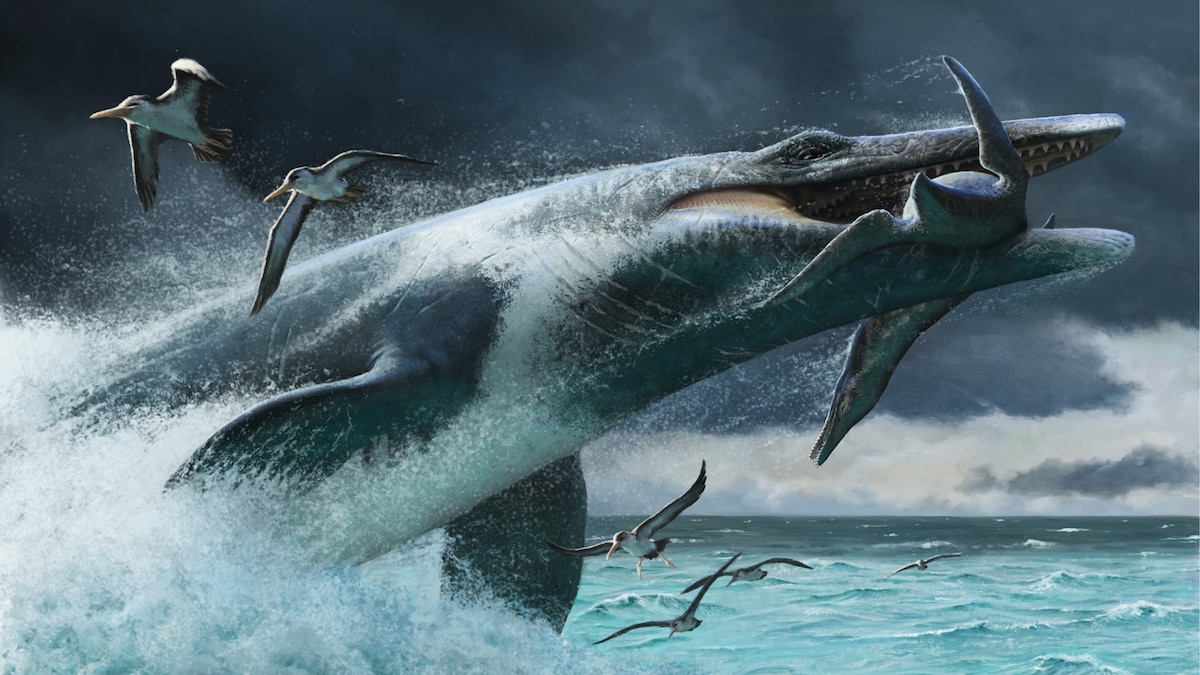
By analyzing the skeletons of multiple specimens—including those housed at the Natural History Museum of Los Angeles County—the team demonstrated that mosasaur anatomy allowed for much more efficient propulsion than the “crocodile-style” swimming previously assumed.
Why It Matters
The implications of this study extend far beyond simple speed statistics. Understanding the mosasaur swimming capabilities provides a clearer window into the complex food webs of the Cretaceous oceans. The ability of these reptiles to reach such high burst speeds explains how they were able to maintain their status as apex predators, capable of taking down large fish, plesiosaurs, and even smaller mosasaur species.
Furthermore, the study highlights the power of biomechanical modeling in paleontology. By applying mathematical principles to fossilized remains, scientists can move beyond mere visual estimation and begin to quantify the actual physical impact these animals had on their ecosystems. The discovery that a Tylosaurus rex could strike with the force of a “car or even a bus,” as Formoso described it, changes how we conceptualize the energy dynamics of prehistoric marine environments.
The Great Evolutionary Split: Ambush vs. Pursuit
The research identifies a critical divergence in the mosasaur family tree, categorizing them into two primary lineages: the Russellosaurines and the Mosasaurines. This split was not merely anatomical; it represented a fundamental difference in how these animals interacted with their prey.
The Russellosaurines: The Ambush Specialists
The Russellosaurine lineage is characterized by relatively long tails and V-shaped snouts. This body plan was optimized for sudden, violent acceleration. According to the study, these animals were likely ambush predators that lurked along the seabed in shallower waters, waiting for the perfect moment to strike.
Key species in this group include:
The Mosasaurines: The Open-Ocean Cruisers
In contrast, the Mosasaurine lineage evolved toward efficiency and endurance. These reptiles possessed proportionally shorter tails and heavier, more robust snouts. Rather than relying on a single, explosive strike, they were built for the long game.
Key species in this group include:
These shorter-tailed hunters likely occupied the deep, open-ocean environments, utilizing a pursuit hunting strategy similar to modern mako sharks or tuna. They were built to cruise efficiently over vast distances, chasing down prey rather than waiting for it to pass by.
Biomechanical Performance Data
The following table compares the estimated performance metrics of key mosasaur species against the modern great white shark, based on the mathematical models presented in the Current Biology study.
| Specimen/Comparison | Hunting Strategy | Estimated Lunge/Burst Speed | Movement Style | |
|---|---|---|---|---|
| Platecarpus | Ambush | Highest Acceleration | High-burst lunge | Tail-driven snap |
| Tylosaurus rex | Ambush | ~15 mph (23 ft/s) | High-speed lunge | Tail-driven lunge |
| Mosasaurus | Pursuit | ~13–16 ft/s | Efficient cruising | Sustained swimming |
| Plotosaurus | Pursuit | ~13–16 ft/s | Efficient cruising | Sustained swimming |
| Great White Shark | Burst | ~11 mph (16 ft/s) | Sudden burst | Modern predatory burst |
Stakeholder Reactions and Expert Analysis
The scientific community has reacted with significant interest to the findings, noting the study’s ability to breathe life into fossilized remains.
Kiersten Formoso, the lead researcher, emphasized the underestimated lethality of these creatures. “People really underestimate the scariness of a forward lunge,” she stated. “Getting caught in the lunge of one of these mosasaurs would be like getting hit by a car, or even a bus.”
Mike Polcyn, a mosasaur expert from Southern Methodist University who was not involved in the study, offered a perspective on the evolutionary competition between the two lineages. Polcyn noted that the long-tailed Russellosaurines were the first to achieve massive sizes and dominated the shallow seas through their ambush tactics. This pressure likely forced the shorter-tailed Mosasaurines to adapt to the deep ocean, evolving the pursuit-hunting capabilities that eventually allowed the Mosasaurus genus to thrive.
“That sustained swimming performance as a pursuit predator instead of an ambush predator might have ultimately led to the demise of Tylosaurus in favor of the large Mosasaurus,” Polcyn suggested.
Amelia Zietlow, a paleontologist at the History Museum of the Castle in Wisconsin, praised the study for its holistic approach. She described the work as “a valuable contribution to how we understand mosasaurs as once living, breathing animals.”
What It Means for You
While the study of Cretaceous reptiles might seem distant from daily life, it has profound implications for how we understand the history of life on Earth.
Counterpoints and Open Questions
Despite the strength of the findings, the study is not without its limitations. It is important to note that the speeds cited—such as the 15 mph lunge for Tylosaurus rex—are estimates derived from mathematical models rather than direct observations. While these models are grounded in physical fossil data, they represent a theoretical maximum of what the animals’ anatomy could support.
Furthermore, some researchers may question the extent to which tail morphology alone dictates hunting strategy. While the correlation between tail length and swimming style is strong, other factors such as metabolic rates, sensory capabilities, and even social behaviors could have played significant roles in how these animals hunted.
There also remains the question of exactly how much of the Mosasaurine’s efficiency was due to their tail shape versus other physiological adaptations that do not fossilize well, such as muscle density or lung capacity.
What Happens Next
The research team is already looking toward the next phase of their investigation. Formoso indicated that the mathematical framework used in this study is highly adaptable. Researchers intend to apply these same biomechanical models to other specialized mosasaurs, such as the shell-crushing Globidens and the large-toothed Prognathodon.
Beyond extinct species, the team is also looking at modern marine giants. Formoso noted that these methods could eventually be applied to studying the movement and ecological roles of elusive modern animals like Sei whales, which are difficult to observe in the wild but possess well-documented skeletal structures.

Frequently Asked Questions
How fast could a mosasaur actually swim?
According to the mathematical models in the recent study, some mosasaurs like the Tylosaurus rex could lunge at speeds of approximately 15 miles per hour (23 feet per second). This is significantly faster than the burst speed of a modern great white shark, which is estimated at roughly 11 miles per hour. However, it is important to remember these are estimated peak speeds based on biomechanical modeling.
What is the difference between Russellosaurines and Mosasaurines?
These are the two primary lineages of mosasaurs. Russellosaurines had longer tails and V-shaped snouts, making them high-acceleration ambush predators suited for shallow waters. Mosasaurines had shorter tails and heavier snouts, which optimized them for efficient, long-distance cruising in the deep, open ocean as pursuit predators.
Why did scientists previously think mosasaurs were slow?
Until the 2010s, paleontologists believed mosasaurs moved in a serpentine, eel-like fashion. This was because their fossilized skeletons did not show the specialized tail fins seen in modern fast swimmers like sharks. Recent anatomical reassessments have since shown they had much stiffer bodies and shark-like tail fins, making them far more efficient swimmers than once thought.
How do scientists estimate the speed of an extinct animal?
Scientists use a combination of physical measurements from museum fossils and mathematical modeling. By measuring the dimensions of bones and tail structures, they can calculate the potential force and acceleration those structures could have produced, allowing them to reconstruct the animal’s movement patterns and hunting capabilities.
Closing
The era of viewing mosasaurs as sluggish, serpentine lizards is officially over. Through the rigorous application of biomechanics and mathematical modeling, researchers have revealed a world of high-speed pursuit and explosive ambush tactics
References
Featured image: Image via Science