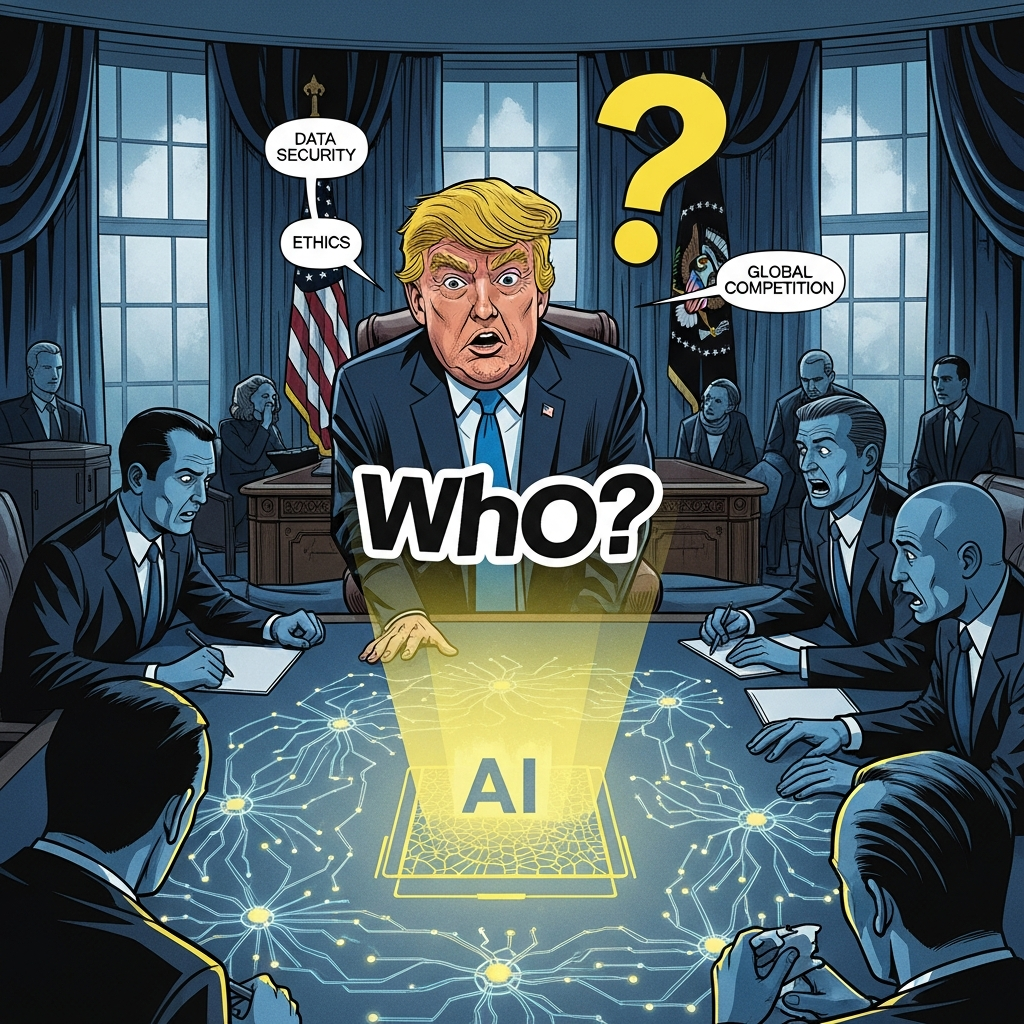
The discourse surrounding artificial intelligence has dramatically shifted, leaving many grappling with its true implications. Once sounding the alarm on AI existential risks, the very leaders pioneering this powerful technology are now urging a calmer outlook. This pivot raises critical questions: Were the initial dire warnings genuine predictions or a strategic maneuver? And what are the real consequences when powerful figures play fast and loose with humanity’s future? This article dives into the complex, often contradictory, narrative spun by AI doomers and tech titans alike, examining the impacts on public perception, policy, and safety.
The Shifting Sands of AI Warnings and Their Real-World Impact
When OpenAI’s ChatGPT catapulted into public consciousness in late 2022, it swiftly brought an urgent conversation about AI’s darker potentials to the mainstream. Top AI companies and their executives, far from downplaying concerns, actively warned that they were unleashing a radical technology with “imminent risks to society,” even claiming it held the power to “destroy the entire world.” This initial alarmist rhetoric, some argue, served a dual purpose: to attract attention and investment, and to preemptively lobby for “light” regulation while simultaneously hawking their advanced software to governments.
Fast forward to today, and the message has flipped. These same executives are now attempting to dial back the panic. Chris Lehane, OpenAI’s global policy chief, recently described much of the public conversation as “irresponsible” and “out of hand,” stating, “This is not fun and games… This is really serious shit.” Lehane is actively working to reshape the AI narrative, aiming to highlight its potential benefits for everyday Americans.
This tension recently escalated into real-world consequences, starkly underscored by attacks on OpenAI CEO Sam Altman’s home. Daniel Moreno-Gama, a 20-year-old from Texas, was charged with throwing a Molotov cocktail at Altman’s residence. Moreno-Gama, reportedly carrying an anti-AI “document” and expressing existential fears about AI development, was a member of PauseAI, an international group advocating non-violent protest. While PauseAI stated his messages contained no violent language, Lehane found the group’s subsequent deletion of some messages “telling.” A second, unconfirmed incident involving a shooting near Altman’s home remains under investigation, though initial suspects have been released. These events underscore the dangerous line between rhetoric and real-world actions.
Leaders’ Contradictory Voices on AI Threats
The challenge in calming public fears is compounded by the conflicting messages from the very people building these systems. Sam Altman, a central figure in the AI regulation debate, has a documented history of making alarmist statements. As early as 2015, Altman remarked, “I think that AI will probably, most likely, sort of lead to the end of the world.” He has also warned about AI’s potential to “design novel biological pathogens” and signed letters about the “risk of extinction.” Yet, in a striking paradox, he simultaneously advocates for the U.S. to lead in developing these potentially catastrophic technologies, arguing that leaving it to geopolitical adversaries poses even greater risks.
Attempting to verify some of Altman’s past statements, such as a supposed “lights-out for all of us” quote, reveals further complexities. When asked, ChatGPT inaccurately claimed Altman hadn’t appeared on the Joe Rogan podcast, despite his documented appearance. While ChatGPT provided similar quotes like “This could go really, really wrong,” the specific “lights-out for all of us” phrase was found in a StrictlyVC podcast interview, not Rogan’s. This illustrates how even AI systems can fall short in accurately representing past rhetoric, potentially failing users in their lived experience.
Other AI company leaders echo similar concerns. Dario Amodei, CEO of Anthropic, has cautioned that “Humanity is about to be handed almost unimaginable power, and it is deeply unclear whether our social, political, and technological systems possess the maturity to wield it.” Amodei has expressed deep concern over “AI-enabled authoritarianism” and the potential for anyone with a STEM degree to create bioweapons with AI assistance, strongly advocating for robust guardrails. In a significant act of industry caution, Anthropic withheld its latest model, Mythos, from public release due to cybersecurity and geopolitical impact concerns, instead making it available for internal vulnerability review under “Project Glasswing.” This proactive measure stands in stark contrast to the initial “move fast and break things” ethos.
It begs the question: If an executive claims they’ve built a tool capable of ending the world, why are they met with calls for “light regulation” instead of facing more severe consequences, as might happen with other dangerous technologies?
Beyond Extinction: The Economic Fallout and the UBI Debate
While existential threats loom large in public discourse, the more immediate concern for many is AI job displacement. Numerous companies have cited AI as a reason for recent layoffs, fueling anxieties about automation’s impact on the labor market, particularly white-collar work. The capacity of AI to write, code, and perform complex analytical tasks is undeniably disrupting traditional industries.
Ironically, while acknowledging these disruptions, some tech leaders also propose solutions that draw criticism. Elon Musk, whose xAI company develops the Grok chatbot, has suggested “Universal HIGH INCOME via checks issued by the Federal government is the best way to deal with unemployment caused by AI,” asserting that AI/robotics will produce goods and services far exceeding the money supply, thus preventing inflation. However, critics swiftly point out the perceived hypocrisy of Musk, who previously oversaw significant purges of federal employees and railed against government handouts, now advocating for a generous social safety net funded by the government. This stance raises questions about who truly benefits from the AI revolution and who bears its costs.
This situation fuels the argument that an “unelected ruling class” is dictating the future. These powerful individuals, often described as oligarchs, present AI’s widespread adoption as inevitable, implying that the public must simply adapt to job losses and societal shifts.
The “Doomer Genie” and Public Perception Challenges
Lehane characterizes the public’s stance on AI into two extremes: optimists envisioning a world of abundance and leisure, and “doomers” holding a “very, very negative and dark view of humanity.” He contends that AI doomers simply aren’t being adequately educated on the technology’s benefits. OpenAI, he stresses, needs to “do a much better job” explaining how AI will positively impact individuals, families, and society.
However, after years of high-profile leaders issuing dire warnings, the “doomer genie” is proving hard to put back in the bottle. Lehane acknowledges public concerns about job loss, harm to children, and rising electricity bills, likening them to anxieties surrounding past technological leaps. He also, notably, criticizes the AI industry itself for its “foreboding pronouncements” that haven’t yet materialized.
OpenAI’s proposed solutions include a white paper exploring how AI can “create incredible economic opportunities” beyond tech. Ideas include an enhanced social safety net, worker-led organizations equipping entrepreneurs with AI tools, economic development zones, and free AI resources for local governments. Research suggests that increased AI usage correlates with a more positive perception, particularly among “power users,” and Lehane notes greater optimism about AI outside the U.S. and Europe. Yet, the persistent challenge remains: how to rebuild trust and foster a balanced public understanding after contributing to initial widespread fear?
Emerging AI Frontiers: Beyond the Existential Debate
Amidst the intense discussions about AI existential risks and job displacement, other fascinating and less-publicized advancements are unfolding, challenging our traditional understanding of “intelligence.” For instance, Australian biotech company Cortical Labs has achieved a remarkable feat by training living human brain cells to play the classic first-person shooter game, Doom.
This “DishBrain” system involves hundreds of thousands of living human neurons, grown atop a microelectrode array, functioning as a bio-electronic interface. The neurons receive electrical signals representing game elements and, in turn, generate electrical responses that are decoded back into in-game actions like movement and shooting. While the neurons play like a beginner, they demonstrate a primitive form of learning, adapting their firing patterns based on feedback. This achievement represents a significant leap from earlier successes with simpler games like Pong.
The true breakthrough lies not in gaming prowess, but in the interface. Cortical Labs developed a system programmable with Python, allowing an independent developer to train the neurons for Doom in less than a week. The motivation behind using living neurons stems from their incredible energy efficiency; the human brain operates on roughly 20 watts, far less than energy-intensive modern AI systems. These biological networks are also naturally adaptable and tolerant of noisy inputs.
Scientists emphasize these neurons are not conscious or “watching” the screen. Instead, it’s a closed-loop interface demonstrating the flexibility of biocomputation. While still preliminary and undergoing peer review, this work points towards future hybrid biological computing systems, where living neural networks might combine with traditional silicon hardware to solve complex problems with unprecedented efficiency. This exploration of bio-intelligence offers a different facet to the AI narrative, moving beyond silicon-based models and raising new questions about the nature of computation itself, separate from the immediate “doomer” concerns.
Frequently Asked Questions
What sparked the initial warnings about AI’s existential risks from tech leaders?
The initial warnings about AI existential risks emerged prominently after the release of OpenAI’s ChatGPT in late 2022. Top AI executives and companies, including OpenAI, openly stated they were building a technology that posed imminent threats, potentially capable of “destroying the entire world.” This rhetoric is argued to have served multiple purposes: generating public attention, attracting investment, and possibly preemptively advocating for “light” AI regulation while simultaneously marketing their advanced software to governments.
How have AI leaders like Sam Altman and Chris Lehane shifted their public narrative on AI dangers?
Initially, leaders like Sam Altman made stark warnings about AI’s potential dangers, including its capacity to end the world or create bioweapons. However, the narrative has significantly shifted. Chris Lehane, OpenAI’s global policy chief, now criticizes the “irresponsible” public discourse, aiming to reshape the narrative towards AI’s societal benefits and economic opportunities. This pivot occurred after some initial alarmist rhetoric was seen by critics as a sales tactic, and amidst rising public anxiety and even incidents of violence linked to anti-AI sentiment.
What are some of the proposed solutions to address AI’s economic impact and public concerns?
OpenAI, through efforts led by Chris Lehane, is exploring solutions to address AI’s economic impact and public concerns. These include proposals for an enhanced social safety net, worker-led organizations equipped with AI tools and skills, and government-provided free AI resources for local communities and economic development zones. These initiatives aim to mitigate issues like AI job displacement and foster a more positive perception of AI, particularly by demonstrating its ability to create new economic opportunities beyond the tech sector.
Conclusion
The journey of artificial intelligence from a nascent concept to a global force has been marked by a tumultuous narrative, largely shaped by the very individuals bringing it to life. The oscillation between dire warnings of AI existential risks and an urgent push for public acceptance of its benefits has not only created widespread confusion but has also, at times, fueled dangerous real-world reactions. As the AI regulation debate continues, the challenge for tech leaders lies in fostering genuine transparency and consistent messaging. Moving forward, a more nuanced and honest discourse, acknowledging both profound potentials and legitimate concerns, will be crucial for navigating AI’s complex future responsibly.