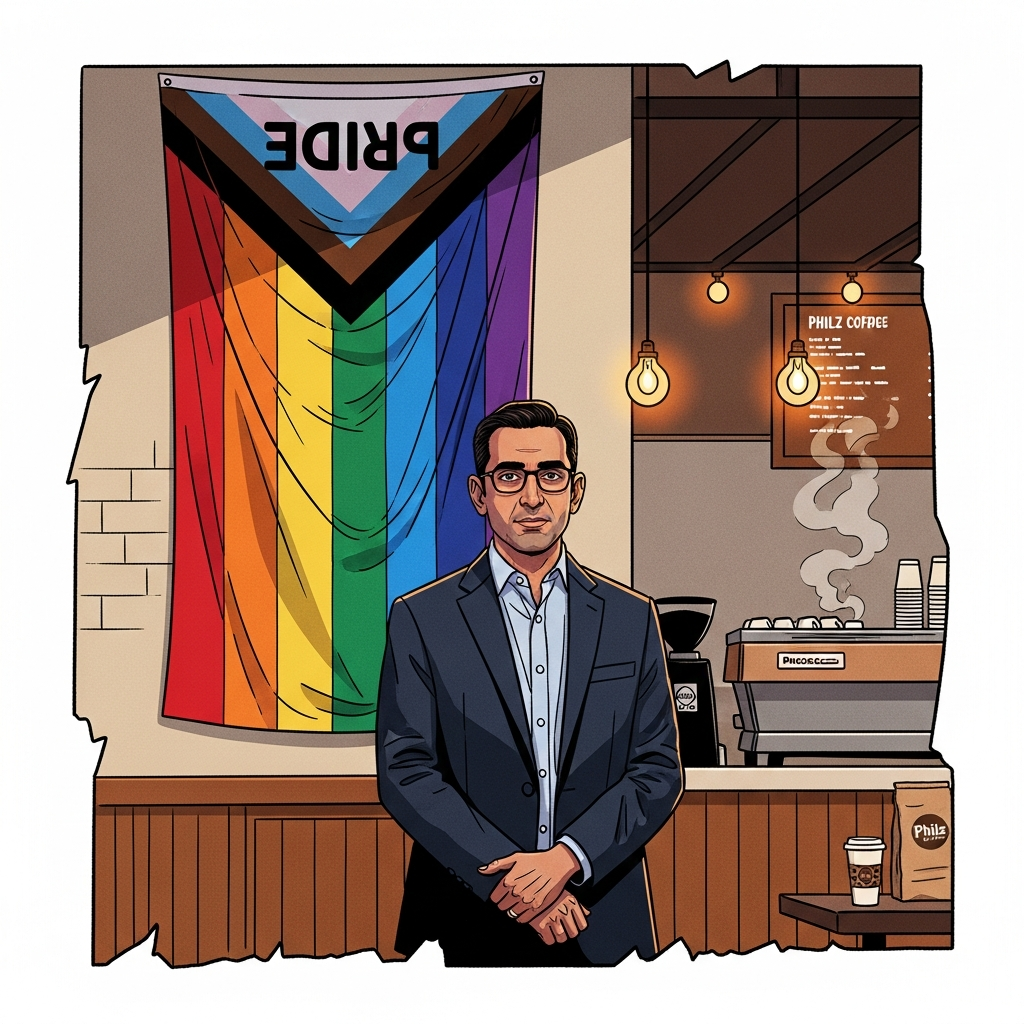
In a significant move reverberating through California’s corporate landscape, San Francisco-based Philz Coffee swiftly reversed a controversial policy to remove Pride flags from its numerous stores. Less than two weeks after the initial announcement, CEO Mahesh Sadarangani issued a public apology, acknowledging his error and reaffirming the company’s commitment to the LGBTQ+ community. This dramatic policy shift, spurred by intense backlash from both employees and customers, highlights the critical role of genuine allyship and community engagement in today’s business environment.
The Unexpected Policy Change and Its Rationale
Philz Coffee, a beloved chain founded in 2003, had cultivated a strong reputation as a dedicated ally to the LGBTQ+ community, building a loyal customer base across its over 80 locations in California and Chicago. This established image made the company’s initial decision last week to remove all Pride flags from its stores particularly jarring for many. Sadarangani initially framed the move as an effort towards greater inclusivity and consistency, explaining to the Guardian that other flags would also be taken down to achieve a uniform appearance across all branches. This explanation, however, failed to resonate with the community.
The CEO’s intention, as initially stated, was to create an environment where no single group was singled out. Instead, the action was widely perceived as a step backward for a brand celebrated for its progressive stance. The Pride flag, a powerful symbol of safety, belonging, and visibility for LGBTQ+ individuals, was seen as an essential part of the Philz Coffee experience by many. Its removal signaled a departure from core values that customers and employees had come to expect and cherish from the popular coffee chain.
A Torrent of Backlash: Community and Employee Uproar
The reaction to Philz Coffee’s flag policy was immediate and intense. Employees, particularly baristas, quickly launched an online petition expressing their strong opposition. This petition rapidly garnered over 7,300 signatures, demonstrating the profound dissatisfaction within the company’s own ranks. Customers, many of whom identify as LGBTQ+ or allies, also voiced their outrage across social media platforms and in local communities. This collective outpouring of disappointment underscored the deep emotional connection many had with Philz Coffee’s previously unequivocal support for diversity and inclusion.
Beyond employee and customer activism, prominent public figures also weighed in. State Senator Scott Wiener, whose district encompasses San Francisco, publicly criticized the decision on social media. Senator Wiener even speculated that the policy change might be linked to the coffee chain’s recent acquisition by the private equity firm Freeman Spogli, suggesting external pressures could be at play. The combined force of internal and external condemnation painted a clear picture for Philz Coffee’s leadership: their community felt betrayed.
The CEO’s Humility and Policy Reversal
Faced with overwhelming opposition, Mahesh Sadarangani acted swiftly to rectify the situation. In a public statement on Friday, just over a week after the initial policy, he unequivocally apologized. “I made a mistake and I am sincerely sorry,” Sadarangani stated, reflecting a profound shift in perspective. He acknowledged the Pride flag’s true significance: “The Pride flag is a symbol of safety and belonging for people who don’t always find that in the world, and that is not something I want to take away from anyone who walks into a Philz.” This reversal was a direct outcome of listening to the community.
Sadarangani specifically credited San Francisco Pride leaders Suzanne Ford and Jupiter Peraza for helping him understand the gravity of his initial decision. Ford lauded Sadarangani’s “genuine humility,” noting his proactive approach to engage, listen, and comprehend the issue’s depth. She emphasized that the situation was “not about optics” but about ensuring queer individuals and their allies felt “safe and seen” within Philz Coffee establishments. This genuine interaction, according to Ford, allowed Sadarangani to apologize not as a mere formality, but as a leader truly committed to making amends.
The Broader Context: Pride Flags as Political Lightning Rods
Philz Coffee’s experience is not isolated. It reflects a wider national struggle where symbols of LGBTQ+ identity have become politicized. Across the United States, elected Republican officials have increasingly pushed back against diversity, equity, and inclusion (DEI) initiatives and protections for the LGBTQ+ community. This broader trend creates a challenging environment for businesses navigating corporate social responsibility.
Recent examples illustrate this climate. Last year, the Trump administration removed a rainbow flag from New York City’s Stonewall national monument, a historic site honoring LGBTQ+ pioneers. While that flag was recently restored after a lawsuit settlement, similar controversies persist. In various Republican-led states, Pride-themed crosswalks, once celebrated expressions of solidarity, have been removed. Even “the US transportation secretary, Sean Duffy,” as reported last summer, encouraged governors to identify and remove “political messages of any nature” from public roadways. Despite these mandates, some cities are finding creative workarounds. Miami Beach officials, for instance, installed rainbow-colored benches and plaques near a former rainbow crosswalk, demonstrating continued support through alternative means.
Corporate Responsibility and the Power of Voice
The Philz Coffee incident provides crucial lessons for businesses everywhere. It underscores the immense power of collective voice—whether from employees or customers—in shaping corporate policy. When a company’s actions contradict its stated values or established reputation, stakeholders are increasingly willing to hold it accountable. This incident also highlights the importance of empathetic leadership. Sadarangani’s decision to genuinely listen and apologize, rather than double down, allowed Philz Coffee to salvage its reputation and reinforce its commitment to inclusivity.
Authentic allyship, as Philz Coffee learned, goes beyond token gestures; it demands consistent action and a willingness to defend core values, especially when faced with external pressures. Companies must understand the symbolic weight of their actions and how those actions impact the sense of belonging for marginalized communities. This episode serves as a powerful reminder that corporate social responsibility is not just about avoiding controversy, but about actively nurturing an environment where everyone feels safe, seen, and valued.
Frequently Asked Questions
What led to Philz Coffee reversing its Pride flag policy?
Philz Coffee reversed its policy to remove Pride flags due to widespread and swift backlash. The initial decision, explained by CEO Mahesh Sadarangani as a move for “consistency,” sparked significant opposition. Employees launched a petition that gained over 7,300 signatures, and customers expressed strong disappointment. State Senator Scott Wiener also criticized the move. Sadarangani subsequently apologized, crediting San Francisco Pride leaders Suzanne Ford and Jupiter Peraza for helping him understand the Pride flag’s crucial symbolism of safety and belonging.
How did employees and community leaders influence Philz Coffee’s decision?
Employees played a critical role by initiating an online petition that quickly garnered thousands of signatures, directly demonstrating internal opposition to the policy. Community leaders, specifically San Francisco Pride’s Suzanne Ford and Jupiter Peraza, engaged directly with CEO Mahesh Sadarangani. Their discussions helped Sadarangani understand the profound impact of removing Pride flags on the LGBTQ+ community’s sense of safety and inclusion, ultimately spurring his apology and the policy reversal. This engagement highlights the power of both grassroots and leadership-level advocacy.
What wider significance does Philz Coffee’s Pride flag controversy hold for corporate responsibility?
The Philz Coffee incident is a compelling case study in corporate social responsibility, demonstrating that authentic allyship requires unwavering commitment, not just public declarations. It shows the critical importance of listening to employees and customers, particularly marginalized communities, whose voices can drive significant corporate change. The controversy also reflects broader national tensions surrounding LGBTQ+ rights and symbols, emphasizing that businesses must navigate these issues carefully to maintain brand reputation and ensure genuine inclusivity in a politically charged environment.
Conclusion
The swift reversal of Philz Coffee’s Pride flag policy marks a powerful moment for corporate accountability and LGBTQ+ allyship. What began as a misstep quickly transformed into an opportunity for genuine engagement and understanding. Mahesh Sadarangani’s public apology and the company’s recommitment to its foundational values underscore the enduring power of community voice and empathetic leadership. In an era where corporate values are under constant scrutiny, Philz Coffee’s journey serves as a vital reminder: true inclusivity is built on listening, learning, and unwavering support for those who need it most. This commitment ensures that businesses not only serve their customers but also foster a sense of belonging for all.