
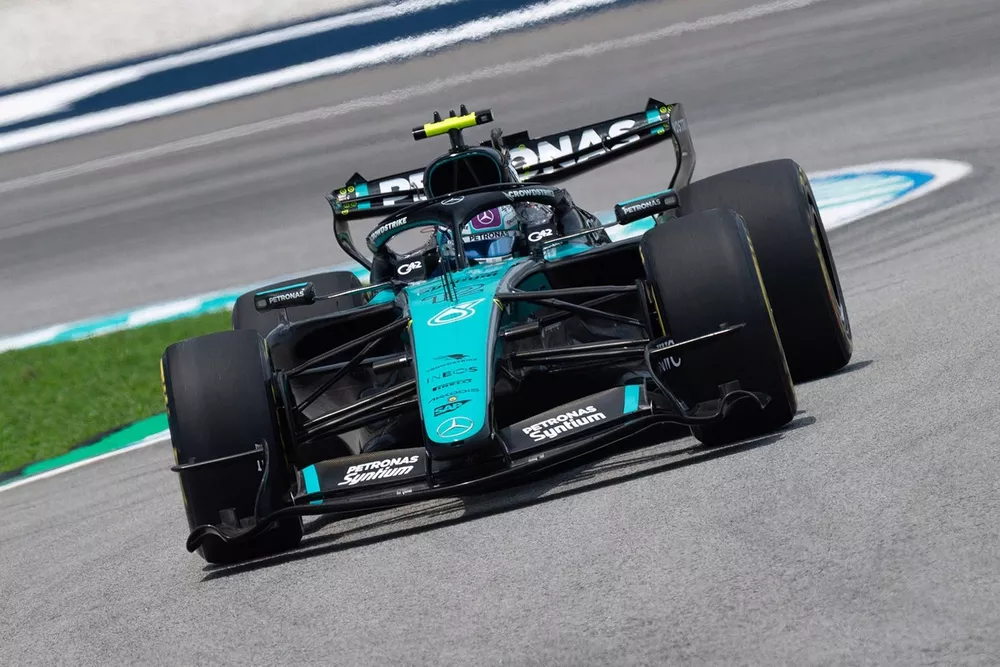
Kimi antonelli mercedes pace reached new heights during the final practice session at the Sepang International Circuit, as the 20-year-old driver topped the timing sheets to signal a significant recovery for the championship-leading Mercedes team.
Key Takeaways
- Antonelli Dominance: Andrea Kimi Antonelli secured the fastest time of FP3 with a 1m36.302s, outperforming a highly competitive field.
- Mercedes Recovery: After a difficult Friday that saw the team finish as low as seventh and eighth, the heavily upgraded W17 chassis showed immediate improvement.
- Red Bull Threat: Red Bull Racing remains a formidable opponent, placing both Max Verstappen and Isack Hadjar in the top three.
- Tyre Degradation Concerns: The abrasive Sepang surface and high temperatures are making the C4 soft tyres difficult to manage, with early signs suggesting they may be “one and done.”
- Red Flag Disruption: A mid-session red flag occurred at Turn 10 due to debris from Oliver Bearman’s Haas, briefly interrupting the flow of testing.
- If you are a Mercedes supporter: Expect a highly aggressive qualifying performance. The team has clearly found a window of performance with the W17 upgrades, and Antonelli’s confidence is visibly growing.
- If you are looking at race strategy: Watch the tyre data closely. If the “one and done” theory regarding the soft tyres holds true, the race will likely be won or lost on the ability to manage the medium and hard compounds over long stints.
- If you are an analyst or bettor: The gap between the top eight and the rest of the field (starting with Colapinto in P9) suggests a two-tier race structure. The battle for the podium will likely be a private affair between Mercedes, Red Bull, and Ferrari, with the midfield fighting for scraps.
- The gap between Antonelli and Verstappen: This will determine if Mercedes has truly reclaimed the top spot or if Red Bull is simply waiting for the right moment to strike.
- McLaren’s recovery: If Norris and Piastri can break into the top five, it will signal that the track is evolving in a way that favors their aerodynamic philosophy.
- Tyre compound selection: The final choice of tyres for Q3 will be the ultimate indicator of how teams perceive the degradation levels observed in FP3.
- www.motorsport.com
- www.motorsport.com
What Happened in FP3
On Saturday, October 3, 2026, the final practice session for the 2026 Bahrain Grand Prix—being hosted at the Sepang International Circuit in Malaysia—delivered a high-intensity battle for momentum. The session was characterized by fluctuating temperatures and a track surface that proved exceptionally abrasive, challenging every driver on the grid.
Early in the session, teams focused on long-run simulations and compound testing. Charles Leclerc of Ferrari was among the first to test the hard compound, setting a benchmark of 1m37.772s. However, the rhythm of the session was broken at the 25-minute mark when a red flag was deployed. Debris had flown off the front-right corner of Oliver Bearman’s Haas at Turn 10, necessitating an immediate stoppage to ensure track safety.
Following an eight-minute delay, the session resumed with a renewed focus on qualifying simulations. Drivers began transitioning to the softest available compounds to maximize one-lap speed. Andrea Kimi Antonelli made his first major impact by recording a 1m36.924s, which briefly placed him 0.129s ahead of his teammate, George Russell.
As the session entered its final six minutes, a frantic rush for the top spot ensued. Isack Hadjar of Red Bull Racing briefly climbed to the top with a 1m36.860s, but he was quickly overtaken by the Mercedes camp. In the closing moments, Antonelli delivered a commanding final lap, clocking a session-best 1m36.302s to cement his position at the top of the leaderboard.
Why It Matters: The Mercedes Resurgence
The primary narrative of the afternoon was the dramatic turnaround for Mercedes. According to reports from Motorsport.com, the team had endured a challenging Friday, with their cars placing second and fifth in FP1, before dropping to seventh and eighth in FP2. This lack of consistency had raised questions about the effectiveness of the heavily upgraded W17 chassis.
However, the Saturday performance suggests that the technical updates are beginning to find their footing. Antonelli’s ability to find significant time in the second sector—where he was three-tenths faster than Russell—indicates that the W17 has the raw aerodynamic capacity to compete at the front. While George Russell noted that the car “needs tweaking at Sepang” and described it as occasionally “off the pace,” the upward trajectory of the team’s lap times is undeniable.
This recovery is not merely about single-lap speed; it is about the team’s ability to adapt to the unique environment of Sepang. As a proxy host for the Bahrain Grand Prix, the Sepang circuit offers a similar level of track abrasiveness, making it a critical testing ground for the Mercedes engineers to validate their upgrade package before the main race.
Deep-Dive: Technical Challenges and Tyre Management
The technical complexity of the Sepang International Circuit cannot be overstated. While the weather remained dry, the heat and the low-grip nature of the track surface created a volatile environment for tyre management.
The “One and Done” Soft Tyre
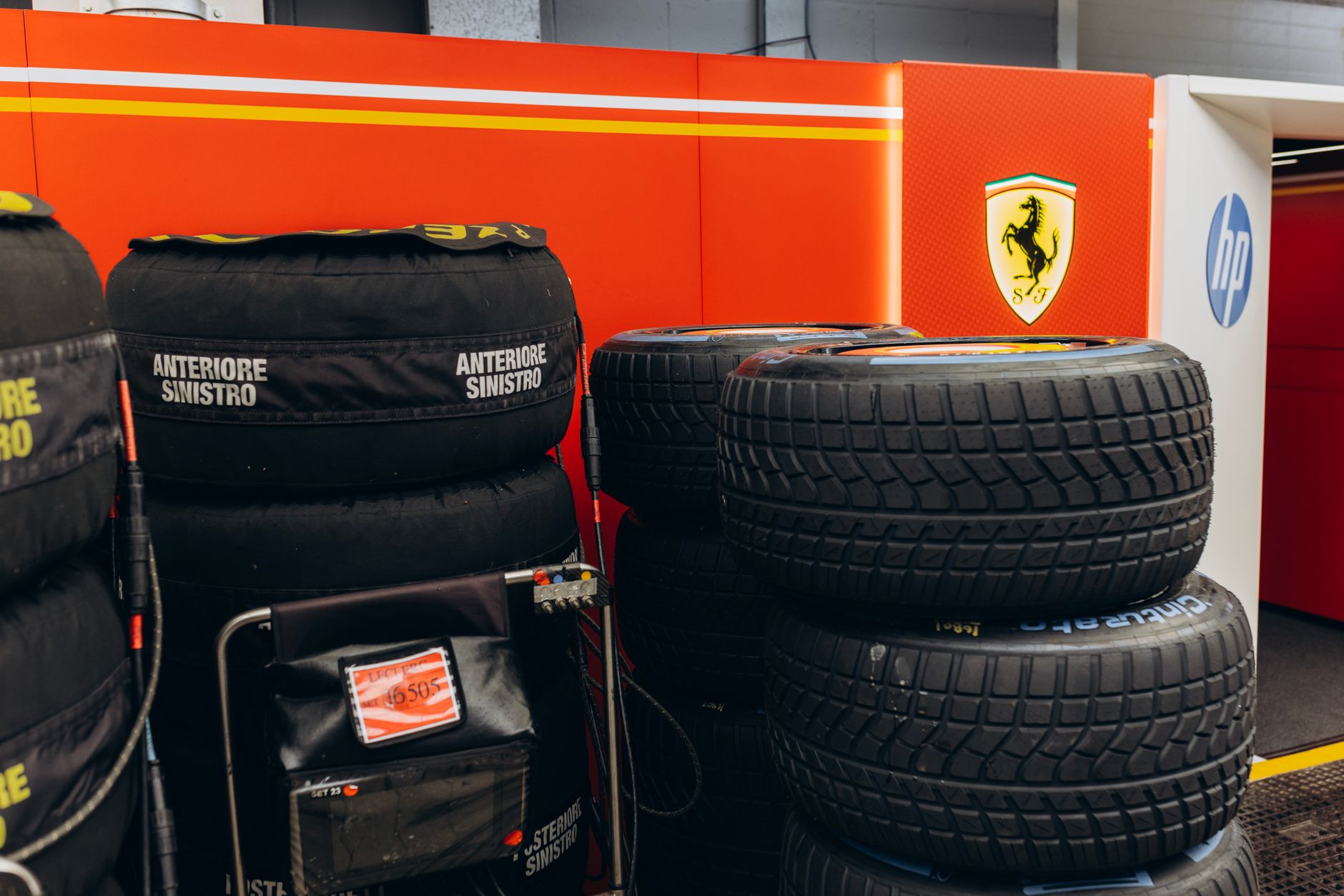
One of the most significant observations during FP3 was the rapid degradation of the C4 soft tyre. Teams observed that drivers were forced to run extremely slow cool-down laps to prevent the surface from overheating. This suggests that the soft compound may only be viable for a single flying lap, a factor that will heavily influence qualifying strategy. If the softs cannot be pushed for more than one lap, the margin for error in the qualifying sessions becomes razor-thin.
Comparative Performance Data
To understand the gap between the frontrunners and the midfield, the following table outlines the top ten results from the FP3 session:
| Rank | Driver | Team/Chassis | Engine | Time | Gap | Tyre |
|---|---|---|---|---|---|---|
| 1 | A. Antonelli | Mercedes | Mercedes | 1’36.302 | — | S |
| 2 | M. Verstappen | Red Bull Racing | Red Bull | 1’36.580 | +0.278 | S |
| 3 | I. Hadjar | Red Bull Racing | Red Bull | 1’36.860 | +0.558 | S |
| 4 | G. Russell | Mercedes | Mercedes | 1’36.912 | +0.610 | S |
| 5 | C. Leclerc | Ferrari | Ferrari | 1’37.016 | +0.714 | S |
| 6 | L. Hamilton | Ferrari | Ferrari | 1’37.041 | +0.739 | S |
| 7 | L. Norris | McLaren | Mercedes | 1’37.161 | +0.859 | M |
| 8 | O. Piastri | McLaren | Mercedes | 1’37.366 | +1.064 | S |
| 9 | F. Colapinto | Alpine | Mercedes | 1’37.920 | +1.618 | S |
| 10 | A. Lindblad | Racing Bulls | Red Bull | 1’38.084 | +1.782 | S |
Stakeholders and Reactions
The results of FP3 have sent mixed signals to the various camps within the paddock.
Mercedes: The team is likely feeling a sense of relief. The W17’s ability to jump from the bottom half of the top ten on Friday to a 1-2 formation in the top four on Saturday provides a much-needed confidence boost. However, the focus now shifts to whether this pace can be translated into race distance.
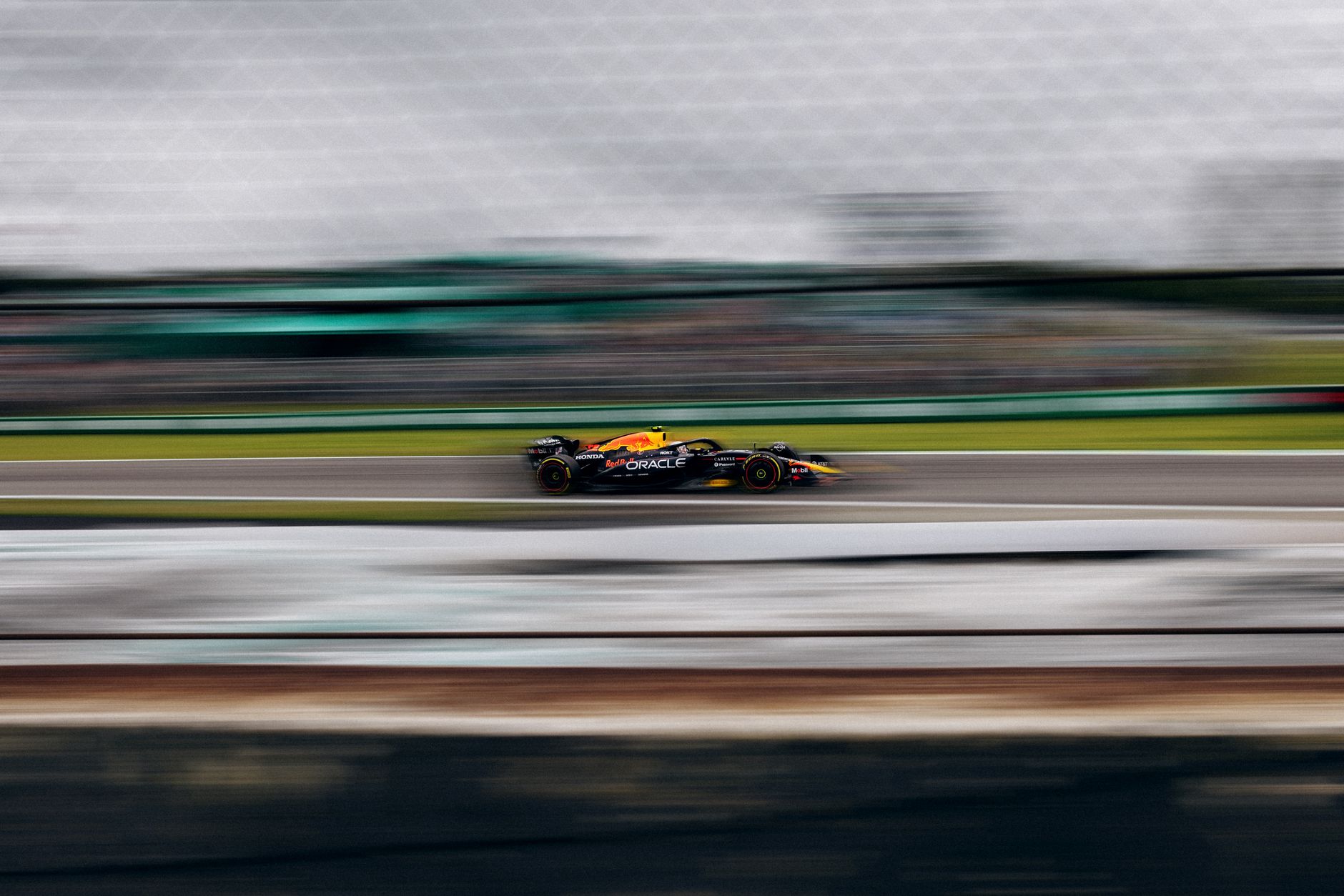
Red Bull Racing: The team continues to demonstrate remarkable consistency. With Max Verstappen and Isack Hadjar occupying the second and third spots, Red Bull’s technical platform remains the benchmark for stability. The fact that Verstappen was able to set a competitive time on the C3 compound further highlights the versatility of the Red Bull chassis.
McLaren: For McLaren, the session was underwhelming. After finishing 11th and 12th in FP1, Lando Norris and Oscar Piastri were unable to break into the top six. The team appears to be struggling with the low-grip conditions, and their inability to match the pace of Mercedes or Ferrari suggests a need for urgent technical adjustments.
Ferrari: Ferrari remains a steady presence in the midfield-to-top tier transition. Both Charles Leclerc and Lewis Hamilton posted times within a tenth of each other, maintaining a consistent presence near the front, though they lacked the ultimate peak speed shown by Antonelli.
What It Means for You
For the fans and observers following the 2026 Bahrain Grand Prix, the implications of this practice session are clear:
Counterpoints and Open Questions
Despite the optimism surrounding Mercedes, several critical questions remain unanswered.
First, is the Kimi Antonelli Mercedes pace sustainable? While a single-lap flyer is impressive, the session also showed that Mercedes drivers struggled with consistency in certain sectors. There is a risk that the W17 upgrades have optimized the car for qualifying trim at the expense of race-day tyre preservation.
Second, the role of the Red Bull drivers presents a counter-narrative. While Mercedes showed a massive jump in performance, Red Bull’s performance has been more linear and predictable. Can Mercedes’ high-peak performance overcome Red Bull’s operational stability over a full race distance?
Finally, the track conditions themselves remain an unknown variable. While the session was dry, the historical tendency for Sepang to produce mixed weather means teams must remain prepared for a sudden shift in grip levels and temperature, which could render today’s data obsolete.
What Happens Next
The focus now shifts immediately to the qualifying session. Teams will have a limited window to implement the “tweaks” suggested by George Russell to further optimize the W17’s balance.
Key indicators to watch during qualifying include:
Frequently Asked Questions
Why is the Bahrain Grand Prix being held in Malaysia?
The 2026 Bahrain Grand Prix is being hosted at the Sepang International Circuit in Malaysia because the track serves as a proxy host. The surface at Sepang is highly abrasive, similar to the regular venue for the Bahrain Grand Prix, making it an ideal location for testing and racing under comparable conditions.
What caused the red flag in FP3?
A red flag was deployed during the 25th minute of the session due to debris on the track at Turn 10. The debris was identified as part of the brake shrouding that had shed from the front-right corner of Oliver Bearman’s Haas F1 car.
How did the Mercedes W17 upgrades perform?
The heavily upgraded Mercedes W17 showed significant promise during FP3. After struggling in the lower half of the top ten during Friday’s sessions, the car was able to secure a 1-2 formation in the top four of the leaderboard, with Kimi Antonelli taking the fastest time.
Is tyre degradation a major factor at Sepang?
Yes, tyre degradation is a critical factor. The combination of high temperatures and the abrasive track surface has made the soft tyres (C4 compound) particularly difficult to manage, with observations suggesting they may only be capable of providing a single high-performance lap.
As the paddock prepares for the high-stakes qualifying session, the momentum has undeniably shifted toward Mercedes, but the consistent threat posed by Red Bull ensures that no one can claim dominance just yet.
References
Featured image: Image via motorsport.com



One thought on “Kimi Antonelli Mercedes Pace: Key Sepang FP3 Analysis”