The 2026 NFL Draft, anticipated to be a major event, instead became an unexpected stage for a burgeoning personal scandal. New England Patriots head coach Mike Vrabel, a figure accustomed to football headlines, found himself at the center of a media storm that ultimately overshadowed the draft picks themselves. This unfolding drama, fueled by alleged infidelity, questionable public relations strategies, and a coach’s perceived arrogance, provided a masterclass in how not to manage a crisis in the public eye.
The Quiet Draft and an Unwelcome Spotlight
The first round of the 2026 NFL Draft largely began with a whimper. Lacking the usual high-profile trades, blockbuster quarterback selections, or captivating storylines, the football world seemed poised for a relatively calm opening night. This subdued atmosphere, however, created a vacuum that was quickly filled by an entirely different kind of news: the escalating fallout from reports of Mike Vrabel’s alleged relationship with former Athletic NFL reporter Dianna Russini. What began as gossip quickly intensified, transforming a personal matter into the dominant narrative of the NFL’s biggest annual event.
The initial reports from Page Six earlier in the year, featuring photos of Vrabel and Russini at an adults-only resort, were met with defiant dismissal by the coach. Vrabel famously called suggestions of impropriety “laughable,” declaring the claims unworthy of further response. This early reaction, as analysts at Boston Sports Journal noted, was interpreted as an act of “arrogance, ego, bravado, and staggering over-confidence.” Instead of quelling speculation, Vrabel’s dismissive tone inadvertently challenged the media to dig deeper, setting the stage for a much larger confrontation.
Attempts to Control the Narrative Backfire
In the weeks following the initial reports, both Vrabel and Russini maintained their silence, allowing speculation and gossip to fester across social media platforms. Russini ultimately resigned from her position, citing a “media frenzy” but still denying any untoward actions. It became clear that her departure stemmed from the professional obligation of a journalist regarding a source, rather than the act of infidelity itself, which is not typically a fireable offense in the NFL. The league confirmed Vrabel was not under investigation for violating its personal conduct policy, suggesting that the initial firestorm might eventually die down.
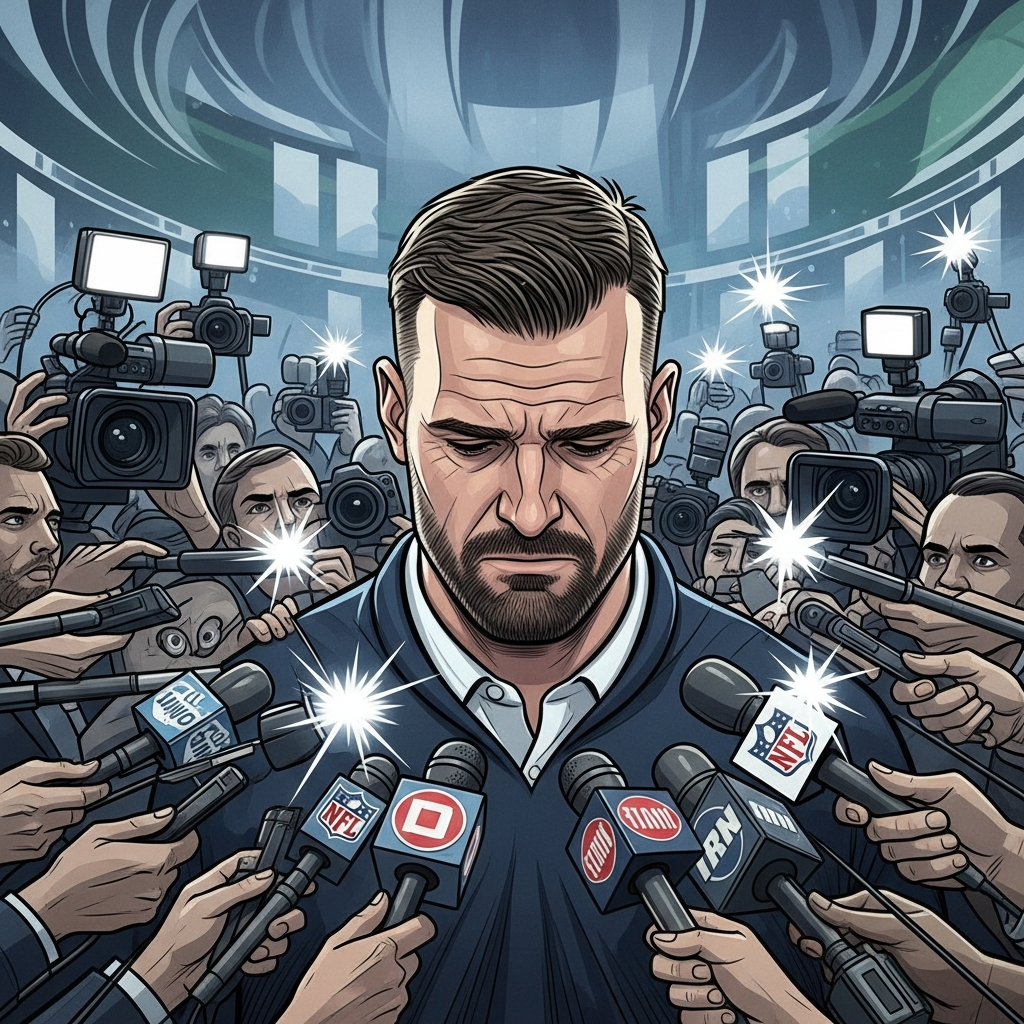
Just two days before the draft, the Patriots attempted to regain control of the narrative. Vrabel made a last-minute appearance before reporters, his tone markedly different from his initial defiant stance. He expressed humility, acknowledging “difficult conversations” with his family, the organization, coaches, and players. Emphasizing the need for “good decisions,” he thanked reporters for their patience in what he termed a “personal and private matter.” This carefully orchestrated appearance, conducted before a small group of beat reporters and with questions largely taken off-camera, was designed to address the situation without providing substantial new material for further media amplification. For a brief moment, it seemed the strategy might work, garnering some positive feedback from local Boston media.
The Midnight Declaration and Renewed Scrutiny
However, this fragile containment quickly unraveled. Less than 48 hours after his seemingly contrite statement, Vrabel made a “midnight declaration” to ESPN, announcing his decision to miss the third day of the NFL Draft to attend counseling. While counseling is a reasonable and commendable step, the timing of the announcement and the implicit prioritization of “top 100 draft picks” over a full commitment to therapy, as noted by The Ringer, unexpectedly “invigorated” the story. It provided sports media, previously cautious about delving into tabloid news, a “pure football way in” to re-engage with the scandal.
This abrupt decision became explicable just hours later. On Thursday, the eve of the draft, new “bombshell” photos emerged. Page Six published images of Vrabel and Russini together in a New York City bar in March 2020, with Vrabel appearing to kiss her cheek. Shortly thereafter, TMZ released another photo of the pair at a casino in January 2024, following Vrabel’s firing by the Titans. These revelations painted a picture of a multi-year affair, shattering any remaining illusions that the story could be contained or easily dismissed.
The Cost of Hubris: A Full-Blown Crisis
The Patriots’ communications team found themselves scrambling on Thursday. Initial plans for Vrabel or executive Eliot Wolf to speak after the first-round pick were swiftly abandoned as the new, damning photos spread like wildfire across social media. Compounding the issue were resurfacing old clips of Russini interviewing or discussing Vrabel, often glowingly and referencing his physical attributes. The sheer volume of evidence, combined with Vrabel’s piecemeal responses, made it clear that a mere statement of support from the team would be insufficient.
As the first round of the draft approached, Vrabel was scheduled for his third public press conference in as many days. Approaching prime time, he reiterated his commitment to counseling and attempted to explain his initial “laughable” comment as an effort to “protect my family.” Around this same time, Dianna Russini deleted her X (formerly Twitter) account. However, by this point, the story had migrated far beyond the sports pages, becoming a full-blown media spectacle. Greg A. Bedard of Boston Sports Journal compared the intensity of the scrutiny to the “Aaron Hernandez fallout” and even the “Bill Clinton and Monica Lewinsky” scandal, highlighting the severity of the crisis.
Analysts largely agreed that this entire “inferno” was preventable. Vrabel’s initial defiance, prolonged silence, and subsequent attempts to address the situation in stages only served to fuel the controversy. His belief that he could “outrun” a story involving “sex, the fall from grace of public figures, The New York Times, the New England Patriots, and years of social media posts” was deemed a significant miscalculation rooted in hubris. By failing to “own up to the whole of it” from the outset, Vrabel and the Patriots consistently found themselves on the defensive, reacting to new information rather than proactively managing the narrative.
The ramifications of this crisis were profound. Bedard raised critical questions about Vrabel’s future as Patriots coach, including the possibility of his firing, resignation, or a sabbatical. The scandal not only undermined the team’s professional image but also created significant distractions on one of the most important days of the NFL calendar. Ultimately, Vrabel’s alleged ego, coupled with a series of mismanaged public relations decisions, transformed a personal indiscretion into a pervasive, career-threatening scandal that dominated the 2026 NFL Draft.
Frequently Asked Questions
What initially sparked the controversy surrounding Mike Vrabel and the NFL Draft?
The controversy began with reports from Page Six featuring photos of New England Patriots coach Mike Vrabel and former NFL reporter Dianna Russini at an Arizona resort. Vrabel’s initial defiant response, calling suggestions of impropriety “laughable,” was widely seen as a critical misstep that fueled media interest and set the stage for the escalating scandal that dominated the 2026 NFL Draft.
How did the Patriots attempt to manage the public relations fallout, and why did it fail?
The Patriots attempted to manage the situation through a series of carefully orchestrated public appearances by Vrabel, who adopted a humble tone and limited media access. Dianna Russini also resigned from her role, citing a media frenzy. However, these efforts failed because Vrabel’s initial denial of the multi-year alleged affair was contradicted by subsequent “bombshell” photos released by Page Six and TMZ. His piecemeal responses and a “midnight declaration” to attend counseling further invigorated the story, making it appear as if the team was constantly on the defensive.
What were the broader implications of Vrabel’s handling of the scandal for his career and the Patriots?
Vrabel’s handling of the scandal, characterized by initial hubris and subsequent public relations missteps, turned a personal matter into a major professional crisis. Analysts like Greg A. Bedard suggested his job could be in jeopardy, raising questions about his future with the Patriots. The scandal not only overshadowed the 2026 NFL Draft but also damaged the team’s public image and created significant distractions, highlighting the severe consequences of poor crisis management for public figures.
In conclusion, Mike Vrabel’s personal scandal served as an unexpected and compelling sideshow to the 2026 NFL Draft, transforming a quiet sporting event into a public relations spectacle. His journey from defiant denial to repeated public statements, each trying to contain an ever-expanding story, highlighted the immense challenges public figures face in the age of rapid information dissemination. The saga stands as a powerful testament to the adage that in a crisis, transparency and proactive communication are paramount; attempts to outrun or dismiss a story, particularly one fueled by perceived hubris, often only serve to amplify its reach and prolong its impact.