
The T. rex body temperature has been empirically measured for the first time, providing definitive evidence that the iconic predator was a warm-blooded animal with a metabolism remarkably similar to modern humans.
Key Takeaways
- Measured Temperature: Researchers determined the Tyrannosaurus rex maintained an average body temperature of approximately 36.3°C (97.3°F).
- Endothermic Physiology: The findings confirm the <a href="https://news.quantosei.com/2026/09/17/t-rex-body-temperature-explained-why-this-discovery-matters/" title="T. rex body temperature Explained: Why This Discovery Matters”>dinosaur was thermoregulated (warm-blooded) rather than cold-blooded like modern reptiles.
- Methodological Breakthrough: Using “clumped isotope paleothermometry,” scientists analyzed tooth enamel, a method that requires 90% less material than previous techniques.
- Ecological Range: The ability to regulate internal heat allowed T. rex to inhabit diverse climates, ranging from the heat of Mexico to the cooler regions of ancient Alaska.
- Biological Middle Ground: The dinosaur’s temperature sits between cold-blooded crocodilians (~30°C) and highly metabolic modern birds (40–43°C).
- newsroom.ucla.edu
- nautil.us
- mynewsla.com
- timesofindia.indiatimes.com
- www.sci.news
What Happened
In a landmark study published on September 16, 2026, in the journal Science Advances, a team of geobiologists and paleontologists led by the University of California, Los Angeles (UCLA) announced they had successfully determined the internal body temperature of the Tyrannosaurus rex. The research, which involved years of method refinement, utilized a specialized “geologic thermometer” to analyze the chemical composition of fossilized tooth enamel.
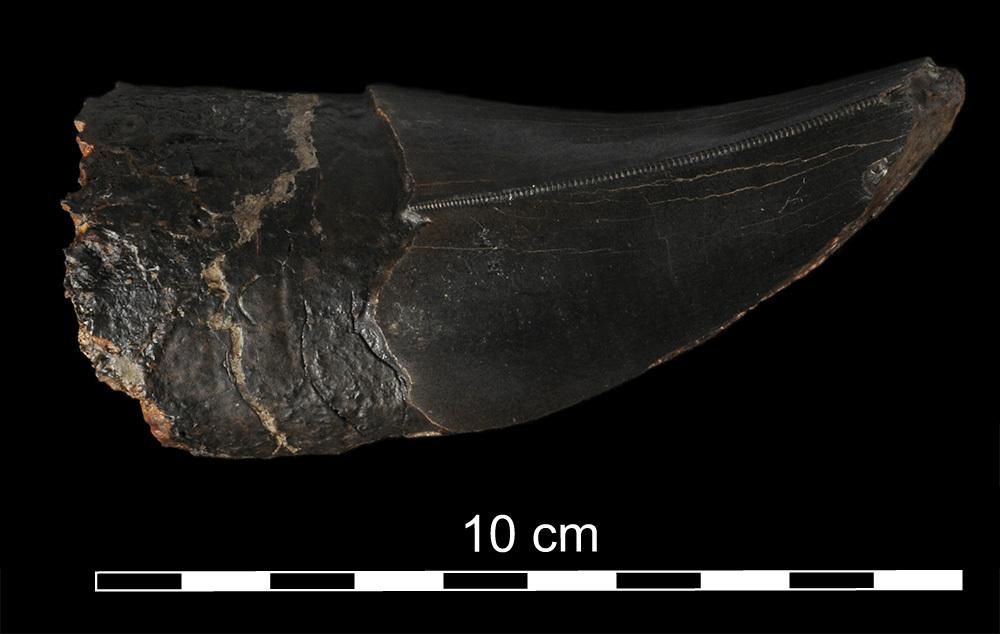
According to the study, the researchers analyzed three teeth from a well-known T. rex specimen nicknamed “Thomas,” which is currently housed at the Natural History Museum of Los Angeles County. By examining the bonding patterns of carbon and oxygen isotopes within the enamel, the team established that the predator maintained a steady internal temperature of roughly 36.3 degrees Celsius (97.3 degrees Fahrenheit).
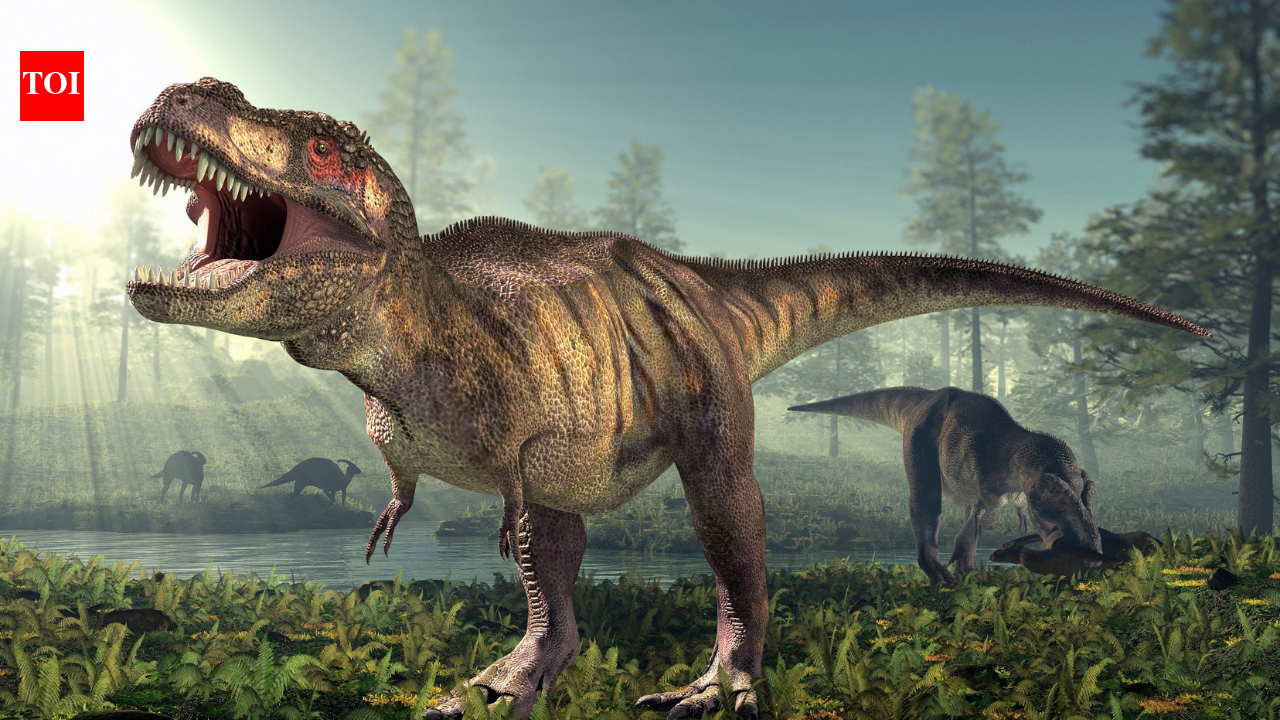
This discovery marks a transition in paleontology from theoretical modeling to direct, empirical measurement. While scientists have long debated whether large theropods were active, warm-blooded hunters or sluggish, sun-basking reptiles, this data provides a concrete biological benchmark that supports an active, endothermic lifestyle.
Why It Matters
For decades, the metabolic nature of the T. rex has been one of the most contested topics in vertebrate paleontology. Understanding the T. rex body temperature is not merely a matter of biological curiosity; it fundamentally alters our reconstruction of the Cretaceous ecosystem.
If the T. rex was indeed warm-blooded, it implies a high-energy metabolism. Such a metabolism requires a massive, consistent caloric intake, suggesting that these predators were highly efficient and active hunters or scavengers capable of sustained physical movement. This stands in stark contrast to the behavior of modern ectothermic (cold-blooded) reptiles, which rely on external environmental heat to regulate their activity levels.
Furthermore, this thermal regulation explains the species’ vast geographic footprint. The study’s researchers used paleoclimate simulations of the Maastrichtian-age North American continent to model how this temperature would have influenced habitat. They found that a thermoregulated T. rex could thrive in a wide range of latitudes, including higher-latitude regions that would have been too frigid for cold-blooded animals to survive the winter. This aligns with fossil evidence of tyrannosaurs found as far north as the North Slope of Alaska.
The Science of the “Geologic Thermometer”
Determining the temperature of an animal that died 66 million years ago presents a monumental chemical challenge. Previous attempts to estimate dinosaur temperatures often relied on indirect evidence, such as bone growth rates or the presence of feathers, which can be influenced by various environmental factors.
To achieve direct measurement, the UCLA team utilized a technique known as clumped isotope paleothermometry. This method focuses on the specific way rare, heavy isotopes of carbon and oxygen bond with one another within the mineral structures of a fossil. The number of these chemical bonds is highly sensitive to the temperature at which the mineral formed. In essence, higher temperatures result in fewer isotope bonds, while cooler temperatures result in more.
Why Tooth Enamel?
One of the most critical aspects of the study was the decision to analyze tooth enamel rather than bone. Robert Eagle, a geobiologist at UCLA and a co-author of the study, explained that bones are unsuitable for this level of precision because they are constantly being remodeled, dissolved, and replaced by the living organism, which can alter the chemical record over millions of years.
In contrast, tooth enamel contains large, durable crystalline structures that are extremely resistant to environmental chemical alterations. This durability makes enamel the most reliable “archive” of the animal’s internal temperature at the time the tooth was formed.
Technical Refinements
The team’s success was also due to a decade of technical optimization. Traditionally, isotopic analysis required large amounts of fossil material, a requirement that often prevented museums from allowing researchers to test precious specimens. However, the UCLA team developed a method to pressurize the carbon dioxide gas released during analysis, creating a denser jet for the mass spectrometer. This refinement reduced the required sample size by approximately 90%, allowing for the “destructive analysis” of only a few milligrams of material.
Comparative Biological Data
The researchers validated their findings by using Cretaceous-era crocodilians as a control group. Because these crocodilians lived in the same ecosystem as the T. rex—specifically the Hell Creek Formation in Montana—their temperature should reflect the ambient environment if they were cold-blooded. The crocodilian teeth yielded an average temperature of approximately 30.9 degrees Celsius (87.6 degrees Fahrenheit), confirming that the T. rex’s higher temperature was a biological reality rather than a result of the fossilization environment.
Below is a comparison of the measured and estimated temperatures of various organisms:
| Organism | Body Temperature (°C) | Body Temperature (°F) | Metabolic Classification |
|---|---|---|---|
| Tyrannosaurus rex | 36.0 – 36.3 | 96.8 – 97.3 | Endothermic (Warm-blooded) |
| Modern Humans | ~36.0 – 37.0 | ~96.8 – 98.6 | Endothermic |
| Modern Birds (Avian) | 40.0 – 43.0 | 104.0 – 109.4 | Endothermic |
| Cretaceous Crocodilians | ~30.9 | ~87.6 | Ectothermic (Cold-blooded) |
| Modern Cold-blooded Reptiles | 28.0 – 30.0 | 82.0 – 86.0 | Ectothermic |
Stakeholders and the Ethics of “Destructive Analysis”
The ability to conduct this research depends heavily on the cooperation of natural history institutions. Because the method involves drilling into fossils, it is classified as “destructive analysis,” which can be a point of contention for museum curators tasked with preserving irreplaceable specimens.
Luis Chiappe, the curator of the Dinosaur Institute at the Natural History Museum of Los Angeles County, noted the difficulty of these decisions. “We’re asked for fossils for use in destructive analysis all the time,” Chiappe said. “The museum contains tens of millions of specimens… that are irreplaceable. We have to make decisions that balance the damage to the specimen against gaining knowledge about the natural world.”
In the case of the “Thomas” specimen, the decision to sacrifice small portions of two teeth was deemed “definitely worth the trade-off” to unlock fundamental truths about dinosaur physiology, according to Chiappe.
Analysis: The Evolutionary Continuum
The data suggests that the T. rex occupied a unique biological middle ground. While it was significantly warmer than the reptiles that shared its habitat, its temperature was lower than that of modern birds, which are the direct evolutionary descendants of theropod dinosaurs.
Aradhna Tripati, a UCLA isotope geochemist and senior author of the study, emphasized that thermal physiology is a primary driver of how a species lives. “Thermal physiology drives behavior, range, energy budget and how a species responds to a changing climate,” Tripati stated. “Without it, you don’t really have an understanding of the animal.”
The findings support the theory that the T. rex was part of an evolutionary lineage that was steadily transitioning from the cold-blooded physiology of early reptiles toward the highly efficient, warm-blooded systems seen in modern birds.
What It Means for You
For students, educators, and science enthusiasts, this discovery represents a paradigm shift in how we perceive the prehistoric world. If you are a fan of paleontology or a student of evolutionary biology, expect a wave of new research that re-evaluates other famous dinosaur species.
As the “geologic thermometer” becomes more refined and less invasive, the “sluggish lizard” trope of the dinosaur era is likely to be replaced in textbooks and media by a more accurate depiction of high-energy, active, and physiologically complex animals. This research also highlights the increasing importance of geochemistry in understanding the history of life on Earth, showing that the answers to ancient mysteries are often hidden in the smallest chemical bonds.
Counterpoints and Open Questions
Despite the strength of the evidence, the study is not without its complexities and unanswered questions.
1. The Caloric Cost of Warm-Bloodedness
A high metabolism comes with a significant biological price: energy. An endothermic T. rex would have required a massive amount of food to maintain its internal temperature. This raises questions about the carrying capacity of the Cretaceous environment. How many large predators could a single ecosystem actually support if every individual required such high caloric intake?
2. The Extinction Debate
The study offers a new perspective on the end-Cretaceous mass extinction. Some scientists previously hypothesized that dinosaurs might have succumbed to the sudden cooling and darkness following the asteroid impact. However, if T. rex was already capable of thriving in cooler climates like Alaska, the inability to handle cold may not have been the primary cause of their extinction. Instead, the research suggests that the total collapse of food webs and ecosystems was likely the more decisive factor.
3. Species-Specific Variation
While the data for “Thomas” is compelling, it remains a single data point from one species. It is still unknown if all large theropods shared this temperature or if there was significant variation across different dinosaur lineages. Scientists will need to apply this method to a wider variety of specimens to determine if endothermy was a universal trait among large dinosaurs.
Frequently Asked Questions
How did scientists measure the temperature of a dinosaur that died millions of years ago?
Scientists used a technique called clumped isotope paleothermometry. They analyzed the chemical bonds between rare isotopes of carbon and oxygen found in the tooth enamel of the T. rex. Because the way these isotopes bond is directly influenced by temperature, the chemical structure of the enamel acts as a permanent record of the animal’s body temperature at the time the tooth was formed.
Does this mean the T. rex was exactly like a human?
Not exactly. While the study found the T. rex maintained a temperature of about 36.3°C (97.3°F), which is very close to the human average, they are different species with different biological needs. The comparison is meant to show that the T. rex was an endothermic (warm-blooded) animal, rather than a cold-blooded reptile, placing it in a similar metabolic category to humans and elephants.
Why did they use teeth instead of bones?
Bones are subject to constant remodeling and dissolution throughout an animal’s life, which can alter their chemical composition over millions of years. Tooth enamel, however, is much more durable and has large crystalline structures that resist chemical changes from the environment, making it a much more stable and accurate “thermometer” for ancient animals.
Could T. rex survive in the Arctic?
Yes, according to the research. While the Cretaceous period was generally warmer than today, regions like Alaska would still have experienced cold temperatures. Because the T. rex could regulate its own body heat, it was capable of inhabiting much wider geographic ranges—from the warm climates of Mexico to the cooler northern territories—than a cold-blooded animal could have survived.
What Happens Next
The immediate future of this research involves applying the refined isotopic analysis method to a broader range of dinosaur species. Paleontologists aim to create a comprehensive “thermal map” of the Mesozoic era by studying everything from massive sauropods to small, feathered theropods.
As the technology continues to improve, we can expect more studies that use even smaller samples, potentially allowing for the analysis of even more delicate and rare fossils
References
Featured image: Image via UCLA