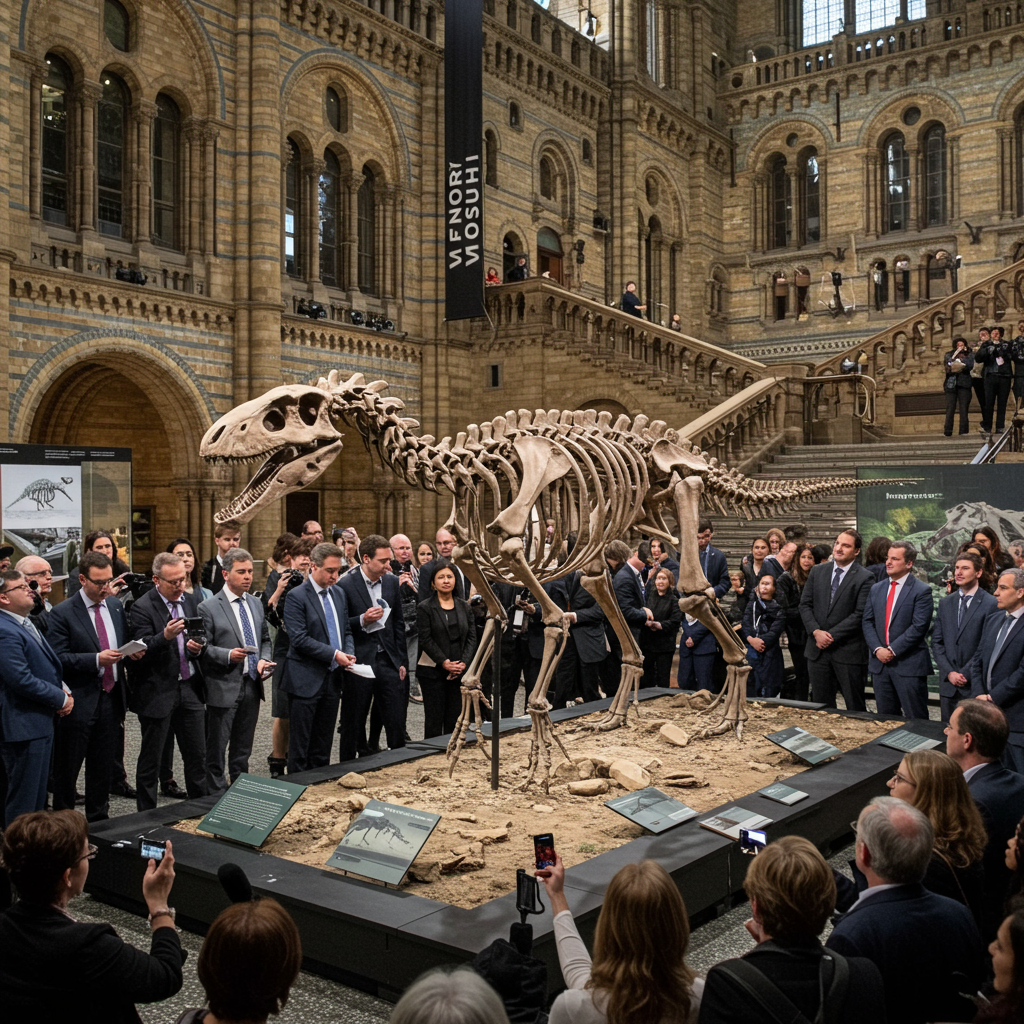
Determining the exact T. rex body temperature has long been a holy grail for paleontologists, and a groundbreaking new study has finally provided a direct answer. Researchers from the University of California, Los Angeles (UCLA) have announced that the iconic predator, Tyrannosaurus rex, likely maintained an internal temperature of approximately 97 degrees Fahrenheit (36.3 degrees Celsius), a figure remarkably similar to that of modern humans.
Key Takeaways
- Direct Measurement: Scientists used clumped-isotope analysis of fossilized tooth enamel to provide the first direct estimate of T. rex body temperature.
- warm-blooded Status: The findings strongly support the theory that Tyrannosaurus rex was endothermic (warm-blooded) rather than ectothermic (cold-blooded).
- Metabolic Advantage: A temperature of 97°F suggests a high metabolism, allowing the predator to maintain activity for longer periods and inhabit diverse climates.
- Geographic Range: Climate modeling suggests this physiology allowed T. rex to thrive across a vast territory, from modern-day Mexico to Alaska.
- Technological Breakthrough: The research utilized a refined method that requires only a few milligrams of fossil material, a 90% reduction from previous requirements.
- If you are a science educator, this provides a concrete, data-driven example of how new technology (clumped-isotope analysis) can solve century-old mysteries.
- If you are a museum visitor, it changes how you look at the skeletons in the hall. Instead of seeing static, slow-moving giants, you can visualize them as high-energy, active predators that moved through diverse landscapes with a metabolic drive similar to our own.
- If you are a researcher, this study serves as a proof-of-concept. The ability to extract massive amounts of data from milligrams of material opens the door to studying many more species that were previously considered “too precious to test.”
- Testing Other Dinosaur Clades: Applying the technique to herbivores like Triceratops to see if they shared the same metabolic profile.
- Mammalian Ancestry: Robert Eagle expressed interest in applying these methods to the ancestors of mammals, which could help pinpoint exactly when warm-bloodedness emerged in the mammalian lineage.
- Refining Paleoclimate Models: Using the new temperature data to create even more accurate maps of ancient North American environments.
- www.bgnes.com
- www.ksl.com
What Happened
On Wednesday, the journal Science Advances published a study that fundamentally shifts our understanding of the most famous predator in history. For decades, scientists have debated whether the Tyrannosaurus rex was a sluggish, sun-basking reptile or a highly active, warm-blooded hunter. While biomechanical models and bone structure had provided hints, they remained indirect.
Lead researchers, including UCLA geobiologist and associate professor Robert Eagle and senior author Aradhna Tripati, a professor of geochemistry at UCLA, have now moved beyond guesswork. By analyzing the chemical signatures preserved in the teeth of a specific specimen known as “Thomas,” the team was able to quantify the animal’s internal heat.
“For an animal this famous, it is remarkable how little we actually knew,” Aradhna Tripati stated in an email. “We had guesses about T. rex metabolism, mainly from bone and biomechanics. We did not have a temperature.”
Why It Matters
The implications of a regulated, high body temperature are profound for evolutionary biology. If T. rex was indeed warm-blooded, it wasn’t just a larger version of a modern crocodile; it was a fundamentally different kind of organism.
First, it redefines the dinosaur’s role in its ecosystem. A warm-blooded predator requires significantly more fuel. To maintain a body temperature of 97°F, the T. rex would have needed to consume vast amounts of calories, necessitating a constant and aggressive pursuit of prey. Second, it explains how these giants could dominate such a wide variety of environments. Unlike modern reptiles that rely on external heat to function, a warm-blooded T. rex could remain active in the cooler, high-latitude regions of the late Cretaceous period.
The Chemistry of a Prehistoric Thermometer
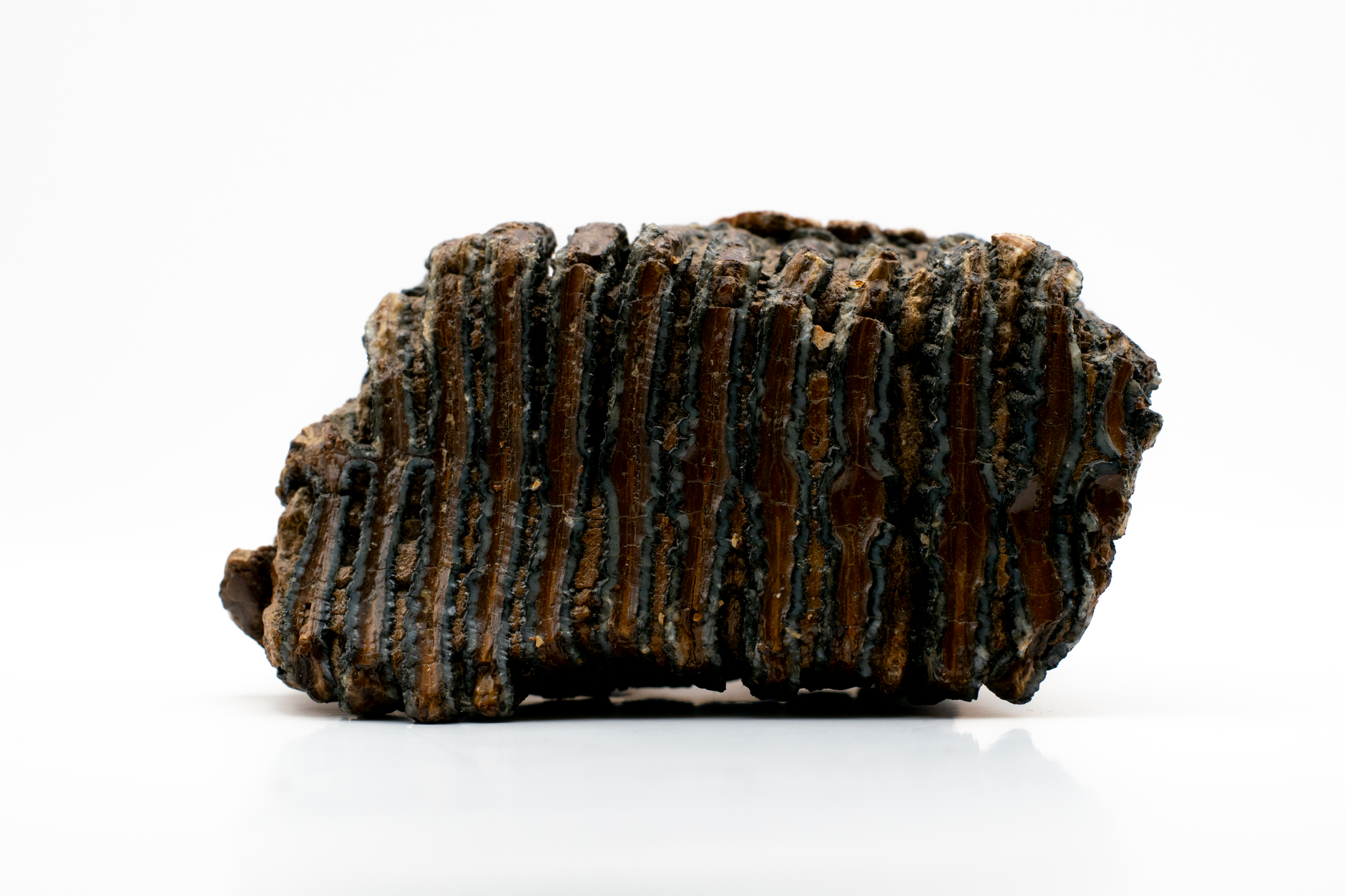
To reach these conclusions, the research team employed a highly specialized technique known as clumped-isotope analysis. This method does not look at the bones themselves, which can be subject to significant chemical alteration over millions of years, but rather at the tooth enamel. Enamel is one of the hardest and most durable substances in the biological world, making it an ideal vessel for preserving ancient data.
Inside the enamel, different forms of carbon and oxygen isotopes exist. These isotopes form chemical bonds at rates that are strictly dictated by the temperature of the environment in which they are created. When the T. rex was alive, the temperature of its body governed how these isotopes “clumped” together during the formation of its teeth. By drilling out a few milligrams of enamel and measuring these specific bonds, the researchers were essentially reading a thermometer that had been frozen in time for 66 million years.
This was not a simple task. The UCLA team spent more than a decade perfecting this method. A major hurdle in paleontology is the destructive nature of testing; traditionally, analyzing a specimen meant destroying a significant portion of it. However, the team successfully reduced the amount of fossil material needed by roughly 90%. This innovation allows museums to provide tiny, non-essential samples—such as the two teeth used from the “Thomas” specimen—without compromising the integrity of the display fossils.
The “Thomas” Specimen and the UCLA Breakthrough
The study focused on teeth from “Thomas,” an approximately 70% complete Tyrannosaurus rex skeleton held at the Natural History Museum of Los Angeles County. Because “Thomas” is such a significant and well-preserved specimen, the researchers were able to extract high-quality enamel for their analysis.
“Nobody can measure a T. rex tooth unless you can show them you only need a few milligrams,” Aradhna Tripati explained, highlighting the necessity of their decade-long refinement process.

Biological and Ecological Comparisons
To put the 97°F (36.3°C) figure into perspective, it is helpful to compare it against modern biological groups. The findings place T. rex in a unique evolutionary middle ground: it was warmer than modern reptiles but generally cooler than many modern birds.
| Organism / Group | Estimated Body Temperature | Biological Classification |
|---|---|---|
| Tyrannosaurus rex | ~36.3°C (97.3°F) | Warm-blooded (Endothermic) |
| Humans | ~37°C (98.6°F) | Warm-blooded (Endothermic) |
| Modern Birds | 40°C – 43°C (104°F – 109°F) | Warm-blooded (Endothermic) |
| Modern Reptiles | 28°C – 30°C (82°F – 86°F) | Cold-blooded (Ectothermic) |
This temperature profile has massive implications for the dinosaur’s lifestyle. While a cold-blooded crocodile might be able to perform short, explosive bursts of speed, it cannot sustain high energy levels for long. In contrast, Robert Eagle suggests that while the T. rex might not have been a specialized sprinter, its high metabolism would have allowed it to maintain energetic performance over much longer durations than a reptile could manage.
Furthermore, the ability to maintain internal heat allowed for a massive geographic range. Using paleoclimate models to reconstruct North America 66 million years ago, the researchers found that the T. rex was not restricted to tropical zones. Instead, it could have inhabited a continuous stretch of the continent, spanning from the heat of modern-day Mexico to the much cooler environments of Alaska.
What It Means for You
For students of science, paleontology enthusiasts, and even those interested in the broader mechanics of evolution, this discovery changes the narrative of the prehistoric world.
Counterpoints and Open Questions
Despite the excitement, the study does not claim that all dinosaurs were warm-blooded. This is a critical distinction. The research specifically targeted the Tyrannosaurus rex, and the results may not be universal across the entire Dinosauria clade.
Vertebrate paleontologist Thomas Holtz Jr., a principal lecturer at the University of Maryland who was not involved in the study, noted that while this provides high confidence for the T. rex, other groups like Triceratops, Stegosaurus, and Brachiosaurus have historically been viewed as having “cooler-blooded” metabolisms. It remains an open question whether endothermy was a trait shared by all dinosaurs or if it evolved independently in different lineages at different times.
Another point of scientific inquiry involves the sheer caloric cost of such a lifestyle. A warm-blooded T. rex would have been an incredibly expensive organism to maintain. This raises questions about the availability of prey and the stability of the food webs required to support such massive, high-metabolism predators. If the environment changed or prey populations dipped, the metabolic demands of a T. rex might have made them more vulnerable to extinction than their cold-blooded counterparts.
What Happens Next
The next frontier for this research involves applying the clumped-isotope method to a wider array of species to map the evolutionary timeline of endothermy. Scientists are eager to see if the “warm-blooded” trait was a constant throughout the Mesozoic or a specialized adaptation.
Key areas of upcoming research include:
Frequently Asked Questions
How did scientists measure the temperature of a dinosaur that died millions of years ago?
Scientists used a method called clumped-isotope analysis on fossilized tooth enamel. Because the chemical bonds between carbon and oxygen isotopes form differently depending on the temperature, the enamel acts as a permanent record of the temperature at the time the tooth was formed. By measuring these bonds, researchers can calculate the animal’s body temperature.
Does this mean T. rex was a mammal?
No. While the T. rex had a body temperature similar to humans, it was still a dinosaur and part of the reptile lineage. The study highlights the evolutionary link between dinosaurs and birds, showing that T. rex sat somewhere between modern reptiles (cold-blooded) and modern birds (warm-blooded) in terms of its metabolic regulation.
Why was tooth enamel used instead of bone?
Tooth enamel is much harder and more chemically stable than bone. Over tens of millions of years, bone is more likely to undergo chemical changes through fossilization that can corrupt the isotopic data. Enamel is highly resistant to these changes, making it a much more reliable “thermometer.”
Could T. rex live in the Arctic?
Yes, according to the study’s climate models. Because the T. rex could regulate its own body temperature, it was not dependent on the sun to stay warm. This allowed it to inhabit a massive range of climates, including the cooler, high-latitude regions of North America that would have been too cold for traditional cold-blooded reptiles.
Closing
The identification of the T. rex body temperature at approximately 97°F marks a definitive step forward in paleontology