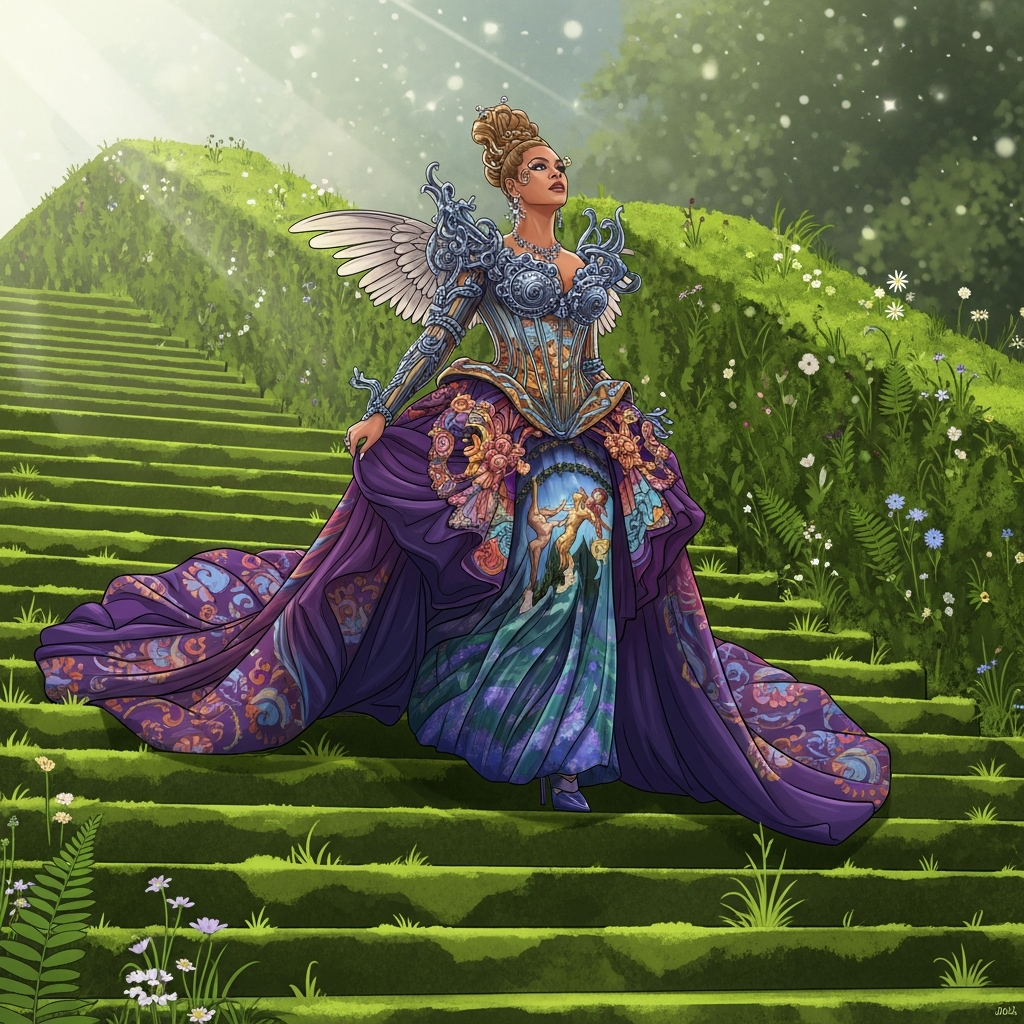
The Met Gala 2026 redefined the boundaries of fashion, art, and celebrity spectacle. Heralded as “the biggest night in fashion,” this annual fundraising event for the Metropolitan Museum of Art’s Costume Institute transformed its iconic steps into a lush, mossy garden. Attendees were challenged by the “Costume Art” theme, which demanded lavish, whimsical, and often deeply conceptual interpretations. From groundbreaking artistic tributes to dramatic personal statements, the Met Gala 2026 delivered an unforgettable night in New York City, cementing its status as a pinnacle of global culture. This year’s red carpet was not just a display of garments, but a living, breathing exhibition of fashion as a profound art form.
“I Wanna Dance With Somebody”: A Theatrical Opening
The evening commenced with an electrifying performance that immediately set a theatrical tone. Golden-voiced Broadway star Joshua Henry captivated the crowd by opening the carpet with a powerful rendition of Whitney Houston’s “I Wanna Dance With Somebody.” Accompanied by a live band and dynamic dancers, Henry turned the grand entrance into an immersive artistic experience. This dramatic start perfectly foreshadowed the night’s theme, urging celebrities and designers alike to push creative limits. The Met’s transformed steps, resembling moss-covered bricks, offered a fairytale backdrop for the unfolding fashion narrative.
The Visionaries: Co-Chairs and the “Costume Art” Mandate
This year’s Met Gala 2026 was steered by a prestigious group of co-chairs. Singer Beyoncé, acclaimed actress Nicole Kidman, tennis superstar Venus Williams, and Vogue‘s global editorial director Anna Wintour led the charge. Wintour, attending her first Gala since stepping down as editor-in-chief of American Vogue, showcased her signature elegance in a feathery custom Chanel confection. The “Costume Art” dress code was more than just a suggestion; it was an invitation to embody art. Andrew Bolton, the Costume Institute curator-in-charge, explained the accompanying exhibition sought to connect “artistic representations of the body with fashion as an embodied art form.” This provided a rich canvas for sartorial expression.
Beyoncé’s Triumphant Return to the Met Gala 2026
After a decade-long absence, Beyoncé’s highly anticipated return to the Met Gala 2026 carpet was nothing short of monumental. Signalling a thrilling new artistic era, possibly “Act III” of her musical journey, she arrived with her husband Jay-Z and their 14-year-old daughter, Blue Ivy. Blue Ivy’s debut was particularly notable, as the Gala typically restricts guests to those aged 18 and older.
A Dazzling Duo of Art-Inspired Ensembles
Beyoncé unveiled two distinct, thematically aligned ensembles. Her initial look, a collaboration with French designer Olivier Rousteing, was a striking, body-conscious gown. It featured intricate diamond skeleton embellishments on a skin-toned mesh, extending dramatically to her fingertips. This was complemented by a colossal feathered opera coat, a magnificent creation that required five people to guide it up the Met steps. Later inside, Beyoncé revealed her second act: a stunning black-and-nude crystallized trompe l’oeil mermaid gown by London-based Robert Wun. Accessorized with a sparkling sheer black organza veil, this transformation fueled speculation about her upcoming rock-infused musical direction. Her hair, styled by Neal Farinah using her Cécred line, featured “ethereal waves” that added to the dramatic flair.
Iconic Entrances: Rihanna, Kidman, and Williams Sisters
As has become a cherished tradition, the power couple Rihanna and A$AP Rocky delivered a show-stopping, fashionably late entrance. Rihanna shimmered in a custom Maison Margiela by Glenn Martens gown, intricately encrusted with thousands of jewels and beads. A$AP Rocky, a co-chair from the previous year, wore custom Chanel, featuring a striking pink coat with black satin lapels. Their arrival effectively closed the red carpet, leaving a lasting impression.
Co-chair Nicole Kidman graced the event in a red, long-sleeved beaded column gown by Chanel, attending with her daughter, Sunday Rose. Fellow co-chair Venus Williams, the tennis icon, radiated confidence in a black sparkling gown with a luxurious silver, jewel-encrusted neck adornment. Her sister, Serena Williams, also shone in a silver Marc Jacobs creation, echoing the classical art found within the museum’s halls. Each look contributed to the vibrant tapestry of high fashion at the Met Gala 2026.
The Body as Canvas: Diverse Interpretations of “Costume Art”
The “Costume Art” theme truly liberated designers and celebrities to explore fashion as a medium for artistic storytelling. Andrew Bolton’s curatorial statement, connecting fashion with “thematic body types” including the “naked body,” “classical body,” and “aging body,” inspired a myriad of looks. This year, the focus was less on literal costumes and more on conceptual art.
Artistic Transformations and Direct References
Many stars channeled famous artworks or adopted transformative personas:
Heidi Klum became a hyper-realistic marble statue, referencing Raffaelle Monti’s 1860s “Veiled Lady,” a true embodiment of classical sculpture.
Bad Bunny embraced “abuelo drag,” a dapper old man look, tying into the “Aging Body” exhibition category and his album’s theme of nostalgia.
Angela Bassett’s pink Prabal Gurung gown drew inspiration from Laura Wheeler Waring’s Harlem Renaissance painting, “Girl in a Pink Dress.” She eloquently noted fashion’s crucial role in character portrayal.
Emma Chamberlain‘s multi-colored Mugler gown by Miguel Castro Freitas strikingly resembled a painting.
Lena Dunham’s vivid red Valentino dress, adorned with crow’s feathers, was inspired by the blood-splatter from Artemisia Gentileschi’s “Judith Slaying Holofernes.”
Hunter Schafer wore a custom Prada dress, referencing Gustav Klimt’s 1912 painting Mäda Primavesi.
Lauren Sánchez Bezos invoked John Singer Sargent’s scandalous “Madame X” with her elegant Schiaparelli gown, highlighting the designer Elsa Schiaparelli’s artistic connections.
Theatricality, Illusion, and Avant-Garde Statements
Other celebrities opted for dramatic flair, creating illusions or pushing avant-garde boundaries:
Katy Perry turned heads with a unique, eerie mirrored mask that obscured her face, hinting at a futuristic bridal-meets-fencer aesthetic. Her Stella McCartney gown featured “cigarette-like burns” and enigmatic tarot cards.
Sabrina Carpenter brought Hollywood glamour literally, wearing a Dior dress made from celluloid film strips, possibly referencing the classic 1954 Audrey Hepburn film Sabrina.
Sam Smith made a grand statement in a glamorous robe paired with a towering feathered headpiece.
Madonna presented a fantastical “nautical-witch” look, complete with a tall ship-shaped headpiece and an ethereal grey veil, requiring an entourage for her dramatic entrance.
Lisa from K-Pop group Blackpink sported an avant-garde Robert Wun gown featuring illusionary mannequin arms, modeled after her own, posed in Thai dancing positions to hold her veil.
Kylie Jenner’s Schiaparelli dress cleverly created the illusion of undress, featuring a severely cinched skin-colored corset with faux nipples, daringly complemented by bleached eyebrows. Her sister Kendall Jenner echoed this theme with her Zac Posen for GAP gown, draped around a nude-colored bra, also featuring a subtle nipple silhouette, reflecting the “undressed body” theme.
Sarah Paulson made a political statement with a mask fashioned from a dollar bill, obscuring part of her face, which she stated represented the “1 percent.”
Personal Narratives and Cultural Tributes
Beyond direct art references, many looks wove in personal stories and cultural heritage:
Aariana Rose Philip made a historic debut as the first wheelchair user to attend the Met Gala, telling Vogue that her presence marked a significant step for disabled representation.
Famed Indian designer Manish Malhotra presented a bandhgala paired with an impossibly ornate cape. The cape, a tribute to Mumbai, took a team of 50 artisans 960 hours to create.
Bollywood director Karan Johar, also in Manish Malhotra, wore a hand-painted cape depicting characters from Indian mythology, emphasizing fashion’s massive role in his films.
Maluma proudly represented Colombian culture in a design by Colombian designer Haider Ackermann, embodying “the Colombian dream.”
These diverse interpretations underlined the power of the “Costume Art” theme to inspire both profound artistic statements and deeply personal narratives.
Frequently Asked Questions
What was the ‘Costume Art’ theme for the Met Gala 2026?
The Met Gala 2026 theme, “Costume Art,” challenged attendees to interpret fashion as an embodied art form, moving beyond simple aesthetics to conceptual and theatrical expressions. Guests were encouraged to embrace lavish and whimsical dress, often incorporating direct artistic references, historical figures, or transformative looks. This theme complemented the Metropolitan Museum of Art’s exhibition, which explored the connection between artistic representations of the body and fashion, organized by categories like the “naked body,” “classical body,” and “aging body.”
Which iconic celebrities returned or made their mark at the 2026 Met Gala?
The Met Gala 2026 saw several iconic moments and returns. Beyoncé made a highly anticipated comeback after a decade, accompanied by her family, showcasing two dramatic, art-inspired outfits. Rihanna and A$AP Rocky maintained their tradition of closing the red carpet with show-stopping fashion. Other notable figures included Anna Wintour, Nicole Kidman, Venus and Serena Williams, and designers and actors like Bad Bunny, Heidi Klum, Katy Perry, and Sabrina Carpenter, all making significant artistic statements that captivated audiences and critics.
Beyond fashion, what is the primary purpose of the annual Met Gala?
While renowned for its spectacular fashion and celebrity presence, the primary purpose of the annual Met Gala is a crucial fundraising event. All proceeds from the gala directly benefit the Metropolitan Museum of Art’s Costume Institute. This funding supports the institute’s operations, including its world-class exhibitions, acquisitions, and conservation efforts, ensuring the preservation and display of historical and contemporary fashion for public enjoyment and scholarly research. It is a vital mechanism for sustaining fashion as a recognized art form within a prestigious museum setting.
A Legacy of Spectacle and Artistic Expression
The Met Gala 2026 cemented its reputation as more than just a red-carpet event; it is a global phenomenon where fashion, art, and celebrity converge for a cause. From the dramatic opening performance by Joshua Henry to Beyoncé’s much-anticipated return and the myriad of imaginative interpretations of the “Costume Art” theme, the night was a testament to boundless creativity. Each look, whether a direct artistic homage or a theatrical illusion, contributed to a rich dialogue about the body, identity, and the evolving definition of fashion itself. The funds raised will continue to support the Metropolitan Museum of Art’s Costume Institute, ensuring that the spectacle of style also serves a profound cultural purpose. The Met Gala 2026 will undoubtedly be remembered as a landmark year for sartorial artistry and philanthropic spirit.