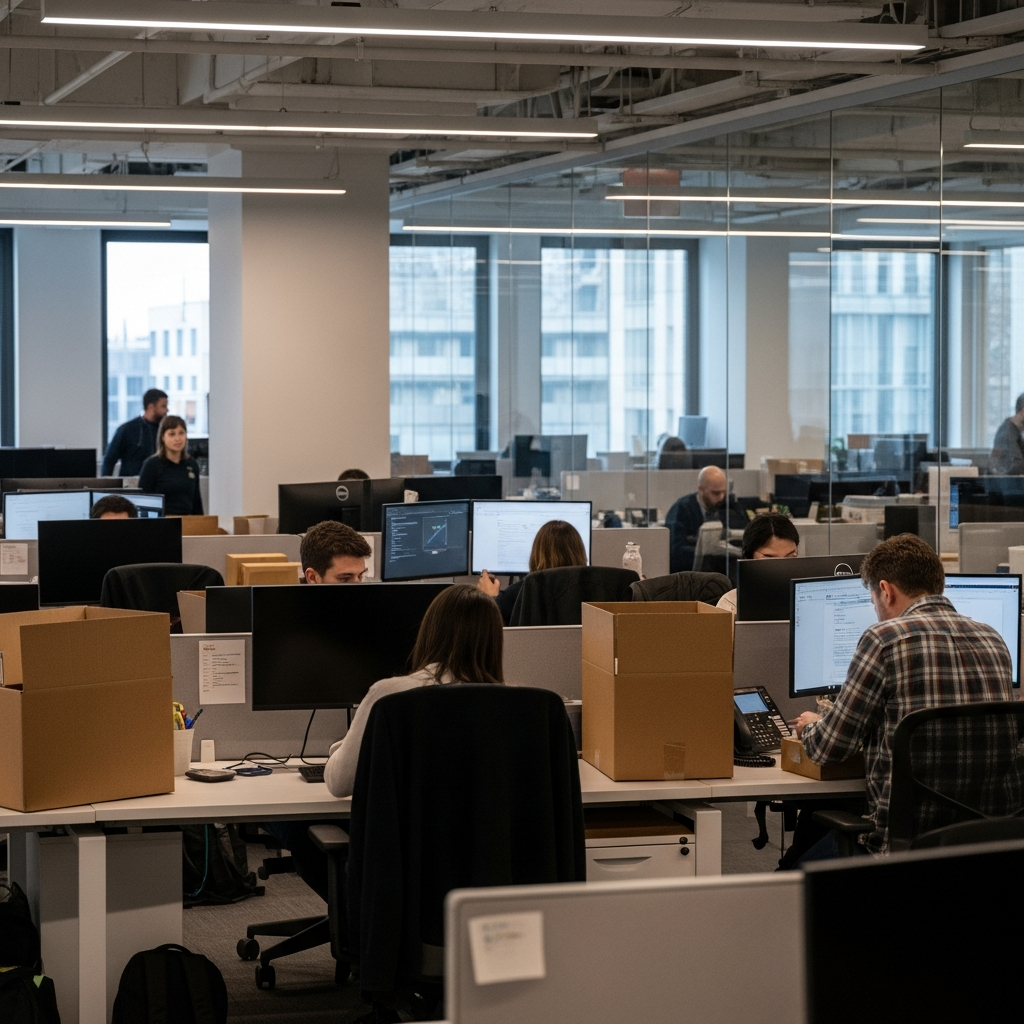
Microsoft is making headlines with an unprecedented strategic move: launching its first-ever voluntary retirement program in 51 years. This significant initiative, confirmed in early May 2026, offers cash severance, continued healthcare, and vested stock awards to eligible U.S. employees. It represents a calculated pivot by the Redmond-based tech giant to reshape its workforce amidst record investments and transformative advancements in artificial intelligence (AI). This program is far more than a simple headcount reduction; it signals a profound, AI-driven restructuring designed to usher in a new era of productivity and innovation.
Approximately 8,750 Microsoft employees, representing about 7% of its U.S. workforce, now face a crucial decision. They have until June 8 to opt for this voluntary buyout, with their last day at the company set for July 1, marking the beginning of Microsoft’s 2027 fiscal year. This strategic offering underscores Microsoft’s commitment to managing its talent pipeline proactively, ensuring its workforce is aligned with its ambitious AI-first future.
Understanding Microsoft’s Voluntary Retirement Program
The details of Microsoft’s voluntary retirement program, initially shared internally, outline specific criteria and benefits designed to support employees transitioning out of the company. This program is a notable departure from Microsoft’s historical workforce management, which had not offered such a large-scale voluntary option even during past economic downturns or the recent tech layoffs of 2022-2023.
Eligibility and Offer Details
Eligibility for this unique opportunity is determined by the “Rule of 70,” a specific criterion requiring an employee’s age combined with their years of service at Microsoft to total 70 or more. This rule primarily targets long-tenured employees, such as a 50-year-old with 20 years of service or a 45-year-old who started straight out of college. Exclusions apply to certain senior roles and individuals on sales incentive plans, indicating a targeted approach towards middle management layers.
Employees who opt into the program will receive a comprehensive package:
Lump Sum Cash Severance: This payment is scaled based on an employee’s tenure and level within the company. For instance, employees at Level 64 (senior positions) and below will receive one week of base pay for every six months worked, with a minimum of eight weeks and a maximum of 39 weeks. Those in director roles (Levels 65-67) will receive two weeks of base pay for every six months worked.
Continued Healthcare Coverage: All participating workers will benefit from one year of subsidized healthcare coverage, maintaining their existing plans. This coverage can extend for an additional four years, though employees would pay a monthly premium during this period. Coverage may conclude earlier for those who qualify for Medicare.
- Vesting of Stock Awards: A significant benefit is the continuation of unvested stock awards. Employees will receive stock awards for six months post-termination in July. Those with over 24 years of service will see their stock awards continue for a full year after their departure. This prevents forfeiture of equity, a crucial component of tech compensation.
- www.techbuzz.ai
- timesofindia.indiatimes.com
- nebius.com
- nearshoreamericas.com
- defensescoop.com
The AI Imperative: Driving Workforce Transformation
Microsoft’s decision to launch this voluntary buyout program is intrinsically linked to its aggressive advancements and record spending in artificial intelligence. The company views AI as a transformative force, fundamentally altering productivity and enterprise operations. Industry experts characterize this as a “generational handoff,” subtly reshaping the company’s talent profile.
Shifting Skill Sets and Productivity Gains
The core premise behind this workforce optimization is the belief that AI tools can significantly augment human productivity. As Microsoft deeply integrates AI capabilities into its product ecosystem—from Copilot in Office to autonomous agents in Azure—the demand for “AI-native skills” becomes paramount. Employees augmented with AI tools may achieve what previously required a larger team, making workforce adjustments an anticipated outcome. This strategic shift aims to create exit ramps for veteran employees who might be less adaptable to rapid AI-driven iteration, making way for new talent with fresh, AI-centric expertise.
Microsoft’s Chief Financial Officer, Amy Hood, announced during a recent earnings call that the voluntary retirement program is expected to cost the company approximately $900 million. While this charge will affect profitability for the current quarter ending June 30, it represents a tiny fraction of Microsoft’s quarterly profit, which hit $31.8 billion in the first three months of the year. Hood anticipates a shrinking total workforce in the coming year, driven by this program and broader headcount management efforts, following mass layoffs experienced last summer.
Long-Term Financial and Strategic Benefits
While voluntary buyouts incur substantial upfront costs—often 6-12 months of salary plus benefits—Microsoft’s move is considered financially astute in the long run. By offering voluntary departure to high-tenure employees, who often command significantly higher salaries, the company projects a payback period of under two years. This is especially true if some positions are replaced with AI-savvy talent at more competitive salary bands. This approach also allows Microsoft to restructure its workforce without the negative public relations often associated with forced layoffs.
Industry observers suggest that Microsoft is “paying people to leave before AI makes their roles obsolete,” framing it as a more humane approach to achieve necessary restructuring. The exclusion of vice presidents and above from the program highlights a focus on targeting middle management, a layer increasingly vulnerable to “AI-driven org flattening” as AI assistants take over coordination and information synthesis roles.
Broader Implications for the Tech Industry
Microsoft’s voluntary buyout program is seen by many as a potential precursor to a broader enterprise trend across the tech industry. As other tech giants monitor its outcome, similar initiatives are anticipated to proliferate, underscoring the profound impact of AI on the future of work. This initiative poses a challenge to manage the transition effectively without eroding morale or institutional knowledge.
The company has also clarified that employees taking the offer will not be restricted from seeking jobs at other companies. In 2022, Microsoft proactively removed non-compete clauses from most U.S. employment contracts, signaling a commitment to employee mobility outside of senior leadership. This further emphasizes the voluntary and supportive nature of the current program.
This bold step by Microsoft signals that even the most employee-friendly tech giants are compelled to re-evaluate their workforce composition in light of AI productivity gains. It’s a strategic move designed not just for cost-cutting, but for actively shaping an “AI-native” organization ready for the challenges and opportunities of the coming decades.
Frequently Asked Questions
What is the “Rule of 70” for Microsoft’s voluntary buyout program?
The “Rule of 70” is the primary eligibility criterion for Microsoft’s voluntary retirement program. It stipulates that an employee qualifies if their age combined with their years of service at Microsoft totals 70 or more. This criterion targets long-tenured employees, for example, a 50-year-old employee with 20 years of service. The program aims to encourage veteran staff to voluntarily retire, allowing Microsoft to strategically manage its headcount and adapt its talent profile for an AI-driven future.
What benefits are included in Microsoft’s voluntary retirement offer?
Eligible employees who opt for the voluntary retirement program receive a comprehensive package. This includes a lump sum cash severance payment, scaled according to their tenure and level at the company, with minimum and maximum payouts. Additionally, participants receive one year of subsidized healthcare coverage, with the option to continue for four more years at a monthly premium. Crucially, the program also includes the continued vesting of unvested stock awards for six months, or up to a year for those with over 24 years of service.
Why is Microsoft offering voluntary buyouts now, and what does it mean for the tech industry?
Microsoft’s decision to offer its first-ever large-scale voluntary buyout is primarily driven by its significant investments and advancements in artificial intelligence. The company believes AI will fundamentally transform productivity, necessitating a workforce with “AI-native skills.” This program is a strategic move to optimize its talent profile and manage headcount proactively, rather than through forced layoffs. For the broader tech industry, Microsoft’s initiative is seen as a potential trendsetter, signaling that other tech giants may adopt similar AI-driven workforce restructuring strategies to adapt to evolving technological landscapes.
The Road Ahead for Microsoft
Microsoft’s voluntary retirement program marks a pivotal moment in its 51-year history. It’s a clear indication that the company is actively preparing for an AI-first future, not just through product development but through fundamental shifts in its organizational structure and talent composition. While the program offers a “humane” exit strategy for long-serving employees, its underlying message is profound: the enterprise of tomorrow demands fewer people doing fundamentally different work, heavily augmented by AI. This bold move positions Microsoft as a proactive leader in navigating the complex implications of AI on the global workforce, setting a precedent that many in the tech sector will undoubtedly watch closely.