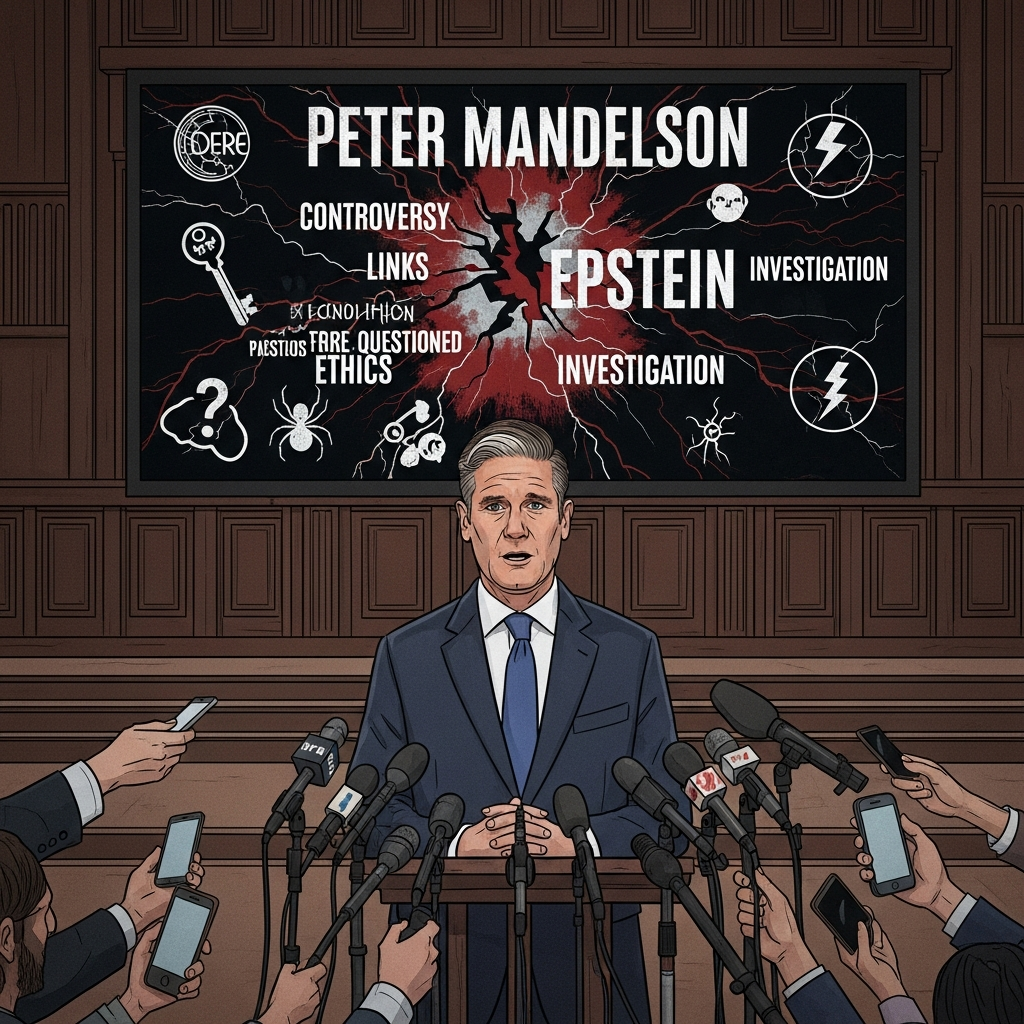
Britain’s political landscape is reeling from a growing scandal surrounding Prime Minister Keir Starmer and the controversial appointment of Peter Mandelson as the UK’s ambassador to the United States. Starmer faces intense parliamentary scrutiny and calls for his resignation after revelations that Mandelson, a figure with past controversies and links to Jeffrey Epstein, received the key diplomatic post despite failing crucial security checks. The unfolding Starmer Mandelson controversy has ignited questions about government transparency, vetting processes, and the Prime Minister’s judgment, pushing his leadership into a severe test.
The crisis deepened as Starmer struggled to explain how Mandelson, a former Labour minister, secured the prestigious Washington role. Reports indicate Mandelson’s security clearance was denied by vetting officials. Yet, the Foreign Office ultimately cleared him, seemingly without informing the Prime Minister of the red flags. This has prompted an immediate political firestorm, with opposition parties demanding accountability and even allies expressing unease.
The Unraveling of a High-Stakes Appointment
The saga began with Peter Mandelson’s appointment as the UK’s ambassador to the US in December 2024. Mandelson, known for his extensive network among global elites and expertise as a former EU trade chief, was seen by some as an asset, particularly in navigating relations with the Trump administration. However, his past was not without controversy. Staff reportedly warned Starmer about the “reputational risk” posed by Mandelson’s friendship with convicted financier Jeffrey Epstein, who died in prison in 2019. Further concerns emerged regarding Mandelson’s business ties to Russia and China.
Despite these warnings, the appointment went ahead. Less than nine months later, in September 2025, Prime Minister Starmer fired Mandelson from the ambassadorial post. This decision followed the emergence of evidence suggesting Mandelson had misrepresented the extent of his connections to Epstein. A trove of Epstein-related documents, released by the U.S. Department of Justice in January 2026, included emails hinting that Mandelson may have passed sensitive government information to Epstein in 2009 during the global financial crisis. This explosive revelation led to Mandelson’s arrest by British police in February 2026 on suspicion of misconduct in public office. He has denied wrongdoing and has not been charged with sexual misconduct.
Allegations of Misleading Parliament and Withheld Information
The core of the Starmer Mandelson controversy now centers on what Prime Minister Starmer knew and when. He repeatedly assured lawmakers that “due process” was followed in Mandelson’s appointment. However, Starmer later stated he was “furious” to discover he had not been informed that an intensive vetting process had actually recommended against Mandelson receiving security clearance. He claims to have first learned of these “red flags” only recently.
This timeline contradicts earlier reports. The UK Security and Vetting (UKSV) officials had reportedly raised concerns with the Foreign Office as early as January 2025, almost a year before Starmer claims knowledge. Furthermore, the political editor of The Independent reportedly contacted Starmer’s then-director of communications in September 2025 regarding Mandelson’s failed vetting, leading to a story that same month. Opposition MPs find it “not credible” that Starmer’s inner circle remained unaware for such a prolonged period.
Fallout and Political Repercussions
In response to the escalating crisis, Prime Minister Starmer took swift action, firing Olly Robbins, the Foreign Office’s top civil servant. Robbins’ allies, however, contend he was unable to share sensitive vetting details with the Prime Minister. Robbins himself is slated to provide his version of events to the House of Commons Foreign Affairs Committee, promising further revelations.
The political backlash has been severe. All major opposition parties have called for Starmer’s resignation. Kemi Badenoch, leader of the Conservative Party, accused Starmer of “misled Parliament over Mandelson, misled the country and is taking the public for fools.” Liberal Democrat leader Ed Davey labeled Starmer’s actions a “catastrophic misjudgment.” Even within Starmer’s own center-left Labour Party, lawmakers are reportedly “restive,” particularly given the party’s concerning poll ratings and the upcoming local and regional elections in May, which could serve as a midterm referendum on his government.
Scrutiny of Leadership and Vetting Processes
Critics point to the Peter Mandelson appointment as yet more evidence of a recurring lapse in judgment by Prime Minister Starmer. Since leading Labour to a landslide victory in July 2024, Starmer has faced challenges in delivering on economic promises, repairing public services, and easing the cost of living. He has also been forced into several policy U-turns, further fueling concerns about his leadership.
The specifics of Mandelson’s vetting process have also come under intense scrutiny. It was revealed that Mandelson was not formally interviewed for the ambassadorial role. He was not directly questioned about potential conflicts of interest but instead completed a form primarily focused on financial conflicts. This process has since been revised. While an “initial assessment” mentioned mitigations for professional and financial relationships, it also noted a “general reputational risk” linked to Epstein. The lack of rigorous due diligence for such a high-profile political appointee, especially one replacing a career civil servant and dealing with the US administration, remains a key point of contention.
Calls for Transparency and Future Challenges
Starmer has pledged “true transparency” and is expected to answer critical questions about the scandal in Parliament. The publication of documents related to Mandelson’s vetting and appointment is anticipated, though some parts will likely be redacted at the request of the Metropolitan Police due to their ongoing criminal investigation. Any government redactions on security grounds will require approval from the Intelligence and Security Committee. Conservative leader Kemi Badenoch has demanded the full papers be released promptly.
The Foreign Office vetting scandal has already led to the loss of a US ambassador, Starmer’s chief of staff, and the head of the Foreign Office. The scandal’s repercussions are likely far from over. The upcoming testimony from Sir Olly Robbins, the potential release of more vetting documents, and the possibility of a criminal trial for Lord Mandelson mean Starmer’s leadership will continue to face immense pressure. This ongoing crisis underscores the critical importance of rigorous vetting and absolute transparency in high-level government appointments, particularly when public trust and national reputation are at stake.
Frequently Asked Questions
What is the core issue behind the Starmer Mandelson controversy?
The core issue stems from Peter Mandelson’s appointment as the UK’s ambassador to the United States despite reports that he failed security checks. Prime Minister Keir Starmer initially insisted “due process” was followed but later claimed he was unaware of these “red flags.” The controversy highlights a breakdown in communication and vetting procedures within the government, raising serious questions about accountability, transparency, and the Prime Minister’s knowledge and judgment regarding such a significant diplomatic post.
Who are the key figures involved in the Mandelson vetting scandal?
The main figures are Prime Minister Keir Starmer, who appointed Mandelson and is now facing the political fallout. Peter Mandelson himself, the former ambassador whose past links to Jeffrey Epstein and other controversies are central to the failed vetting. Olly Robbins, the former top civil servant at the Foreign Office, who was fired by Starmer and is expected to give testimony. Additionally, opposition leaders like Kemi Badenoch and Ed Davey are prominent in demanding Starmer’s resignation, alongside uneasy Labour Party backbenchers.
What are the potential consequences for Prime Minister Starmer’s leadership?
The Starmer Mandelson controversy poses significant risks to Prime Minister Starmer’s leadership. He faces calls for resignation from opposition parties and increasing unrest within his own Labour Party, especially with upcoming local elections. The scandal suggests a potential failure of judgment and raises concerns about his grip on government affairs. Continued revelations, Mandelson’s ongoing criminal probe, and the testimony of key officials could further erode public trust and potentially destabilize his government, impacting his political future and Labour’s standing.