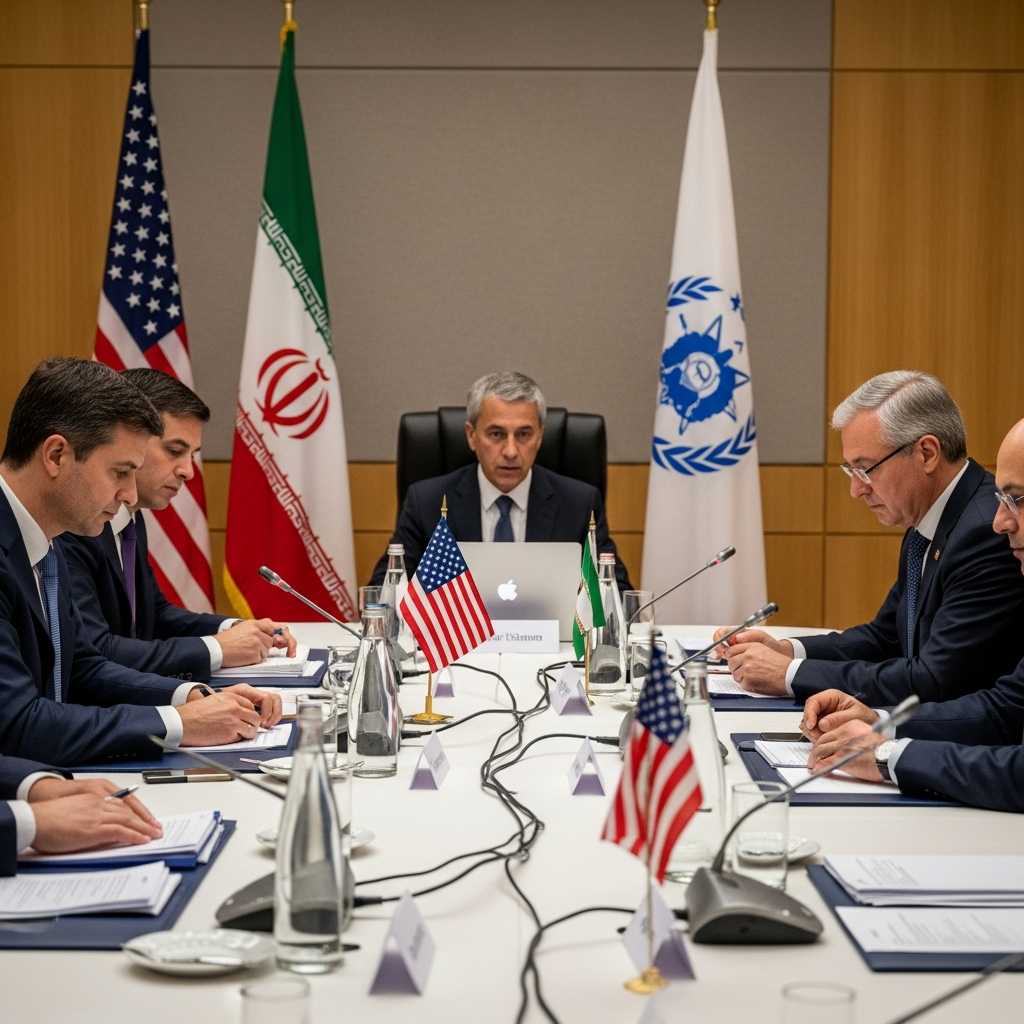
In a significant diplomatic breakthrough on April 14, 2026, Israel and Lebanon convened their first direct, high-level talks in Washington D.C. in over three decades. Mediated by the United States, these crucial discussions followed more than a month of intense conflict between Israel and the Iran-backed Hezbollah militant group, highlighting an urgent need for de-escalation in the volatile Middle East. US Secretary of State Marco Rubio hailed the event as a “historic opportunity,” though he cautioned that immediate breakthroughs were unlikely given the region’s complex history.
A New Chapter in Diplomacy: Israel-Lebanon Direct Talks
The two-hour session, facilitated by the U.S. State Department, was praised for its “productive discussions” aimed at “launching direct negotiations.” This marked a profound shift for nations technically at war since Israel’s founding in 1948, having previously relied on indirect communications, often through the UNIFIL peacekeeping mission or the U.S. The discussions sought to establish a framework for lasting stability, allowing the people of both Lebanon and Israel to live without constant fear.
The Road to Washington: Conflict’s Grim Backdrop
The impetus for these talks stemmed from a severe escalation of hostilities that began on March 2. Days after joint US and Israeli attacks on Iran – Hezbollah’s primary patron – the militant group launched rockets into northern Israel, triggering a new wave of intense fighting. Lebanon’s political authorities, critical of Hezbollah’s decision to initiate hostilities, swiftly proposed direct talks to prevent a full-scale Israeli ground invasion. Israel, initially hesitant, agreed only after its extensive bombardment of Beirut sparked international outcry and threats from Iran.
Competing Agendas: What Each Side Seeks
The diplomatic table in Washington revealed starkly differing priorities and perspectives from the two long-standing adversaries. The United States, playing the role of primary mediator, stressed that any eventual agreement to cease hostilities must be forged directly between the two governments, with its own brokering, rejecting any separate negotiation tracks.
Israel’s Stance: Security and Hezbollah’s Diminished Role
Representing Israel, Ambassador to the U.S. Yechiel Leiter described the initial talks as “positive,” expressing encouragement at a “wonderful exchange.” He emphasized a perceived “convergence of opinion about removing Hezbollah’s influence from Lebanon.” Leiter asserted that the Lebanese government had signaled its intent to no longer be “occupied by Hezbollah,” viewing the situation as a timely “opportunity” due to a reportedly “weakened” Iran and a “dramatically weakened” Hezbollah. Israeli Foreign Minister Gideon Saar underscored this by stating, “The problem is Hezbollah,” denying direct disputes with Lebanon itself. Israel’s stated objective in its ongoing military operations, which include an invasion of southern Lebanon, is to disarm all non-state terror groups and create a “security zone” up to the Litani River, approximately 30 kilometers north of the border.
Lebanon’s Plea: Sovereignty, Ceasefire, and Humanitarian Aid
For Lebanon, Ambassador to the U.S. Nada Hamadeh Moawad articulated an “urgent need” for an end to the Israel-Hezbollah conflict, firmly upholding the nation’s “territorial integrity and full state sovereignty.” Her government called for an immediate ceasefire, the safe return of over a million displaced citizens, and “concrete measures to address and alleviate the severe humanitarian crisis.” Lebanese President Joseph Aoun, who came to power pledging to disarm non-state actors like Hezbollah, forcefully declared, “Israel’s destruction of Lebanese territories is not the solution,” advocating for diplomacy as the most effective path to resolving armed conflicts. Lebanon also insisted on representing itself, rejecting Iran’s condition for its inclusion in any broader ceasefire talks.
The Hezbollah Factor: A Shadow Over Negotiations
A critical and undeniable complexity casting a long shadow over the Washington talks was the explicit opposition from Hezbollah. The Iran-backed militant group, a formidable political and military force in Lebanon, was not present at the negotiations and declared any agreements made would not be binding upon them.
Militant Opposition and Escalated Actions
Wafiq Safa, a high-ranking member of Hezbollah’s political council, publicly stated the group’s rejection of the talks and its intent to disregard any outcomes. This defiant stance was underscored by actions on the very day of the diplomatic engagement; Hezbollah claimed responsibility for 24 attacks on northern Israel and Israeli troops in southern Lebanon, triggering continuous drone and rocket alerts in Israeli border communities. Hezbollah and its allies criticize the Lebanese government’s participation, arguing it lacks sufficient bargaining power and should instead align with Iran’s position. The group advocates a return to the 2024 agreement that facilitated indirect talks mediated by the U.S., France, and UNIFIL.
Internal Dynamics: Hezbollah’s Strained Ties with Beirut
Despite its immense sway in Lebanon’s predominantly Shia south, Beirut’s southern suburbs, and parts of its eastern provinces, Hezbollah’s relationship with Lebanon’s top political authorities has noticeably soured. The Lebanese government has openly criticized Hezbollah’s decision to enter the latest conflict and has since moved to criminalize the group’s military activities within the country. This internal friction further complicates the peace process, as the Lebanese government’s capacity to confront Hezbollah directly remains limited, hindering its ability to assert full control over its territory.
The Human Cost: Crisis and Displacement
The ongoing conflict has exacted a devastating humanitarian toll on Lebanon. According to the Lebanese Health Ministry, at least 2,124 people, including hundreds of women and children, have been killed in Israeli strikes. Over 1 million people have been displaced from their homes, facing dire conditions.
Devastation on the Ground
The week prior to the Washington talks saw particularly brutal violence. Israel launched 100 airstrikes across Lebanon in a mere 10 minutes, targeting areas including the heart of Beirut, killing over 350 people. Such widespread bombardment drew international condemnation and prompted Iran to threaten an end to its ceasefire with the U.S. and Israel, further illustrating the regional ramifications of the conflict. While Israel has since halted strikes on the capital, it has ruled out a general truce, maintaining a focused military presence.
Israel’s “Security Zone” Objective
The Israeli military’s ground invasion of southern Lebanon aims to create a “security zone” from its border northward to the Litani River. Israel’s defense minister has stated that hundreds of thousands of uprooted Lebanese citizens would not be permitted to return to their homes until the area is demilitarized and northern Israeli communities are deemed safe. This policy underscores Israel’s deep-seated security concerns, even as Hezbollah, despite being weakened in its last war with Israel ending in November 2024, continues daily attacks with drones, rockets, and artillery.
US Role and Future Prospects
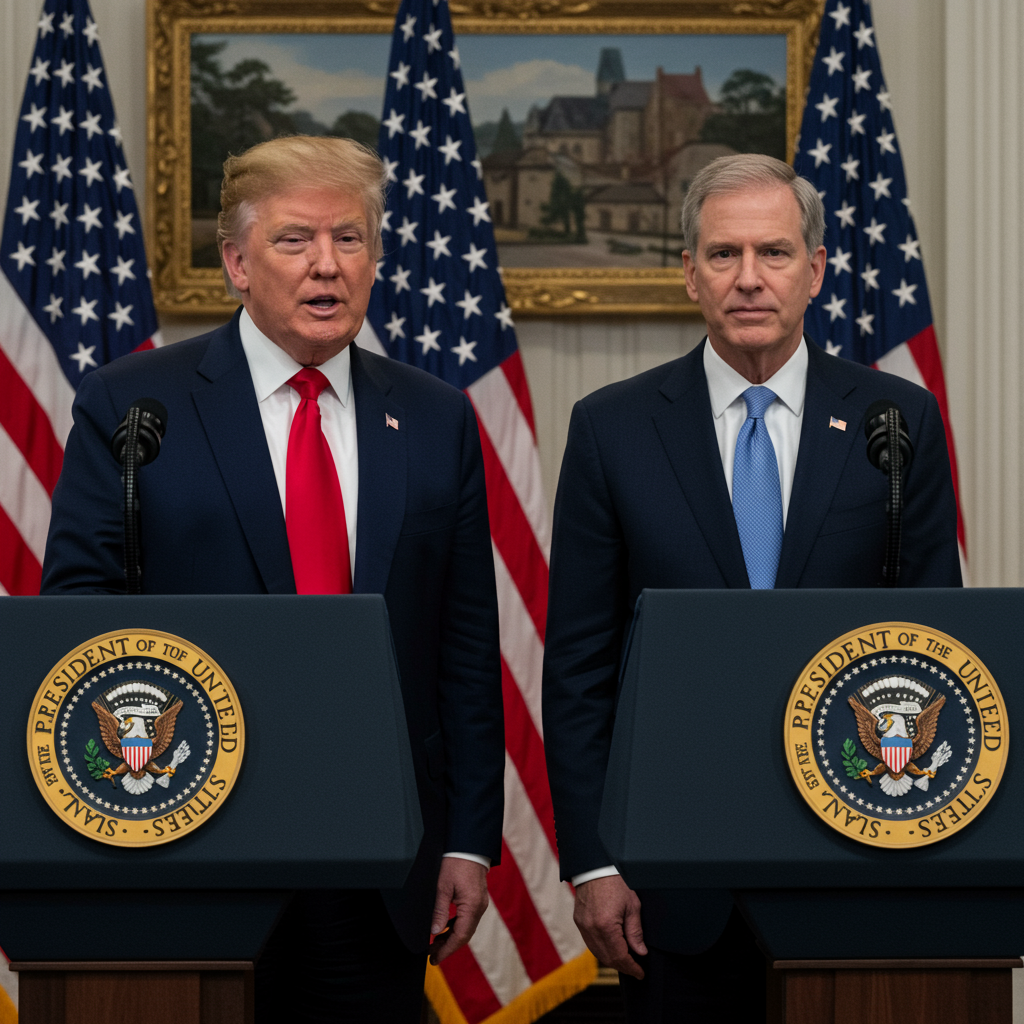
The United States has emerged as the indispensable facilitator, navigating a highly sensitive and dangerous geopolitical landscape. The Trump administration, with Secretary of State Marco Rubio at the forefront, expressed enthusiasm to foster a framework for lasting peace.
Orchestrating De-escalation
US Ambassador to Lebanon Michel Issa, alongside the Israeli and Lebanese ambassadors, led the discussions. A primary objective articulated by a State Department official was to ensure long-term security for Israel’s northern border while simultaneously supporting Lebanon in regaining control over its territory and its political future from Hezbollah. The US’s clear stance that agreements must be government-to-government, rather than through separate channels, aims to empower the legitimate Lebanese state.
Navigating the Path Ahead
Despite the initial positive tone, the path forward remains fraught with difficulties. The profound disagreements over Hezbollah’s role, its continued military actions, and its outright rejection of external agreements present major obstacles. The limited capacity of the Lebanese state to assert full control over its territory, coupled with the immense humanitarian crisis, highlights the urgent need for a ceasefire and sustained aid. The talks represent a fragile hope, a crucial first step, but a lasting resolution demands ongoing, patient, and complex diplomacy amidst a tangled web of regional power dynamics involving the US, Israel, Iran, and powerful non-state actors.
Frequently Asked Questions
What was the primary agenda for the Israel-Lebanon diplomatic talks in Washington?
The core objective of the April 14, 2026, Israel-Lebanon diplomatic talks in Washington was to initiate direct negotiations between the two nations after decades of indirect communication, aiming to de-escalate a month-long conflict. Mediated by the United States, the agenda included Israel’s pursuit of long-term security by removing Hezbollah’s influence from Lebanon, and Lebanon’s urgent plea for a ceasefire, restoration of territorial integrity and sovereignty, and humanitarian aid for its displaced population. The US emphasized that any agreement should be reached directly between the two governments.
Where in Lebanon does Hezbollah primarily exert its influence, and how does this affect peace efforts?
Hezbollah wields considerable influence in Beirut’s southern suburbs and extensive areas of Lebanon’s southern and eastern provinces. This significant presence, coupled with its control over a sophisticated militia, profoundly impacts peace efforts. The group explicitly rejected the Washington talks and declared any agreements non-binding, signaling its intent to continue military actions. This stance creates a major obstacle for negotiations, as any resolution needs Hezbollah’s de-escalation, which the Lebanese government, despite its criticism of the group, has limited capacity to enforce.
Why did Hezbollah reject direct negotiations, and what are the implications for future peace?
Hezbollah rejected the direct negotiations primarily because it argued the Lebanese government lacked sufficient leverage to negotiate effectively, suggesting it should align with Iran’s position. The group preferred a return to the 2024 agreement, which facilitated indirect talks with mediators like the U.S., France, and UNIFIL. The implications for future peace are significant: Hezbollah’s non-binding stance and continued military actions create a major impediment to a lasting resolution, prolonging instability and the humanitarian crisis, as any ceasefire or security agreement would be challenged by an unrepresented, yet powerful, non-state actor.
Conclusion: A Fragile Hope for Regional Stability
The direct diplomatic talks between Israel and Lebanon in Washington represent a vital, albeit precarious, step towards de-escalation and potential long-term stability in the Middle East. While marked by profound disagreements, particularly regarding the role of Hezbollah, and unfolding against a backdrop of severe humanitarian crisis, the simple act of direct engagement offers a sliver of hope. The success of these nascent negotiations hinges on the ability of the United States to continue its robust mediation, the willingness of both Israel and Lebanon to find common ground beyond immediate military objectives, and ultimately, the intricate challenge of managing or neutralizing Hezbollah’s formidable influence. The path ahead is undoubtedly long and complex, but the willingness to talk, for the first time in decades, acknowledges the urgent need to address a conflict that has exacted an unbearable human cost.
References
- apnews.com
- www.inquirer.com
- <a href="https://www.telegraphherald.com/news/nationalworld/articlea6c320e5-2ed2-4f6d-b115-9649eb4ffc87.html”>www.telegraphherald.com
- www.bbc.com
- www.nbcsandiego.com